– “Manuelito: hard times are coming for humanity and we have to remain firm. Like a rock”
said taita Gregorio, his eyes lost in the infinite, while he firmly pressed his fists against his chest.
“We have to be like the rock in the river during the flood: steady and calm, so that others can cling to us when they feel they are drowning.”
Those words from my dear taita, back in 2014, echoed in my mind when we saw on the news that a lockdown had been declared across the entire province of Ontario, limiting activities in public places to essential services and everyday necessities such as supermarkets and drugstores.
The images of hundreds of corpses piled up beside the provisional hospitals in Wuhan were the prologue to the tragedy that, for more than two years, struck down millions of families around the world, leaving behind social, political and economic consequences that, as I write these lines in the summer of 2023, have still not fully unfolded.
The COVID-19 pandemic, which spread rapidly throughout the world, violently shook the foundations of modern Western society and laid bare, before humanity's stunned gaze, our extreme fragility — even before something as mundane as the smallest biological form in nature: a virus — and exposed the precariousness of our capacity for cooperation and effective organization in the face of a global tragedy.
Unlike an earthquake or a flood, which disproportionately affect the poorest, a virus makes no distinction of race and threatens rich and poor, liberal and conservative alike. For that reason, many of us thought the pandemic would unite us as a species, that it would bring out the best in us and help us see our existence with a renewed perspective, to recognize what is truly important in life.
But as time went by and the tragedy — which was supposedly going to last a few months — became part of daily life, the world watched how those initial displays of solidarity, unity and good will gradually gave way to some of the meanest traits of our humanity.
– “…We must remain firm. Like a rock”
Grego's words became ever more relevant. The calamity was drawing ever closer to our social circle in Colombia, unlike Canada, where I felt we lived in a glass bubble, with the best medical services available, an educated society and enough resources to weather the crisis while keeping one of the lowest mortality rates in the world.
Our hearts, however, were in our motherland, where most of our loved ones were part of the population most vulnerable to the new disease: our parents, Paula's grandmother, Mara, Grandpa Luis, many low-income friends and relatives, and many of them who had been left without means of subsistence because of the strict lockdowns and curfews decreed in Colombia's main cities.
With worry and helplessness we learned of the first infections among our friends and family, and with sadness we said goodbye from a distance to some acquaintances who succumbed to the capricious complications of the disease. In the midst of that dark landscape and despite the risks, we made the decision to travel to Colombia in December 2020 to embrace our loved ones and recharge each other with the human warmth that the coronavirus had stolen from us.
It was the first time I set foot in my home country since we departed for North America that morning in June 2017, and everything had changed. The nighttime street parties in Medellín, typical of the Christmas season, had been replaced by daily curfews during which a police helicopter made constant flyovers, reminding people through a loudspeaker of the ban on going out into the street.
Even so, the people of the neighborhood faced the pandemic with a strange mix of fear and nonchalance, not atypical of Colombian culture: many wore their face masks below their noses or hanging from one ear and ignored the recommendation to keep a safe distance from people outside the immediate family. At the same time, a good number of superstitions and preventive measures with no scientific basis had taken root among the habits of our family and friends.
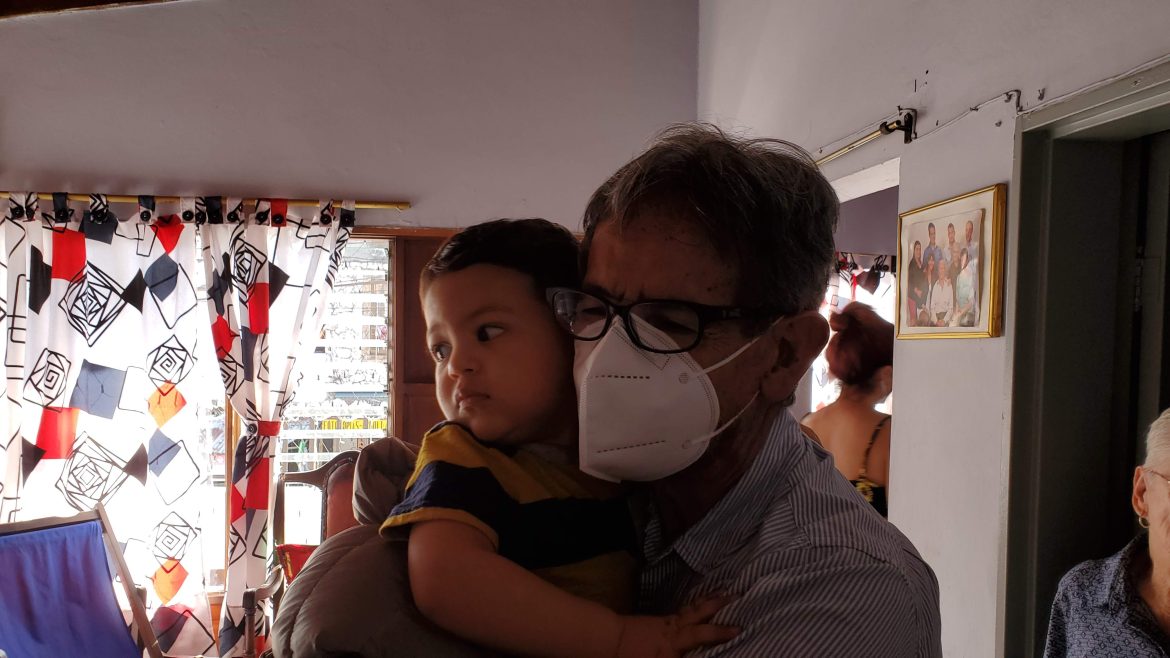
So it was common that, at the entrance of homes and public establishments, visitors were sprayed with alcohol from head to toe using an aerosol, and many installed at their doorways a plastic tray holding an absorbent mat which they moistened with alcohol. Before coming in from the street, guests had to clean the soles of their shoes with that alcohol, as if there were the slightest possibility that the coronavirus could slip in among the treads of the footwear and then casually jump into the nostrils of the house's residents.
One might think these measures, completely useless from an epidemiological standpoint, were harmless little actions, but in fact Paula's mom slipped on one of those shoe-cleaning trays and hurt her hip while carrying Benjamin in her arms. What's more, the alcohol “bath” seemed to create a false sense of security that distracted from the truly effective measures, like the proper use of face masks and social distancing.
We were happy to be able to celebrate Christmas and New Year with our loved ones in such difficult conditions, but we were also worried about the relentless advance of the disease, which in several Colombian cities was already keeping intensive care units at over 95% occupancy. We were terrified of the possibility of contracting the disease amid such precarious preventive measures and passing it on to our elders, without the peace of mind of having the robust Canadian medical system within reach.
And so, after almost a month, we returned to Canada with our hearts full of our loved ones' love, but also with immense worry for their well-being, amid so much public ignorance about preventive measures against the disease and so few resources to treat it if contracted. No sooner had we landed in Toronto than we learned that Paula's dad had been diagnosed with COVID-19, was being cared for at home and had to breathe with the help of an oxygen tank.
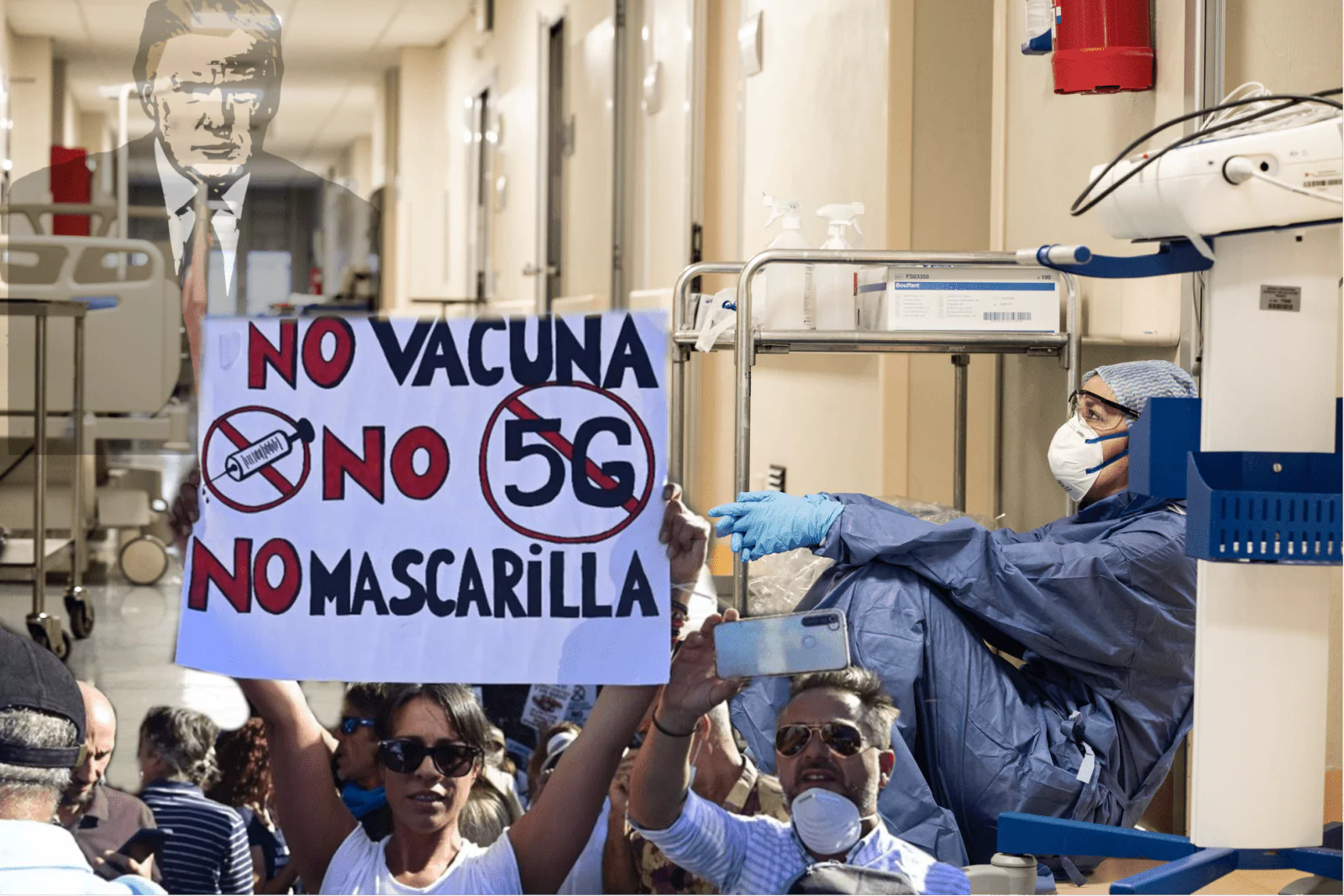
The situation in most of the world was bleak, but as they say, misfortunes never come alone: running parallel to the COVID-19 epidemic, a second epidemic was silently advancing that worsened the damage caused by the coronavirus — the epidemic of misinformation and conspiracy theories that torpedoed the efforts of health professionals, the scientific community and governments trying to act responsibly.
The first stirrings of that evil had already been seen a year earlier, when Donald Trump's government in the United States was nearing its end. The ever more elusive prospect of being re-elected as president had turned the erratic and egocentric leader into a machine of fake news, hoaxes and conspiracies.
His poor handling of the pandemic in its early days had already cost the lives of more than half a million Americans, and instead of changing course to follow the recommendations of scientists and academics, Trump instead decided to devote himself to attacking those institutions and fanning the conspiracy theories that his most fanatical and violent followers had been incubating since before he came to power.
Then, a taita yagesero friend whom I chatted with from time to time told me he would invite me to an Internet group where they were sharing secret information highly relevant to the things that were coming in the world. When I joined the group I found the same conspiracy theories I had seen on the Internet, promoted by dark right-wing cyber activist groups, led by the one known as Q-Anon. The only difference I noticed in the Colombian versions of these theories was that they abounded in esoteric terminology and pseudo-spiritual references.
Group members described Donald Trump as a spiritual leader in the service of the light who had launched a crusade against the darkness. In the imagination of the followers of such conspiracy theories, that darkness was represented by Washington's so-called “Deep State,” a cabal of satanist and pedophile politicians and billionaires who supposedly pulled the strings of traditional power. According to my “conspiritual” friends, Trump led the hosts of spiritual warriors in the midst of the prophesied final confrontation between good and evil, to make possible a new era of enlightenment and spiritual awakening. According to the taita who invited me to the group, in Colombia there were many sabedores, abuelos, mamos and taitas shamanizing to support Trump in that spiritual war and stop those they considered “enemies of the light.”
After that discovery, I researched a bit more into the subcultures of conspiracy-minded Trump followers. I found many similar prophecies, including the promise of an imminent large-scale operation in which Hillary Clinton would be captured, along with George Soros, Bill Gates and hundreds of politicians supposedly belonging to the diabolical “Deep State.”
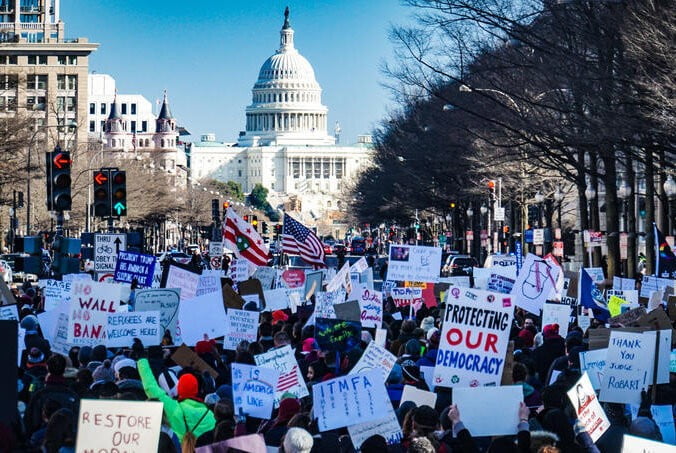
The outcome of all those theories and out-of-control fanatic groups was laid bare before the whole world on January 6, 2021, when hundreds of violent pro-Trump demonstrators stormed the Capitol building in Washington and shook the rule of law and the world's greatest democracy to its foundations.
In Colombia, among the general population, the Trump topic lacked relevance beyond personal affinity or animosity toward the man. Yet, out of nowhere, the extravagant and misogynistic president became a reference point for hundreds or perhaps thousands of followers of the spiritual path. Unbelievable! But there was another conspiracy theory that potentially caused even more damage and affected me on a personal level. A hoax that became the straw that broke the camel's back of my tolerance for superstitions and pseudoscience: the chlorine dioxide epidemic, also known as CDS or MMS.
During my years in shamanism I came to know, accept and spread a good number of superstitious beliefs and magical remedies with no clinical basis. I always knew there was a chance those recipes relied on the placebo effect or the power of suggestion, but I also saw the possibility that Western science simply did not yet understand the mechanisms through which ancestral medicine operated. Thus, I dismissed the need for controlled clinical trials or academic studies to support each form of healing, or disregarded the results of clinical trials that directly undermined their effectiveness.
Among other beliefs, I shared and used tobacco as a cure for the flu, family constellations as a vehicle for healing relationships with our loved ones, and homeopathy to cure serious illnesses. I also made use of and promoted the benefits of the sacred plants — coca, tobacco and ayahuasca — to heal the soul, although the latter is now being clinically investigated as a basis for treating certain mental illnesses.
It is possible that yagé will one day receive the backing of the scientific community regarding its viability as a psychiatric medicine, but the fact is that I never had scientific knowledge of the mechanisms of action of yagé or of any of the other therapies I promoted. Nor did I ever receive education about their risks or contraindications, or evidence of their efficacy beyond my personal experience and the anecdotes of third parties.
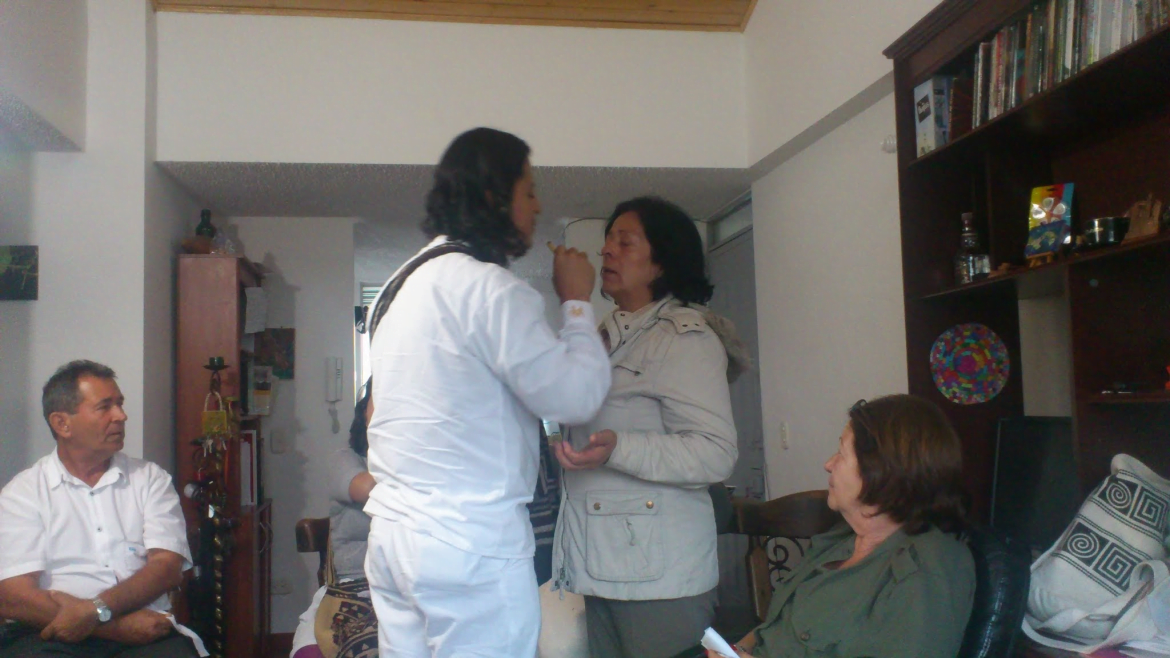
Consequently, I never obtained the faculty to prescribe any of those therapies. As happens in almost all esoteric and New Age groups, my qualification as a healer or sabedor was limited to my good will and my conviction of having received “empowerment” or authority in that regard during my entheogenic ceremonies or mystical experiences in the inner worlds. And even so, like almost all the holistic “healers” I met, I took the liberty of contradicting well-established scientific concepts. Knowledge that did not arise from divine inspiration or casual exchanges over the Internet, but from the collaboration of hundreds of professionals after years of research and methodical, self-critical experimentation.
My certainty of doing the right thing every time I recommended therapies or remedies weakened as I learned more about the scientific method and the world of academic research, especially in biology, physics and astronomy. My gateway into that world was Carl Sagan's influential series “Cosmos,” many years ago, but it was the books of Sean Carroll, Brian Greene, Yuval Noah Harari and Richard Dawkins that opened my eyes to a reality far richer and more complex than the simplified, easy version I had known on my spiritual path.
Some of the topics I found there were so complex that I had to reread them several times and, in some cases, look for simpler explanations on the Internet, usually through educational videos. In other cases, I simply had to resign myself to the fact that that level of knowledge was beyond my reach, at least within the limits of time and effort I was willing to devote at the moment. I had to humbly acknowledge that deep knowledge of nature cannot be obtained in one yagé ceremony, nor by casually chatting in circles of word, but through hundreds of hours of reading, years of study, the abstraction of complex models and methodical experimentation.
I recognized that deciphering the mysteries of the universe is not something that can be achieved with good will and enthusiasm alone; one has to push one's own capacities for comprehension, abstraction and memory to the limit, following the path that the pioneers of the sciences have left behind in thousands of pages documenting observations, experiments and theories. Of course, understanding the heart, the mind or the world of relationships is not an exact science, and philosophy remains the foundation for discovering the mysteries of human experience. But medicine, astronomy, physics and chemistry are definitely outside the spectrum of what can be reached with a “spiritual consultation.”
I also observed that while in the world of “spirituality,” esotericism and the New Age, the validity of knowledge depends entirely on the hierarchy and influence of whoever professes it, in science no one is exempt from the rigor of the scientific method, regardless of their credentials or hierarchical position. In fact, the scientific community encourages the refutability of any new theory. This means that whoever proposes a new idea must strive to find weaknesses in their own theory and ask their colleagues to try to tear it down using solid arguments. In my years on the shamanic path, I never heard any abuelo ask his community to question his ideas or contribute new theories in the search for truth. I realized that, when it comes to the search for truth, religions are arrogant while science is humble.
Despite this new understanding, I still considered that there was nothing wrong with maintaining and promoting magical thinking when it came to “alternative” medicine. After all, a natural substance with a bit of faith would carry no risk, and maybe it could help a little. But that last bastion of credulity and pseudoscientific thinking fell apart when I witnessed with horror that the magical thinking harbored by most of my spiritual friends had incubated credulity in extravagant theories that were proving to make the pandemic we were going through even more dangerous.
I was a silent witness to my friends' increasingly frequent social media posts labeling the pandemic a hoax, often using the term 'plandemia,' popularized by the makers of the fake documentary with that name, which went viral among spiritual seekers. According to that infamous 26-minute video, riddled with falsehoods, inaccuracies and irresponsible theories, the global COVID-19 pandemic would have been an event planned by world elites to enrich themselves and gain greater control over the world's population.
Later, when Pfizer and Moderna announced the first vaccines against the feared SARS-CoV-2 coronavirus, the conspiracy theorists' narrative was that the new vaccines would be a vehicle for inoculating the disease itself, for implanting a chip with which Bill Gates could read our minds, for sterilizing the population, or — somehow — all of the above at the same time.
So my 'spiritual' friends not only shrugged at the impressive technological advance represented by the new vaccines, but became a sounding board for unfounded fears about vaccines, face masks and the medical system in general. Many also joined in promoting supposed pseudoscientific cures that until then had existed only on the fringe, as the belief of uneducated groups. What's more, they turned them almost into an object of worship, since in them they saw not only the miracle they had been praying for, but the weapon to oppose the tyranny of the seven-headed monster: Pharma-Clinton-Gates-Soros-Biden-Science-Common Sense.
These supposed medicines ranged from vegetable juices and smoothies to veterinary drugs like Ivermectin. But the one that caused the most damage, not only because it is a toxic substance but because it practically became the center of a multinational sect, was the aforementioned chlorine dioxide (CDS), known to its devotees as Miracle Mineral Solution (MMS).
Chlorine dioxide is a corrosive, toxic aqueous solution used industrially in low concentrations to purify water and in almost every home as a laundry bleach and floor cleaner. A quick Google search showed me that the chemical compound has been promoted since 2006 as a supposed cure for HIV, cancer, the common cold and even autism. Since then it has been used by charlatans, pseudoscientific mystics and sects to attract followers, extract money and gain fame.
In Colombia, MMS burst onto the scene in the midst of the pandemic at the hand of the supposed German biophysicist Andreas Kalcker, who apparently took advantage of the public's eagerness to find protection against COVID-19 to repackage the miracle bleach and profit from his courses and publications in the poorest countries, most vulnerable to superstition.
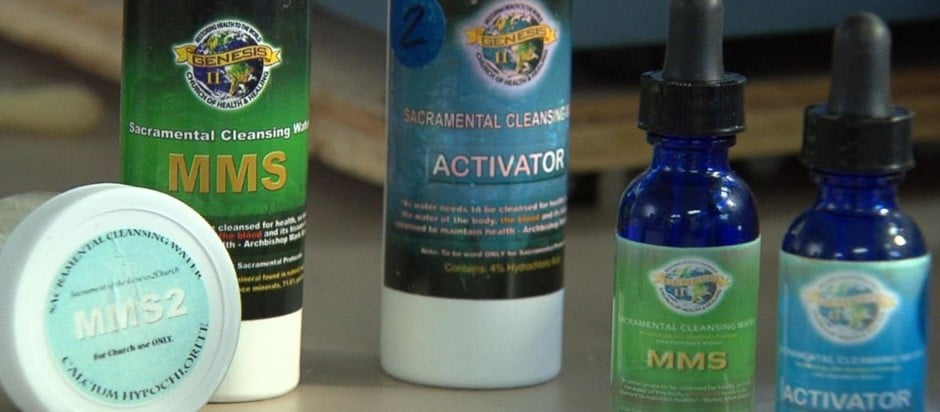
Between 2020 and 2021, Latin America saw an avalanche of articles and testimonials about the supposed effectiveness of CDS in treating or preventing COVID-19, some of them promoted by licensed physicians. The topic was so omnipresent that my skepticism was put to the test and I had to turn to the most reliable academic sources I could find to try to discern what was real from what was fantasy amid so much confusion. After all, this was not merely a matter of scientific curiosity; the health of my loved ones was at stake.
My parents, Mara, Grandpa Luis, taita Gregorio, some aunts and several friends at some point informed me of their intention to start consuming chlorine dioxide, and almost all of them knew someone who had supposedly been cured by the miracle chemical. Well, almost all of them also knew someone who had recovered spontaneously or with the help of medical science, but for some reason, the 'magic' of CDS seemed superior and irresistible. I couldn't blame them; even Evo Morales, the president of Bolivia, had expressed his support for chlorine dioxide as a therapy for COVID, and in April 2020, the president of the United States, Donald Trump, joined the festival of irrationality when he suggested that maybe it would be a good idea to inject bleach into COVID-19 patients. After all, if bleach was good for disinfecting tables and floors, surely it would also serve to kill the virus inside the human body…
It was the world turned upside down: while doctors and nurses risked their lives — and many died — every day fighting the virus, the president of the most powerful nation on Earth promoted false concepts from the darkest corners of the Internet. While immunologists, pharmacists and epidemiologists worked tirelessly to develop effective vaccines and therapies to fight the disease, people trusted science less and less, handing their lives and those of their loved ones over to charlatans with no academic training.
Then I saw it clearly: the magical thinking I had harbored with enthusiasm and pride for so long had become a global threat, capable of destabilizing democracies and causing the deaths of thousands of people. Through Facebook I witnessed how one of those Muisca friends with whom I had often talked about mystical missions, secret powers and other fantasies lay helpless, intubated in a hospital bed. A few days earlier I had seen him proudly declaring that he would not let himself be manipulated by the agents of darkness with the 'plandemia' caused by a fake virus, while socializing with a large group of people; all of them without masks and without observing the recommended social distancing.
From my spiritual family, however, the one who gave himself over most candidly to the cult of Kalcker and his miracle chemical was Grandpa Luis. The old man, to whom I am bound by a great friendship, not only for his coherence and wise counsel, but for our shared enthusiasm for technology, succumbed completely to the promise of a simple, cheap and effective cure against the most ferocious and deadly disease of recent times.
At his request I carefully read some supposed clinical studies and academic articles that, according to him, demonstrated the efficacy of CDS in treating and preventing COVID-19. In them I found photographs, tables and colorful graphs, but none of the conventions required in serious clinical studies. The theoretical framework of the mechanisms by which CDS combats the virus was riddled with generalizations and falsehoods regarding the chemistry of chlorine dioxide and its reactions with biological substances in the human body. There were also no details about population selection methodologies, pre-existing conditions, control groups, and a long etcetera.
All of the above, not to mention the abundance of spelling, grammatical and contextual errors, including several instances of texts from dubious, irrelevant or nonexistent sources, or inserted without explanation or connection to the rest of the document. In short, as they say in Colombia: 'there wasn't even enough to make a broth.'
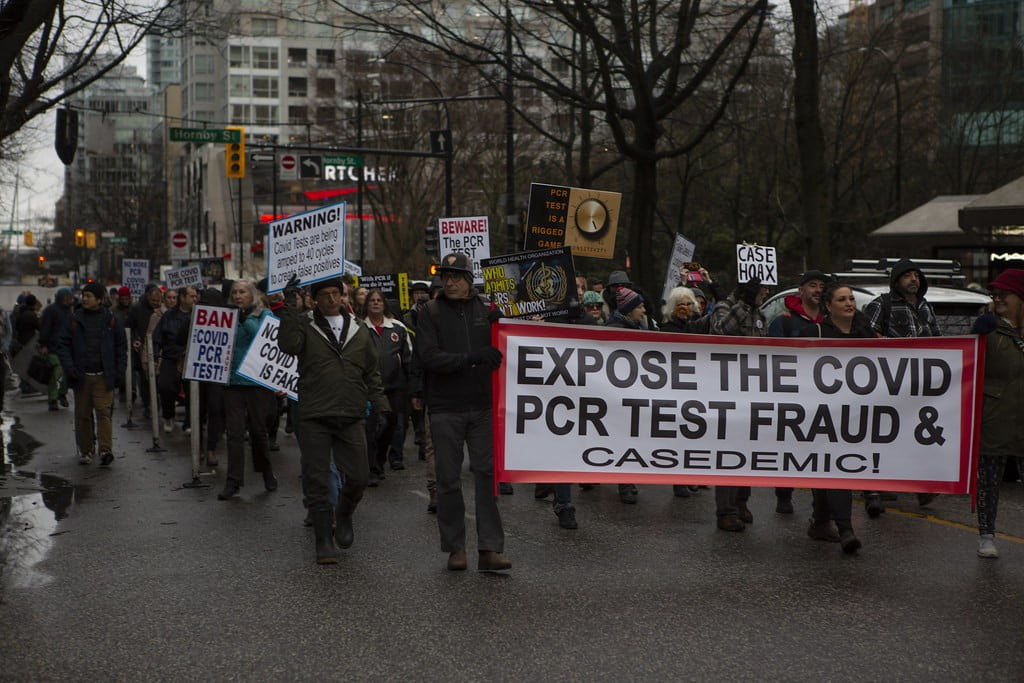
I shared my findings about the 'study' in a virtual circle of word to which Grandpa Luis had invited me using the Zoom platform, and I suggested to the participants that we rather use that space to discuss topics about the spirit, the healing of the soul or the emotions, and leave what pertained to chemistry and biology to the medical community and academic institutions. As one might expect, that invitation turned me into the target of a subgroup of conspiracy theorists who frequented that circle and branded me gullible, manipulable, irresponsible and clueless.
I then turned to Grandpa Luis's good sense to get the circle of word back on the spiritual track that I thought it should follow, but he admonished me, surely motivated by his conviction of having received from providence the miracle cure that would save the world from its inexorable doom.
For the first time I felt that Grandpa and I were walking separate paths, but it was not his fault. I was the one who had left the fold. A few years earlier, Grandpa Luis and I would chat for hours about our role in the cataclysm looming over humanity. We spoke of ancestral pacts between the deities of our lineages, mystical agreements between millenary clans of which we knew ourselves to be emissaries. We ventured theories about a network of cosmic consciousness guarded by spiritual soldiers, whom we baptized “The Solar Clan,” and determined that, as its custodians, it was our mission to wait silently until yagé, or another divine channel, summoned us to act with the sword and the chalice, or with the robe and the staff, according to God's will.
Those occasional conversations were episodes of a storyline we began writing 10 years earlier, when abuelo Suagagua brought us together with the aim of forming the Música community of Engativá. Soon we recognized ourselves as Sagittarian firstborns, presumed reincarnated Levites, apostates of Samaelian Gnosticism, and astral warriors of the sacred yagé. Together we embarked on a path of sowing the word and a liberating mission through our circles of word and shamanic ceremonies.
That story was woven with yagé from ritual to ritual, and in almost all of them I had to face episodes of consciousness, fear, paranoia, suffering and Samadhi in equal measure. But in almost all those ordeals, I also held the hand of that elder with the white beard, in whose eyes I always saw boundless trust and pride; a trust I had only ever known in my Mother's eyes:
– “You're doing well, Manuelito, don't give up, focus on the Father's Infinite Love…”
– “You're almost there, you're very close to connecting with the Most High, believe in yourself…”
I never knew what to do. Every time I heard those words from Grandpa, I found myself lost on the edge of madness, sometimes feeling that my soul was burning and that I was probably living my last moments on Earth, drawing closer to an inevitable death, perhaps part of some twisted blood pact between gods who could not have cared less about me.
I think Grandpa believed that in my terrifying psychedelic journeys I fought evil and earned, through my suffering, some points for the side of good. But I felt less and less motivated to go through those experiences, least of all in the name of a humanity that clearly refused to resolve its own affairs individually and kept demanding blood sacrifices left and right in its eternal search for expiation.
Compared with all these beliefs, the belief that a few drops of laundry bleach can annihilate a legion of coronaviruses would not seem so far-fetched. Grandpa remained coherent with his cosmogony and his magical view of the world: as leader of the Solar Clan, who knew homeopathy and had been preparing to play an important role in the apocalypse he believed was coming, he had received a miracle cure to face the seven-headed monster and was willing to use it courageously.
But I was already tired of being a sacrificial lamb, and perhaps out of fear for my own extinction, but also because of that seed of skepticism that Carl Sagan planted in me decades ago, I decided that being a christ was a waste of time and potentially a distraction on the road to the true salvation of the wretches who follow him.
The Bible tells that Jesus Christ truly believed his death would serve to save his brothers. With stoicism he carried his cross to Golgotha and endured there for hours until his body — so human — could not withstand such a divine burden. However — some traditions in India say — Jesus did not die on that cross, but rather lost consciousness and was eventually spared by his executioners from the fatal outcome of his torment.
His followers would then have taken him down from the cross, and Joseph of Arimathea together with Nicodemus would have healed him with spices and myrrh. Upon regaining consciousness, Jesus would have realized his naivety and, finally understanding the concern of his beloved Mary Magdalene, would have traveled discreetly with her to Egypt, where Jesus supposedly completed his recovery.
According to the account, shortly afterward, Jesus and Mary Magdalene continued their journey to India, where the Nazarene was said to have already spent some time during his adolescence. Once there, Jesus would have taken the name “Yuz Asaf” and continued preaching his teachings, although this time without the claim of divinity that had brought him such bad consequences in Judea.
A more human and cautious Jesus would have known how to live to an old age, and according to the inhabitants of Kashmir, he ended his life there at the side of his wife and children, unaware that his supernatural alter-ego would become the image of political institutions, economic powers and wars, and that even his name would one day be mentioned several times by an eccentric, narcissistic American president who, taking advantage of his followers' credulity, would cast himself as a veritable messiah with orange skin and a rebellious quiff.
I — despite my mysticism — never had Donald Trump's messianic pretensions, although I confess that I did feel, like Grandpa Luis, part of a cosmic plan to liberate humanity from evil. However, deep down I always felt that my mission could not be based on lies, unfounded theories and self-deception. I was definitely no longer on the same wavelength as Grandpa, so, with sadness but also with a lot of love, I let Grandpa Luis know that I was not willing to follow him on an irresponsible journey of misinformation and conspiracy theories, and I set out to do something to make amends for the mistakes I had committed over years of spreading hoaxes and falsehoods.
I said goodbye to that circle of word, knowing it would probably be the last one I attended. I said goodbye to Grandpa Luis, knowing it was possible I would never hear from him again. Shortly afterward, during a silent quarantine night in which I nostalgically recalled those magical, thrilling moments of power plants, mystical dreams and ancestral traditions, I turned on my computer's recorder and articulated the outline of what would become my new quest. I spoke of my longing to find peace and happiness through truth. I declared my intention to prove that true spirituality neither requires nor permits deception or delusion.

I uploaded the 19-minute-and-30-second audio to a web portal I created for that purpose, and then, to finish that catharsis, I wrote these words, which I now recognize as the first breath of a new life: my spiritual child and the creed of my new self:
“First entry of my personal podcast focused on the search for a spirituality based on science. In this episode, I narrate a bit of my personal story and the purpose of this space. I warmly welcome comments, questions and suggestions, to try to make this channel a relevant resource for people who find themselves in similar or related searches.”
Then I gave that new space the first name that came to mind, one that perfectly sketched the conflict that had brought me there: “Espiritualidad y Ciencia.”