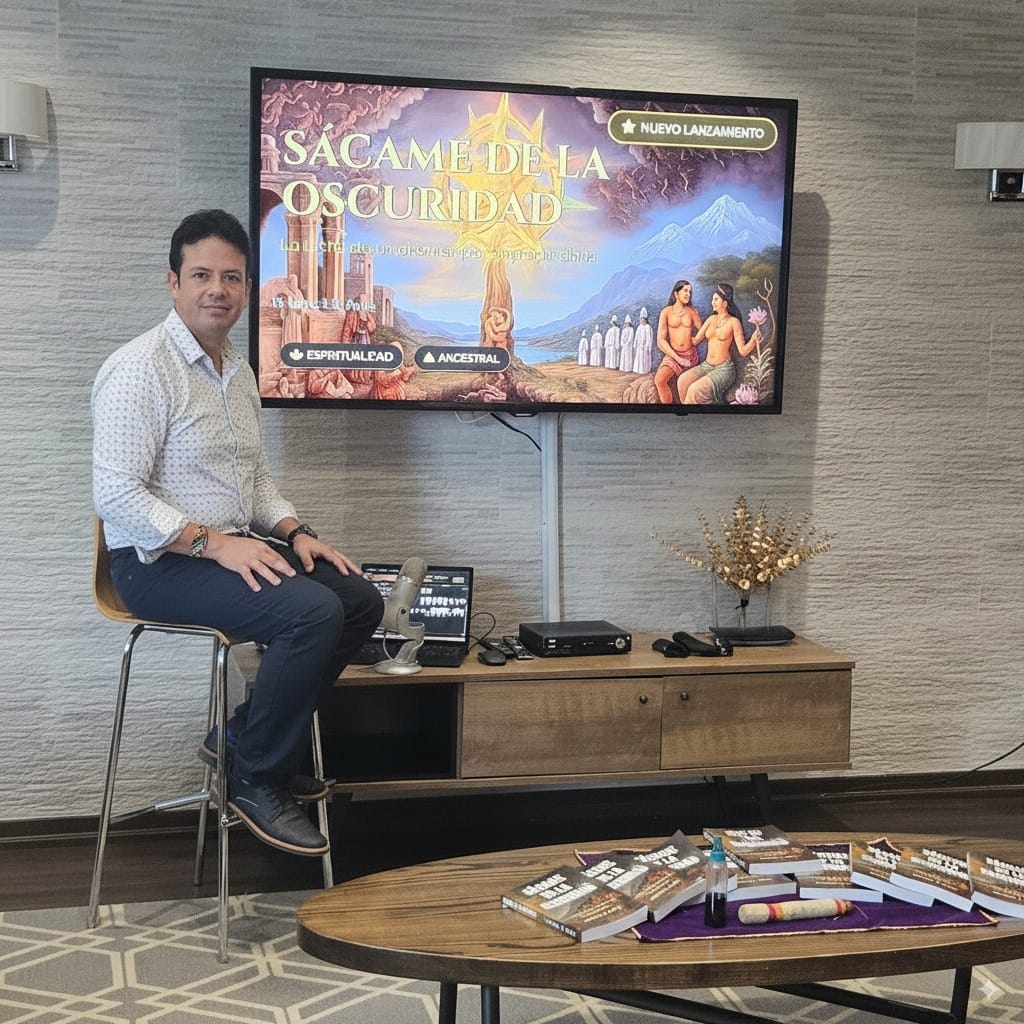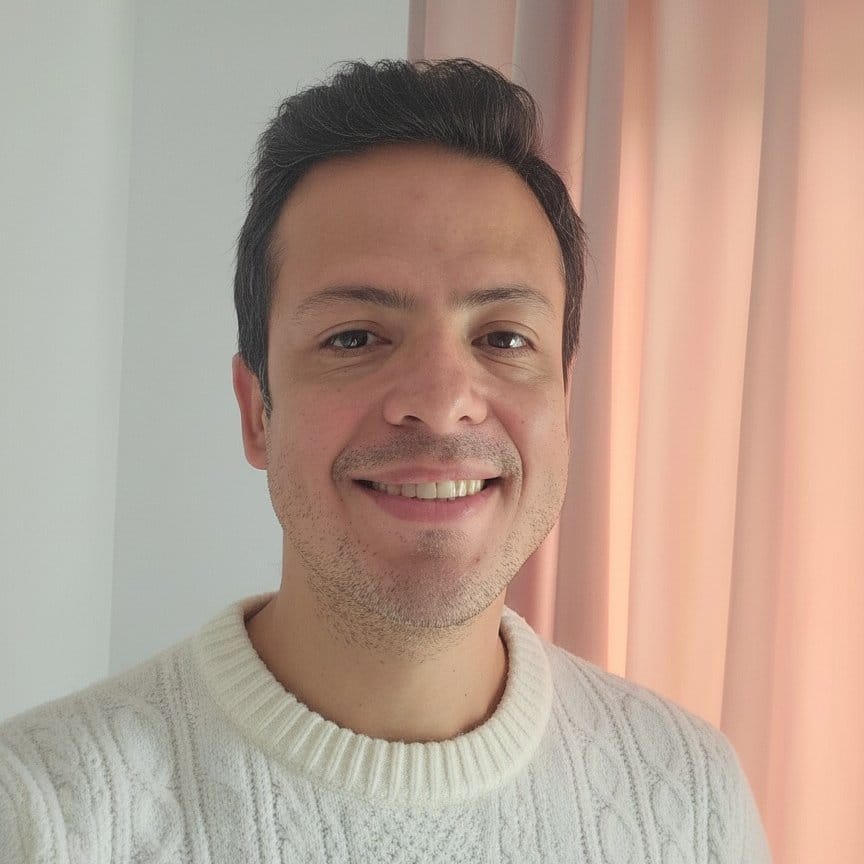
When I began writing my story in 2019, I thought I did it because I had reached the end of my spiritual odyssey. I believed I had, in my version of shamanism, that point of equilibrium between reason and mysticism that I had sought so much. So I decided it was time to take stock and put on paper the testimony of my odyssey from materialism to spirituality.
At that time, already settled in Canada and awaiting the arrival of my son Benjamin, I continued officiating shamanic ceremonies whenever the opportunity presented itself. I led a couple of talking circles with family members and some friends interested in learning about this kind of ceremony. I performed tobacco cleansings for two people who sought my help with conflict situations with their partners.
I cherished every opportunity to wear my vestments and necklaces, touch the pincuyo or the harmonica, and flow in the performance of the officiating shaman. Unlike in Colombia, where the difficulty is avoiding neglecting other matters because of participating in spiritual gatherings, in Canada those spaces were unusual. For that reason, I occasionally attended the talking circles that Grandpa Luis organized by videoconference, and I coordinated some virtual mambias with friends from Colombia to mitigate my nostalgia as a healer.
The Seed of Change
I also kept for some time the folk customs that remained to me from my Muisca past, such as bathing with blue soap, insufflating myself with powdered tobacco, and articulating prayers in moments of difficulty. Nevertheless, gradually and without realizing it, I was heading irreversibly toward a radical skepticism.
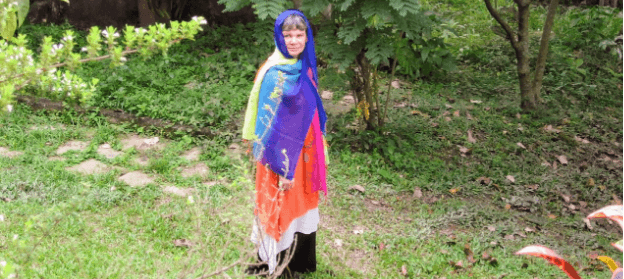
The catalyst of that transformation was a modest mobile application that I installed on my phone that year: Libby, the app of the Toronto library system. This simple application was a door to the world of knowledge: I could not only reserve any digital book, but I also gained access to thousands of audiobooks. This was perfect for me, since I was never fond of reading on paper.
The first audiobook I listened to was “A New Earth” by Eckhart Tolle, but it did not impact me as much as his first book. Instead, I found it repetitive and pretentious. I was no longer that aspirant to initiation discovering a new world; everything I found in the books of spirituality seemed to me a repetition.
But soon after I would experience again that sensation of intellectual trepidation, no longer for ancestral wisdom, but for the incredible history of the human race.
From Mysticism to Science
The book that transformed my way of seeing the world was “Sapiens” by the Israeli author Yuval Noah Harari. I also devoured its sequels: “Homo Deus” and “21 Lessons for the 21st Century”. Casually, Harari recounts having found the inspiration to write ‘Sapiens’ during a Vipassana meditation retreat. Curiously, this connection with Vipassana meditation resonated deeply with me, especially after my own retreat in May 2025, an experience that consolidated my appreciation for conscious observation.
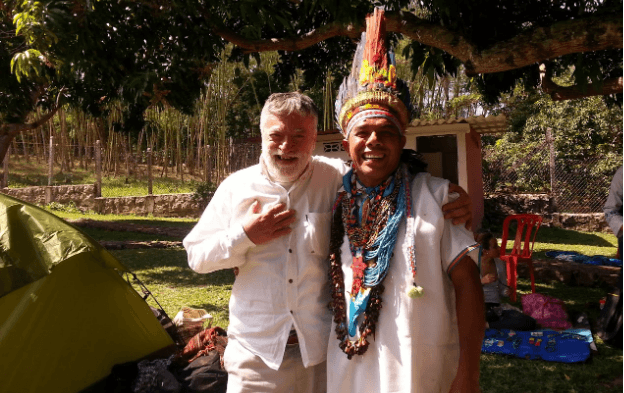
And I could not stop: I continued with the futurist books of Michio Kaku, the astrophysics of Brian Greene and Neil deGrasse Tyson, the studies on the mind of Malcolm Gladwell, the treatises on randomness of Nassim Nicholas Taleb, until arriving at the studies on evolutionary biology of Richard Dawkins.
However, it was the book of the astrophysicist Sean Carroll, “The Big Picture”, that offered me the key to harmonize the vast factual knowledge I was acquiring with spiritual wisdom. Carroll proposes a fusion of a scientific vision with a poetic appreciation of reality, which he calls “poetic naturalism”. Upon knowing this concept, I knew that it was exactly what I was looking for.
The core of poetic naturalism lies in the idea that there is no division between matter and spirit; rather, there exists a single natural world. The ‘poetic’ aspect is found in the fact that there are multiple ways of describing and talking about that world, as long as they are coherent with observable reality.
The Echo of the Cosmos
Upon understanding poetic naturalism, I remembered my favorite lines of Carl Sagan in his series “Cosmos”. I was transported to my childhood in Bogotá, excited to hear the beginning of a new episode. Phrases like “We are the way the cosmos knows itself” or “We are stardust” had been engraved in my memory. I believe that my spiritual search was, from the beginning, an attempt to understand those phrases that, being a child, sounded magical and evocative to me.
This could be the reason why I felt that I was facing a deep truth when the Muisca grandpas spoke to me of the fact that our origin came from the stars. I let myself be seduced by fantasies of interstellar travel and pseudoscientific theories.
The Pandemic Effect and the Face of Magical Thinking
These beliefs, initially harmless, showed their danger during the Covid-19 pandemic. Fear drove millions to believe and spread conspiratorial theories. It seemed implausible to me that a reasonable person could believe such absurdities, but then I reflected on my own past. I too had believed in not very different ideas, such as the obsession with semen retention or the liberal use of power plants like tobacco, even in front of children, believing that their harmful effects were a conspiracy.
However, I had changed. Years of science education had weakened the fragile foundations of my beliefs. I felt that world circumstances required a firm stance against lies and misinformation, because of my role as guide and protector of my family.
Facing Reality and Chance
The pandemic revealed the true face of the magical thinking that I had practiced. Faced with the choice between evidence-based knowledge and beliefs founded on faith, I chose the path of skepticism. Even so, it cost me to accept the tyranny of chance, but any doubt dissipated when I witnessed the calvary of my uncle Álvaro in his fight against cancer. A good man who did not deserve that destiny.
It was not his beliefs, his words or his silences that unleashed his illness. It was the relentless chance. The immune system of an elderly person is more prone to fail, added to his exposure to carcinogenic agents as a farmer and the precariousness of the medical system. Despite the pain, seeing him smile in our farewell reminded me of an epiphany: “No matter how desperate the situation is, there will always be a new dawn”.
A New Path: The Spiritual Skeptic
Upon finishing writing my memoirs, I still keep certain practices. My shamanic altar is now a window to a past that I remember with gratitude. I do not regret my search; to verify that I was wrong was not a mistake, but a step closer to the truth.
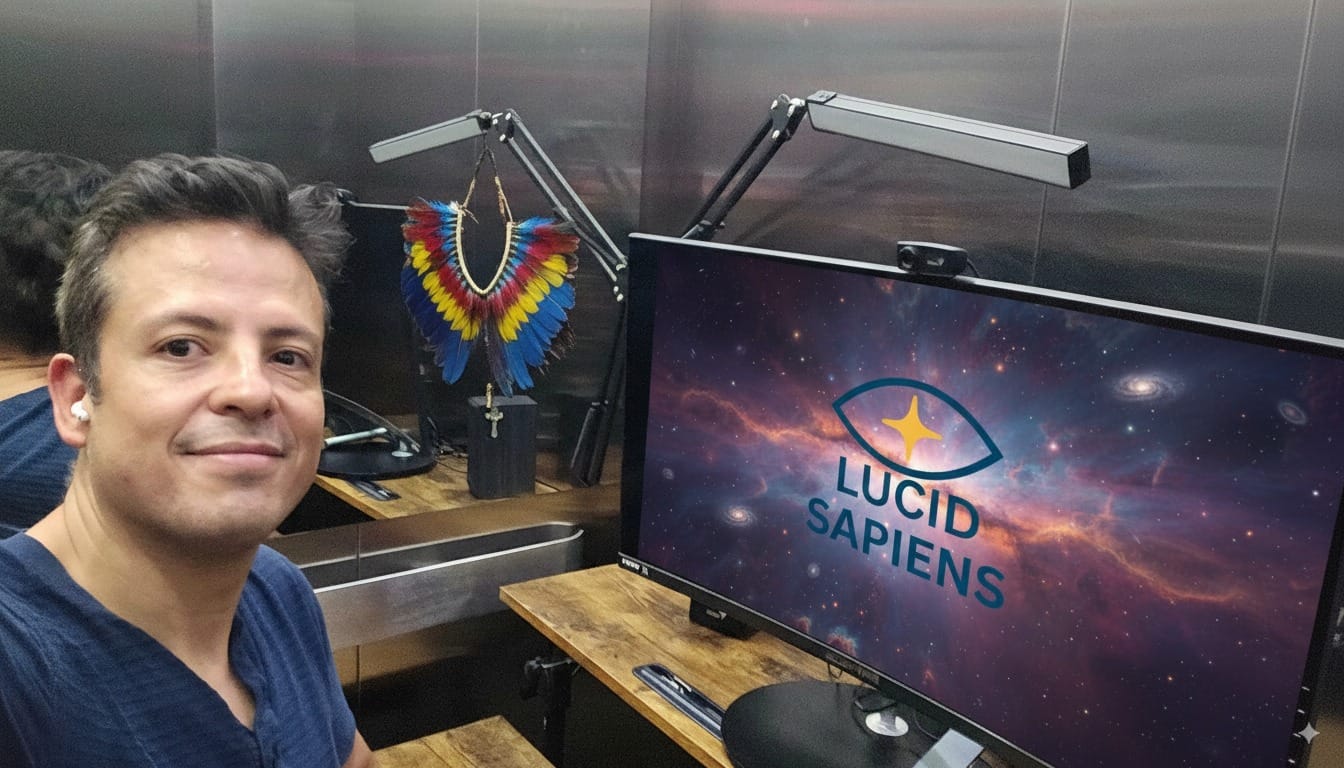
Spirituality led me to masters and teachings full of wisdom. I discovered the power of the talking circle and the magic of conscious observation. And thanks to “poetic naturalism”, I have been able to share my path in my podcast “Espiritualidad y Ciencia”, looking for a point of encounter between the respect for truth and the magical vision of the world that many of us love.
In this new stage, I have found spirituality in science and religion in skepticism, as in the ceremonial structure of the podcast “The Skeptics’ Guide to the Universe”. The ceremony is inherent to the human being; it drives us to believe and to create something greater than ourselves. I identify as a spiritual skeptic because it is the way in which I can reach the sky and the infinity, keeping my feet firmly on the ground.