In several previous episodes I've spoken about Gnosis, which is probably the most widespread sect in Latin America, well, after Jehovah's Witnesses — and I've shared some of the beliefs that make hundreds of thousands of followers place their faith in the strange teachings of Samael Aun Weor. However, today I want to delve into one of those beliefs in particular, one that at certain moments in my life became an obsession for me and which for many is proof of the truthfulness of Gnostic teachings. Today we're going to talk about Astral Travel.
Astral travel or "astral projection" is a practice based on the belief that it's possible to separate the "astral body" or spiritual part of a human being from the physical body during sleep. According to multiple traditions, in this state you can explore other planes of existence or spiritual dimensions, or even explore the physical plane without the limitations imposed by the laws of physics that govern matter.
For me, the idea of astral travel was my gateway into the world of esotericism. When I was in seventh grade, a strange teacher who was supposed to instruct us in Catholic religion decided instead to promote the teachings of Gnosis and, rather than Christian myths, instill in us Samaelian fantasies.
What fascinated me was that, unlike other mystical theories so unbelievable that even a credulous preteen like me would dismiss them, astral travel seemed plausible to me. Moreover, the teacher instructed us in the technique without any caveats and assured us that it only took practice — anyone could verify that "doubles" — as it was also known — were entirely real.
Without delay I began doing the practices, since they also only required some exercises during the day and a few mantras at night. Some of my classmates soon started boasting about their dream experiences and even talked about having met in the astral world and done group activities.
If they could do it, so could I — and that's exactly what happened. But unfortunately, years had to pass before I could achieve that longed-for experience. The promise of a reality where no physical rules apply was impactful enough to plant the seed of my interest in Gnosis, esotericism, and spirituality for the rest of my life. It wasn't the only time — years later, already on the spiritual path, I encountered an invitation to the astral world again and this time I could go deeper, higher, farther.
I verified that astral travel is real and it was much more than I had imagined. But does that mean everything Gnosis promises is real? No, not at all. However, my fascination with the subject led me to research different perspectives, various authors, other angles on spiritual work during sleep — and I discovered that the night is a far more powerful and exciting laboratory than the wildest fantasies of gnostics, witches, and shamans.
But before getting into that, let me tell you a little history about this so interesting concept of leaving your body and crossing dimensions and realities.
Since time immemorial, dreams have been considered as a form of communication between the human and the divine. In many cultures, including the civilizations of Egypt, Mesopotamia, and Greece, dreams were interpreted as messages from the gods or from ancestors. The Bible shows several examples of dreams as vehicles of divine communication.
Dreams have qualities that make them particularly conducive to divination and prophecy. They are usually enigmatic, somewhat incoherent, blurry — and above all involuntary. Just like observing chocolate residue in the cup you just drank from or the shapes of clouds, dreams are an ideal tapestry for projecting our hopes, fears, and fantasies — giving meaning to what has none, finding sense in what has no context.
Which is why it's not surprising that almost every human group throughout history, during their dark ages and pre-scientific stages, tried to use dreams one way or another as a tool for precognition and clairvoyance.
But there's a special kind of dream — perhaps you've had one yourself at some point — that is nearly the opposite of an ordinary dream. While regular dreams are blurry and confusing, lucid dreaming is strangely vivid and clear. While conventional sleep is involuntary and in it you participate as an actor who doesn't know they're acting or even that they're an actor, in a double experience you know who you are, you know you're sleeping, and most importantly, you can decide what to do based on that knowledge.
This is an experience that requires no initiatory knowledge or esoteric practice. There are records of lucid dreaming in ancient Greece, Tibetan Buddhism, Hindu vedas, and Amerindian cultures. Aristotle is often cited as the first author to reference the phenomenon in his "Parva Naturalia," in the chapter on dreams where he said: "Often, when one sleeps, there's a part of consciousness that declares what appears then is nothing more than a dream."
Most likely all the civilizations I just mentioned discussed this phenomenon to some degree, since it happens spontaneously without any preparation — albeit infrequently. No wonder those who experienced it often interpreted it as a mystical, demonic, or entirely natural event, depending on their particular cosmogonies and traditions.

So let's talk about what astral travel is, then its meaning in esotericism, my personal experience with it, and the perspective from spirituality and science.
Astral or projection travel is the esoteric name for a real phenomenon, recognized by science as "lucid dreaming" — it's simply the subjective experience of being aware that you're dreaming and having the ability to make decisions within the dream, even about events happening around you in that dream.
It's the closest experience you can have to an entheogenic or psychotropic journey without needing to ingest any substance, which is why it's used as "proof" or demonstration that a reality beyond the physical world exists — one we can access through spiritual practices. It's also common for onironauts, or dream travelers, to have the experience of feeling their soul or astral body separate from their physical body when they initiate an astral projection — and even to be able to see their own physical body while their astral body floats around the room.
All this is what drew me to the world of esotericism at a very young age. What I didn't know then was that you could learn about, experience, and benefit from lucid dreaming without having to join any sect or profess a number of dogmas that have nothing to do with what happens in the dream world.
After my introduction to astral travel by my seventh-grade religion teacher, I remember practicing without success the techniques he shared with us back then: looking at my hands several times during the day and occasionally pulling on my fingers, and at night repeating a couple of curious mantras mentally as I fell asleep — hoping to detect that exact point between being awake and being asleep so I could leap from my bed and supposedly leave the body behind, lying there on the mattress.
I seem to remember one mantra went "Take me to heaven Felipe, Heaven Felipe, Heaven Felipe" and the other consisted of just the word "Pharaoh" but replacing the final "oh" with a prolonged "OM", like this: "Phar-a-ommmmm". The fact is that I never nailed that elusive point where you stop being awake and start being asleep — among other things because such a point doesn't exist. Like almost everything else in nature, being awake or asleep isn't a binary state but rather a spectrum of consciousness where you can be somewhat awake and somewhat asleep at the same time. It's the well-known "half-asleep" state so prized by artists and inventors as a doorway to creativity. But I'll talk about that more later.

The fact is that several years passed before my first experience with yagé revived my interest in the dream world. When I started attending meetings of the Muisca community of Bacatá and then became a member of that community, I found that the elders often referred to the experience of astral travel — but they didn't call it that. They called it "traveling through inner worlds" or being "in spirit."
When I had the opportunity to ask the elders questions directly, I probed as much as I could about dream practice, trying to get precise instructions for achieving it. The answers I got were confusing and sometimes contradictory. Some elders said that every night you have this experience but don't remember it; others said that to achieve it you first had to do a rite of passage or some other initiation — but they all agreed that it was a journey to a parallel reality, just as real as the physical world we inhabit when we're awake.
As for specific techniques, Elder Nemequene was the only one who gave me a direct answer — and then he did so by referring to the teachings of Samael Aun Weor in his "Yellow Book," which include resonating the letter "S" like a fine delicate whistle or the "FARAON" I mentioned earlier. However, not entirely convinced that I'd find the teaching I was looking for among the Muisca, I continued my search on forums about the subject like the "Club of Onironauts" (onironautas.org) — and there I found a recommendation for the book "Adventures Beyond the Body" by William Buhlman, which for me meant a before and after in my exploration of the dream world.
What I liked most about "Adventures Beyond the Body" was the measured, objective tone of the author. Despite being a well-known author on "New Age" topics and therefore professing that astral travel is something that really happens outside the physical body — it didn't seem to me like he had any intention of using his experience as a vehicle to convert readers to his belief system.
That's how I started practicing the techniques I extracted from Buhlman's book, which I'll share at the end of this episode in case you want to try them. In addition to specific techniques for going to bed, the author recommends exercises that should be practiced during the day to increase the likelihood of a successful astral projection — so I began doing the daily exercises and at night putting into practice the techniques that made the most sense to me. I did this for weeks expecting that big breakthrough to come someday — as decisively and vividly as my first experience with yagé. But it didn't happen that way; instead, it happened gradually. At first without realizing it, but increasingly clearly until one day something clicked and I had my first voluntary state of consciousness during sleep — my first "astral travel."
At first I noticed that when I was falling asleep, I'd start dreaming that I was leaving my body and could walk around my bed. Then the dream would veer off into some random topic and soon I'd lose consciousness, only to wake up in the morning with a mixture of optimism and frustration. Was I making any progress? Or maybe astral dreams were just ordinary dreams — except these were the ones where you managed to become aware that you were sleeping. Either way, I didn't lose enthusiasm and persevered toward my goal.
One night, while repeating my favorite mantra: "Tonight I'm going to be conscious during sleep..." I had an unusual sensation. I felt my body vibrating — but it wasn't a tremor or spasms; it was a subtle vibration, like the one you feel when sitting in a car that's running and parked. Then the vibration became more evident at the back of my neck and I remembered the rope technique where I should lift my arms and grasp an imaginary rope at chest height to use as support for "leaving the body."
So I did — and much to my surprise, I found the support I was looking for despite not seeing or feeling any rope at all. Then I slowly opened my eyes and looked around. The darkness of my room prevailed, but I could still identify some of the objects in it. Even though I was clearly elevated above my body, I could feel the accelerated rhythm of my heartbeat and thoughts flooding my head: "I had finally managed an astral travel," "it was real!" "Would everything I'd read about it also be real — like the possibility of visiting places in the physical world or talking to inhabitants of the astral world?"
That first experience, unfortunately, didn't last long. The moment I tried to pass through my room's ceiling, I felt an inexplicable resistance from the material — as if concrete had its equivalent in the astral plane and it wasn't as simple to pass through as I'd heard. That unexpected inconvenience made me think about the risk of "returning to the body" — and sure enough, just as I'd read, thinking about my physical body sent me back into it immediately. I cracked my eyes open again in my bed and though I tried, I couldn't get out of my body a second time. So I gave up and opened my eyes while reflecting on what had happened.
My heart was still racing and I felt a bit confused — but I was sure of one thing: the sense of consciousness during that brief astral exit had been as real as what I felt in that moment. What I'd just lived through was real. That certainty, strangely, began to change as soon as the next morning arrived. After breakfast, my memory of the episode from the previous night no longer seemed so real — indeed, each time I recalled it, it resembled a normal dream more and more, except for having had full awareness of being asleep and having been able to consciously direct my movements and thoughts.
This became a constant in my subsequent astral travels: each time I managed to gain more and more awareness during the experience — even feeling, on two occasions, that my perception in the astral world was clearer, sharper, and "more real" than my waking consciousness. Despite this, with the passing of days, my memories of dream experiences grew blurrier and the certainty of their "realism" became more questionable. The sensation wasn't unfamiliar to me — I experienced something similar with my entheogenic trips on yagé, where I experienced a reality more solid and vivid than everyday life, always promising myself never to doubt that everything I felt and lived was totally real — only for that certainty to fade in the days that followed.
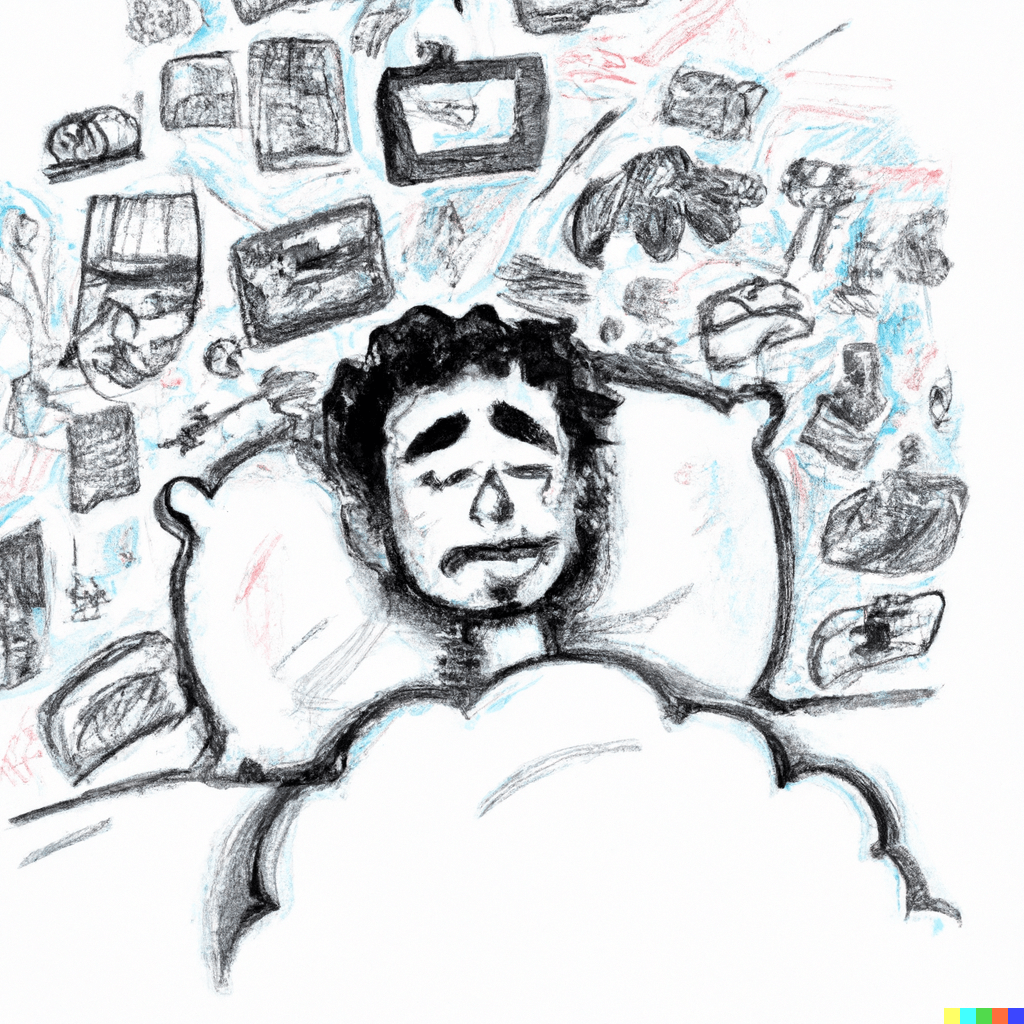
So after many attempts — most of them fruitless — and some memorable experiences, I found that it became increasingly easier at night to leave my body behind and experiment with the absence of physical laws. Over time I learned to pass through walls and ceilings, fly freely above my bed, then above my house, and eventually across what I perceived as many kilometers above my city.
Each experience had different levels of consciousness — from the blurry sensation of a dream you're aware of to incredible episodes where I perceived colors, sounds, and sensations with greater clarity than in the physical world. It was like wearing fogged-up glasses and earplugs every day, and in lucid dreaming being able to take them off.
However, what I could never verify — despite having consistently tried — was that what I lived through in those experiences was irreducibly real. I tried putting playing cards on top of a cabinet so I could observe them later during an astral flight over my body and then the next morning check whether I'd actually seen them. I also tried to identify specific houses, streets, or places near my home while flying over the neighborhood in my astral flight — but I never had any success with those experiments.
Small letters, numbers, and figures always changed shape, and known places always had something different about them. I also tried looking for well-known people to ask them things I could later contrast as evidence — but I always found only a slightly similar version of the original. Needless to say, I never found any information that I could verify afterward.
At the time, I accepted my defeat in this front — proof that I still needed more "spiritual work" to achieve the exceptional revelations that others more dedicated than me had managed: Elder Suagagua said he could leave in astral form even without needing to be asleep, just by closing his eyes and dozing. Omar Barreto, Mara's teacher, also said in his talks that his students should practice astral travel so they could later have group trips to the inner worlds.
Even today I can't assure you — any more than science can — that those claims are false. It's possible there are people who — unlike me — have been capable of confirming beyond a shadow of doubt the reality of what's experienced during lucid dreaming. It would be enough for two onironauts to meet in the astral world, agree on a code word that's very hard to guess — like a combination of city-color-animal-day-of-the-week, say: "Barranquilla-Blue-Bat-Friday" — and then write down the code on a sealed envelope the next day. The travelers could then exchange envelopes and open them to find the confirmation they're looking for.
On my shamantic path I witnessed, on two occasions, testimonies from other shamans who said they had met and conversed in the inner worlds — or even traveled together to temples located beneath mountains — and then talked about it during the day regarding what they'd experienced in their astral encounter. Once, too, I told Elder Suagagua that I'd seen him in a dream where he had taught me another way of offering tobacco.
The elder's response was: "And it's not the first time — the thing is you just don't remember, but I've been training you in the astral."
The opposite also happened to me — when a friend told me she'd had a very vivid dream about me where I had given her some beautiful words that helped her get through a personal problem. I didn't feel up to telling her that instead I'd dreamed of riding a go-kart down a winding slope near my childhood home — but neither did I have the nerve to say that I perfectly remembered our encounter and that my astral visits were part of the friendship package with Manu, of which she was a frequent user. So I just managed to say: "You know we're connected and my energy is with you, also in your dreams."
In any case, the fact remains that — just as it's impossible to assert that astral travels happen somewhere beyond the dreamer's mind — no one has yet provided compelling evidence to the contrary. James Randi, the famous Canadian illusionist and skeptic who passed away in 2020, held for over 40 years an offer of a cash prize — which in 1996 amounted to one million dollars — for anyone who could prove, under criteria previously established by mutual agreement, that they possessed some supernatural ability.
This prize was open to anyone who could verify, for example, the ability to read text hidden in a safe using astral travel. Or two individuals could have shared it if they could confirm beyond all doubt their ability to exchange information while completely isolated during sleep. Only one applicant from Brazil mentioned the intention to prove the ability to make astral travels — but never got in touch with the James Randi Foundation's correspondents in Brazil.
James Randi ended the prize offer in 2015 after declaring the competition void. In an interview on the podcast La Guia del Universo para escépticos, Randi explained that the competition demanded too much time and resources — and that after verifying more than 1,000 experiments of various supposed paranormal abilities since 1964, it was more than fair to determine that an absolute majority of those alleged supernatural skills were hoaxes. Still, he declared that if some of those abilities really do exist, their holders might despise the money — even though it could be used for the benefit of humanity...
But that doesn't mean lucid dreaming is nonexistent or irrelevant. If we set aside the question of whether an astral body leaves you and can travel to real places, there remains the mystery inherent in an experience that, on paper, shouldn't have to exist beyond any doubt — the fact is that the sensation of leaving your physical body behind and traveling to worlds — whether real or imaginary — that can be perceived with greater clarity and realism than the physical world is a fascinating and very real enigma.
My most impressive experiences — except one — happened without needing to apply any technique at all, without even doing the daytime exercises recommended. That said, it's true those experiences came during the period when I participated more frequently and enthusiastically in ceremonies with sacred plants like yagé, tobacco, and coca leaves — which means my brain may have had greater sensitivity to the presence of entheogens, and even small remnants of them in my system might have contributed to a greater propensity for mystical experiences during sleep.
The first mystical lucid dream I had happened shortly before my rite of passage with the Muisca community. During the night I felt the familiar vibrations throughout my body that signaled I was about to have a lucid dreaming experience. I tried to ascend using the invisible rope like I did the first time I had this experience — but I couldn't manage it. Instead, an invisible hand kept me anchored to my physical body while keeping me conscious of being asleep and aware that I was being manipulated by something outside myself.
Then I felt the presence of an old man who was very large. I say "felt" because I knew my eyes were closed, but I could discern the shape of this elder standing before me. He had the body build of a troll or an elf — but his size seemed taller than two meters and as wide as a wardrobe. His skin was grayish and he had long black hair reaching down to his ankles. His clothing looked like a patchwork quilt, and on his wrists he wore rattles that jingled as he beat green leafy branches against my body.
Then I could smell him — pure tobacco, that scent you get when you take a good sniff from a jar of fresh ambil. Then I felt tobacco leaves beginning to wrap around my feet, then my calves, knees, forearms, hips, chest, and finally my face. Only small openings remained through which I could hear and see the giant who was teaching me about tobacco. Some of those teachings I couldn't remember later — but others were similar to what I'd heard before from elders, like being straight in word, thought, and action; having discipline; walking upright.
Then I had sensations similar to ones I usually experienced during ayahuasca trips, which gradually turned into dreams unrelated to the astral ceremony I'd just had. For me, that was my tobacco empowerment in the inner worlds.
On another occasion — after two or three successful astral exits with only a few days between them — I managed an astral exit again without much difficulty, so I decided to try some of the other practices I'd read about in Buhlman's book and especially some that I remembered from one of the most unsettling films I'd ever seen up to that point — one that revolved precisely around the experience of astral travel: "Awakening Life" by the American self-taught writer-director Richard Linklater.
I rose above my body, recognizing as always some but not all the objects in my surroundings — and passed through the ceiling without looking down much, intending to ascend as high as I could. My goal was to reach the stratosphere and see Earth from up there — something that was and remains a dream I'd like to achieve. As I ascended I noticed my consciousness becoming somewhat more diffuse, so I put into practice the technique of asking for more clarity: "consciousness, awareness, I want more clarity." Doing so made everything sharper around me. It was like when you feel sleep overtaking you but then you take a deep breath and perk up by opening your eyes wide to come back to yourself.

As I ascended I noticed the night around me brightening until it seemed as though it were daytime. The sky looked blue and at my feet — well, the feet of my astral body — I only saw white clouds. I stopped ascending and again avoided looking down — maybe out of fear of being drawn back into my physical body. I felt neither cold nor heat, nor did I perceive any wind in any direction. So I made a new declaration: "I want to go deeper, I want to know what lies beyond the astral body."
Then something extraordinary happened. In some way I was able to perceive all the space around me as if I myself were an orb with the ability to see in every direction simultaneously. This is something one of the characters in "Awakening Life" had mentioned: in the astral world there's no need for eyes to see, and therefore you can see 360 degrees if you wish.
Strangely, I don't remember seeing anything below me other than a carpet of clouds. Everything, however, continued having a degree of realism and clarity that seemed even superior to my yagé experiences. After enjoying that strange sensation for a while I told myself — or my inner guides, as some believe — that I wanted to talk with someone, see other inhabitants of the astral world.
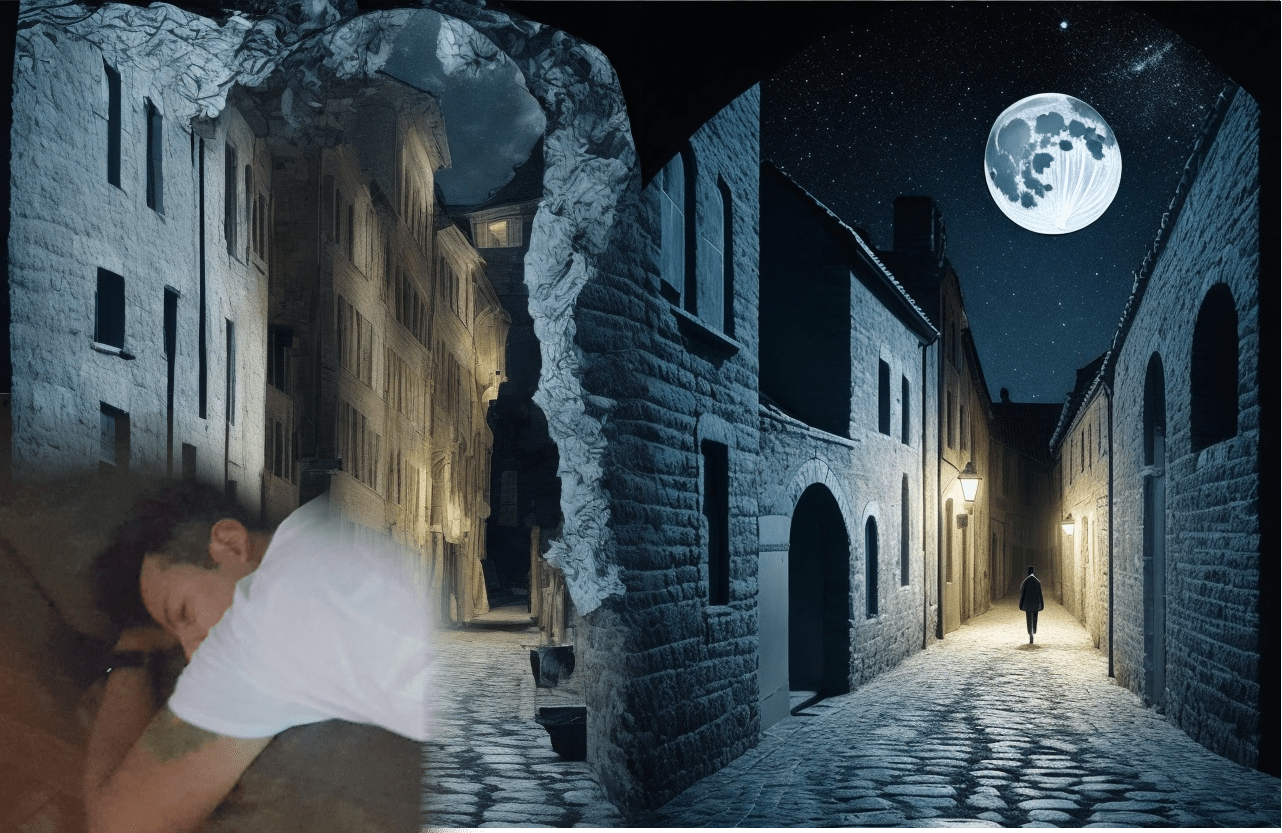
Then, without having felt any sensation of travel or movement at all, I found myself walking — this time under the night sky indeed — through the cobblestone alleys of a strange village where the houses seemed to lean over narrow streets. A small shop drew me in with its dim flickering light — perhaps a candle — and I headed toward it. Inside I saw an older woman to whom I asked where I was. She told me, "You're in Spectrp" — and there are others like me here that you can talk with.
The name seemed too precise to be casual — although days later I remembered it was nearly identical to Spectre, the mysterious town lost in the forest where Ed meets Jenny in his youth, from one of my favorite films: Big Fish. The point is, I left the shop and by instinct rose toward a balcony of one of the nearby houses, where I found two thin men in sleeveless shirts who were having an animated conversation.
I introduced myself and told them it was my first time meeting other people during an astral travel. Both laughed, and one of them told me that life there was very different — that time didn't exist and therefore neither did hurry. I asked where the village was located and he told me nowhere in particular — that it wasn't in the world I knew and that only those who had refused to be reborn on Earth lived there.
We chatted for a few more minutes and then I bid farewell to the pleasant Spectrpans, who reminded me a lot of friends I'd left behind in the Colombian Caribbean. Then I turned around and leaned against the balcony railing, looked up at the sky, and felt awed by the possibility of being there — in a world outside the world — experiencing what I had always wanted to know. I looked at the sky and a full moon shone like a small sun — yes, later it occurred to me that strange coincidence that this other world also had a moon the same size as ours...
I looked at the moon and asked my inner guide to take me even deeper — I wanted to learn even more of that astral world. Then I felt those vibrations again — this time in my astral body — and everything around me coalesced into a whirlwind of meaningless forms. I felt myself falling inward. For the first time, I felt the same fear I experienced during my yagé ceremonies when I felt I was going too deep — and with some panic I remembered my physical body lying next to Paula, and immediately opened my eyes.
My heart was pounding hard and my breathing was labored. Then I woke Paula up and told her everything I'd just been through — partly to regain my composure and partly so I wouldn't forget anything about what had happened.
The other lucid dream experience I hold dearest is one where I found myself in a mountain inhabited by indigenous people dressed in white. The grass looked greener and the water from a brook running through the place was brighter than its counterparts in the physical world. I walked enjoying the view, then took flight to get closer to a higher point on the mountain from which a song was coming — children were singing.
When I got close enough, I clearly heard the chorus that girls and boys holding hands repeated like a children's circle game: "The heart of America is at the center, the heart of the world is in America."

As with the previous accounts, this time I also woke up to review what I'd experienced — and at that moment I could hum the song with the same melody I'd heard it with. Since then, however, that melody has been lost and I only remember the phrase — which over time has become less profound in my mind than I thought at the time, very much in the style of pretentious and grandiose phrases used by elders and esoteric writers.
Months passed and my practices aimed at achieving doubles or astral travels gradually fell out of use. The daytime exercises, night mantras, and filling my dream journal each morning are activities that come with a cost: it's not just about the discipline needed to do these things daily — the time spent on mantras and writing in a journal gets taken away from other activities like talking with your partner before bed or enjoying those quiet moments of slow waking in the mornings.
So after several interesting, exciting, and some unsettling experiences, it was time for an assessment. On one hand, I should say that these "beyond-the-body" adventures were among the most memorable experiences of my life. The thrill and wonder of feeling completely conscious, lucid, and present in a dream is something that stays with you for a lifetime. It's like the first time you see the ocean or the first time yagé takes you there.
When I wrote these lines, Apple had just launched its first augmented reality headset — the Vision Pro — and it seemed curious to me how once again through technology we keep fulfilling the dreams and promises of esotericism. This time with the possibility of visiting increasingly realistic and immersive fantasy worlds. Well, lucid dreaming can be even more realistic and captivating an experience than cutting-edge technology can offer — without having to pay the $3,500 that Apple's new mask was going to cost.
Just for that alone, I believe it's worth trying and persevering until you achieve it, even if only a few times. It's also a personal achievement like learning to play an instrument or reaching a fitness goal — not just the skill itself can prove very useful, but achieving your goal makes you feel proud.
On the other hand, at least in my personal experience, lucid dreams — despite being very real and surprising — happen entirely within the mind. There's no evidence that astral travels can receive any information or allow communication or influence of any kind on the outside world. In fact, experiments have been conducted that prove it's possible to induce lucid dreaming and the sensation of being outside your body through electrical stimulation of the brain — or even using virtual reality headsets.
A study conducted in 2014 by the University of Jena in Germany and published in the journal Nature Neuroscience found that low-frequency electrical stimulation applied to the prefrontal cortex during REM sleep could induce lucid dreams. Study participants reported a greater awareness that they were dreaming, and several were even able — to some degree — to control the content of their dreams[1].
In 2002, neuroscientist Olaf Blanke and his colleagues in Switzerland published a study also in Nature journal, describing how a patient experienced the sensation of leaving her body when her right angular cortex was electrically stimulated. The patient described feeling as if she were "floating" two meters above her bed, looking down at her own body[2].
Other experiments have used virtual reality to induce that same sensation of bodily detachment. In a 2007 study published in Science, researchers used VR goggles to make participants see a virtual image of themselves from another person's perspective. By touching the participants' backs in sync with the virtual image, the participants reported feeling like they were outside their body — located at the position of their virtual avatar[3][4].
But this doesn't mean astral travels are useless — just as neuroscience recognizes that conventional dreams are very useful for brain development, memory formation, overcoming trauma, knowledge consolidation, and training for events that might happen in a dreamer's life.
Even intermediate states between wakefulness and sleep are recognized as "portals" to creativity and problem-solving. They say Thomas Alva Edison, the famous American inventor — when he felt drowsy — would sit in his rocking chair holding metal balls in his hands, with his arms at his sides, so they hung over separate metal plates placed on the floor. When he fell asleep, the balls dropped from his hands onto the plates and the noise woke him up. Edison said that semi-lucid hypnagogic state provided him with a surge of creativity and problem-solving.
I've never tried Edison's technique, but I can attest that some of my most difficult problems as a software developer have been solved with ideas that came to my mind in those hypnagogic or half-asleep states that happen before falling into deep sleep.
But let's return to astral travels: from the perspective of spirituality — even if it's not the case that we can communicate with higher beings or visit temples of the white lodge beneath mountains — the fact remains that the journey you *can* make is much more important: it's a journey within yourself, your illusions, your fears, your memories, and your desires.
There are also real beings you can communicate with in your dreams — lucid or not — that are more important than unknown spirits or angels: You can talk with your own subconscious, with the wisdom and value system living inside you — your personal God, your inner elder. You can talk with your inner child, with the feminine archetype in your life or the masculine one that lives within you. All those parts of your psyche take shape in the dream world, opening up before you the possibility of recognizing and healing everything inside you that needs to be heard and integrated into your consciousness.
This is recognized by science, which supports — or at least doesn't deny — the benefits of the therapeutic use of conscious dreams:
It's fun, healthy, safe, and free! True, it requires discipline and willpower — but the benefits far outweigh the effort. So if you're up for it, next I'm going to share with you the practices, techniques, and mantras I like best for doing this beautiful work of self-knowledge and dream health.
Let's first talk about the practices I recommend you do during the day — ideally every day — to increase your chances of achieving the astral travel experience:
You should pay special attention to any experience that might resemble an astral projection. You can do this in a notebook — or there are several apps for iOS and Android for keeping a dream journal. If you decide to do it, I'll give you a fun tip: After more than a month of writing your dreams down, go back and read the earliest entries and you'll be surprised at how many details you don't even remember having written.
The second tool for your astral adventure is techniques for "leaving the body." I know I've said before that I don't believe there's a real exit of anything outside yourself — but in this case I want to emphasize the sensation, and it's definitely the one of leaving the body. So it makes sense to understand it that way so the practice can be successful.
There are some mantras that the onironaut community as well as other groups interested in astral projection and lucid dreaming sometimes recommend. Here I mention a few:
It's important that you remember these mantras, by themselves, don't guarantee an astral travel. Their purpose is to help establish intention and prepare your mind for the possibility of having an out-of-body experience. But to increase your chances of success, I recommend using them alongside the practices and techniques from the earlier sections.
If everything goes well and you persevere in your search — no doubt you'll achieve not one but many wonderful experiences like the ones I shared with you today. Even though every mind is different and there are no universal rules or laws that apply to everyone — there are some recommendations that might be useful, especially for your first experiences. Here are what I consider the most important:
Well, we've reached the end of this journey. I hope you found it interesting — and if you decide to embark on the path of astral traveler, please write to me and share your experiences. But above all, enjoy the adventure and thank yourself for that wonderful gift of discovering there's more beyond dreams. Safe travels, good winds, and sweet dreams...
[1] Voss, U., Holzmann, R., Tuin, I., & Hobson, A. J. (2009). Lucid dreaming: a state of consciousness with features of both waking and non-lucid dreaming. Sleep, 32(9), 1191–1200.
[2] Aspy, D. J., Delfabbro, P., Proeve, M., & Mohr, P. (2017). Reality testing and the mnemonic induction of lucid dreams: Findings from the national Australian lucid dream induction study. Dreaming, 27(3), 206–231.
[3] Blanke, O., Ortigue, S., Landis, T., & Seeck, M. (2002). Stimulating illusory own-body perceptions. Nature, 419(6904), 269-270.
[4] Lenggenhager, B., Tadi, T., Metzinger, T., & Blanke, O. (2007). Video ergo sum: manipulating bodily self-consciousness. Science, 317(5841), 1096-1099.