When I was part of the Pueblo Nación Muisca-Chibcha movement in Bogotá, back in 2011, I heard for the first time the accusations that were frequently made that my community of spiritual work and Muisca ancestral resignification was a sect. The accuser was a young member of the Muisca cabildo of Suba, who in a video he posted on Facebook pointed to abuelo Suagagua, using his legal name, Sigifredo Niño, as the leader of what, according to him, was a Gnostic sect disguised as an Indigenous community.
In his diatribe, the boy with long hair and indigenous features said that the aforementioned Mr. Niño was not a true indigenous person and that his teachings did not reflect the traditional uses and customs of the Muisca people. I had been frequenting abuelo Suagagua and his wife for a little over a year, participating in the activities of the community and sharing with other members. I also knew the concept of a sect, and it did not seem to me that there was anything in my Muisca community that could be considered sectarian or fanatical, much less that the members of the organization were being manipulated in some way by any of the elders I knew.
Of course, I dismissed the accusations of the boy from Suba, understanding them as one of the many attacks that abuelo Suagagua unjustifiably received, probably out of envy of his prominence in the media and his capacity to draw crowds, unmatched among the ancestralist circles of Bogotá at that time.
Abuelo Suagagua himself had warned me that the members of the other Muisca cabildos of the territory were against him, after the failure of several attempts to integrate the Muisca cabildos of the city. According to the elder, the other cabildos had forgotten the spiritual part of the indigenous tradition and were focused instead on fighting over the economic resources that the Government allocated to the protection of recognized cabildos.
The truth is that I never approached any of those groups that were detractors of the Pueblo Nación Muisca-Chibcha, and in retrospect, I consider that it would have been interesting to hear their arguments and try to discern the reason why abuelo Suagagua and his process had so many ill-wishers. Had I done so, perhaps I would have been able to notice certain behaviors not only of abuelo Suagagua but of other members of the Council of Elders, as well as peculiarities of our community that, although I still believe they could not be considered a sect proper, did have many points in common with the most frequent definition of a destructive sect.
Here again we face the problem of having to label human manifestations, in this case collective ones, that have not been officially defined by any international organization; manifestations that, moreover, can be expressed across an entire spectrum of levels of fanaticism and manipulation, from innocent religious subgroups to dangerous groups of sociopathic fanatics.
In any case, I will try to give some shape to the concepts by distinguishing those that, while they may not be especially beneficial for the spiritual search, are not particularly dangerous either, from those that we do have to learn to recognize in order to avoid falling into their clutches at all costs.
The first distinction that should be made is that between sect and cult. In English, this distinction is easier because the word cult is used exclusively to refer to what in Spanish we understand as secta, while they use the word sect to refer to what we misname secta. Let me explain: a sect is simply a subgroup or derivation of a religious group that, generally for doctrinal or sometimes normative reasons, separates and adopts its own denomination. Examples of sects would be Orthodox Jews, Hindu Shaktas, Christian Baptists, or Muslim Sunnis.
All of these are subgroups of the large religions from which they emerged, but none of them is considered dangerous or destructive. In contrast, cults, which are what we usually call secta, do always have a negative connotation, except when it is used to refer to excessive reverence for something in particular, for example, when we say “cult of beauty” or “sun worship in Amerindian communities.”
Cults, therefore, are the central objective of my analysis, but from here on I will refer to them calling them sects, because that is the way they are known in Spanish, although I wanted to make the clarification to avoid confusion.
There are many definitions for the concept of sect, in the context we are addressing. A definition contributed by Wikipedia comes from psychologist Michael Lagone, who says it is a “group or movement that exhibits excessive devotion to a person, idea, or thing and that employs unethical manipulation techniques to persuade and control (its followers); designed to achieve the goals of the group's leader; bringing as actual or possible consequences, harm to its members, to their family members, or to society in general.”
This is a bit general, and that is why experts who work on deprogramming victims of sects have created frames of reference to identify and denounce the thousands of sects that exist around the world. Such is the case of forensic psychologist Steve Eichel, who estimates that there are more than 10,000 dangerous sects in the United States alone.
This same psychologist has shared the guidelines for identifying a sect, and what I am going to do is use Eichel's model to determine whether the Muisca community I belonged to and the Gnostic movement founded by Samael Aun Weor can be considered sects. Note: I am not saying in advance whether or not these groups are a sect; I simply want to apply Eichel's model to make an analysis as objective as possible and then reach some conclusions.
A sect can be of any size, from a handful of people to a global religion. If the characteristics we are going to see in the following points are identified in a group of friends, it could be considered a sect. On the other hand, the religion of Jehovah's Witnesses is for many also a sect, despite being an organization of almost nine million members and present in almost every country in the world. Needless to say, for an organization to be considered a sect, there is no need for all members to know each other or to be physically gathered in a single place. Therefore, my Muisca community and the Gnosis can keep competing for the sect medal of Spirituality and Science.
Eichel says “Be careful of any kind of pressure. That is probably the most important advice I can give to anyone. Any kind of pressure to make a quick decision about getting involved in any kind of intensive activity or organization.”
There are many types of pressure, but they all act on the emotional part of the individual. It can be coercion such as extortion or deception, which is when something totally different from what is actually going to be received once you are linked in is promised, or persuasion through fear, along the lines of: “if you don't join this group, your life will keep spinning meaninglessly,” “This is the only way to solve your problems,” or “On the path you're on, you're headed straight for death, unless you take refuge here.”
There is also positive pressure, which appeals to curiosity, ambition, or longing. This is the type of pressure I experienced in the Muisca community. When I first sought out abuelo Suagagua, I had a thousand questions after everything I experienced in my first Ayahuasca ceremony. The elder could have given me the answers he knew that night, but instead he decided to appeal to my curiosity. He told me that I had a mission there and that what I had seen in the Yagé was only the beginning of everything I could find on the path of tobacco and the wheel of ancestral medicine. The pressure is subtle but real, so I'm going to give the Muiscas 2 little stars in this category.
I'm not saying that the elder's intention was malicious. I myself made exactly the same promise more than once to people who sought an answer in me, and I genuinely believed that if I invited them onto my path, I would open for them the possibility of finding the answers I believed I had found. And this is something important with respect to sects: it is possible and even common for a sect to have a benign intention and for its leaders to truly believe they are helping their members; however, what gives the group its character as a sect is not the intention but the methods and the results.
The Samaelian Gnosis, as experienced by those of us who have turned to it, on the one hand promises an endless array of material and spiritual benefits, and on the other threatens nothing less than the second death, or the death of the soul, if the confusing, contradictory, and sometimes dangerous precepts that Samael Aun Weor defined in his endless list of books and conferences are not practiced.
The general rule is that, if you feel pressure of any kind to join a group, the safest bet is that there is nothing good for you in that place. Organizations that study, cultivate, and promote real knowledge in any field not only refrain from exerting any kind of pressure, but generally restrict access to make sure their members meet certain requirements. Let's think of universities, reading groups, NGOs, clubs, and even the traditional esoteric groups and Masonic lodges have strict entry requirements.
One of the most important points to observe in order to recognize a sect is whether supernatural capacities or characteristics are attributed to the person who leads the organization. Obviously, the vast majority of religions and cults revere or worship one or more divine beings, but usually those deities are perceived as immaterial, as energy, or as Spiritual beings that inhabit another level of existence.
The problem is when the human being who founded the religion, or the person who leads the group, proclaims himself a divinity (because it is almost always a man), or declares having supernatural powers such as prophecy, magical healing, immortality, or all of the above.
This is something that until recently was not exclusive to sects; almost all religions had at their head a person — likewise, almost always a man — who claimed to have superhuman powers. In the Catholic religion, for example, it was said that the Pope was infallible and therefore could not err while in office. Today the church maintains that dogma, but Pope Francis said in 2016 that he was not infallible, although he did not deny that papal infallibility existed, only that it “worked” when the pope made an ex cathedra statement, something that, according to what he said then, he will never do.
Ex cathedra is an expression in Latin that means “from the chair,” which means making a statement by appealing to the position or authority one holds; something like when a dad says “it's like that because I say so.” Well, that same argument is used by many sect leaders to separate their human dimension from a supposed divine manifestation that they channel at key moments, usually when they want to impart some doctrine that requires the members of the community to take literally, without questioning or criticizing.
I remember that, with the Muiscas, the elders called this process “speaking from the Spirit” or “the word of the inner elder.” Many times, during the mambias or ceremonies of the community, generally late into the night, one of the elders would change his tone of voice, making it deeper and slower, and would begin to say things that supposedly did not come from his human side but from the ancestral spirit they claimed to embody.
Abuelo Nemequene, for example, being barely over 70 years old, would change his voice for one that made him seem like an old man of more than ninety. At that moment, the members of the community who were by his side would fall into a reverential silence and listen attentively to what they expected would be a tremendous mystical revelation full of wisdom.
I, truthfully, stopped believing in that performance after a couple of times of seeing abuela Yanguma and abuelo Nemequene embody their supposed spiritual grandparents. The grandmother had the habit of starting to speak supposedly in the ancestral language of the grandmother, but what she actually did was babble meaningless phonemes with no structure, more or less like when one pretends to speak Chinese without having the slightest idea.
Even though muiskubum, which was the ancestral language of the Muiscas, is considered extinct, there are enough written records to know how it sounded and was structured, with which the National University and other Colombian institutions have even built dictionaries of the Muisca language. In such a way that the grandmother's performance barely managed to convince the most gullible. Even other elders privately acknowledged that the grandmother's thing was a performance, despite pretending that their own “ancestral possessions” were indeed genuine.
The dangerous thing about the “word of the elders” was that, during those trances, the elders made value judgments that often expressed prejudices and biases such as homophobia, machismo, and even racism. They frequently took advantage to advise young people on important decisions or sow seeds for future manipulation, saying things like “you have an important task to carry out here, but you have to promise me your loyalty” or “in another life you were my woman.”
I heard this last one said by a septuagenarian elder, addressing a girl of barely 20 years old, who a couple of years later said she was hopelessly in love with him...
The Samaelian Gnosis, from its beginnings, has revolved around the supposed divinity of its founder Samael Aun Weor. In life he was considered a messiah, an incarnation of God, regent spirit of the planet Mars, infallible and immortal. After his death, his followers expected him to resurrect on the third day, and there are those who still await his return.
Today, many Gnostic groups and derivatives of the Gnosis continue to use the image of Samael as an invisible presence to manipulate their followers, but in some cases, the “priests” or leaders of individual Gnostic groups proclaim having powers derived from their level of initiation to exercise control over the members of the community.
In a way, the dangerousness of the sect depends on how dangerous its leader is, and in that sense, the most critical thing is the motivations, values, and scruples he has. In the case of the Muisca elders I met, I believe their intentions in general were not bad. They believed in their doctrine and in helping people, but also in the need to manipulate them to ensure their cooperation in the businesses they maintained.
The most serious thing were the cases of romances between elders and women of the community, in which, despite being apparently consensual, I believe they reflected that psychological manipulation. A famous and quite serious case of this phenomenon was the one that reached the courts in Colombia and sent the “taita” Orlando Gaitán to prison, who raped at least six women of the Carare community, of which he was the leader.
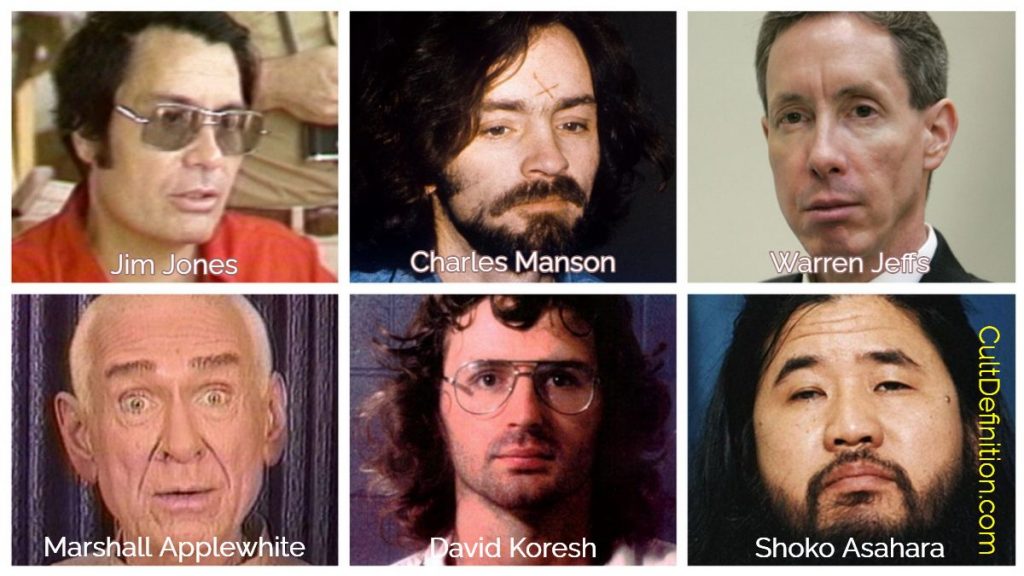
In the world, the most macabre stories about sects are connected to the psychopathy of their leaders, like the case of Jim Jones, whose 900 followers carried out the largest mass suicide in history. Charles Manson, also famous for his cruelty and the number of crimes that he and his group perpetrated, and David Koresh's group, which exchanged gunfire with the FBI, which ended with his death and that of 76 of his followers.
In all these cases, the leader proclaimed himself a new messiah and little by little co-opted the will of his followers until he controlled them completely. You might think that this kind of manipulation can only affect people who are very emotionally weak or too gullible, but it is not so. The faculty of idealizing leaders and following them to unthinkable extremes is not a flaw but a characteristic of the human mind.
It is a capacity that evolution has given us to allow ourselves to organize and cooperate in large numbers. If all human beings had the capacity to resist toxic leaders and be completely independent, it would be very difficult to structure governments, armies, and even companies.
Think of all the times you have excused your favorite candidate for a mistake for which you would have been relentless with his opponent. Think of all the times you have done something you considered unfair or questionable because your boss asked you to, or the times you have considered the crimes of your country's army, or of the “good” side of a war, as necessary in order to put an end to the evil of the opposing side. Remember that, for the good people of that side, their cause was the just one, and yours was the one that had to be destroyed.
Another characteristic of sects is that they have a closed structure of concentric hierarchies that promotes secrecy and fosters loyalty through levels of initiation. This means that in order to be a member, one has to undergo some kind of rite of passage with which members gain access to private information that no one outside the community has.
In many cases, within the community there are even more exclusive levels of membership, which in turn give access to even more confidential information until one reaches an inner circle around the leader. A famous case of this structure is Scientology, which has 8 levels of knowledge or liberation, as they call them, plus 7 additional levels that are supposedly secret and can only be revealed to those who reach the eighth level.
In the case of Scientology, to reach each level one not only has to demonstrate loyalty and compliance with the doctrine they promote, but also has to pay increasingly exorbitant amounts of money. This is the reason why several Hollywood stars and billionaires have been particularly prone to letting themselves be seduced by Scientology, as one more way of reaffirming their power and exclusivity.
I have already told in other episodes about my Muisca rite of passage and how, since I joined the community, I heard promises of mystical knowledge and astonishing revelations that awaited me if I decided to follow the elders and prepare for the rite of passage. The elders spoke of seven rites of passage, which I later learned were actually an adaptation of seven Gnostic initiations, adapted to look like ancient indigenous rites.

It will come as no surprise that during the three years I spent with the Muiscas, I only found, again and again, the same vague promises of mystical knowledge that would be revealed at the appropriate moment, to always end up talking about the “maíz biche,” which is nothing more than the Gnostic belief, adapted from Eastern tantrism, of avoiding male ejaculation in order to supposedly transmute energy. Transmute it into what? The Gnostics say it is used to ignite demons and build one's own soul, and the Muiscas of Pueblo Nación said it was to create “cosmic gold” to make pagamentos and spiritual business.
If the Muiscas of Pueblo Nación adapted the Gnostic initiations for their rites of passage, the Gnostics did the same with the initiatory levels of Freemasonry, on which Samael Aun Weor based his ceremonies. Within the Gnosis, each level of initiation supposedly grants the applicant some supernatural power. The first of them is the so-called “astral travel,” which is nothing other than lucid dreams, which, although uncommon, can be achieved by anyone with the right technique and a little practice.
When someone who does not know this has a lucid dream for the first time, after entering the Gnosis, they can believe that this experience is evidence that everything the Gnosis promises is true and that they have just had their first real experience in the spiritual world. With that precedent, the Gnostic apprentice usually redoubles his loyalty to the group, the leader, and the doctrine, and keeps handing over more and more of his will and his life to the Gnosis, patiently waiting for the moment to receive the other powers that Samael Aun Weor's texts promise: telepathy, clairvoyance, or even bilocation (being in two places at the same time) and making astral travels with the physical body, something they call traveling in the state of Jinas. Needless to say, those powers never arrive, and I can assure you that if someone swears to you that they have had those experiences, they are lying to you.
Another dangerous aspect of sects, and at the same time a key criterion for you to realize whether some group is a sect, is that, directly or subtly, it tries to disconnect you from the world, particularly from the people closest to you: your family and your friends. Starting from the practice of secrecy and the hierarchical structure of sects, the member gradually feels more and more special, different from “normal” people, and more a part of the sect than of the ordinary world.
Sect leaders usually reinforce this idea by telling the initiate that he will feel less and less understood, that “outside” people live asleep, and that without meaning to they can push him into sin or damnation. Something common is that they warn him, as if it were a premonition, to prepare himself because his family is going to attack his beliefs and tell him that they are manipulating him, that it is a sect, and that all of that will be a test for the initiate to prove his worth and make himself worthy of the later initiations.
The family of someone who is in a sect frequently makes the mistake of confirming those prophecies — which later one realizes were obvious — by doing exactly what the leader warned the member of their family about. I frequently receive emails and contact from relatives of people who are in the Gnosis who share with me the concern they feel about the behavior and apparent obsession of their relative with the Gnostic group.
In all those cases, what I advise is to avoid the temptation to criticize the doctrine or the leader and instead keep the person's trust, even feigning interest in the topic, with the goal of preventing the victim from distancing herself from her loved ones and starting to hide what is happening. This can be something very difficult to do, but when a person is being co-opted by a sect, one has to understand that an attack on their beliefs becomes a personal attack and turns you into an agent of evil, an enemy of their spiritual process.
It is like when a loved one gets romantically involved with a toxic or violent person. Many families make the mistake of blaming the victim for their “stupidity” or naivety and end up pushing them into the arms of their tormentor, sometimes forcing a marriage or a distancing from the family. The most appropriate thing is to protect the person's trust and try to stay informed, as far as possible, of what is happening at all times.
When a sect manages to disconnect the victim from her social circle, generally the next step consists of doubling down on the exploitation or abuse that was brewing up to that moment. Once the risk of the person being dissuaded from continuing in the group is eliminated, it is easy to turn her into a slave, usually doing work for the sect without receiving any payment, subjecting her to sexual exploitation, wheedling her money out of her, or all of the above.
We also tend to be quick to judge the victim and say “I would never let myself be exploited like that; how is it possible that she doesn't realize they have her enslaved or subdued.” Here again we have to understand that the mind is very complex and that the perception of reality for human beings is made up of much more than what the senses tell us. We all have a belief system that is also part of our reality. For some it is honor, for others their political ideas, for others religion or even science. Ask yourself if there is any ideal for which it would be worth losing your life: the good name of your family, your country, your religion, or finding the truth... Well, the victim of a sect has been deceived, indoctrinated, and manipulated for years to think that the most important thing in life, or even more important than life, is to give herself completely to the sect, or rather, to the doctrine and practices of the sect.
Many times, the person in the sect believes that with her suffering and sacrifices she is working not only for her own salvation but for the good of her family and even for the redemption of all humanity. When what is at stake is so important, everything else takes a back seat, even being close to family or eating three times a day. Not very different in intention from someone who takes up arms to defend their country, or who goes to live illegally in a country where they know no one to seek a better future for their family.
Even if the person eventually questions whether she made the right decision and begins to recognize that she may be being exploited, the sunk cost fallacy comes into play, which is an instinctive mental bias in humans that makes us stay in something that hurts or harms us, because we don't want to lose what we have already invested. This is the reason why you finish watching a movie you already started even if you're not liking it at all, so as not to “lose” the time and money you already spent, or keep investing in a business that only gives you losses, because “you've already put a lot into it,” or stay in a toxic relationship so as not to waste the time you have dedicated to that person.
Maybe the sect is absorbing your life, but if you quit now, would you have to admit that you were an idiot and that you threw those years in the trash? Rather, value all the learning you have gained and keep seeking your happiness as a wiser and more mature person.
Realizing the deception, gathering the courage to leave the sect behind, and returning to reality, despite being supremely difficult, is only the beginning of a process that can sometimes take years. The conditioning received over the years, the threats of divine punishments or tragedies for betraying the leader, and in general a magical view of reality make the first steps outside the sect terribly hard.
Even knowing that one has been deceived or manipulated, the subconscious is so loaded with fears that one cannot help feeling that one is in constant danger. In my case, the abandonment of beliefs that accompanied me for so many years led me to an anxiety attack, an episode that I will tell soon on this podcast and that took me a little over a year to completely overcome.
There are support groups for victims of sects, and the professional psychological or psychiatric counseling needed to get through this stage and be able to return to normalcy is also recommended. In any case, the understanding of the family, the support of friends, and the constant company of the person recovering from manipulation are fundamental to achieving complete healing.
The question worth asking is whether sects should not be declared illegal and prosecuted by the law. Some countries have tried it with anti-sect legislation that prosecutes the most extreme and dangerous variants. The problem is that, as I said, some sects disguise themselves as religions, coaching, ancestral communities, or clubs and manage to fly under the radar for a long time, until some tragic event captures the public's attention.
In Colombia there is a bill on coercive organizations that seeks to punish those who engage in actions that harm the integrity of people, violate their free will, or remove them from their social environments for purposes of exploitation and manipulation. The initiative is a step in the right direction, although the challenge, as always, will be in the regulation and execution of the norms, so that it is effective and respects the freedom of worship protected by the constitution.
After doing Eichel's analysis, my conclusion is that my Muisca community had some sectarian components, but it could hardly be considered a sect. Let's say it had some ingredients of a sect, but not the level of organization and discipline that the most dangerous sects have. The Gnosis, on the other hand, I would say is more like a franchise of sects. There is not much information about how Samael Aun Weor's private circle worked while he was alive, but everything seems to indicate that it would have been a full-fledged sect.
What happens is that all the Samaelian Gnostic doctrine is perfect for being used in the formation of a sect, and that is why what has happened since Aun Weor's death is that megalomaniacal, ambitious, and unscrupulous individuals have adopted Samael's chair, using the dozens of books and conferences he left behind, to create their own sects and with them exploit thousands of people. Many of those people, moreover, arrive at the Gnosis in moments of vulnerability or with mental health problems and cling to the promises of the sect, believing that they will find the solution to their problems.
Apart from the Gnostics, there are many other organizations that use the same techniques and traps I mentioned, although varying the appearance and content of the teachings. There are derivations of the Samaelian Gnosis such as the Muisca community I belonged to, the MAIS movement of Mexico, about which I talked a while ago with Amilcar Vargas, or the community of the Sakroakuarius temple in the department of Santander in Colombia.
Other sects have adopted the coaching phenomenon made famous by Tony Robbins, which mixes pseudo-psychology with esotericism, positivism, the pseudoscience of neuro-linguistic programming, supposed quantum and new age principles to attract followers with promises of transforming into the best version of yourself and achieving all the goals of your life just by wishing it.
I also want to share my experience with coaching, but that will be in a new episode of Spirituality and Science.