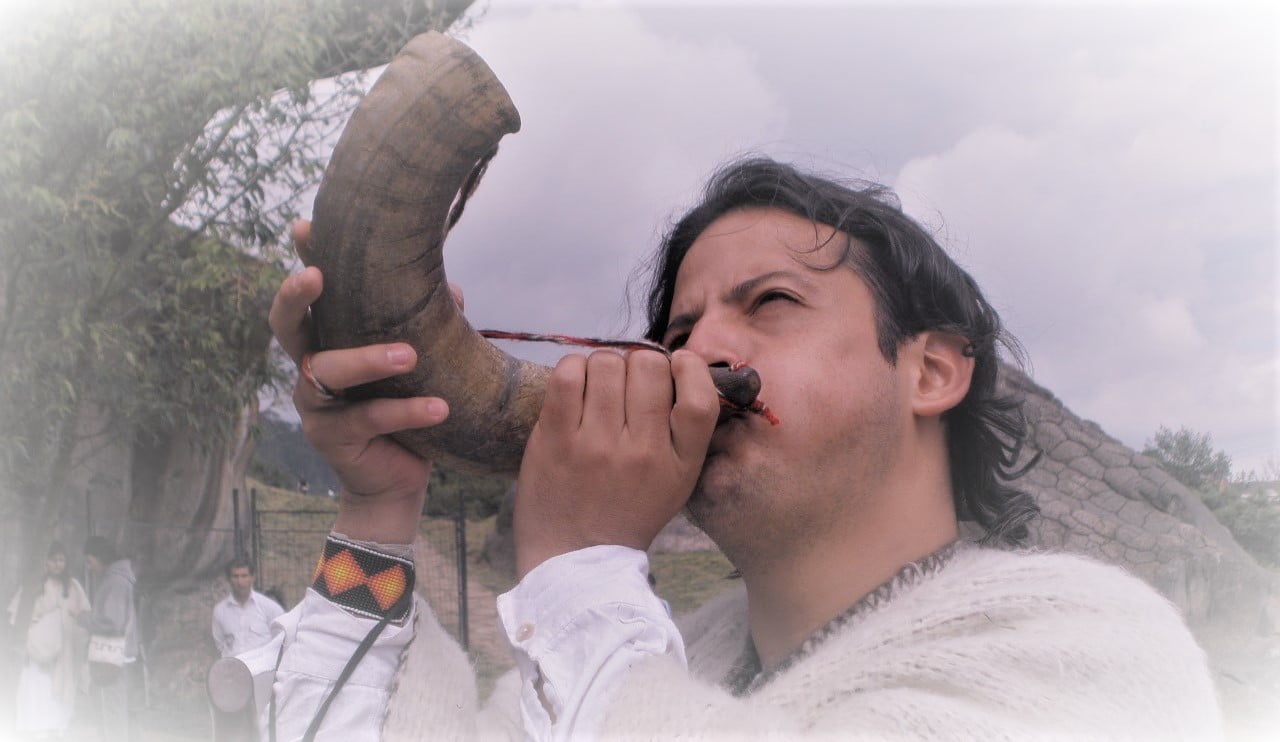
One of the most frequent mistakes made by both believers and agnostics alike is to dismiss ceremonies and rituals as synonymous with superstition or credulity. This is partly because postmodern society has centered on individualism, or personal importance, and because we live in the age of the attention economy, in which advertisers, technology companies, and media outlets make money by making us believe we are the center of the universe and by distracting our attention so that we buy their products or, worse yet, so that we become their products.
In the past, ceremonies carried greater relevance and depth in almost every aspect of human interaction. From marriages and other religious celebrations to sporting events, ceremonies had more dignity, more mystique, and rituals were vested with greater meaning. Today, form tends to matter more than substance, and both ceremonies and rituals have become excuses to allow excesses and sales opportunities for many industries. A famous Canadian investor used to say: “I love weddings and funerals because they are the two events in life at which people don't care about the price.”
But let's step back a little and talk about what ceremonies and rituals are. Sometimes they are considered synonyms, but in reality they are distinct, albeit complementary, concepts. According to Wikipedia, ceremonies are solemn acts carried out according to established norms or rites that become outward signs or manifestations of the heart's feelings. This is revealed by the word ceremony itself, which comes from the Latin caere-monia and could be translated as “public demonstration.”
On the other hand, ritual, which also comes from Latin, ritus, which could be said to mean “order,” has a more intimate connotation than ceremony and is related to the order in which certain actions are carried out. The rite is the order given to actions that hold particular importance for the person performing them. So we could say that a ritual is a specific series of actions we perform that, taken together, have particular importance, and a ceremony is the public demonstration of a ritual or of several rituals. The key is that both ritual and ceremony have an order and a purpose, but a ceremony necessarily involves more than one person, while a ritual can be entirely individual.
Now that we understand what a ceremony and a ritual are, we realize that human beings are ritualistic and ceremonial by nature. Ever since we lived in caves we have created rituals, both religious and mundane, to bring order to certain aspects of our lives, and ceremonies to connect those aspects with a higher purpose. Since then we have kept changing rituals and ceremonies depending on the environment, social conditions, available resources, and the knowledge we have accumulated, but the fact of being ritualistic and ceremonial has not changed.
Even the most cynical have to accept that our modern, globalized, egocentric, and depersonalizing society depends more than ever on rituals and ceremonies to define itself. As for rituals, the most widespread today is picking up our cell phone several times a day to check email, social networks one by one, and the notifications from our favorite apps. One could say it is a mundane ritual, far removed from any spiritual meaning, but if we look carefully, every time we check our phone we are often expressing our longing for connection with our loved ones, or to attain greater knowledge, or to achieve some goal, however small.
As for ceremonies, the ones we have left, as I said before, have become excuses to spend money, but despite that they still carry other social and emotional meanings. In this category, besides religious ceremonies, we also have the many Christmas Eve traditions, Thanksgiving dinner, New Year's celebrations, inaugurations, and voting days in democratic countries.
It is clear that humans feel the need to sublimate certain aspects and important events of our lives through symbols and rituals with which we connect those aspects to something sacred. We declare before society that those events hold special importance for us, and in some cases, such as weddings, quinceañera parties, sweet sixteen celebrations, or graduation ceremonies, they reflect personal growth or transformation.
However, in the West most people believe that ceremony is only a symbol and that its importance is social and emotional, nothing more. In the East and among Amerindian communities, in contrast, for centuries ceremonies have carried a different connotation: in them there is a transformative power that transcends the motivation for performing them. That is, the ceremony itself has power and is therefore an everyday tool of spiritual work.
In our Western society this concept of ceremony as a transformative experience also exists, but it is applied mostly to religious ceremonies and services, and it is believed that their power comes from an external deity who, out of mercy, attends to the pleas of the faithful and bestows blessings and graces upon them.
Esotericism, on the other hand, recognizes that the power of ceremony is real, but it does not attribute that power to an external god but rather to the inner divinity that dwells in each one of us. Poetic naturalism would understand this divinity as the creative consciousness that exists in the human mind and that is capable of mastering all the most primitive aspects of the brain in order to achieve the most perfect state of existence we can reach.
Regardless of how it is defined, the undeniable fact is that ceremonies hold enormous power and have the capacity to generate altered states of consciousness with which things like euphoria, emotional release, and catharsis can be achieved, but also fear, sadness, or even psychosis. This becomes evident when recalling images of the “deliverance” ceremonies of some Christian churches in which some congregants end up on the floor convulsing and shouting, or wrapped in tears with the palms of their hands raised toward the sky.
I remember that a few years ago, even after having my first experiences with yagé, I believed that all those scenes were performances that people did at the request of their pastors to give them credibility, and well, in many cases it is so, but now I know that in some cases people's reactions during an intense ceremony can be strange and sometimes surprising.
If you disagree with me, I suggest you analyze the reactions of attendees at a pop star's concert, a soccer match, or a political rally of some charismatic leader. Surely you have seen images of fans crying in dismay while pulling their hair, fainting, and collective hysteria. Painted faces, outfits alluding to the team, party, or star, memorized chants, and other manifestations of euphoria are also common.
This is not a coincidence but a consequence of the fact that, as I mentioned in a previous episode (Episode 11: The War Between Good and Evil), religion, politics, and sports are based on the same archetypal principles: communities that form around common ideas or principles, rituals, initiations, idols, and ceremonies. The performing arts should also be added to the list, since, as we saw, music, film, and theater stars also tend to generate intense emotions and can, under some circumstances, cause altered states of consciousness.
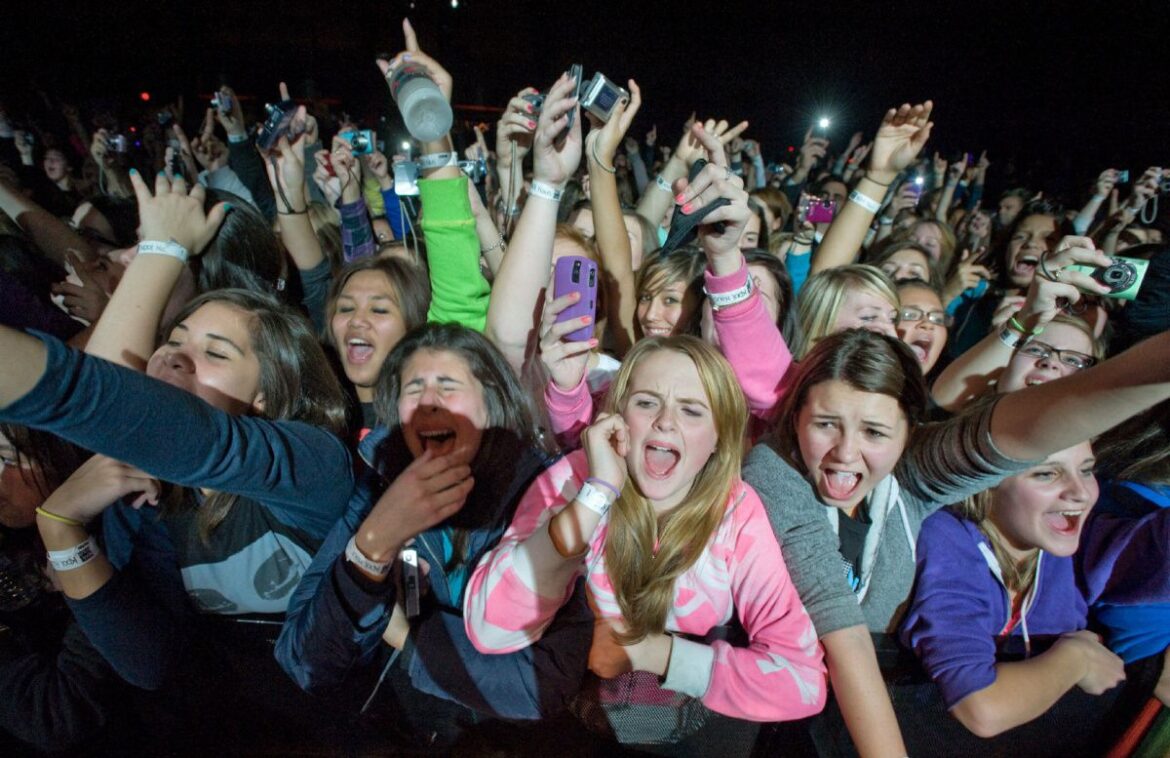
In any case, what artistic, political, religious, and sporting ceremonies have in common is that they are controlled by elites that determine their rituals, their rhythms, and the conditions under which the rest of us mortals can access them. What do they receive in return? Evidently power, money, fame, and perhaps most importantly: the possibility of transcending death. Thanks to this, the Beatles, Marilyn Monroe, Winston Churchill, Maradona, and Jesus Christ are remembered and stir passions long after their passing.
But what would you think if I told you that you too can use the power of ceremonies and rituals for your own benefit, without needing to turn to the institutions that have traditionally managed them?
Shamans and esotericists have used the power of rituals and ceremonies for centuries, without needing to resort to global institutions. Instead, they use the very same principles that give ceremonies their power, with small groups of trusted people. This is part of the traditional wisdom of the tribes and Masonic orders that practice them, and they have taken advantage of the results of ceremonial magic in many aspects of their lives. I too have practiced magical ceremonies and rituals over the last few years and have proven their power to heal relationships, grow personally, overcome difficult moments, and even achieve personal goals.
Today I'm going to share with you what I have learned about esoteric and ancestral ceremonies and rituals, but first we have to talk about how the magic behind these practices works, along with its myths and truths.
Let's start with rituals. As I said before, rituals are sequences of acts we perform to represent or manifest events that are important to us. Examples of everyday rituals are: praying before sleeping or eating, reading the news in the mornings, checking social media when we go to the bathroom, drinking coffee twice a day, or doing an exercise routine in a specific order a couple of times a week.
The power of rituals lies in the fact that they give us security. Let's remember that human beings used to be prey and scavengers on the African savanna. We lived hidden from predators, waiting for them to leave the bones and hide of their prey so we could come out to eat the marrow and dress ourselves in the skins; we hunted furtively and gathered whatever fruits or berries we found along the way. This went on for thousands of years, so our brain evolved to be alert to many dangers simultaneously. One small mistake and our life could be in danger, but staying alert twenty-four hours a day was exhausting and inefficient. So our ancestors devised rituals that consisted of specific steps repeated every day to make sure they didn't overlook anything important. For example, waking up before dawn, checking the den, making sure all the young were breathing, checking the traps for invading animals, sharpening the spears and knives, and preparing the first meal of the day. Doing the same thing every day served to prevent some of the steps from being overlooked and allowed for an action plan if any extraordinary event arose.
Even so, in such a hostile environment, the risks were many and tragedy often arrived in the form of accidents, illness, attacks by wild beasts, or other humans. So the human being invented religion; in this way, our ancestors dealt with the existential anguish of living amid so many dangers and then incorporated magical rituals that allowed them to face the world with the tranquility, albeit naive, of knowing that a superior being was protecting them from misfortune.
So were rituals simply useless self-deception? Self-deception perhaps, but not useless. A tribe with a strong belief in magical protection rituals would be more likely to take risks and venture into unknown areas, try new hunting techniques, and taste foods they had never seen. Surely many of those ventures must have ended in misfortune, but a good number of them would have allowed them to find new food reserves and even new technologies, such as fire, waves, and cooking food.
More realistic tribes, fearful of dangers and with no rituals or gods to lean on, surely would have perished more easily during times of scarcity. And so we arrive at modern times, in which we have created a society with considerably fewer dangers than those our ancestors faced, and therefore we have gradually abandoned the need to use rituals to feel safe and become bolder. But our brain still works almost the same as it did thousands of years ago, so it still reacts the same way when we perform magical rituals, and we can use this capacity to help ourselves succeed in many aspects of our lives, regardless of the beliefs we hold.
Let's talk about ceremonies, then. When rituals are practiced in a group, they become ceremonies, and analogously to the former, ceremonies gave our ancestors the ability to organize themselves, focus the mind, and charge themselves with energy to carry out especially important tasks or face a new stage of their lives. While rituals were day-to-day tools, the most important ceremonies occurred at special moments of life such as births, marriages, and death, and during outstanding natural events such as the changing of the seasons, full moons, and solar eclipses.
The ceremony had another virtue, and that was that through psychodrama it brought the elements of the group's beliefs into the physical plane, usually with someone representing the deity, using symbols of magical powers, reciting protection spells, and generating exaltation with the use of musical instruments. In this way, the ceremony not only reinforced the usefulness of the ritual but increased faith in the supernatural powers of the leader or of the group. This is what the ceremonies of almost all religions still achieve today, keeping alive the tradition and the power that their leaders hold over the congregation.
So far, in Spirituality and Science I have shared two powerful tools for personal growth: meditation and self-observation. This is the moment to talk about the third and fourth tools that we can use without needing to belong to a religion or adopt any particular belief. Rituals and ceremonies, as we have seen, are resources for inner work that use the way our mind works to bring about a transformation of consciousness.
To use magical rituals you don't need to follow any particular guide, but it is advisable to follow some general recommendations to increase the chances of success in the practice, and for that I'm going to share with you what, from my personal experience, are the best practices to ensure positive results in this field.
The first thing you should keep in mind is that the ritual you choose must be one you truly believe in. For many people it is difficult to believe in something they invent themselves, but in practice it makes no difference whether the ritual came from a sacred book, was received as part of a tradition, or was taught to you by a spiritual leader you follow, as long as you believe the ritual has power. Those of us who come from a Catholic home performed most of our rituals within the confines of temples or churches. Apart from that, personal Catholic rituals usually consist of prayers, the sign of the cross, and Bible readings. These practices can be effective, but they waste some of the most important elements of a magical ritual: the performance and the tangible symbols.
The second important point when performing a ritual is that it must be properly directed. The right thing is to direct the ritual toward the most elevated thing that can be conceived: God, Eternity, the Great Spirit, the Infinite, goodness, Universal consciousness, the motherland, the Self, the inner divinity, or whatever archetype of perfection you believe in from the heart. That idea must be in your mind the whole time during the ritual, and it is there that you must direct your intentions so that the magic can take place.
An effective ritual must be performed in an environment conducive to the disposition of all the senses, the mind, and the body. Ideally in a comfortable, silent, and private place where you can feel at ease to move, do, and say whatever you want freely. It doesn't have to be a temple, although it is very convenient to do it in front of an altar or a symbol that represents that entity or superior idea to which you will direct the ritual. But it is common to perform rituals in nature, and in my case, in the shower. I find it an ideal place to do it because of the nakedness and the possibility of using water as a tangible element that represents transformation, healing, and cleansing.
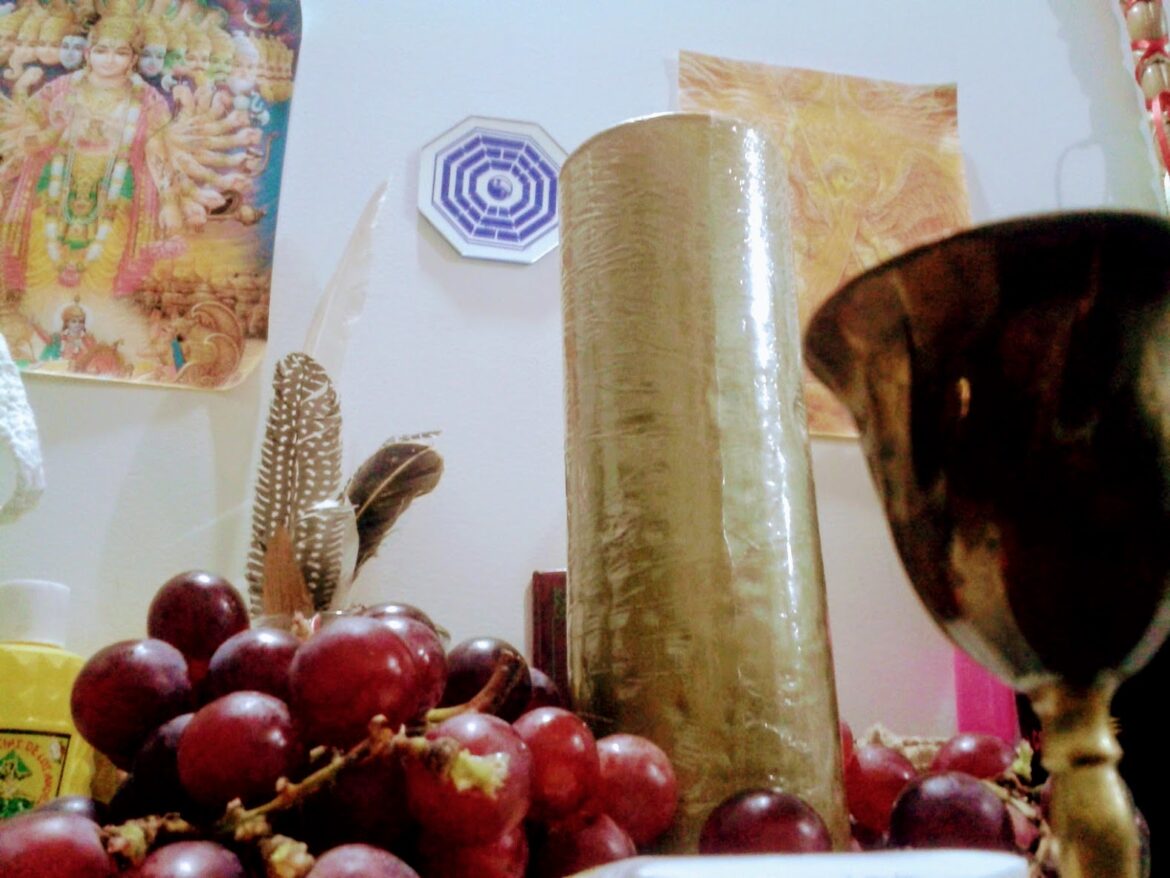
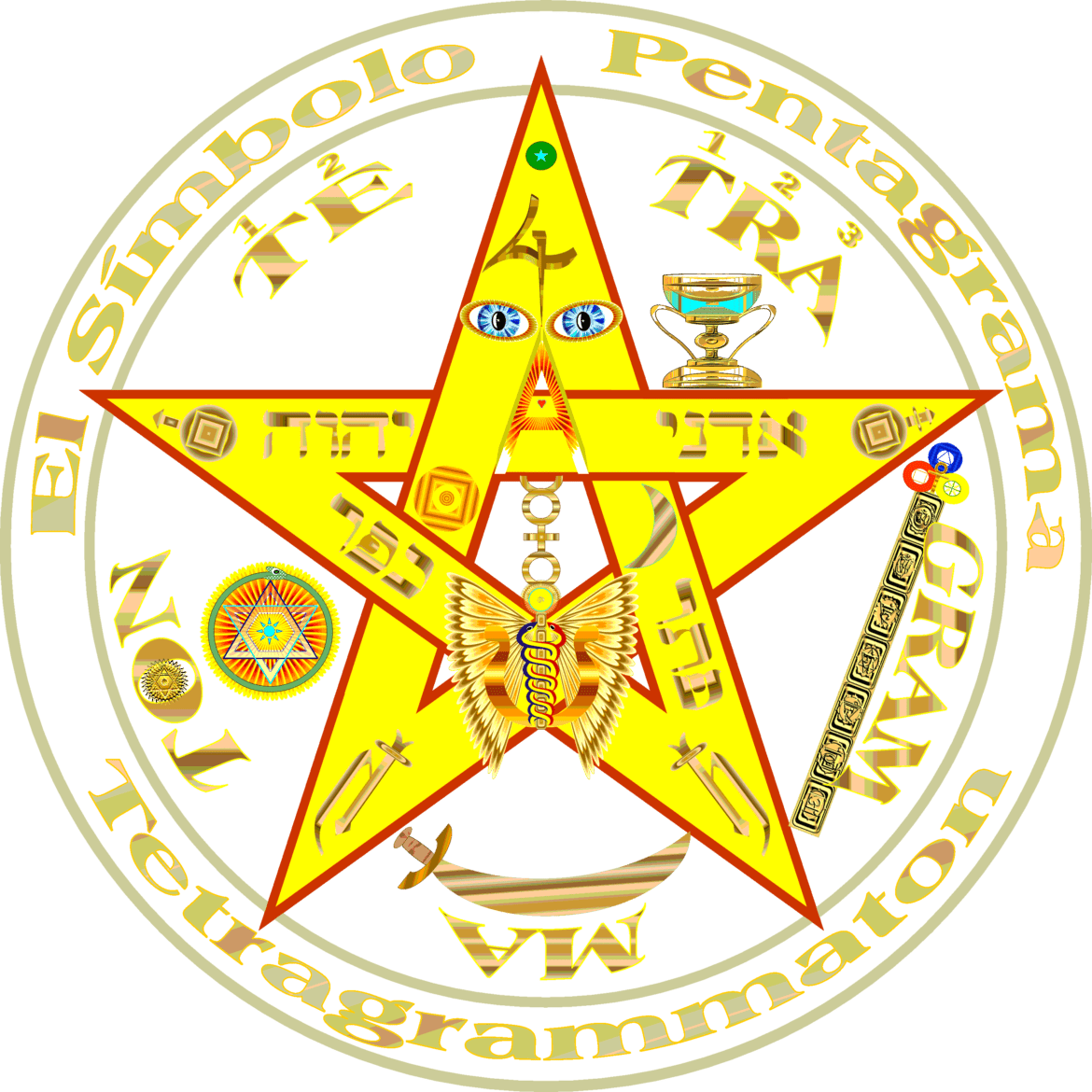
The symbols that can be used for the ritual are those that for you represent that superior ideal or a specific power you want to invoke. If you practice Christianity, you can use the symbol of the cross or the image of an angel. If you resonate with the Eastern wisdoms, you can perform your ritual in front of a yin-yang, a mandala, or the image of a Hindu deity. If your thing is esotericism, you can use the pentagram, the Egyptian cross, a sword, a cup, a staff, or even a lasso. What matters is that the symbol has a positive and important meaning for you. If you are not sure about the meaning of a symbol, or you know its meaning but because of your previous beliefs you feel apprehension or fear toward it, it is better not to use it, because the subconscious works with the most deeply rooted learnings and not the most recent ones. For this reason, many people can end up confused or entangled with symbols like the pentagram, because it has traditionally been wrongly associated with Satanism and witchcraft, so if you don't feel comfortable, it is better to use a symbol that inspires confidence in you.
Now that we have covered the external part — the environment, the disposition, and the destination of the ritual — we have to make sure the internal part is aligned too. There, the most important thing is the purpose. Rituals should not be done out of routine, although they can be done routinely as long as there is always a purpose each time. I usually perform rituals when I'm about to have an important event, a job interview, a long trip, when I'm emotionally loaded, with stress for example, and I need to release myself. Also when I move into a new house or when I start a new stage.
The purpose can be of two types: to give or to receive. You can give up the weight we carry on our shoulders — worries, sadness, anxiety, anger — but we can also give in a positive way, generally in the form of gratitude for the blessings we have received, the happiness we have achieved. Receiving is similar to asking, but I have learned, thanks to neuro-linguistic programming, that better than asking is visualizing what we want or need and giving thanks as if we already had it. Who is listening to these requests or receiving this offering? The divine part that is in you, which connects with that sacred ideal toward which you are directing the ritual. That divine part of your being is also the not-yet-developed potential that can become that which you long for. If, for example, you are performing a ritual to get a new job, then your act of ritualistic magic connects with the future self that has already obtained that job you desire and that dwells in you as a potential force.
If you are giving thanks for having been able to heal a relationship that caused you a lot of pain, then the divinity you are speaking to is the one connected to your past self, the one that had to face the difficult things you lived through and that had the courage and the grit to get to where you are now.
The way of executing the ritual can vary greatly depending on your beliefs, customs, and traditions. The ritual can be a practice learned from some ancestral knowledge, such as the Muisca pagamento, the asanas or pranayamas of yoga, Buddhist chanting, an esoteric spell, or also a Christian prayer. I have a repertoire of almost all of the above. Depending on the occasion I can pray an Our Father, do some mantra, recite an indigenous pagamento, or make an esoteric invocation. For example, I use an invocation that I learned in esotericism, which I have always felt has a lot of force, and I use it to achieve personal goals. Remember that the transcript of this podcast is on my website and you can read the prayer there if you wish:
I beg you for all gifts
All vows for my strength
And all that I long to achieve
May it be prospered by your greatness and Great Power
So it is, so it is fulfilled and so it is realized
The ritual can be carried out standing, kneeling, or sitting, but it is not recommended to do it lying down, because the ritual must project action, strength, and determination. It is advisable to use a bit of drama in the way the words are pronounced and to accompany them with movements that convey that strength. I use mudras, or gestures with the fingers of the hands, expansive movements with the arms, and directing the palms of the hands upward.
You can also dance if that feels comfortable to you. There are schools of spirituality built around the power of movement and dance, but that is a topic for another episode. Movement is in any case fundamental in the ritual, and that is another reason why the shower is a good place to perform rituals. Using an aromatic soap to represent wrapping yourself in the power you invoke is a very effective act of psychodrama.
And since we're talking about psychodrama, this is a very important word within the context of the ritual, because it refers precisely to what it sounds like: a psychological drama, or a psychological performance. In short, the ritual is about playing a small role in which you are the protagonist and through which you embody a transcendent version of your own life, a sacred version if you will, capable of connecting with a higher power to achieve a magical transformation. It is also the concept of psychomagic that Alejandro Jodorowsky uses for healing.
It works the same way that, for an actor, it works to convince himself that he is not an actor playing a role but that he really is the character he is portraying. The more they believe they really are their character, the more convincing their performance, but also the greater the emotional load they receive from the character and the harder it is for them to come out of the character afterwards when they no longer have to play it again. This is what apparently led actor Heath Ledger to his death when he got so deep into the skin of the Joker that he caught the madness of his character.
If in your ritual you become a sacred person with the power to achieve magical transformations, then it is much more likely that the ritual will achieve the purpose you seek.
It doesn't matter how long the ritual lasts, but that it is performed from the heart, that you believe in your power, in the power you are invoking, and that you enjoy doing it. When you return to the normal world, you feel like one of those superheroes from the movies, an apparently normal person but who knows he has a secret power that he uses when necessary for his own good and that of other people. Because the ritual also serves to help others, as long as you have some relationship with those people. I believe that rituals don't serve to help someone specifically if you have no contact with that person, because remember that the ritual works within your Being, within your mind, and therefore it can help someone as long as that someone has contact with the being that has been empowered through the ritual.
Now that we understand the ritual and where its power comes from, it is easier to understand how ceremonies work, since they are nothing more than rituals performed in community. It doesn't matter how many people take part; if there are at least two, then the ritual has become a ceremony.
All the conditions, suggestions, and mechanics of the ritual work equally for ceremonies, but there are some elements present in the ceremony that are not found, or are not as important, in an individual ritual. The most outstanding in this regard is the distinction between officiant and congregation. In the ceremonies of all religions the officiant is called by many names: priest, pastor, minister, abbot, or any other ecclesiastical title. These ceremonies have a determined structure, liturgies, readings, sermons, chants, and other elements.
In these hierarchical structures, just as with political rallies and pop concerts, the officiant directs the ceremony with which he leads the congregation toward a kind of emotional ecstasy, helps them come into contact with the power toward which the ceremony is being directed, and in return the faithful hand over to the officiant their time, energy, respect, money, and often loyalty and obedience.
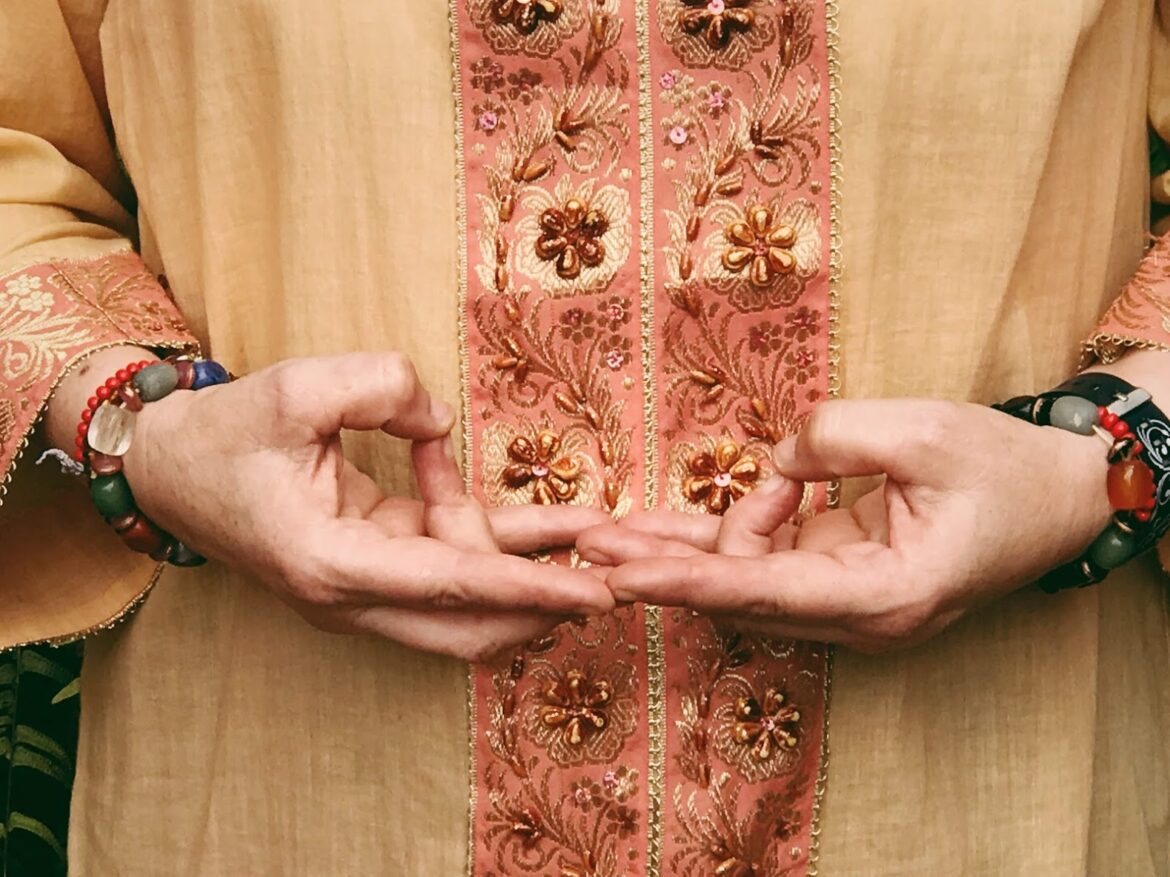
The secret is that you can become the officiant of very powerful ceremonies, in your home or with your friends on the spiritual path. I'm going to share with you some basic instructions so that you can use this ancestral power to achieve surprising transformations, even healings and liberations.
The first thing to keep in mind is that when the psychodrama of the ritual is performed in public, it becomes a performance. Remember that this is tied to the concept of a self-convincing performance. The officiant of the ceremony must believe in his own power to direct the ceremony and lead the congregation to spiritual ecstasy. If these words sound a bit sexual, it is not a coincidence. The esoteric or ancestral ceremony has many elements that resemble a sexual relationship, and the officiant has to have a sensitivity similar to the one required in intimacy to recognize the signals of the attendees and navigate the rhythms of the ceremony. But let's not get ahead of ourselves, because this is going to become clear later on.
The first thing recommended for the ceremony is an appropriate attire. In the ritual, this is not so important, because with eyes closed and in private, what happens inside your mind matters more than what happens on your skin; but in the ceremony, material acts and perceptions are much more important. For this reason, all attendees must wear a ceremonial attire, which, depending on the uses and customs of the group, can be a robe, a blanket, a vest, an apron, or even a necklace, belt, or headdress. It is not necessary for the officiant to wear something more elaborate or pretentious than the other attendees, but even if the attendees decide not to wear robes or special attires, it is advisable that whoever officiates does so.
Unlike the ritual, in the ceremony it is indeed important that it be held in a consecrated place, which can be a temple or our house, but with conditions that resemble those of a temple. That is, that there be the order, cleanliness, and symbology that make the attendees feel they are in a place superior to the mundane. As for the attire and the temple, we can say that the design of the temple should reflect how we see divinity, while our attire and our behavior should be a reflection of how we would like divinity to see us.
You can build a small altar every time you hold a ceremony, but it is advisable to have an altar at home, in an important part of it, as a place dedicated to everything you consider sacred. On my altar there are sacred plants, incense, esoteric symbols, obsidian and quartz stones, bird feathers, and other shamanic elements. You can make an altar with images of power, objects from nature, flowers, incense, or anything else that represents that elevated and sacred ideal toward which the ritual is directed. Additionally, you can use during the ceremony a glass of water and a candle to represent the sea and the sun, or a lagoon and a bonfire. Cotton to represent the clouds, or anything else that holds spiritual meaning for the participants of the ceremony.
The specific development of each ceremony varies according to the beliefs and methods known to whoever officiates, but I'm going to talk about an ancestral esoteric ceremony, which is the one I know and practice, so that if you wish you can take advantage of its benefits in your life. The ceremony is divided into Opening, Invocation, Elevation, Climax, Gathering, and Closing.
The duration of an esoteric ceremony is typically much longer than a religious ceremony, precisely because of the emphasis on the participation of the congregation, but it is not advisable for it to stretch on for hours, because an exhausting ceremony is one that many attendees will not want to repeat often. Between one and two hours is an adequate duration, although depending on the rhythm of the ceremony, 3 hours is not too much. 4 generally is.
Any person can officiate an esoteric ceremony. No title, initiation, or special power is required. What matters is believing in one's own capacity, in the power of the ceremony, and having the will to serve through the ministry of the ceremonial office. Even if you don't have the motivation or the need to hold a ceremony, you can rehearse the power of ritual in your life, making use of your own beliefs and knowledge.
Even if you are an agnostic and scientific person, you will be able to appreciate the ritual of reading a good book under the shade of a tree, closing the book and for a moment filling your lungs with air, feeling how you fill with energy and looking around you at the beauty of Nature, opening your arms to feel the wind and the warmth of the sun on your hands and feeling the incredible fortune of being alive here and now, thanking with your heart all your ancestors, connected through time by an invisible thread of DNA, who walked from beyond the ocean to bring you to where you are, and remembering that your skin, your bones, your muscles are made of atoms that were created in the stars and that are older than the Earth itself. Knowing that you are made of stardust and eternal matter can give you the impulse you need to fight one more battle, to attempt that which you long for, and to discover the transformative magic that dwells in you.