Canada was one of the first countries, along with the United States and the United Kingdom, to begin distributing vaccines against COVID-19. In December 2020, while we were visiting our family in Colombia, Canada administered the first doses to health care workers and the most vulnerable people.
Paula, my daughter Ana María, and I, who did not belong to any of those groups, received our first dose of the vaccine in May 2021. In my case, I had access to the Pfizer-BioNTech vaccine, one of the first developed using the advanced mRNA technology.
Unlike other traditional vaccines that use a weakened version of the virus, the mRNA vaccine introduces into the body the genetic material containing the instructions that infected cells use to create the protein with which the SARS-CoV-2 virus attaches itself to healthy cells. In this way, the cells that receive the vaccine's genetic payload begin producing the famous coronavirus “spikes” – which on their own do not cause illness – generating a response from the immune system. This response consists of producing the antibodies with which the body will attack the virus when it detects that protein in the future.
I learned this by doing a quick YouTube search, where I also got to watch an interview with one of the employees of the pharmaceutical company that developed the vaccine, as well as a fun animation that made the explanation much more entertaining for me.
Despite how easy it was to find this information in reliable sources, social media was full of fake news and misleading claims about the new vaccines. In some cases they said that mRNA technology modified the genes of healthy cells, or even that everyone who accepted the vaccine would die within the following five years, as part of an alleged conspiracy by the elites to reduce the world's population.
Thanks to the rapid vaccination campaign, along with the temporary immunity gained by the part of the population that had been infected with the disease, daily life began returning to normal starting in mid-2021. I kept working from home and little by little we resumed our social life, not only at home but in public places such as amusement parks and beaches.
Fortunately, the children were able to return to school in September, although it was evident that remote learning via Zoom had disrupted the educational process of many children, including our Lucy. Her teacher confirmed that she and most of her classmates showed a notable lag in the knowledge and skills expected at their age.
At least we had dodged the dreaded virus, and in the process we were able to enjoy family life intensely with our children, isolated at 4 Latham Avenue, near the forest and Lake Ontario. We were fortunate to have the efficient protection of the Canadian health care system during one of the most difficult periods for millions of people around the world.
By December 2021 we had already received our second dose of the vaccine, this time from Moderna, and at last the governments of Canada and the United States agreed to open their shared border for non-essential travel; so we accepted David's invitation to spend Christmas and New Year with him and his family in Chicago.
Everything was ready to leave on December 22, but in the early hours of the day before, while everyone else slept, I woke up uneasy with a sore throat that had started during the night and grew sharper toward dawn. Without making much noise, I took one of the rapid COVID tests that the government gave out for free at supermarket checkouts.
Two years after its appearance at a market in Wuhan, China, I was finally infected by the virus that by that date had already claimed more than 5.4 million lives worldwide. According to what I read in the news, it was most likely the new Omicron variant, which was wreaking havoc in North America. Fortunately, aside from ruining the family's travel plans, leaving me without a sense of smell for a few days, and forcing me to spend Christmas Eve locked in my room, the virus didn't cause me any major problems.
My main concern at that moment, apart from the possibility of infecting other people, was the unsettling news of the emergence of a phenomenon dubbed “long COVID”. It is a syndrome that affected a number of patients who developed strange symptoms such as extreme fatigue, muscle pain, depression, and even schizophrenia, months after having had COVID-19. Above all, I worried about the syndrome's possible psychiatric effects, given my history of the anxiety crisis I suffered in 2017.
My family in Colombia was also lucky enough not to suffer any COVID-19 infections, with the exception of Deiber, a first cousin who lived with us in Bogotá, who was infected before the vaccines arrived in Colombia and spent a couple of very difficult weeks, even needing oxygen at home due to a considerable drop in the oxygen concentration in his blood.
But it was Mara who fared the worst among my loved ones. Despite having received her first dose of the vaccine, she caught the virus from an elderly woman she was hosting in her home and had to be hospitalized as an emergency. Medical science was vital in saving my shaman's life, but she used her spiritual wisdom to stay strong during the difficult trial and also to offer support and comfort to several of the critical patients she met during her stay at the hospital.
But that Christmas of 2021, when we believed the worst had passed and the family's elders were safe, we received news that chilled us to the bone and marked the beginning of a painful process for my family.
My uncle Álvaro was one of my mother's three brothers who decided – or had – to stay living in the countryside instead of emigrating to the city. Despite that, and despite not having been able to finish his basic education until adulthood, Álvaro was always intellectually restless and very aware of the social and political situation of his country. In his youth he studied the Marxist, Maoist, liberal, and Keynesian doctrines, extracting the virtues and flaws of each with objectivity, and although he didn't talk much, when he did, he revealed his abundant knowledge and sharp analytical ability.
Since childhood I admired Álvaro for his good humor, his love for the land, for music, and for knowledge, as well as for his slow, wisdom-filled way of speaking, even though his terse personality didn't seem to make it easy for him to relate to restless kids like me. But I did have the fortune of growing close to him during a brief period, back toward the end of the 1980s, when he was a guest in my parents' home while recovering from knee surgery. Those days of convalescence were the longest stretch I ever shared with Álvaro one on one. We talked about the countryside, about history, music, and chess.
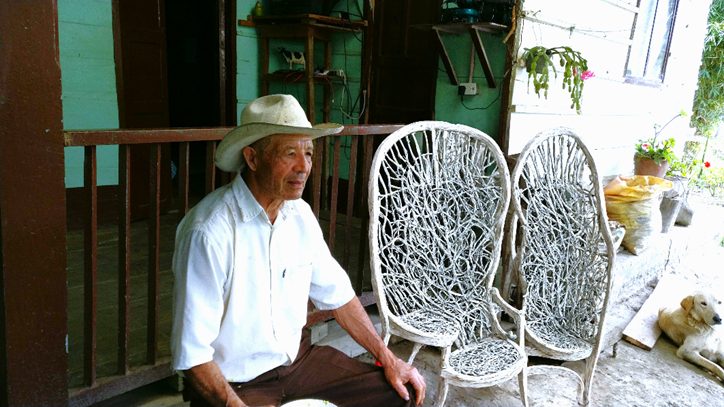
My uncle was a consummate practitioner of the “game of kings”. He loved chess so much that his economic hardship didn't stop him from owning a professional-quality set. Instead of settling for one of those magnetized sets with tiny pieces sold cheaply in town, my uncle carved his own pieces out of wood and engraved an elegant board onto a piece of cured leather.
During those days we shared, my uncle taught me to play chess. I learned to castle and the Scholar's Mate, although my passion lasted only until I faced the sharks of high school, who made me realize how lenient my uncle had been as an opponent. I also learned from him to sing the beautiful traditional bambuco “Hurí”, which he accompanied on his tiple.
After that, my uncle Álvaro married and had two children. The younger of them is Deiber, the one who, 30 years later, got quite a scare fighting COVID-19. The thing is, we gradually lost closeness, but my affection and admiration for him remained intact. Over the years I watched him age with dignity and good health on his farm, always tending to the animals and the chores of the land, and always with a smile and a loving hug at every reunion.
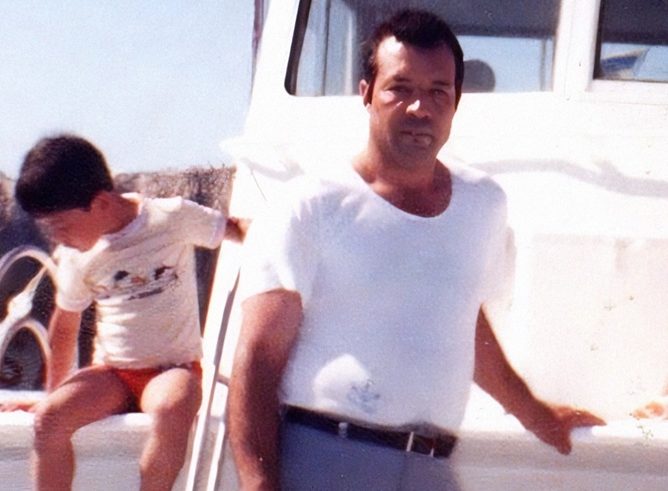
Shortly before my departure to North America, I bought a portion of my grandparents' farm where he lived with his wife, mainly out of love for that territory that shaped such an important part of my personality, trying to keep the property from falling into the hands of some stranger.
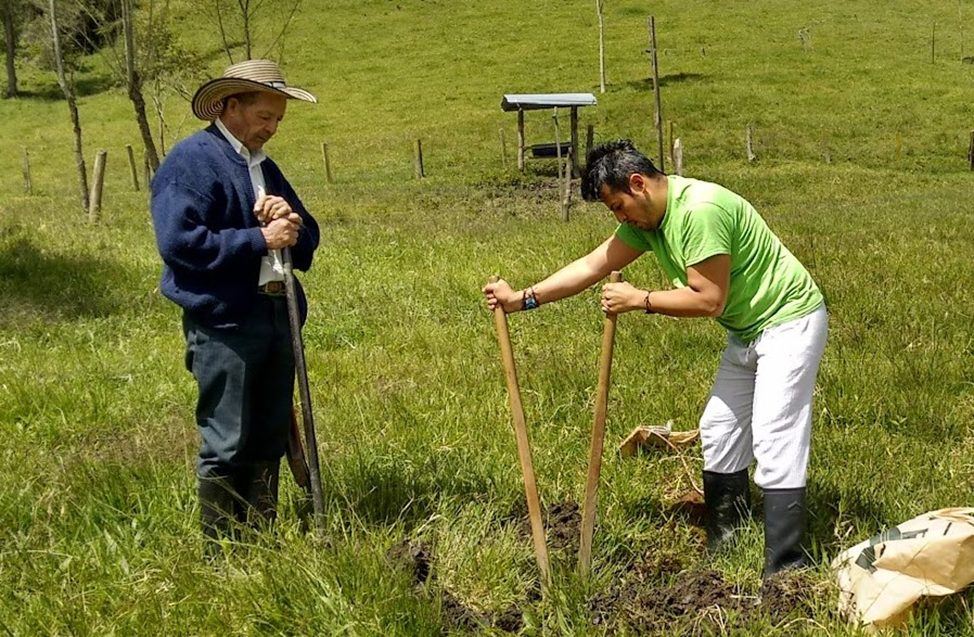
That episode gave rise to an unpleasant experience with part of the family, which is not worth revisiting, but also a pretext for new moments shared with my uncle and his family. One of those opportunities was the placenta-burial ceremony for my Luciana, which Paula and I celebrated together with the midwives who had attended the girl's birth. My uncle, even though he knew little – as far as I know – about the shamanic cosmology we practiced, accompanied us with respect and solemnity, and it was he who finished covering the placenta with earth and planting over it the tree that commemorated the birth of our little angel.
We also worked shoulder to shoulder on a family vegetable garden, which at my sister Paulina's initiative we planted behind my grandparents' house. All those moments nourished our mutual affection, even though conversations between the two of us remained scarce. Come to think of it, that was my uncle: cautious and reserved with words, but abundant and generous with actions.
Living in the countryside during the pandemic turned out to be an advantage for Álvaro and his wife Lolita. At their advanced age, they had to be careful with social interaction, and living kilometers away from their neighbors in open space turned out to be the best form of social distancing one could have. So the coronavirus didn't change life on the farm much. What it did make enormously difficult was access to quality medical services for the peasants.
With scarce resources and the high demand for medical services caused by COVID-19 infections, it became much harder than usual to access consultations and treatments for other reasons. This phenomenon, together with his high pain tolerance and enviable physical condition, contributed to my uncle Álvaro not getting timely attention for a small ailment that was bothering him.
It was a sore on the back of his tongue, which the doctors recognized as an infection and treated unsuccessfully with antibiotics and painkillers. For months my uncle took care of his lesion with home remedies and the medicines that the physicians who saw him in a hurry would try.
The sore gave way to an inflammation which, after months, the doctors finally got around to investigating in depth and, in December 2021, identified as a stage 1 cancerous tumor at the base of the tongue.
In January 2022, his oncologist determined that they had to operate urgently, and probably then put him through sessions of radiotherapy and chemotherapy. During the days before the operation, my parents hosted Álvaro at their home in Villeta and found him nervous but positive, determined to beat the disease.
The operation was apparently successful, although due to the size of the tumor, the surgeon had to remove a larger portion of the tongue than expected. Even so, my uncle was happy to have removed “the evil” from his body, and a few days later he was back on his farm, tending his crops and his animals.
But the joy didn't last long. After a few weeks, the intense pain at the surgery site forced him to return to Bogotá, where he was soon scheduled for a second operation. This time, they had to remove not only an additional portion of what was left of his tongue, but also part of his throat and the floor of his mouth.
The doctor in charge of the procedure informed the family that, unfortunately, in the first surgery they had left some “roots” of the tumor that had to be removed so it wouldn't spread again. He also told them that, under normal circumstances, he would have ordered complementary radiotherapy, but given my uncle's age, it could do more harm than good.
With this, my uncle Álvaro was sent home, but much weaker, more battered, and more limited than before the first surgery, when he had longed for it all to be nothing more than a passing scare that would be left behind after the procedure. Instead, that man, who cared for his parents in their final years, who built a beautiful family with love, and who was an exemplary man amid the hardships of country life, who at one time was a recognized peasant leader in his community and who was accustomed to hard work in the fields and the sober use of words, was forced to shut himself away in a small apartment in the big city, under the care of his son Deiber and Nury, a niece who from the very first moment did everything she could to give that good man all the care he now needed.
From the moment his doctors realized they had erred in their initial diagnosis, that the first surgery had been insufficient, and that the second surgery could not ensure a favorable prognosis, they seemed to redirect their efforts toward terminal palliative care, even though the information they gave the patient and his family kept fueling hope for a successful recovery.
Clarity and frankness are not very common virtues in Colombia, particularly when it comes to bad news, so in the successive medical checkups after the surgery, the doctors talked about radiotherapy, antibiotics, therapy, diet, faith, and positivism, but there was only one thing my uncle wanted to hear: “What I want is for you to tell me the truth,” he said over and over without getting a direct answer.
And neither his children nor his wife nor his relatives told him the truth because they didn't know it either, and all of them – all of us – preferred to ignore the obvious.
Then the pseudoscience helpers arrived. Without his approval, some relatives decided to consult Eusebia, a homeopath they visited frequently. I too went to homeopathy several times, until I decided to accept the abundant evidence that it is a pseudoscience with no physical or chemical principle that makes its functioning plausible. After 200 years since its creation, no serious clinical study has demonstrated the effectiveness of homeopathic remedies beyond the placebo effect.
My uncle, far more skeptical and wiser than me, had reached that conclusion much earlier, despite belonging to a family in which magical thinking and superstitions were common. He showed this off one afternoon, when his relatives took him to see the aforementioned homeopath, since she had stated the need to see him in person to begin the treatment.
During the consultation, in addition to dispensing the optimistic but unfounded diagnoses that charlatans are accustomed to giving, the “doctor” proceeded to probe my uncle's personal inner world:
“Don Álvaro, what you have in your throat is many things you've wanted to say and that have gotten stuck, things you haven't wanted to let out. You have to say all that you've kept silent so that you can be cured.”
This suggestion revealed a doctrine that I myself accepted during my years of shamanism and that is known as “mind-body holistic medicine”. This theory holds that negative thoughts, stress, and emotional conflicts can trigger or contribute to the development of physical illnesses. Those who preach this belief conjecture that the origin of a disease in a certain organ or part of the body comes from an emotional cause supposedly related to that organ.
Thus, a back problem would come from “some emotional burden that hasn't been released,” or a vision defect from the inability to “see” some reality in one's life. Therefore, Doctor Eusebia's question implied that my uncle was the cause of his own illness due to his supposed inability to be honest or direct with his loved ones. What insolence!
But Álvaro's response was forceful and a great lesson for all his loved ones: “Do me a favor and show me some respect; those are private matters and I don't have to tell you any of that.”
His anger, more than justified by the casual insult, also arose from the irony of being questioned about his lack of frankness when he himself had been demanding that they be frank with him, treat him like an adult, and tell him the truth.
Needless to say, that was the end of the consultation, and if my uncle ever accepted taking the dubious homeopathic remedies, it was probably because he knew that water or sugar wouldn't harm him, but it would make his gullible relatives happy.
By the summer of 2022, most of his relatives understood that my uncle's situation had no turning back and that it was only a matter of time before his final departure. His children did everything possible to get him the radiotherapy the oncologist had recommended, after recognizing it was something that should have been done long before.
But by the time that goal was achieved, the disease had already advanced so far that my uncle couldn't bear the pain of stretching out with his neck extended on the radiation table, and the procedure had to be canceled.
I knew that if I didn't travel to Colombia I would never see him again, and although our communication wasn't very abundant, especially since I emigrated to Canada, not a day went by without me feeling that I had to say goodbye to that beloved old man.
Around those days, a minor surgery on my mother's forearm was also scheduled, and although the procedure carried no special risk, I noticed she was deeply affected by the situation of her older brother, so I decided to travel as soon as possible to offer my support and company for at least a few weeks.
Paula not only supported this decision but had been suggesting for days that I make this trip. I sorted out my affairs and, taking advantage of the fact that my work allowed me to work remotely, I left for Bogotá without yet understanding the importance that trip would have, not only for my family but also for my spiritual search.
Traveling to Colombia five years after leaving, and without Paula and the children by my side, felt a little surreal. I left Colombia frustrated by the failure of the 2016 peace plebiscite and fed up with the animosity and virulence of the country's politics. But in that regard, things took a surprising turn: contrary to the widespread idea that Colombia was a mostly conservative country hostile to anything that smelled of socialism or communism, Gustavo Petro, a progressive former guerrilla, had just been elected as Colombia's first president from the left.
That was no chance event: four years of misgovernment by Iván Duque, a frivolous uribista upstart, wore out the voters, who had been electing right-wing governments for 20 years under the shadow of the shady former president Álvaro Uribe Vélez. But the dissolution of the FARC guerrilla group thanks to the peace process led by former president Juan Manuel Santos left Uribismo without the figure of the internal enemy and wore down the strategy of the fear of communism with which they had commanded the presidential elections for two decades.
So I, like a great many young people, peasants, victims of violence, and other marginalized people whom the new vice president of the republic called “the nobodies,” felt a hope for change and progress that I don't remember ever having felt before regarding Colombia's future. For me, that hope for change flourished thanks to the sacrifice of thousands of anonymous people of good will who worked for peace, with the modest help of those of us who took part in marches, in the 2016 peace camp, and who knows, perhaps also with the spiritual work we did. Not for magical or mystical reasons, but because by talking about the land, connecting with it, embracing one another, and talking about peace, I know we managed to touch the hearts and change the way of thinking of many of those who came to our circles of the word, yagé ceremonies, and the pagamentos we made with the Muiscas.
I found Bogotá in a state of chaos, worse than I remembered. The pandemic left in its wake more poverty and labor informality than before, but even so, I felt happy to set foot in a country that hadn't let itself be defeated by fear but had given itself the chance to look toward its forgotten people, trading the discourse of war for something closer to a bet on life. Of course, it was too early to know whether the change would be positive in the long run or whether we had taken a leap into the void with ramifications to regret, but it seemed right to me to share the joy of those who had never felt represented at the center of power.
After resting from the trip, I visited my uncle Álvaro at his son Deiber's house. I could barely recognize him. He wasn't even a shadow of the sturdy farmer I had said goodbye to five years earlier. He recognized me the moment I approached and, with a gesture, asked me to hug him. I did, and I took his hands as I passed along greetings from Paula and Ana María. I told him a couple of things about our life in Canada, and after a few minutes he let go of me, put his hands on his head, leaned back, and let out moans of pain.
Nury – his primary caregiver – told me he could only hold his focus for a few minutes before the pain forced him to withdraw into himself. We talked for a while about my uncle's condition, his routines, and the number of medications and devices he required during the day, which had turned the small apartment into a nursing room. My uncle's state was truly pitiful; although cancer is tremendously painful wherever it invades the body, having it in the mouth is perhaps one of the most unpleasant, uncomfortable, and distressing experiences one can go through.
There was no way he could ignore a wound located so close to all of his senses. The strong painkillers they gave my uncle managed to bring him some peace for a few hours, during which he could fall into an intermittent sleep. The rest of the time, the poor man struggled between the discomfort, the intense pain, and the anguish of not knowing how much longer he would have to endure that torture.
Despite all that, my uncle never gave up, never yielded to despair, nor did he resign himself to the indignity of being treated like a child. With the little piece of tongue he had left, he made his will heard, along with his demand to always know the truth. With the few strength he had left, he fought to stay on his feet and fend for himself. He rejected the strongest opioids because with them, he said, he didn't feel like himself. He preferred consciousness amid pain over the placidity of unconsciousness.
On one of my visits I wanted to talk to him about yagé, to raise the imminence of his death and offer him the plant as an alternative to reconcile with the path of farewell. But I couldn't. His rock-solid skepticism showed me that I myself didn't fully believe in the magic of my own path. I wouldn't have felt honest telling him that yagé could guide him or help him in his passage, because I had no evidence of such a thing. At most, the psychotropic journey might have helped him find a purpose in his suffering, but I knew it could also have caused him an episode of psychosis like the ones I had lived through so many times.
Nor did I feel I had the authority – or the courage – to talk to him about the imminence of his death, when he had expressed his desire to fight for life and had shown his ability to steal happiness from suffering by enjoying the little he could in his state: the hugs, the smiles, the news from his farm, Colombian music, soccer matches, and Deiber's jokes.
Despite my hesitations, I accepted Mara's invitation to a yagé ceremony at a farm not far from Bogotá, with two shamans she had been working with for some time. The idea of taking yagé terrified me, but at the same time, it filled me with an inexplicable enthusiasm.
It's true, my skepticism had been growing, but perhaps taking yagé again was what I needed to test whether reason was capable of containing the overwhelming hyperreality of the entheogenic experience. But there was something else drawing me: I yearned for that feeling of unity with the Earth, that sense of transcendence, the encounter with the sublime within myself.
It also occurred to me that it could be an excellent opportunity to reunite with some of my dearest friends, so without hesitation I extended the invitation to the ceremony to abuelo Luis, my friend Pedrito, and my friend Lucero, and all of them accepted immediately.
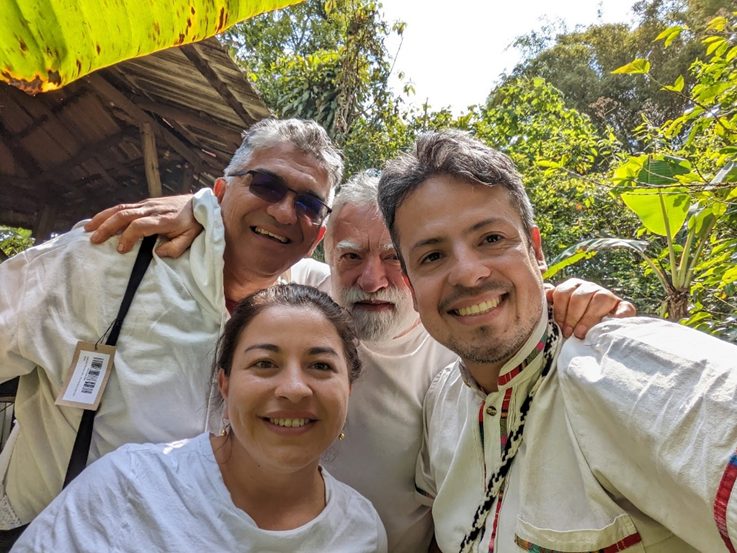
Mara and I arrived early at the farm located in the town of Albán, along with Lucero and Cielo Rocío, a friend of Mara's who also knew, loved, and was a very close disciple of the shaman Omar Barreto.
A strong hug with abuelo Luis made me feel that the deep distance that chlorine dioxide and other conspiracy theories had carved between us was only an imaginary crack. The affection was intact. Being dressed in white again alongside my shaman friends filled me with joy and gratitude, so much so that the usual fear before ingesting the sacred potion seemed insignificant. The farm was beautiful, the morning clear, and everything was conducive to a calm and contemplative ceremony… Well, perhaps it would have been, had I not been there.
I believe that was the smallest portion of ayahuasca I had ever received at a yagé ceremony – perhaps five spoonfuls – so I thought the probability of a bad trip, or even of having a trip at all, was low. So I settled in as I usually did, sitting in the lotus position with my eyes closed, waiting for the entheogen's effects to begin.
I think I fell asleep after a while because I lost all notion of the passage of time, but the feeling was one of peace and tranquility. Then, as I had grown accustomed to, I flinched when the urge to vomit came over me. I stood up and let out a few mouthfuls before sensing the familiar nervousness that accompanied that feeling of a dizzying shift in my state of consciousness.
I began breathing deeply, trying to come back to myself, but I knew the yagé was grabbing hold of me with force. Soon I felt vulnerable and looked for Nayab, the officiating shaman, who with affection and confidence-inspiring warmth asked me to lie down on the grass and assisted me with copal fumes and sprays of perfume.
I stayed there for a good while as I sank deeper and deeper into a disturbing state of consciousness, full of mystical visions, fleeting images of my life and my tribulations mixed with bursts of dark and absurd thoughts. Eventually I felt I was in control of my mind despite the chaos flooding me, and showing my usual childish arrogance, I began wandering around and bothering the other attendees with incoherent, repetitive ramblings.
Little by little I abandoned myself to the labyrinth of my mind, and soon I found myself once again in the middle of a dark ocean of fears and anguish. Soon I fell into the messianic delusion of being there as the stage for the ancestral struggle between good and evil, achieving through my intoxication the healing of my companions and even the salvation of humanity. The water of that ocean then became absolute solitude and fear, and its salt, the conviction that the only solution to my predicament would be the relief of death. I thought of my uncle Álvaro's calvary and saw myself in him, his hands on his head fighting against evil, atoning for our sins with his suffering.
“Why is everyone looking at me like that? Don't you know mercy? Kill me out of pity, please kill me!”
Whatever I was in that state exhaled that scream from the depths. I repeated the sinister phrase like a mantra while obscenities, lustful thoughts, images of death, and once again Álvaro's cancer, in whom I saw my uncle, my father, and myself in equal parts, jostled in my mind.
Later I learned that Nayab and Juan had agreed to tie me up to keep me from hurting myself or anyone else, but my friends, Pedrito and abuelo Luis, volunteered to take charge of me to avoid the dishonorable binding. Feeling them near, I managed to recover a little of my consciousness, and despite my state, I could understand what they were telling me and asking of me. Even so, I kept feeling that this was the day of my death and that as long as I didn't let myself be carried away by death, the suffering would keep consuming me.
“Pedrito, I have to die today, help me die,” I told my friend.
“Alright Manuel, I'm going to help you, but you have to do what I say. Come with me.”
I sat up calmly, just as my son Benjamin does when, in the middle of a tantrum, I look him in the eyes and ask him to breathe deeply. I followed Pedro, who led me to a small clearing behind the bushes, on the other side of a little spring of clear water that ran near the maloka.
He helped me lie down and said:
“Are you ready to die? Do you really want to die?”
“Yes, brother, yes I do,” I told him, full of fear but with conviction.
“Then stay silent, close your eyes, and let yourself go; mother death is waiting for you.”
I closed my eyes and relaxed every muscle. My mind emptied, and I found myself in the middle of silence.
Until suddenly the trance broke and I found myself once again beside my friend, with life flowing through my entire body.
We repeated the same game several times until I surprised myself with the same certainty of living my last minutes on Earth, but now without the fear that had always accompanied me until that afternoon. I let myself be dragged toward the silence in which, little by little, I could understand what it was that was dying.
A day before the ceremony I had contacted Diana, the woman for whom I had put my home at risk, and we agreed to meet during my stay in Bogotá. Of course that encounter wouldn't be just for coffee, and although I told Paula about that date, I knew I was hurting her. I was already 42 years old and I kept behaving like the 21-year-old boy who didn't care about the suffering of those who love him as long as he satisfied his instincts.
I also saw myself obsessively following the value of stocks on the stock exchange and playing at predicting the market's ups and downs for hours, during which I was failing to enjoy invaluable moments with Paula and my children.
Finally, I saw myself blaming my Father for the mistakes I made during my life, for my eagerness to feel loved and admired, and for the irrational fears that tormented me since childhood. Fears that in the end forced me to abandon a country that was, after all, my territory and my world, fleeing the constant feeling of insecurity.
Then I realized I was standing, with Pedrito and abuelo Luis holding me up on each side. I looked at the abuelo and told him:
“I'm tired of going around in circles; that's what won't let me be born.”
“Well die then, and stop talking so much.”
I exhaled the air from my lungs and let myself fall with all the weight of my body. My friends caught me and laid me on the ground, where I lay for a few moments before jumping up and getting going again, murmuring some nonsense or perhaps some profound reflection.
My friends were already enjoying my performance: saying I was going to die, waiting for them to “give me permission,” and then fading away theatrically.
Then Juan picked up the guitar and began to sing a beautiful tune, whose name I don't know, but which I remember was about the love of a Father who never leaves us alone, who is there loving us even when we despise ourselves, and who waits for us to give us his love.
I thought of my old man, nearly 83 years old and living his own via crucis with Parkinson's disease. But I saw him younger, playing with me on his lap, just as I now play with Benjamin. Carrying me on his shoulders and teaching me songs, rounds, and tongue twisters.
My dad, the eloquent, strong, and disciplined teacher, taking me to my swimming and karate classes, teaching me to admire nature with homemade experiments and showing me plants that close when you touch them, others that can be used as a marker, and others with which you can make funny sounds.
Then I saw him somewhat older, shut in his room watching television while I discovered my world with the computer he had bought despite its prohibitive cost. I saw myself judging him for not talking to me, for not being the father I thought I needed, without realizing that it was precisely he, who never had a father to learn from and who carried the trauma of the violence and poverty of his childhood, who gave me the foundations to become the father I am now.
From my heart I poured out the tears of that child who lives in me, sometimes mistreated and ignored, but always loved and encouraged. Also the tears of that confused and arrogant young man, but always supported, and above all the tears of that neglectful son, who let anger and sadness rob him of the chance to enjoy a wonderful father who is still with him and, above all, who also needs him.
When I felt I had no more tears left, I stood up and stood watching with gratitude the young shaman who, with his guitar, had just decongested my soul. Then he raised his gaze and said:
“The boy is back! Welcome!”
The ceremony attendees, who apparently had already been out of their trance for a good while, turned to look at me and burst into applause.
I felt embarrassed because I knew my behavior had been very intrusive and inappropriate, and that I had bothered several of the attendees during the ceremony. But what I saw in their eyes was the honest joy of seeing me “on the other side,” relieved of the singular emotional storm of which everyone had been witness.
Two or three of them even thanked me for having endured that trance, since, as they told me, they saw themselves reflected in me and felt that my torment somehow helped them bear their own afflictions.
I returned to Bogotá somewhat annoyed with myself for not having managed, after so many years, to have more self-control during the yagé trance, but happy because once again, despite how much the years had changed me, the sacred plant demonstrated its therapeutic and medicinal power, beyond personal convictions or beliefs.
This time, however, it was clear to me that the visions of that struggle between good and evil, the mystical missions, and the prophecies are not part of reality, but rather the result of the accumulation of beliefs, traditions, superstitions, and fictions I built in my mind over decades. As always, I saw myself as god and as demon, but this time I didn't give it much importance. I understood both states as manifestations of conflicting yet complementary aspects of the human being: self-love and egocentrism on one hand, and on the other, instincts and fear.
I also understood the prevalence of the idea of death during the entheogenic experience from another perspective: beyond the constant fear of death that comes with being aware of our finitude, there is a more immediate and pressing anguish that comes from the inexorable dissolution of a mental structure anchored in the mind. It is known that yagé enables the formation of new neural connections in minutes, instead of the months or even years it can take naturally. Some of those connections are part of the definition of the self, and when they replace or threaten to replace what we once treasured as what defines us, we can feel an instinctive survival response coming from that part of our mind. A response we interpret as the closeness of death.
Or it may be that yagé simply activates a region of the brain associated with the perception of imminent death, but in any case, its effect is powerful in a process of self-transformation. It is an experience that can hardly be replicated in another safe environment the way the ancestral yagé ceremony allows.
Back in Bogotá, I wrote to Diana apologizing for yet another change in my attitude toward her and telling her we would not see each other again, and that even though I still felt great affection for her, I would not seek her out again either.
I also felt I fully reconciled with my country. After once again living the neurochemical magic of yagé and the emotional power of the shamanic ceremony, I felt deeply grateful to have been born in Colombia. Where else – except perhaps Ecuador or Peru – could I have found such a natural power? But only in Colombia could I find friends like Mara, abuelito Luis, Pedrito, or Lucero, people devoted to helping like Nayab and Juan, or a president who would say before the United Nations that he “wants us to live in the times when the human being knew how to stop killing each other on the planet and managed, understanding itself in its own diversity of cultures, to fulfill its mission: to spread the virus of life across the stars of the universe.”
My uncle Álvaro passed away in Bogotá on October 12, 2022, almost a month after my return to Toronto. My mother visited him a day before his departure and put me on the phone so I could say goodbye to him. I don't know if he heard me or understood me, but I let him know how much I appreciated and admired him, but above all that I would never forget everything he taught me, from chess and the love of Colombian music to the courage to defend the truth and not yield to fear, the fortitude to fight for life, and the coherence not to give in to the deception of pseudoscience, however attractive its promises.
Well, it's possible those weren't my exact words, but that is the feeling that has accompanied me since his departure.
In June 2023, Paula, Luciana, Benjamin, and I reunited with our parents in Cuba to embrace one another and celebrate life. We talked for hours about everything that had happened, and I realized that my mother resists abandoning the magical, idealistic view of the world through which she has understood reality her whole life, and which has served her to overcome poverty, adversity, and injustice, always with a smile and the certainty that everything is for the best and part of God's plan.
My father, on the other hand, somehow balances in his mind a skeptical mind and a factual view of reality with the need to believe in a just and bountiful higher power that drives away his fear of the relentlessness of chance. Parkinson's makes that act of intellectual juggling even harder, but brave like my uncle, he too chose life, to fight his disease in order to keep enjoying more moments like the ones we shared on the beautiful Caribbean island.
I see them both, in harmony with their contrasts, and I see in them the incarnated spirit of my search to balance in my soul the magic I intuit in existence with respect for the truth without adulteration or evasion, and the need for a purpose that gives meaning to suffering and to the inclemency of chance.
That search for balance may have no end, but thanks to the path of lights and shadows I traveled over the last 15 years – with its illusions and disappointments – I found my own way. Writing these memoirs for my podcast “Espiritualidad y Ciencia” became the space of self-reflection and catharsis I needed to digest the teachings I received during my spiritual journey and find the peace my mind longed for.
Just as the faint light of dawn outlines the shapes in the jungle, making the monsters formed in the darkness disappear, the light of scientific knowledge has allowed me to see reality in its true magnificence and perfection. My homage to my grandparents, to my parents, to my godfather Diego, to my teachers, and to my uncle Álvaro is to acknowledge them with these lines, but above all, to make them flesh and blood through my own life, honoring their teachings and their legacy, as I continue my path from the stars to the sea.
When we were children the old folks were about thirty a puddle was an ocean death plain and simple did not exist. then when we were youths the old folks were people of forty a pond was an ocean death merely a word when we got married the elders were in their fifties a lake was an ocean death was the death of others. now veterans we have caught up with the truth the ocean is at last the ocean but death begins to be ours.