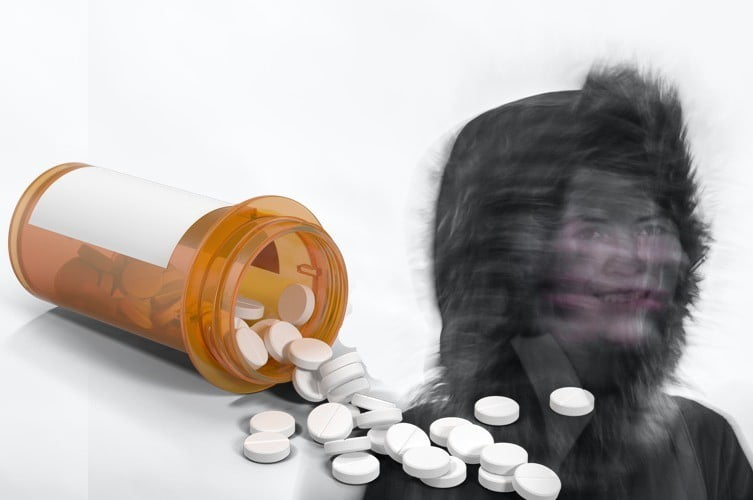
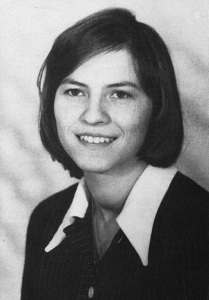
Anna Elisabeth «Anneliese» Michel was born on September 21, 1952 and died on July 1, 1976. She was a German woman who underwent Catholic exorcism rites during the year before her death. She was diagnosed with epileptic psychosis (temporal lobe epilepsy) and had a history of psychiatric treatment, which in general was not effective.[1]
When Anneliese was 16 years old, she suffered an attack and was diagnosed with a psychosis caused by temporal lobe epilepsy. Shortly after, she was diagnosed with depression and was treated by a psychiatric hospital. At age 20, she had become intolerant to various religious objects and began to hear voices. Her condition worsened despite the medication, and she became suicidal, also showing other symptoms, for which she also took medication. After taking psychiatric drugs for five years without improving her symptoms, Anneliese and her family became convinced that she was possessed by a demon [2][3]. As a result, her family went to the Catholic Church to have an exorcism performed on her. Although they refused at first, after many doubts, two priests obtained the permission of the local bishop in 1975.[3] The priests began to perform exorcism sessions and the parents stopped consulting doctors. Anneliese Michel stopped eating and died of malnutrition and dehydration after 67 exorcism sessions [4]. Michel's parents and the two Roman Catholic priests were found guilty of negligent homicide and were sentenced to six months in jail (reduced to three years of probation), as well as a fine.
The 2005 film The Exorcism of Emily Rose is loosely based on her story.
In June 1970, Anneliese suffered a third attack in the psychiatric hospital where she was. For the first time she was prescribed anticonvulsant drugs, including Dilantin, which failed to alleviate the problem. She began to describe seeing “demonic faces” at various times of the day[7]. That same month, she was prescribed another medication, Aolept, which is similar to chlorpromazine and is used in the treatment of various psychoses, including Schizophrenia, conduct disorder and delusions.[8] In 1973, she suffered from depression and began to hallucinate while praying, and frequently complained of hearing voices telling her that she was “damned” and that she would “rot in hell”[10]. Michel's treatment in a psychiatric hospital did not improve her health and her depression worsened. Long-term treatment also did not help, and she became increasingly frustrated with medical intervention, taking pharmacological drugs for five years.[3][2] Anneliese became intolerant to sacred Christian places and objects, such as the crucifix.[7]
The disturbed young woman went to San Damiano with a family friend who regularly organized Christian pilgrimages.[11][12] Her companion came to the conclusion that she was suffering demonic possession because she could not pass in front of a crucifix and refused to drink the water from a holy Christian spring:[13]
Anneliese told her companion that she could not enter the sanctuary. She approached it with the greatest hesitation, then said that the ground burned like fire and that she simply could not bear it. Then she walked around the sanctuary in a wide arc and tried to approach it from the back. She looked at the people kneeling in the area surrounding the small garden, and it seemed to her that while they prayed they were gnashing their teeth. She reached the edge of the small garden, and then had to turn back. Coming from the front again, she had to avert her gaze from the image of Christ [in the chapel of the house]. She reached the garden several times, but could not pass. She also noticed that she could no longer look at the medals or images of the saints; they shone so immensely that she could not bear it.
Anneliese and her family, as well as her community, became convinced of the problem and consulted several priests, asking for an exorcism. The priests refused, recommended the continuation of medical treatment and informed the family that exorcisms required the bishop's permission. In the Catholic Church, official approval for an exorcism is given when the person strictly meets the established criteria; then it is considered that he/she is suffering a possession (infestation) and is under demonic control. The intense dislike of religious objects and supernatural powers are some of the first indications[9]. Anneliese Michel worsened physically and showed aggressiveness, self-harmed, drank her own urine and began to eat insects. In November 1973, Michel began her treatment with Tegretol, an anticonvulsant drug and mood stabilizer.[8] She was prescribed antipsychotic medications during the course of the religious rites and took them frequently until some time before her death.[14] Despite taking these neuroleptic medications, the young woman's symptoms worsened and she began to manifest “grunting, seeing demons, and throwing objects”[1].
The priest Ernst Alt, whom they knew, upon seeing her declared that she “did not look epileptic” and that he did not see her having seizures[12]. Alt believed that she suffered demonic possession, whereupon he recommended to the local bishop that he allow an exorcism. In a letter to Alt in 1975, Anneliese wrote: “I am nothing; everything in me is vanity. What should I do? I have to get better. You pray for me” and she also told him once: “I want to suffer for other people... but this is so cruel”[9]. In September of the same year, Bishop Josef Stangl granted the priest Arnold Renz permission to exorcise according to the Rituale Romanum of 1614, but ordered total secrecy. Renz performed the first session on September 24. Anneliese began to speak more and more of “dying to atone for the wayward youth of the time and the apostate priests of the modern church,” and toward the end she refused to eat[10]. At that time, her parents stopped consulting doctors at her request and relied solely on the exorcism rites.[10] 67 exorcism sessions; one or two each week, of up to four hours in duration, were carried out over about ten months between 1975 and 1976[9].
On July 1, 1976, Anneliese Michel died in her home. The autopsy report indicated that the cause was malnutrition and dehydration due to her being in a state of semi-starvation for almost a year while the exorcism rites were being performed[17]. She weighed 30 kilograms, and had broken knees due to constantly making genuflections. She was unable to move without help, and it was reported that she had contracted pneumonia.
The science of Anneliese's case
This is a story that would have been appropriate to tell on Halloween, but I wanted to share it with you because it is a case, sad to say, that illustrates a series of phenomena that are found on the border between reality and the paranormal.
As we have chatted before, this border is found in the human mind, which has a physical part made of neurons and glia, which is the name of another type of cells that form what we call the gray matter. But we already know that the mind is not only a physical organ, but it is also formed by conscious and emotional sensory experience, which as far as we know is generated in the brain but in which many other organs and systems of the body participate (See: Episode 19: The Power of Intuition and Energies).
In several episodes I have referred to the mind as a world parallel to physical reality, which, analogous to the software of a computer, is as real or even more real for us than the physical world around us, for the simple reason that consciousness exists precisely in that subtle or ethereal part of the mind.
In a computer, the field of action of the hardware, or physical part of the system, and of the software or the intangible part, is very clearly defined. That is why there are specialists dedicated to designing, manufacturing and repairing the physical elements of a computer, such as the motherboard, the processor, the hard drive or the memory, and other specialists who do the same with the software. The former are the semiconductor and microelectronics engineers and technicians and the latter are the systems engineers, developers and computer technicians.
In the human mind, the thing is not so clear. The physical part of our body is studied by doctors, neurologists and other specialists who achieve more and more advances in the treatment of diseases like tumors, infections, epilepsy and some neurodegenerative diseases like Alzheimer's and Parkinson's disease. The intangible part, in turn, is studied and cared for by psychologists, psychoanalysts and, in its most mysterious part, by us spiritual people, religions, coaches and many others who try to make sense of life and help solve the drama of existence.
However, unlike computer science, in human medicine a specialty emerged that moves in both worlds, trying to find the physical origin of mental illnesses and provide a scientific approach to the darkest phenomena of the mind, so that they can be cured with equally scientific methods. We are talking about Psychiatry.
The word psychiatry comes from the Greek words psiqué – iatreia, which literally means Healing of the soul, and as a medical specialty it is dedicated to the study of mental disorders of genetic or neurological origin with the objective of preventing, evaluating, diagnosing, treating and rehabilitating people with mental disorders and ensuring the autonomy and adaptation of the individual to the conditions of his existence.
This field of science is relatively new, appearing only in the 18th century as an area of scientific study. Medicine only formally accepted psychiatric practice in the 19th century, and in the 20th century, the mentally ill were still confined in asylums where they were given “moral treatments” whose purpose was to reduce their “mental confusion.”
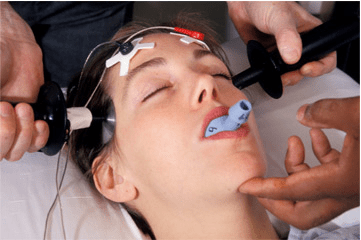
Thanks to many movies we have seen, we are aware that in the last century the most common therapy for many mental illnesses like depression, schizophrenia or psychosis was electroshock therapy. Many believe that this was done out of ignorance of the chemistry of the brain, and in a way it was, because at first it was not known for certain what happened in the brain, but the truth is that in many cases it helped improve the patients' diagnosis.
What you probably do not know is that electroconvulsive therapy, which is its technical name, is still administered to more than one million patients around the world every year. Furthermore, recent studies have shown that the reason why electroshock therapy is useful beyond the placebo effect has to do with the fact that it stimulates the production of chemicals whose shortage in the brain causes some of the diseases that are treated. It is also possible that electroshocks cause the generation of new neurons and the formation of new neural connections that improve the functioning of areas of the brain that may not be operating correctly. In any case, this therapy today is considered almost a last resort and is only recommended in cases of severe depression and some manias, when pharmacological therapy has not been successful.
This brings me to the main tool of modern psychiatry: drugs, or biological therapy as it is officially known. The history of psychiatric medications predates psychiatry itself because even pre-Hispanic and aboriginal cultures all over the world knew of the beneficial effects of certain plants and fungi, generally loaded with psychotropic substances, to treat mental illnesses, even when these were not considered as such but as spiritual manifestations. Later I will touch again on this point, which will bring us closer to the spiritual vision of psychiatry.
From the modern scientific point of view, however, research with psychotropic drugs is relatively recent, dating back only to the middle of the 20th century. Certain chemicals were already known, like lithium, which helped patients with depression, schizophrenia and bipolar disorder, and the chemistry of the brain began to be studied in depth, with which chemical compounds, generally synthetic, began to be theorized and then clinically tested, to compensate for the deficiencies or chemical imbalances that were associated with certain mental illnesses.
One of the first and most important discoveries in this field was chlorpromazine, which began to be used in the 1950s as a therapy to treat psychosis. Thus, little by little, medications were added to the psychiatric pharmacopoeia, which gradually began to replace the confinement of patients in psychiatric hospitals and the widespread use of electroshock therapy.
Thus we arrive at modern pharmacological therapy, which includes antidepressants like Fluoxetine, Citalopram and Sertraline, anxiolytics like Clonazepam and Alprazolam, stimulants, antipsychotics, mood stabilizers and medications for attention deficit like Adderall and Ritalin, among many others.
The problem with psychopharmacology is that none of these chemically derived medications is effective in all people on all occasions, and all medications have side effects that vary in intensity from person to person. Because of this, many people experience side effects that in some cases can be worse than the very disease being treated.
This was the case of Professor Jordan Peterson, whom I have already referenced in a couple of episodes (See T2E19 – La Regresión and T2E23: Orden y Limpieza en tu vida), who has been fighting a severe anxiety condition for years and who recently had to be hospitalized because he developed dependence on benzodiazepine, a medication used to treat anxiety, insomnia and other psychiatric pathologies. Peterson himself narrated that not only did the “benzo,” as the medication is colloquially called, generate a strong chemical dependence in him, but it did not help him at all with the anxiety.
These cases are infrequent, but not as much as one would wish. In 2015 Peter C. Gøtzsche, professor at the Nordic Cochrane Center in Denmark, stated that these drugs can be more harmful than beneficial. He also said that psychiatric drugs kill more than half a million people over 65 years old every year. Gøtzsche also believes that deaths related to psychiatric medications are not reported. He estimates that there are at least 15 times more suicides than those reported by the Food and Drug Administration among people taking antidepressants.
On the other side of the spectrum, the majority of the psychiatry guild, although it recognizes that the placebo effect has an important effect on the effectiveness of psychotropic drugs in people with mild cases of mental illness, defends the effectiveness of these medications in people with more severe pathologies.
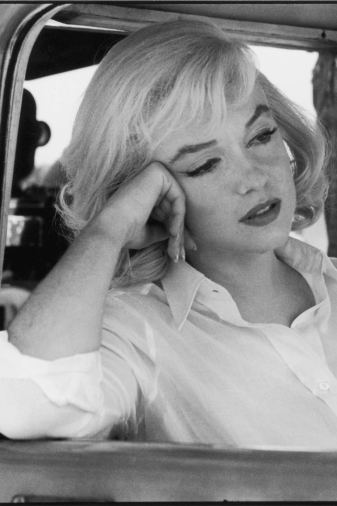
Recently I was just reading about the case of Marilyn Monroe, who is famous for having suffered, during most of her short life, from a chronic depression and what today is known as borderline personality disorder. There is a theory that her psychiatrists not only did not help cure her mental illnesses, but aggravated them with an irresponsible prescription of a barbiturate called Nembutal, which she used to be able to sleep, and amphetamines that she used to shake off the drowsiness of the barbiturate in the mornings. Some current psychiatrists affirm that if she had been given the antidepressants we have today, she probably would not have committed suicide.
This claim is very debatable, since there are numerous recent cases of celebrities who have ended up committing suicide despite being under treatment with antidepressants. A 2010 study concluded that antidepressant medications seem to generally reduce suicidal thoughts in depressed adults, but their effectiveness could not be proven on the suicidal mentality of younger patients with severe affective disorders. The possible increase in the suicide rate induced by the growing use of antidepressants continues to be one of the most important public health problems in the whole world.
The reality is that there is not enough information to determine with certainty the effectiveness of all psychotropic drugs. I believe it is responsible to say that as far as possible, it is advisable to exhaust the therapy alternatives that can be tried before resorting to psychiatric medications. Psychiatry itself has other tools like psychotherapy and psychoanalysis that have proven effective, although also in some cases, sometimes.
Psychology also has tools with which it can help resolve the entanglements of the soul, and of course, esotericism, self-help, shamanism, Buddhism and other ancestral knowledge have their own methods to heal the mind. In past episodes I have shared the tools that I know and have applied in my life to heal and grow internally (See T2E7: El Secreto Para Poner Fin al Sufrimiento) but it is important to clarify that no spiritual therapy is a replacement for a psychiatric or psychological treatment.
Even so, some psychologists and psychiatrists recommend meditation, mindfulness, self-observation and other spiritual techniques as a complement to their therapies, and many cases of lasting healings thanks to spirituality have been reported. Yagé or ayahuasca, which I have also talked about in several episodes (See: T2E4: Muerte y Renacimiento en el Yagé), is also being studied with great attention by psychiatric medicine because it has been proven that it can help treat addictions, anxiety, treatment-resistant depression, and post-traumatic stress disorder.
But then, what really happened to poor Ann Elizabeth Michel, the young woman in the story I told at the beginning of this episode? Being one of the most famous cases of demonic possession in history, the question that arises is whether today's psychiatry or spirituality could have saved Anneliese.
This is something we will never know, but what we do know is that in the 1970s the antipsychotics and anticonvulsants that exist today did not yet exist. Besides this, we know that historically the human being has granted supernatural qualities to the phenomena we do not understand. In the past, diseases like leprosy or epilepsy were considered divine punishment and demonic possession respectively. This was so until science allowed determining that what causes leprosy is a bacterium called Hansen's bacillus and what gives origin to epilepsy is an electrical imbalance in the brain caused by lesions or genetic predisposition. Today almost no leper or epileptic is treated outside traditional medicine, much less accused of being possessed or a sinner.
With mental illnesses it is much more complicated because there is not a single cause that generates them: it is a mixture of genetic predisposition, environmental conditions during gestation, traumatic events during childhood, poor nutrition, emotional wounds, stress, isolation, bad family relationships, frustrations, attachments and many more factors.
Neither is there a single form of manifestation of mental illnesses, because each individual, depending on his upbringing, culture, religion and other factors, can show his symptoms in very different ways. Furthermore, in the spectrum of mental illnesses there are all the nuances from very mild cases to chronic and highly severe cases.
Anneliese's case was clearly a severe case of schizophrenia, which is characterized by seeing visions, hallucinations, dissociation, social isolation, catatonia, unrestrained insomnia and sudden violent outbursts. Not to mention that she began to have “demonic” symptoms precisely the year the movie “The Exorcist” came out, although it is not known whether she saw the movie. Anneliese's testimonies of feeling evil, being the demon or being possessed, are frequent in patients with schizophrenia, and as I told in the episodes of my Exorcism with Yagé and my descent into hell, I myself have experienced those sensations during the entheogenic trance with ayahuasca.
Anneliese Michel came from a very religious family and during her childhood she had to go through a difficult drama when her older sister died when she was only 8 years old. Apparently Anneliese's mother always felt guilty for the death of the girl, and Anneliese grew up with the idea that she had to do penance to free her mother from sin. Several years of prayers, guilt feelings and suggestion from reading about sin, demons and divine punishments were settling in Anneliese's subconscious, who at 16 began to have seizures and was diagnosed with epilepsy.
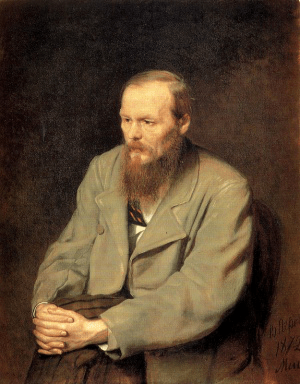
Recent research has shown that there is a strong relationship between epilepsy and schizophrenia and other mental conditions. Famous is the case of Fyodor Dostoevsky, who suffered from a strange case of epilepsy called “ecstatic epilepsy” that made the author experience, during his seizures, mystical revelations and states of ecstasy or religious rapture. In fact, Dostoevsky documented 102 of those experiences during his attacks and used them to create characters with epilepsy in four of his twelve novels: The Demons, The Brothers Karamazov, Humiliated and Insulted and The Idiot. Many believe that, without his epilepsy, Dostoevsky would not have achieved the depth and excellence of his work.
It is possible that a mental condition that for Dostoevsky was a kind of connection with divinity, the superior archetypes of the mind and creativity, for Anneliese was a portal to the hell of guilt and terror that overwhelmed her since her childhood. Heaven and hell are in the end states of consciousness that cohabit as two faces of the same coin in the interior of the human mind and spirit (See T2E18 – Descendiendo a las Tinieblas).
This is a question for which science does not have for the moment a concrete answer. Some believe that all mental illnesses are ultimately physiological or biochemical imbalances in the brain and that therefore, when we know more about the way the chemical and neuronal reactions that give rise to those diseases work, we will be able to create a cocktail of substances that correct the imbalances and cure the disease.
I personally believe that this is only part of the answer, but just as computers cannot work correctly if they have a faulty program installed, even if they have hardware that works perfectly, human beings also cannot have ideal mental health if we have wounds in our soul, even if our brain chemistry works perfectly.
For this reason, my recommendation, clarifying that I am not a competent person to give advice on mental health, but simply based on my research and my experience, is that in the face of symptoms of any mental illness, we go to a mental health professional to rule out that we have some physical or biochemical problem that has to be resolved through medicine. Usually, a general practitioner is trained to recognize the symptoms and refer the patient to a psychologist or psychiatrist as appropriate.
In many cases, the psychologists or psychiatrists themselves are able to suggest alternative therapies that can help the healing process, according to the beliefs and personality of the patient. If you ever need spiritual guidance to help heal your mind and you are listening to this podcast, of course I invite you to listen to other episodes about inner work and healing and if you wish, you can also contact me to put you in touch with trustworthy people and valuable resources to help in your process.
Each case is different, but I dare to say that, with proper treatment, the help of a conscious spiritual work and the love of the people you love, it is possible to come out even of the darkest darkness. I have already shared my personal experience with yagé and later I will talk about my experience with psychiatry after I was diagnosed with anxiety and tendency to obsessive-compulsive personality. I was able to get out of that difficult trial thanks to the love of my family, my spirituality and psychiatry, but I did not want to use psychotropic drugs and in my case, they turned out not to be necessary.
However, my case was not as serious as Anneliese's or many others who suffer daily from complex mental illnesses. But I am going to share, to finish, the experience of a friend of mine, whose name I am going to keep to myself, who suffered the hell of schizophrenia and was able to get out of it on his own.
My friend recounts that after years of inner emptiness, loneliness and a job he hated, he began to suffer hallucinations, visions, nightmares and other symptoms that over time became worse. Eventually he had to be admitted to a psychiatric clinic where he received pharmacological and other types of therapy, which according to him, only aggravated his state even more. He says his mind was like a labyrinth from which he could not escape. He was alienated, absent, lost.
It was then that his family, in an act of desperation, took him to participate in a yagé ceremony. I do not remember if it was a single session or several, but something did change after receiving the sacred plant. He says it was as if inside the labyrinth of his mind a light had appeared. He had discovered that in the middle of that confused tangle in his head, there was a wonderful being he had not known. He had discovered his essence, his own being, a joyful, creative, wise and happy being that he had never known.
He then decided to work tirelessly on finding the way out of the labyrinth, and so he did; each day he found one more clue that moved him away from the darkness of his thoughts and brought him closer to the light of his inner Being. He says it was not easy, but after a few weeks he began to have moments of total clarity in which he recognized himself, although he then returned to the shadows. However, through constancy and thanks to the accompaniment of his loved ones, he managed to get out definitively from the prison of his mind and awaken as a new, free and empowered Being.
Today, my friend is an admirable shaman, musician, painter and healer who dedicates his life to art and to helping others who, like him, find themselves lost in the dark night of the soul. So, to answer the question of whether mental illnesses can be cured: I believe yes. I believe that with the scientific and spiritual resources we have today, Marilyn Monroe and Anneliese Michel could have been saved, but even more important, I believe that millions of people who today suffer in silence can find a cure. Hopefully we can get this message to all of them.
By the way, if you have not done it, I recommend that you watch the movie Soul from Disney and you will find many clues of what I have talked about today and in other episodes.
5 years ago Thank you for these last two chapters. My respects. A hug.
Comentarios (archivo, solo lectura)
Mostramos 1 comentario guardados de la versión anterior del sitio. Ya no se aceptan nuevos comentarios.
Gracias por estos dos últimos capítulos. Mis respetos. Un abrazo.