
There is a question that philosophers, religious people, spiritual people have been asking since time immemorial, and it is the purpose of existence. This is a question that probably arose, at least in a more consistent way, when our hunter-gatherer ancestors learned to cultivate the land and settled on farms to produce their food. Before that, life was too hectic, and the small groups of humans who spent their days roaming the African grasslands in search of food had very clear the central purpose of their life: to survive until the next day.
This is speculation; perhaps they too were aware of the lightness of the everyday and thought about the possibility that there was a higher purpose for their existence. However, it was surely when our ancestors could make a pause in their days and, thanks to having food reserves and a safe place to shelter, that they had the time and tranquility to question themselves about the meaning of being born, growing up, begetting offspring and dying.
Religion has historically been prompt to give its answer to this existential question, because the purpose of existence is directly linked to the purpose of the existence of religion itself. Religion is the tool to fulfill the ultimate purpose of life which, according to most religions, consists of fulfilling the will of God and preparing ourselves for a full life in the afterlife.
Then comes science; it manages to decipher many of the mysteries of nature, but in all its journey it does not manage to find either gods or purposes. So believing scientists like Isaac Newton or Johannes Kepler take refuge in the cracks of mystery where science has not managed to penetrate and trust in finding there God and his secret plan for us.
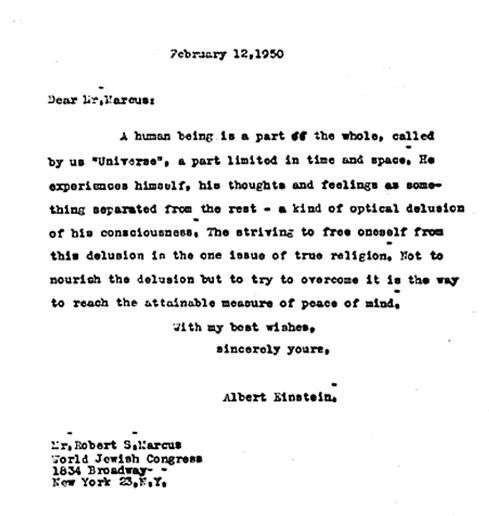
Albert Einstein, for example, said in February 1950: “A human being is part of the whole, which we call Universe, a part limited in time and space. He experiences himself, his thoughts and feelings as something separate from the rest – a kind of optical illusion of his consciousness. The effort to free oneself from that illusion is the true foundation of true religion. Not to nurture it but to try to overcome it, is the way to reach the attainable measure of peace of mind”
The truth is that the meaning of existence in principle has nothing to do with science but with some other kind of thought, which may be religious, philosophical, humanist or spiritual. However, science has not refused to explore any question, so as for this matter, there are theories that connect the dots of astronomical observations and subatomic physics experiments and give us some answers, but I will talk about this later.
When probing the question of the purpose of life, we have to start by defining what purpose itself is. What do we mean by the purpose of something? According to the Royal Academy [of the Spanish Language], purpose means “Goal that is intended to be achieved.” It comes from the Latin propositum; pro meaning “forward” and postitum meaning “positioned.” Positioned forward, that is, it refers to the future meaning of something.
This concept of foreseeing the usefulness of something in the future is closely linked to the way the human mind works. Humans, along with some other animals like chimpanzees and crows, have the capacity to plan for the future, that is, to sacrifice immediate gratification in favor of achieving a more attractive goal in the future[1]. This implies combining several mental and nervous skills: observation, memory, probability calculation and the capacity to restrain instincts at will. As we saw in episodes 11 and 15, these processes occur mainly in the brain stem, there where the R-complex remains, and in the limbic system or mammalian brain. Planning forces us to identify the purpose of the actions of others and create purposes for our own actions, so that our future plans can be fulfilled.
But human beings have something additional that makes us different from all other animals, at least as far as we know: besides planning for the future, humans, thanks to our developed cerebral cortex and especially the frontal lobe, are also capable of observing our own consciousness. Homo sapiens has the gift and also the curse of being conscious of its own existence, and this is the origin of the terrible consequence that we are aware of our own death.
I say it is a terrible consequence because being aware of our own existence and our own death creates a difficult paradox for us: we are capable of planning and building mega-works, nations, empires, technology and even virtual realities, but everything crashes against the cruel reality that one day we will cease to exist, at least in this physical world we know. Then comes the impulse to cling to the belief of a life beyond death, but that is a topic I will talk about in another episode.
So we remain here, aware that for some reason we are organic matter that has become conscious, and that we have limited time to... for what? Why do we have to live with that sword of Damocles of death always hanging over us? What is consciousness for, if we could simply walk the savanna collecting fruits and living in the eternal present? Even, what is life for, if we could simply be stardust traveling around a star for all eternity? Or why exist, if we could simply be nothing, or rather, not be?
If these questions triggered your existential anguish, I offer my apologies. But it does not happen only to you; almost all human beings feel at some point the burden of finding answers to these concerns. Some take refuge in the powerful resource of faith; if you can believe that everything that happens in your life is part of a divine plan and that in the end everything will be rewarded with a life of pleasures and joy in the afterlife, then you have no need to inquire further or to build a purpose that does not depend on the divine. What you surely do have to do is defend your belief tooth and nail, because faith cannot fulfill its purpose if you open your mind to a possible different reality.
This is one of the reasons why so many religions are capable of waging wars and killing in the name of their god: believing that that which gives purpose to my life is real implies that everything that is incompatible with that belief has to be false. Therefore, the religions of others have to be false. Well, some say “There are a thousand ways to call God, but it is the same god,” but that does not work in all cases. For Christianity, death is the passage to heaven, purgatory or hell, while for Hinduism, it is the moment to migrate to another body in a new reincarnation. Either it is one, or it is the other, but not both at once!
While religion asks us to have faith in the purpose of life that its sacred texts suggest to us, usually to have a pious life, helpful to others and fulfilling the rules established by the authorities of the religion so that God looks upon us favorably and takes us to a better life after death. That is, it focuses on the question of the purpose of the life of each individual. Science, on the other hand, is more interested in the purpose of life in general, as a natural phenomenon.
Explaining the purpose of genes, of cells or of sex from the point of view of natural evolution is easy, because these and many other biological phenomena share the main purpose that drives life, which is survival. Nature rehearses millions of different configurations over millions of years and so both the product of evolution, which is living beings, and the process itself of natural selection are refined. However, the question remains of what is the purpose of there being life in the first place. All the other natural phenomena we observe, like the formation of planets, stars and galaxies, do not seem to have any particular purpose but to be simply the result of the laws of physics applied to the cluster of particles that emerged in the Big Bang.
But life, even more so when it seems extremely rare in the Universe, at least as far as we know for now, seems to us much more than a simple consequence of the laws of physics. What is life for? As is tradition, it is here where even some scientists roll out the red carpet for God and proclaim that there must be a superior intelligence interested in creating living beings and conscious beings so that they experience its creation. This is what is known as the “God of the gaps,” because we keep moving it as we gain scientific understanding, to explain the things we still do not understand.
Well, it is possible that we are about to move the fence on God again, if a mathematical model created by the American physicist Jeremy England called “Dissipation-driven adaptation” is confirmed. What this model proposes is that when a group of atoms is influenced by an external source of energy, like the sun for example, and surrounded by a warm environment like the ocean or the atmosphere, it will often begin to gradually restructure itself to disperse more and more energy.
This is related to the second law of thermodynamics, also known as Entropy, which determines that energy tends to disperse or expand as time passes. Entropy is the measure of this tendency. This is a physical law of the universe and it is the reason why energy must be injected to heat a cup of coffee, but once hot, the atoms of the coffee spontaneously interact with the air atoms of the room in which it is and dissipate the received energy until both the air and the coffee are at the same temperature.
Dr. England's theory originated from the observation of a fundamental difference between living things and inert things, even composed of the same elements: life is much more efficient at capturing energy from its environment and dissipating it as heat. If it is experimentally proven, we will know that the purpose of life is none other than to contribute to the entropy of the universe, that is, to capture as much energy as possible from the Universe and dissipate it in the most efficient way possible. If so, Darwin's theory of evolution would be nothing more than a special case of the second law of thermodynamics.
If we compare for example a plant with a rock, we realize that while the rock takes a little more time dissipating heat than the time needed to heat it, and requires a lot of heat, a plant, on the other hand, is much more efficient at absorbing energy: it transforms ultraviolet rays and releases infrared radiation in much less time[2].
Human beings do not depart from that tendency: we are even more efficient at trapping energy: we take it from coal, oil, wood, the sun, the wind or the atoms, and we invent more and more ways to use more energy. In fact, the per capita energy consumption of humanity has quadrupled in the last 200 years and it does not seem that it will decrease in the near future.
So far this is what science has been able to contribute to the discussion about the meaning of life, but as I said before, only in relation to the phenomenon of life, not to the meaning of your life or my life in particular. The law of thermodynamics moved the pieces of the puzzle to create life on Earth, and from there, natural selection assumed the mission of creating increasingly efficient forms of life to consume and dissipate energy. In that process it created sex and the survival instinct to deceive death, and at some point, it endowed some primate species with the capacity to recognize their own death. A mistake? Maybe not, because that precisely turned those primates into the most efficient beings in the history of this planet at consuming and dissipating energy.
And so we arrive at this moment, in which you and I are here talking through a network of cell towers, data networks, datacenters, satellites and fiber optics, powered by hydroelectric, nuclear and some coal plants, so that we can ask ourselves what the purpose of our life is... besides consuming and dissipating energy.
Here things get complicated because we enter the terrain of philosophy and the ideas we have accumulated about the purpose of human existence.
For Plato, the meaning of life was to reach the highest possible level of knowledge. Aristotle spoke of virtuosity, which as he defined it, consists of all our actions, choices and thoughts being directed toward a benevolent end. The cynics deduced that the purpose of life was to seek riches, power, good health and fame. On the other hand, the hedonists saw the maximum fulfillment in obtaining the greatest possible amount of physical pleasure, while the followers of Stoicism sought liberation from suffering through apathy or self-control so as not to yield to negative emotions[3].
From these schools of thought of ancient Greece, all human civilizations and cultures have explored the matter, adapted some of the Greek concepts or created their own doctrines. It would be very difficult even to enumerate all that have existed, but for the discussion it is worth seeing two extreme visions of the human purpose: at one extreme would be nihilism, which considers that since there is no God and it is impossible to determine an objective truth or morality, life has no meaning, purpose or intrinsic value[4]. At the other extreme, I could place the Mormons and some esoteric sects that consider that the purpose of life is to carry out an internal transformation or evolution to end up becoming gods.
And so, what answer does spirituality give us? We have made a journey through science, religion and philosophy in search of the purpose of life, and at this point I am going to remind you of the definition of spirituality that I shared in episode 8:
“Because spirituality is something much simpler: it is the sense of connection with something bigger than us, that transcends mortal existence but does not necessarily intend to understand what is beyond. Spirituality starts from the deep knowledge of oneself and includes the capacity to transform ourselves, to grow as human beings and give a purpose to our existence.”
Spirituality is not going to give us an answer because spirituality is the search for purpose itself. It is a path, not a goal. Spirituality is a work of self-discovery and therefore poses to us the need to know ourselves, to free ourselves from suffering and from the burdens we carry, but not as a purpose in itself, but as the prerequisite for us to be able to identify the purpose of our life.
Spirituality tells you: do you feel an emptiness that you do not know how to fill? Do you not find a meaning to your life, but you cannot accept the purpose imposed on you by capitalism, your family or religion? Then accept the path of initiation and walk it so that you discover who you really are, free yourself from that which you are not, and can reach the maximum expression of your being or, as the Muisca ancestors said, so that you find your Tchetzakua, which means “the place of the cosmos that corresponds to you.”
That place that corresponds to you is as much yours as your fingerprints or the iris of your eyes, and just like them, your purpose arises from a sum of genetics, your upbringing, the environment in which you grew up and a bit of luck. This is a unique combination of factors that will never be repeated in the whole history of the Universe, and that is why we can say that the Cosmos has arranged everything so that you find and realize your potential.
But it may be that you still do not have clear what your purpose is, so how can you recognize it? Many people believe, and I agree, that when you fulfill your purpose, the goal of your life, you feel at home, you have certainty, you know that despite there being other things you could or would like to do, none other fills you, none other calms your Spirit.
Now, having a purpose does not mean that you only do one thing in your life. It is not limited to a profession, an art or a project. Many times your purpose manifests itself in many ways in different contexts, so for that reason many people can believe that they do not have a defined purpose. That is where self-observation becomes key to understand why we do what we do. It may be that we are in the search, but it may also be that we have already found our place and simply have not seen it.
One way to do this analysis is through the framework of your interests, abilities, talents and gifts. So let's see these three parts: your interests are the themes, places or people toward which you gravitate: humanities, science, technology, sports, personal relationships, entertainment, etc. Your abilities are those physical and mental capacities, generally applied to your interests, that you have learned during your life and for which you are competent: jogging, dancing, math, computers, public speaking, telling jokes, listening, painting, taking care of animals, etc. Now, some of those abilities are truly special in you; you have practiced them for years and you know that you are better at them than most of the people you know.
These talents are already things you love doing. It is very difficult to be talented at something one does not like, although there are cases! But as a general rule, they are a few things for which we can consider that we are truly talented.
We all have talents, and following the thread of what those talents tell us is the main key to finding our purpose. However, many times one or two of those talents are especially outstanding; besides, they are the ones we apply the most in our daily life, at work, in relationships. They arise totally naturally and sometimes it seems even magical. These talents, we can also call them “gifts.” Maybe you are a person with a lot of charisma to win people over, or you have the capacity to organize and plan that always leads you to lead the groups in which you participate. Perhaps it is your capacity to listen to others or to convince them to follow you. Many have such a strong empathy that they can understand and put themselves in the place of those who suffer better than anyone. It can also be simply your capacity to contemplate nature or even the resilience to overcome the difficult trials that life puts before you.
Your purpose connects your gifts with your talents, your abilities and your interests, and gives peace to your Being. By the examples I put, it seems that your purpose necessarily has to be something that helps others, or to achieve a big goal, but it is not like that. When we realize that we live on a tiny blue dot floating in space in an infinitesimal instant of time, everything is irrelevant, or well, everything is important. The work of the old lady taking care of the flowers every day and the work of the CERN scientists discovering subatomic particles are equally important for Spirituality.
Remember that we are groups of atoms that have become conscious of themselves and that we are the way in which the Cosmos knows itself; from the simple to the complex, everything is a unique opportunity to experience creation, well, and by the way to keep consuming and dissipating energy so that the Universe fulfills its purpose.
[1] https://www.washingtonpost.com/news/speaking-of-science/wp/2017/07/13/are-people-and-apes-the-only-ones-that-can-plan-ahead-quoth-the-raven-nevermore/
[2] https://www.scientificamerican.com/article/a-new-physics-theory-of-life/
[3] https://en.wikipedia.org/wiki/Meaning_of_life#Western_philosophical_perspectives
[4] https://en.wikipedia.org/wiki/Nihilism