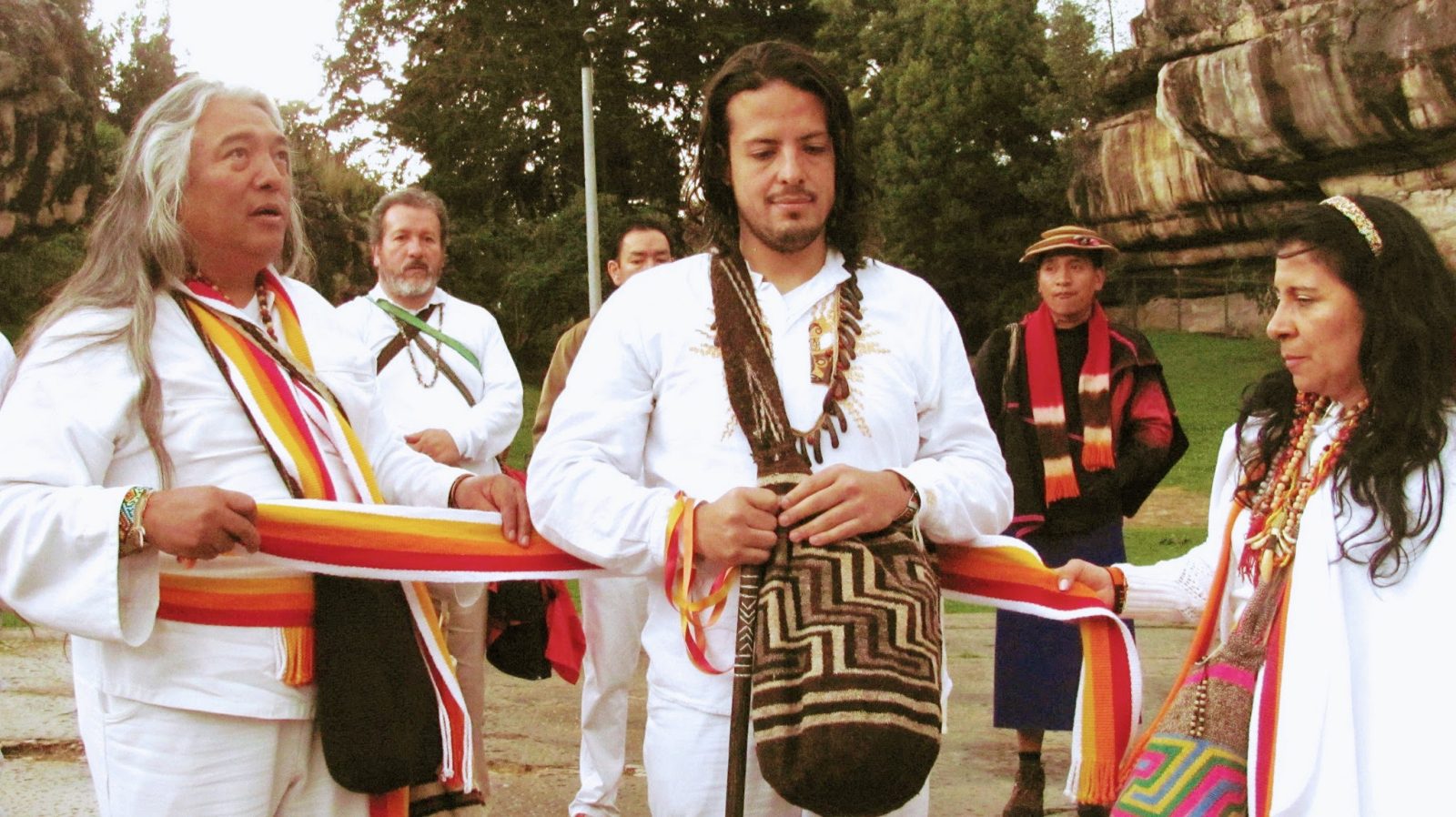
Along with the disappointment of not having been able to connect with the poporo, I began to feel a little disillusioned with the Muisca community in general, and with the abuelos in particular. By that point I had forged a genuine friendship with abuelo Suagagua and had grown quite close to abuela Yanguma and abuelo Nemequene. I had also had the opportunity to sit down in private with abuelo Xieguazinsa on several occasions, and although I continued to admire them for both their communal work and their vast knowledge of ancestrality and esotericism, I had also come to know a great deal, perhaps too much, about their personal lives and their past.
Of course, I never expected my spiritual guides to be perfect, but I had already noticed many inconsistencies between the abuelos' teachings and their actions – or omissions – in their personal lives. I have already mentioned the abuelos' proverbial inability to be punctual, and on many occasions to keep their commitments, something that for me was a fundamental value; but what disturbed me most was the ease with which the abuelos twisted reality to achieve their personal objectives or simply to look good in the eyes of others.
The most evident part of this behavior was the family dynamic of the Ingativa Neusa. Eventually I realized that, beyond the shared intention of awakening Muisca thought in the heart of Colombian territory, there was not much else on which abuelo Suagagua and abuelo Xieguazinsa agreed. Frequently, each of them on his own confided to me the things in which he considered the other to be completely wrong. This ranged from personal decisions and interpretations of ancestral concepts to political positions and the very vision of what Pueblo Nación should be.
For his part, abuelo Nemequene privately proclaimed himself the true mayor of the community – a title that did not refer to his age, since in that respect his seniority was beyond dispute – but to his spiritual authority over the other abuelos and over the community in general. In public, however, none of the other abuelos recognized him with such a dignity, though they did acknowledge him as the elder most focused on spiritual matters, or rather, the least interested in the political side of the Muisca movement.
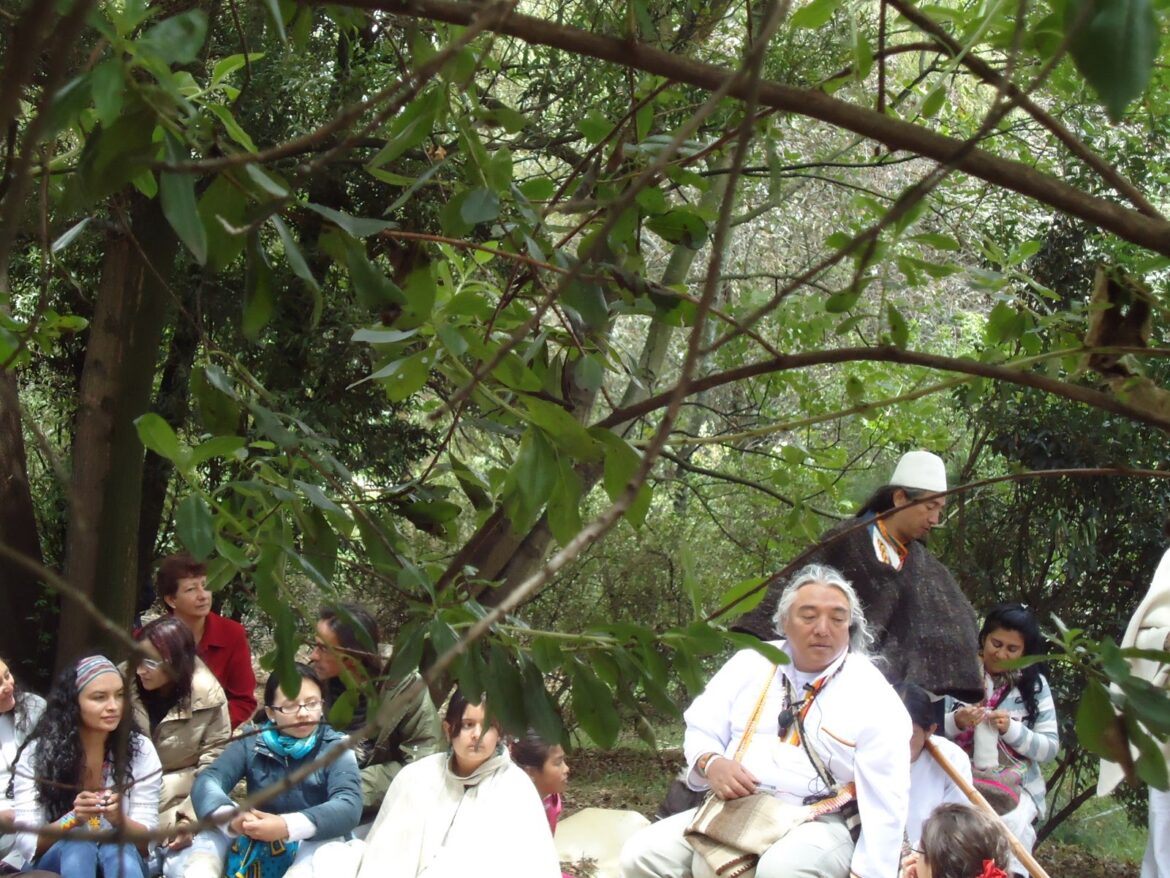
However, what disturbed me most about Nemequene's claims was his diametrical opposition to most of the teachings of the Ingativa Neusa, and above all to those of abuelo Suagaua, whom he saw as a nefarious being:
"I am the very Christ doing the work of my Father and taking care of my children from the enemy. You know well who the enemy is…"
abuelo Nemequene told me once, after a Tabaco purification ceremony at his home, in clear reference to abuelo Suagagua. I know it because I asked him directly, and he answered me with a nod and a sardonic smile.
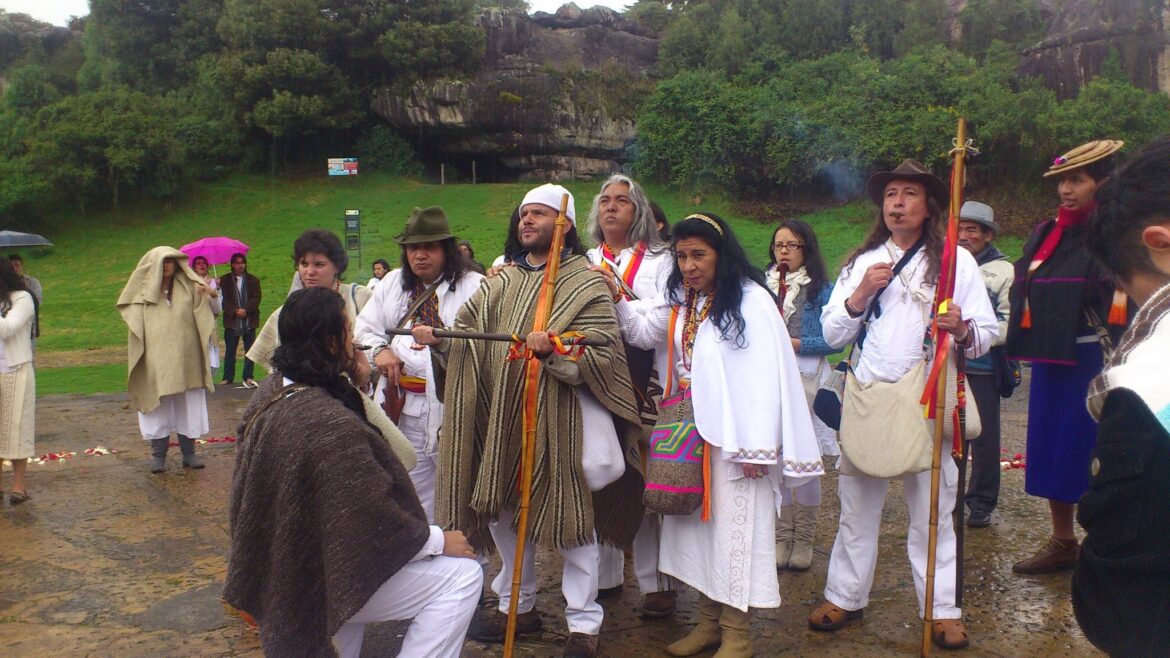
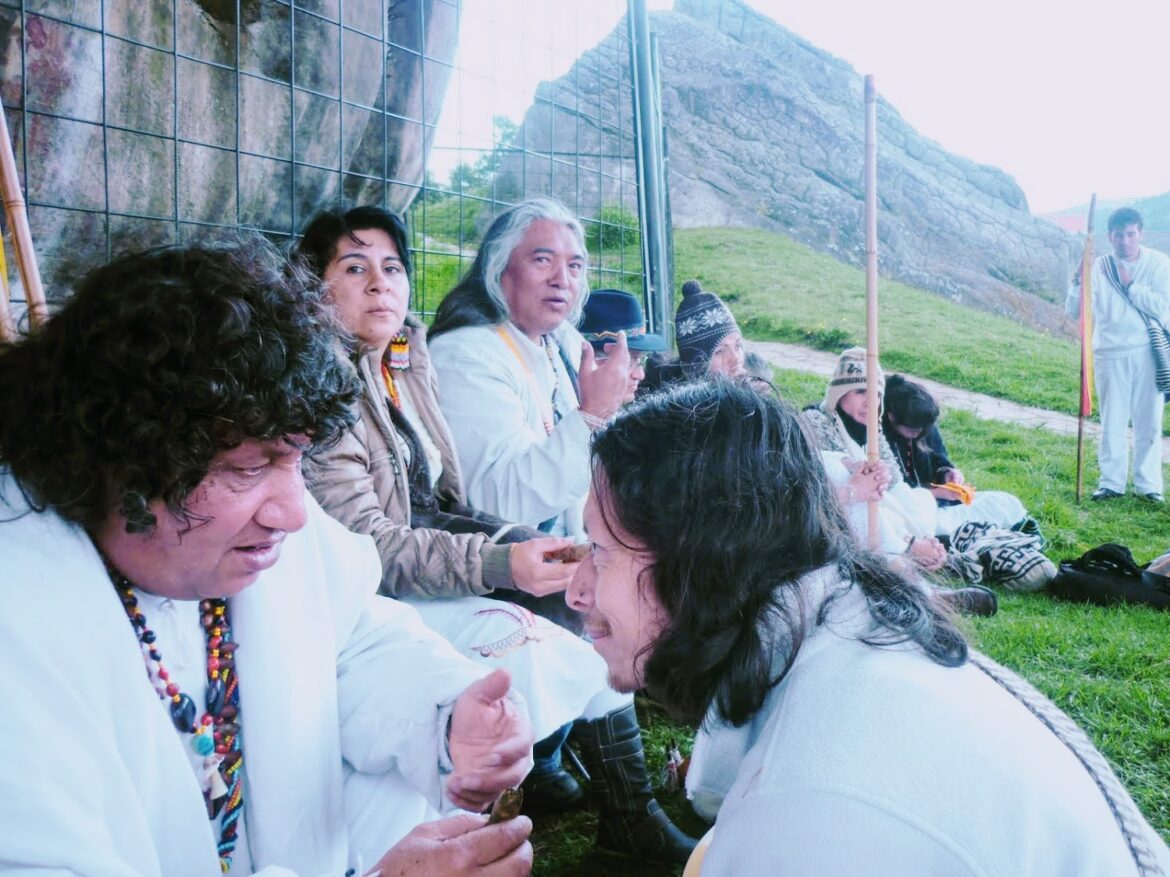
I, unlike abuelo Nemequene, gradually became interested in and involved with the organizational affairs of the community. Specifically, in the formation of the Muisca-Chibcha cabildo of Bacatá, which was an effort we carried out to achieve the elusive recognition as true indigenous people by the national government. At first, my position regarding this process was one of passive support, but as I drew closer to the abuelos Suagagua and Xieguazinsa, I came to understand their legal struggle and committed myself to it. For that purpose the Council of Elders proposed me as mayor of the cabildo in formation, and in a beautiful ceremony held at the archaeological park of Piedras del Tunjo in Facatativá, they handed me the staff of command of that office and empowered me to work alongside the governor and the other cabildo members to achieve the dream of the Muisca Nation.
The dream was that one day we would be hundreds, or perhaps thousands, of people self-recognized as Muisca, and that a political organization would be required to represent the community before the rest of society and to apply the principle of self-determination that Colombia's political constitution grants to indigenous communities. Besides this, being legally recognized as a cabildo would have given us the right to be consulted before carrying out projects in territories considered sacred, and could eventually have meant that the government granted us our own territory, in which to carry out what was known as the community's life plan: to return to the countryside and live in a self-sustainable, ecological, ancestral village, where we would have our central cusmuye or maloca and bohíos for each family.
The truth is, I never really believed that such a thing would be achieved. Not only because Colombia is not a state characterized by its generosity toward indigenous communities, or because granting protection and guarantees of indigeneity to people from the city, solely on the basis of self-recognizing as such, would open a legal Pandora's box, but because it had already become clear that the community did not have the cohesion or the commitment necessary – including among the abuelos – to carry something like that out. Still, I enthusiastically helped plan activities, make calls for participation, and do other small tasks that were meant to lead, one day, to the recognition of the cabildo.
I never became clear about what my function as "mayor" of the community was, nor did I make much effort to find out, but the reality was that I had no authority or privilege of any kind. Although I enjoyed meeting with my fellow cabildo members, there were no decisions to be made, only the abuelos' tasks to advance. Over time, I realized that the dreams of a Pueblo-Nación were secondary. The priority was serving to legitimize the educational and outreach activities that the abuelos carried out in the city's ecological classrooms and wetlands.
These activities, though important for making ancestral knowledge known and for bringing a message of environmental protection to the citizenry, were also the abuelos' main means of livelihood, thanks to the contracts they signed with several institutions, but mainly with the district's environmental secretary, through the Fundación FUNAZA, owned by the abuelos Suagagua and Yanguma.
The cabildo was thus an entity without the functions that the cabildos of truly indigenous communities have, and largely in service of the aforementioned foundation. It is true that several members of the community, generally of modest means, benefited from the contracts this foundation carried out, but it is also true that many others ended up working without compensation, or in exchange for "aids," while believing they were taking part in a purely spiritual process or helping in a selfless social effort.
My participation in the cabildo ended when I expressed the aforementioned objections to the other cabildo members and proposed that we set aside the ambition of becoming an indigenous cabildo and instead think of organizing ourselves as a foundation in which everyone would participate and have decision-making power, and not only the abuelos. A few days after those opinions had been recorded in a meeting minutes, an extraordinary community meeting was held, to which I was not invited, where the abuelos decided that, according to their spiritual consultation, I had to leave the cabildo in favor of someone more aligned with the purpose of Pueblo Nación.
Another of the objections I expressed – one that earned me being relieved of my brand-new position as cabildo member – was that although I was deeply drawn to the gnosis of Samael Aun Weor, there were parts of his doctrine I did not like, and I disagreed with imparting gnostic teachings by passing them off as Muisca ancestral knowledge. This was something I had the opportunity to say directly to abuelo Suagagua:
"If we are going to do gnosis, let's do it openly. Let's form a study group and go there in other attire and do the gnostic rituals, but I don't think it's right to tell people this is Muisca ancestral knowledge when we know it comes from esotericism and other sources" – that's what I remember telling him on one occasion.
It is well known that Latin America is a region with a high rate of misogyny and machismo, as well as homophobia and Manichaeism, so it is no surprise that the Muiscas were also victims of such biases. In the indigenous and esoteric communities I shared with — including the yagé drinkers — I always found some degree of machismo that was part of the very culture of the community. This ranges from the stigmatization of menstruation, which is generally considered sacred but inconvenient during ceremonies and rituals.
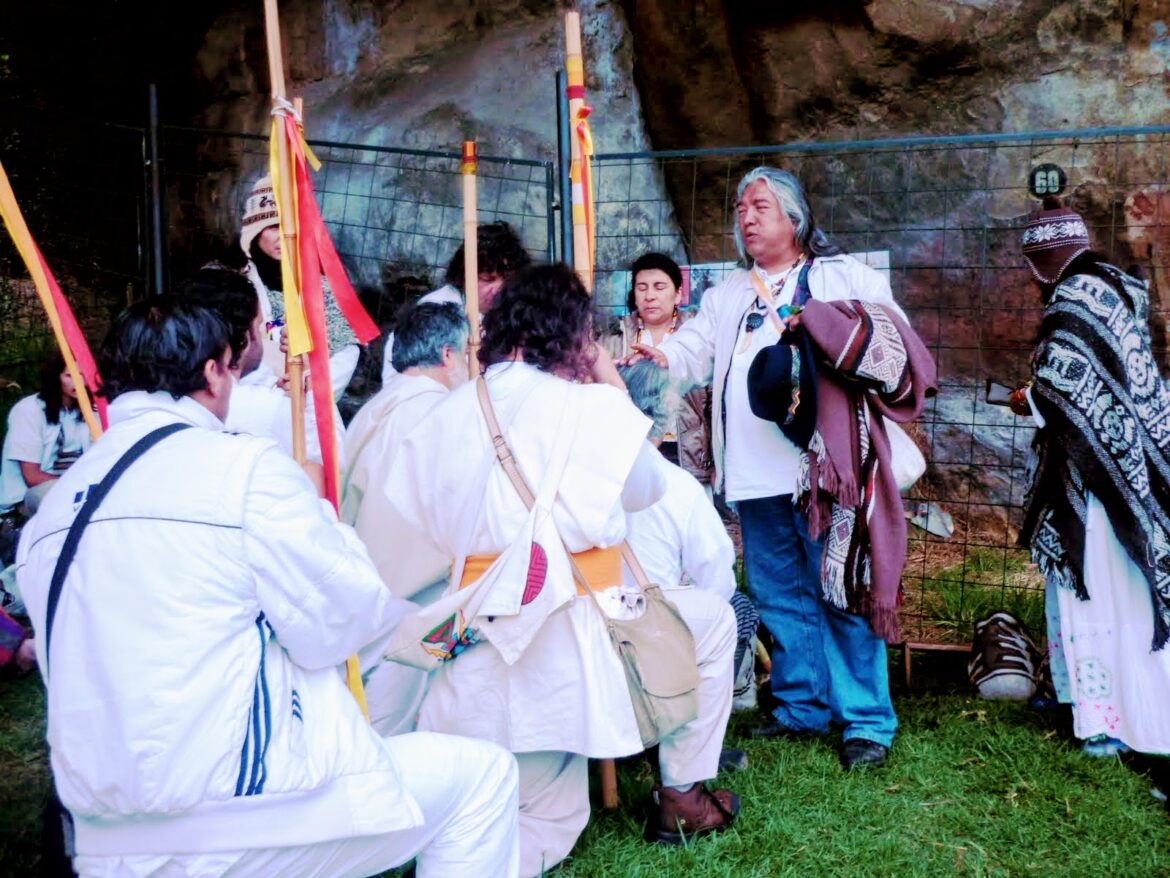
Women usually have a secondary role of accompanying and supporting their husbands. Although in women's circles empowerment and equality are often talked about, in practice, even the grandmothers and women of the community end up accepting a position of submission to the needs and even the outrages of their partners. I knew several cases of infidelity or mistreatment in which the women of the community acted as defenders of the offending man and asked the aggrieved woman to “put up with it,” arguing that men are like that and that the most important thing is to take care of the home.
As for homosexuality, the matter was always more controversial. The most predominant view both in indigenous communities and in Gnosis is that it is an illness of spiritual origin. In some cases I heard it attributed to sexual transgressions perpetrated by the subject's ancestors, in this life or a previous one, or to sexual abuse during childhood. The few times I saw someone openly homosexual at a ceremony, they were treated as a difficult case that required a lot of yagé or another sacred plant to “get the evil out.” I already recounted the event during my Muisca rite of passage in which one of the initiation candidates, who only rejoined the community a couple of times after that day, was harshly confronted by the elders for his apparent homosexuality.
Something similar happened to a friend of mine from the community, who had joined Pueblo Nación with great enthusiasm to learn the uses and customs of Muisca women. My friend was very attuned to the territory and ancestral spirituality, she made pilgrimages to natural sanctuaries and knew how to prepare corn chicha with her grandmother's traditional recipe. On paper, those would have been sufficient considerations to ensure my friend's acceptance in the women's circles and as an apprentice of grandmother Yanguma. However, my friend did not get support within Pueblo Nación. According to someone who participated in the community meetings, one of the elders would have said that they would not hand over the women's knowledge to her because apparently my friend was a lesbian.
However, the matter that generated the greatest division among the elders and the most desertions of members of Pueblo Nación Muisca-Chibcha was precisely that of the teachings and behaviors related to “sacred sexuality” or “maíz biche,” as the elders called it. As I narrated before, this is a teaching that during the years I accompanied the Muiscas was not imparted completely or in detail, but it was insistently promised as the maximum knowledge of spirituality that we would one day receive.
Despite this, the elders spoke very frequently about sacred sex, repeated that it was such sacred knowledge that it could not be spoken about in public, and then referred to the Gnostic teachings of Samael Aun Weor. I, thanks to my friendship with the elders Suagagua, Yanguma, Nemequene, and Xieguazinsa, had the opportunity to talk about sacred sex with all of them, and all of them spoke openly in private about the teachings of Gnosis.
Grandmother Yanguma and grandfather Xieguazinsa were radical in that the Great Work could only be carried out with one's partner and that having any sexual approach with other people was harshly punished by the divine hierarchies. Grandfather Suagagua, however, had a different vision. He said that the sexual work had to be done with whoever the Cosmos gave one to do it with. He even mentioned that even having a wife, the initiate often had to practice with another woman who knew how to do the work, to learn from her and then do it with the wife.
He also maintained that polygamy was the natural form of ancestral sexuality and that the Muiscas practiced it that way. In this he was right; so narrate various chroniclers of the conquest:
– “Polygamy was common among Muisca society. Men could have as many tygüi (wives) as they were able to support, although the first was the principal one, and was given the name güi chyty (first consort).”
Grandfather Nemequene declared himself against this practice and for it judged Suagagua as a messenger of darkness.
Be that as it may, the fact that sexuality played such an important role within spirituality and that polygamy was in effect part of Muisca history made the sexual theme become a reason for differences, confusion, and in some cases abuse: Two women of the community told me that two of the Pueblo Nación elders made sexual advances or proposals to them on more than one occasion, even when their partner was also part of the community.
In more than one internal word circle the doctrine of “training” men and women with initiates in the techniques of “maíz biche” was hinted at, although as far as I know, such an arrangement was never carried out. I also heard more than once that part of the initiation into the mysteries of “sacred sex” involved having sexual relations with one's partner, in front of the elders.
Although I never witnessed or learned of abuses at the level seen in other sects around the world, I knew from grandfather Suagagua himself that he had trained several women who wanted to receive powers or divine graces, “helping” them achieve all their purposes through sexual practice, as he himself informally called it.
I cannot deny that at some point I was intrigued and told grandfather Suagagua that I wanted to know more about those rituals. Although I never consummated any kind of sexual ritual under that agreement, perhaps because the grandfather had reasonable doubts about my decision to get involved in that, some strange things did happen that I will describe later.
All these entanglements related to sex turned the Muisca community of Bacatá into a hotbed of gossip, distrust, jealousy, and secrecy, which the other indigenous communities and the legally constituted Muisca cabildos were not unaware of. Several women who felt violated, husbands who suspected the elders' advances, and people who felt deceived, little by little spread in hushed voices the strange things that happened in the community. This created a growing legion of adversaries of Pueblo Nación — or detractors, as they were called within the community — who with increasing force began to point to Pueblo Nación Muisca-Chibcha as a sect and a new-age esoteric movement disguised as an indigenous cause. This mortally wounded Pueblo Nación, taking with it the genuine intentions of some of its leaders and the serious work that, in my opinion, grandfather Xieguazinsa did with his community in Tunja.
As for my spiritual process, it was clear that it had no future within a community with which I felt less and less identified, and despite the beautiful experiences I had lived, I no longer saw the moral and spiritual height I expected to find in order to keep growing as a person. What I did not know at that moment was that leaving Pueblo Nación Muisca-Chibcha would not be as easy as entering it. From my retirement from the cabildo and still feeling a legitimate affection for all the elders and my brothers and sisters of the community, I had to begin a long and painful process of detoxification, not corporal but mental. Without realizing it, I had given a large part of my psyche to a cause, teachings, and dogmas that did not belong to me.
Freeing myself from that burden would be as hard, if not harder, than freeing myself from the demons of my youth, and this time yagé would not be enough.
5 years ago Hello... I had an energetic problem to make an illustrated book showing the beginnings of humanity for which I required a guide. The story is by Siewaxinga and I showed it in the muisca community of Suba, who denied that that was the real knowledge of the beginning of the Muiska, which stopped my creative work and left me without a horizon... I would love to meet with sumerc3 goraonce@gmail.com
0 Reply Xieguazinsa Ingativa Neusa Reply to Gora SuativA 5 years ago Good day, Gora SuativA, which story are you referring to, in what year; any attention we provide from our governance, if it concerns these writings, the final work is reviewed and authorized by the indigenous government. Any investigative accompaniment is requested in writing to the indigenous cabildo and it will answer in writing the route, its convenience or not. Saying: “I showed it in the muisca community of suba” says a lot, if the census of that community must pass through 5000 members? If I am not mistaken, there were no protocols nor review, and I do not know what was presented in Suba, and as you say in “my creative work” and to whom you presented said creative work, I do not know you, remind me. When approaching the indigenous, one must avoid generalizing; for ex. there are tribal peoples, acculturated peoples in loss of identity, and peoples that are recomposing themselves, and within an ethnic group there can exist different groups and communities with different particular histories and likewise in their foundational myths of origin; one must not generalize; it is like saying that the muisca cabildos of Suba, Bosa, Chia, Cota and Sesquile have the same orderings, organization, principles and unity of a system of muisca thought and the answer is NO! although apparently the institutions of the State and government policies unite them structurally, or belonging for ex. to the ONIC, but as a system of their own thought no; they depend more on external actors and on other indigenous peoples, but more autonomy and intracultural dialogues are lacking; distinct linguistic learning systems are adopted; the territorial vocation is distinct, the urban, the rural. One cannot homogenize; proof of this is that the life plans are distinct, and likewise there are diverse personal interests that break the unity of collective law; the NGOs are more important, demeriting their own government. So from what context do we approach these very complex and delicate themes in the recomposition of a people without memory that is more ladino than chontal? The differential approach and the right of indigenous jurisdiction must be applied at least as general culture, but it is not, and it is the responsibility of the new generations “not invented” “without fads” etc., only from a genuine identity despite the loss of memory, to open thought toward integration in respect for difference; that is called unity, a PEOPLE in a NATION.
I suggest, among other documents, the following work:
https://sites.google.com/view/charlas-vargas/boyac%C3%A1-la-otra-historia?fbclid=IwAR0wKDXaIRETeY0jUFg_ohSOSB1OMxiodPwpsLRGpXYT75uVJsLOmpi2wvo
Thank you for your attention Xieguazinsa Ingativa Neusa consejoindigena.cimccb@gmail.com cabildomayormuiscachibcha@gmail.com 310 680 90 87
1 Reply Sie paba Sua 5 years ago Hello, bakataedukpopular@gmail.com, my email. I am interested in speaking with the author of the audio
0 Reply manuelr Author Reply to Sie paba Sua 5 years ago Hello, gladly, you can write to me at manuel@lucidsapiens.com
-1 Reply Miguel Mahecha 5 years ago Good description. Eloquent and objective. Reminding us to always keep our consciousness lit no matter the spiritual process one is in.
1 Reply Xieguazinsa Ingativa Neusa 5 years ago Manuel Avila regarding this shared link: Mr. or Young Manuel Gómez Aguaquiña, good day; I have seen how one is exalted with the comments of young Manuel Avila, whom I see is playing an important role of clarifications of his personal life and points of view of the experiences by him, along with some characters “the elders,” as is well known before public opinion and before the proper authorities and governments, especially the Indigenous Muisca Chibcha Council of Boyacá CIMCB (where this process dawned in 1975 in Chiquinquirá), THESE PEOPLE ARE NOT RECOGNIZED, especially Sigifredo Niño R., his wife, and the rest of his followers (JEI 2010-2013); from Boyacá we have accompanied various processes of ethnic recomposition, and the one that is boasted about and alluded to here DID NOT DAWN in Bogotá (usurpers of our struggle that you and others ignore). I know your professional judgment in distinguishing an “article” (as you say), to my non-indexed rigor, and your point of view is regrettable in not knowing how to distinguish a “pamphlet” (narrative) from a scientific document; nevertheless I respect you; that is how far your vision reaches; one cannot generalize nor confuse; one must read between the lines and without adventurous detours; a gross error that you do not know me, as I have invited you on more than one occasion to Tunja where I have resided for 40 years. Mr. Gómez do not confuse: ignorance can be more than daring, and you cannot speak about my person nor about the rural muisca communities that historically have not been ashamed to recognize themselves as natives in their own history and that you ignore, with all the boasting you do as a peasant. We are insisting in the CIMCCB that one thing is the person in what one is (ontically) and another what one represents (in his struggle as a social leader). I understand that this neighborhood gossip is a bit dated; this young man narrates what happened to him with these people about nine years ago and that he should not have involved my name, and he knows it and has to clarify it; likewise he did not tell everything; sincerity and honesty were lacking: he should have told all the damage these people caused to the accompaniment process and to my person; for this reason these authorities of Boyacá withdrew from Bacatá without neglecting our territorial and governance commitments. “I am from where they want me and respect me; I go where they invite me, and above all respectful of my muisca chibcha indigenous brothers whatever their legal situation.” A good reason to meet once more. I always run into you with your personal “grudges” on the networks, I do not know why; it would be good to visit each other and eat a little potato with chili and a little guarapo. Thank you for your attention Xieguazinsa Ingativa Neusa CIMCCB Territorial Coordinator Boyacá.
Mr. Javier Jayali, to not be lengthy and in the respect I owe you because I do not know you nor distinguish you, I clarify to you the same as to Mr. Gómez Aguaquiña: it is easy to speak of what one does not know and not recognize that I come from an intergenerational lineage since 1823 (which has corresponded to me, that staff or seat delivered by my mother) of one of the existing muisca resguardos (resisting two continuous centuries), and that does not make me more or less than anyone. You, who are attracted to these themes, should approach them scientifically and historically: I tell you something that young Ávila did NOT tell and corroborate it with him; this servant was the one who opposed all those pseudo-doctrinal foundational myths, abuses, etc. (there the category of ethnic borders appeared, which I took all the way to the Constitutional Court); besides, I am a professional and social leader who has my own history very clear; I invite you to read my investigative articles (indexed) of several universities and history academies. One must know in order to have critical thought and not be a critic without affirmative actions; that is what has this country screwed up with people like you; I invite you to sit in tradition and I demand respect for my people, and if you are like Gómez Aguaquiña, taking it personally (is it fair, true, and necessary?) and you tell me where your displeasure is, but in truth and we resolve it; do not let it happen to you like the “legal?” cabildo members who speak without knowing and from fears. I see you the same; indigenous law is collective, in case you do not know; the legitimate, participatory, and representative assembly elects its leaders, and we sustain ourselves apart from politicians, economists, and NGOs, and with the adverse racist burden of some brothers of those “registered” Muisca Cabildos, whose struggle I was supporting at the time (2004-2005). Easy to reach these processes when we have already made critical mass, us “trocheros,” risking our skins; welcome. Xieguazinsa does not answer for the arbitraries and damages of these people who did not belong to our Indigenous Movement Pueblo Nación: Muisca Chibcha and who abused the trust; that movement did not dawn in Bogotá and that is known by its previous generations; thank you for allowing me to give clarities; welcome to Boyacá, to the province of Ubaté and to Tenjo, where as Councilors we answer to society and the Colombian State. Review Sentence T-792 of 2012 of the Constitutional Court (registration with the Ministry of Interior is not necessarily required to guarantee rights) and there you will find the difference; it is time to sit in unity, the whole muisca people. See you soon, we are in communications.
He is just a young man searching for himself like many in the metropolis, falling into the game of indigenism and muisquisms, etc., and I think it is fine that he expresses himself, but that he tell the whole story, because he is talking about 10 years ago; this is another march and one must assume with responsibilities in the new generations, transcending from self-recognition to full recognition, taking the timid step between not being and being, without inventions, simple, direct, clear in: 1. Strengthening of the own and suitable identity of the muisca chibcha ethnicity. 2. Recognition of the intergenerational social fabric. and 3. In the struggle against the political regime and the Colombian State with public policies and affirmative actions of guarantees.
https://sites.google.com/…/boyac%C3%A1-la-otra-historia…
-1 Reply Xieguazinsa Ingativa Neusa 5 years ago https://sites.google.com/view/charlas-vargas/boyac%C3%A1-la-otra-historia?fbclid=IwAR0wKDXaIRETeY0jUFg_ohSOSB1OMxiodPwpsLRGpXYT75uVJsLOmpi2wvo
0 Reply Xieguazinsa Ingativa Neusa Reply to Xieguazinsa Ingativa Neusa 5 years ago Manuel Ávila. For the appreciation and respect I have for you and your family, and in the moral support I received for my professional graduation and of a desktop PC team for said achievement, and likewise for your personal support in seeking clarifications in the disorders of some people we accompanied in Bogotá, among them you at one point for the strengthening of ethnic self-recognition, but we were wrong because they were wrong; nevertheless there are exceptions like your stance, narrated T3E8: Los Pecados de los Abuelos (in religious terms), but in part you were sincere more than honest, you know it, for which I am going to remind you in the little we saw each other so that you take it into account and that you did not mention, this to give clarities; since we have not met since you traveled to USA in 2013 and you were marginalized by the people you mention (facts I have nothing to do with, nor are they in my competence), since it was a group not ethnically recognized by our authorities, hence the divisions caused by themselves, headed by some leaders like Walkala Eslava (aligned with taita yagecero Carare), Comba Nymy Quene (indigenist yagecero), Nemequene (Javier Méndez) rest in peace aligned with hate Kogui of the Sierra; Suagagua (Sigifredo Niño) esoteric indigenist and a group of women Jannete Yanguma (wife of the latter); Yairsa (indigenist yagecera), Fagua Combita Guane (Vice-Governor of PNMCh Boyacá) and the new generations that kept arriving but likewise dispersed, remaining in ethnic borders; some accommodated in processes of indigenist NGOs (non-governmental organizations), that is, they are not own governments, gross error; the great majority of them deserted the organization, if not to say almost all, and that is how the accompaniment process was gathered back up on our part, because no one understood it, where new particular interests emerged, especially the one caused by the conduct of Mr. Sigifredo Niño and his wife and with the complacency or omission of the others.
For this reason we initiated, up to a certain point, lacking full competence from the CIMCCB, a Council of Own Justice (2010-2013) and in its due process, in which the gentleman evaded, and we withdrew in respect and in the distance to our Boyacá territory, where these syncretic indigenist diseases were exported from Bogotá by some people foreign to our process; it is a complex and interesting social phenomenon that is neo-colonizing the sabedoras and monetizing them, to such a point that we see indigenous elders leading indigenisms or lending themselves to it without attending to their communities. Each one did what they wanted without respect for our sharing; they did not understand the muisca-muisca aseguranza (to whom it was delivered) and it was better to be anarchic because the here-called “elders” were authoritarian and egolatrous? Therefore this ordering was not known in its historical background, not even by you; but you were sincere; you should have done it at that time and you knew you had our support, but you did not do it; it would be good for the public opinion to know it, because personally I do not know why they have not denounced it and at the opportune moment? Since then, tell me who has called me to resolve; not even the “registered” muisca cabildos, but they speak without knowing; that is the reflection of the crisis of our country. One criticizes without having the capacity to respond to propose proactively, and this is called co-responsibility; or will it be yellow-journalism morbidity? Jealousy? Fears? Envies? Who knows!
For these and other reasons, the Pueblo Nación Muisca Chibcha DID NOT DAWN in those generations of Bogotá. For the new generations it is especially easy, particularly in the cities, to settle into indigenist, environmentalist and culturalist spaces; mystical, esoteric, feminist and new age ones, with organizations and confessions of this type; I have considered that all indigenist tendencies and movements have nothing to do with the muisca chibcha ethnicity, much less with the processes of ethnic belonging and ethno-cultural recomposition of the indigenous communities of Pueblo Nación Muisca Chibcha of: Boyacá, Province of Ubaté and Tenjo among others.
I hope, in respect of the right to free expression and thought, but with responsibility and honesty, that those experiences have served to overcome and truly dawn the integration with the other cabildos and muisca communities, to heal the misunderstandings, the errors and possible crimes due to the bad and unconsulted conduct of people that You mention, but one must denounce to resolve.
In these clarities and contexts, Manuel Ávila, I remind you that your sincerity during that transit of decisions when we suspended the dialogues, and I regretted what happened to you with these people; we were also victims as an indigenous people, and it likewise overflowed into the personal sphere due to the mistreatment, betrayal, abuse of trust, usurpation of investigative processes and information, processes of social fabrics and cultural identity, besides the misrepresentations you mention: FIRST, that at no time did I boast of esoteric ideologies or beliefs, which I know and respect from general culture as the leader it corresponds to me to be, but I have not made an apology of them, much less made them look like my own culture, because I am respectful of the knowledges and their roots — besides, they are borrowed words, not one's own — and it reminds me of the internal ethnic borders of today's indigenous peoples immersed in Christianisms (Protestant and Catholic) and the external ethnic borders of Eurocentric, esoteric, spiritist or mediumistic indigenisms, Orientalist ones, pachamanic indigenisms, rainbow native-mestizo ones, getting confused with practices in agroecological villages, etc... and even assimilating other indigenous cultures into the muisca chibcha, or in the inventions of the same (without research and lack of respect for the living memory mimicked in the peasant), gross error; situations to which I have opposed not for their nature or forms, and I insist: of course respect! but they should not give rise to being muisca chibcha in ethnic terms; likewise from the essential — not discursively — but from the coexistence, cosmovivence and organization proper to their Major Law (Law of Origin and Natural Law and of Life) and Minor Law or Own Law, etc. etc. in a life plan, and that is one of the difficulties and mistakes that I have always openly opposed; which surprises me, Manuel, is that you make it seem as if that were my vision, beliefs or points of view; there you got confused, Xieguazinsa is not Suagagua. All this from the ideological; SECOND, from the functional socio-cultural and political organizational, nothing to do; the historical order and of intergenerational resistance was not considered nor respected, nor the processes of self-recognition before the governments, institutions and the indigenist norms of the State, politicizing with politicking parties to the detriment of the autonomies of own governance. Their governance was given through authoritarianisms and messianisms with practices of “cheap” magical thoughts, threatening, and abuses in states of defenselessness, with complacent narratives of metaphysical sexual education, etc. in the face of which their followers reacted in anarchisms and independences and others in submission or complacency; they function like an NGO, especially FUNAZA; behind it others appeared and that “got out of hand” in Bogotá and other territories.
Abuses and profanation of sacred plants as happens with the “plastic shamans” and some taita yageceros that sponsor them, disguised as medicine? Organization that functioned (and still does) through indigenist NGOs and with more force today, unfortunately, with particular and not collective interests, something I have also opposed, not because they are NGOs but for their biases without consulting the communities and proper indigenous authorities, etc. etc. some as a political springboard, for Example the case of Ati Quigua and Diego García (environmentalist ex-councilman? and ex-director of the RAPE with the route of the golden one?), the Carare with a taita leader convicted and in prison intervening in the muisca,... and other culturalist, environmental, gender struggle NGOs, etc. etc. Very complex and more so in the competences of city subcultures like Bogotá, in the face of the abandonment and violences in the countryside, etc. THIRD, the difficulty of separating the personal in what one is with the particular history with what one represents; cases like the unethical, immoral, irresponsible conduct, of abuses and deceits by Mr. Sigifredo Niño (Suagagua), his wife Yanguma and some accompanying leaders, and usurping our work with the website www muiscas.org that you helped build and that later excluded you from that group or NGO, in the shadow of the indigenous? But nobody denounced at the time; we as authorities from Boyacá pronounced ourselves: we do not validate nor recognize those indigenist processes as ethnic, nor what derives from them, and distance was taken in the past due to all these disorders and misunderstandings; there was no maturity, but nobody pronounced, until belatedly that burst and each one set up his own destiny, far from our indigenous organization
For this reason, among others, the importance of ratifying the Indigenous Council CIMCCB in Bogotá and in some municipalities of Cundinamarca with the recent meetings (2020) remembering the 20 years of struggle of this indigenous council since the year 2000.
But my insistence is not capricious in opposing that this exists, since from social and anthropological studies I have understood the complexity of a worldwide socio-cultural indigenist phenomenon of spiritual syncretisms as alternatives to new forms of life, in the face of the crises of the systems of modern states, but with psychedelic (non-indigenous) tendencies justified in native practices and plants, and from the influences of social networks transformed into realities of modus vivendi and survival that involve the muisca chibcha without the consent of the communities and proper authorities of the ethnicity (suitable in ethnic belonging), and it is not racism nor xenophobia as some say, but it is the lack of respect for a proper and historical recognition of our communities and authorities (registered or not registered) “regardless of their legal situation” (article 1° of Convention 169 or law 21 of 1991, Sentence T-792 of 2012 referring to the Pueblo Nación Muisca Chibcha).
My insistence as a leader in the face of those indigenisms and their NGOs is to be consulted with respect and to agree on accompaniments as long as they contribute to:
1. Strengthening of the own and suitable identity of the muisca chibcha ethnicity.
2. Recognition and cohesion of the intergenerational social fabric. and
3. In the struggle against the political regime and the Colombian State with public policies and affirmative actions of guarantees.
But imagine that the exact opposite of each of these aspects happened; clearly it is a reflection that was made around there and that they remain the same, in my understanding more sophisticated; and the muisca chibcha? one would have to analyze the particularities and evaluate the consequences of those processes in Bogotá and some regions of the country
But everyone dares to handle our cultures, they do not respect, neither what they bring from other parts nor what is one's own; they remain lost in their identities and manage other interests, not ethnic but indigenist. Like a neocolonization of the cultural capitalism of the ancestral, the market of cultures, alien to the strengthening of the own ethnic cultural identity.
And what are the sins of the elders? let them denounce; we receive information, testimonies and other evidentiary collections if it is about clarities about our people, and why not also what is happening in the registered and unregistered muisca cabildos, or in processes of ethnic recomposition? participatory, legitimate and representative; to criticize one must self-criticize, recognizing, accepting, thanking, repairing and releasing it to the universe; YBZAQUA, to place in the place that corresponds, and YBZASQUA, to make one's own space, one's own path; to be yourself, own word not borrowed in original tradition (in the triple spiral of thought and own organizational governments).
I remind you how your words were (in an email) at that time:
«Manuel sent June 23, 2013 Really that is not our search now. We consider ourselves muiscas of origin, but more than anything inhabitants of the cosmos, in a pertinent search for humanity, not only for a territory Manuel sent June 23, 2013 But yes, we support all the processes that work in reindigenization, indigenism or ecological activism, because everything adds up You sent June 23, 2013 it seems to me a respectable stance, but I keep my reservations through this means, we will see later; I thought you were still at the forefront of things; how the panorama looks after what they have done to you. Manuel sent June 23, 2013 No elder, I believe that my cycle with Pueblo Nación ended, at least for now. I keep accompanying with friendship and in whatever I can contribute, but as I tell you, internally I have been guided toward my mission and it is not circumscribed to the Muisca Manuel sent June 23, 2013 I tell you openly for the friendship and trust I feel You sent June 23, 2013 I would like you to help me communicate with the person who remained in charge of the page that was under your responsibility. Do not worry that with me things are open, sincere and with respect.»
WAS IT NECESSARY? IS IT FAIR? IS IT POSSIBLE? IS IT ENDURING? IS IT TRUE?
In what has corresponded to me to lead and represent in the processes of the indigenous communities of the Pueblo Nación: Muisca Chibcha of the Andean cundiboyacense highlands, recomposition processes not understood neither by the “registered” muisca cabildos nor by the “elders” as some admirers or followers in Bogotá were taught to call them, a word to which I have opposed in its misuse and in the events you mention in your experiences Manuel A.; very few are the knowledgeable ones and some others that roam around there in the Andean highlands and in the great capital using the word muisca written in various ways and committing arbitraries, abuses, distortions and ancestral cultural usurpations like those committed by Mr. Sigifredo Niño R. SUAGAGUA, his wife Yanguma and his followers, whom we accompanied at some point but we were deceived, and I do not know if deceived victims, or frustrated in the expectations like those of my friend Manuel Ávila, where he makes statements in which he includes me and that are not of my conception, statement nor application, as could have happened with the muiscas of Suba in the creation of the illustrations or text of Gora SuativA that I do not know, and like so many other dysfunctions and ill-intentioned and unfortunate comments. As an indigenous Muisca Chibcha authority, Governor and Councilor through the Indigenous Muisca Chibcha Council of Cundiboyacá CIMCCB (2000-2021) I am the one responsible for the emergence of the Pueblo Nación: Muisca Chibcha process (1823, 1975, 1985, 1991, 2000,...) in which Mr. Sigifredo Niño, his followers and his NGO FUNAZA have pending issues in Boyacá and elsewhere; nothing formally has to do with us since 2010-2013, and whoever has felt affected, deceived, hurt, violated, denounce before the competent ordinary authorities; before the special indigenous ones, NEITHER is recognized, nor the website www muiscas.org, where my name, images and research have been included without my authorization nor that of the proper authorities of the ethnicity, like the website DESPERTAR SOLAR; we do not endorse their YouTube videos in which they include our process, etc. A Cabildo Mayor Muisca Chibcha Bacatá is not recognized nor anything that resembles it (https://www.facebook.com/cabildomuiscachibcha); in the scope of our competence, those processes are not recognized.
Pueblo Nación Muisca Chibcha has not dawned in Bogotá in those generations. Please understand the situation; please do not include me anymore personally in those matters of the “elders”; my deeds and good example of struggle and leadership are my presentation; they have not understood it, much less known it, and I express it not out of pretension but out of preparation and experience of struggle and of what has corresponded to me in the unfolding of the history of my ancestral people. For the new generations.
I regret all these misunderstandings and mistreatment, and likewise I have been a victim (of insults and slanders, attacks, judicial false positives, persecutions and injustices, etc.) of some people whom at some moment it corresponded to me to accompany in this awakening, and especially of those that Manuel A. refers to in his voice T3E8: Los Pecados de los Abuelos, but here I am standing in struggle, without asking anything in return, without deceit, nor lies, trying to be better, giving good example as a person and leader, without negotiating the culture of my people, nor bad politicizations. So where are those “elders” and what are their sins? (in Christian terms), will this be an epistemology? Who usurps whom? Who manages and appropriates the ancestral memory: the communities in the becoming of their history or the institutions?
Manuel Ávila, do not forget that I have not marginalized myself from your friendship, as with many other beautiful people that there also are, in their own search; we only took prudent distance, for more than 7 years and only now I hear again about you, and I request that you rectify that you do not include me in that generic of the “elders” and in what refers in your narration T3E8: Los Pecados de los Abuelos, and you know it, and by the way in your Christian terms of soul and sins, which in my understanding some are configured as crimes and they call them sins (that is why the priests believe themselves infallible and do not step into prisons); here there must be justice with rigor; it is not a moral judgment that is of the religious confessional scope under the stamp “sins”; there must be a political judgment for those who hold the powers using and excluding their communities that they represent, and there must be prison for the delinquents.
Manuel Ávila, for which I suggest that you reflect and rectify your errors of appreciation about my person, in what I am, in what I represent, and for the authorities and the communities of the Pueblo Nación Muisca Chibcha, that rise standing in struggle, resisting, trochando [blazing trails], risking, making critical mass to open the path to present generations in respect to these processes (that have also unfortunately placed dead and disappeared) and that they are not usurped where anything goes as muisca chibcha, and they are mistaken; it is not a game nor a romanticism of longings; it is a felt historical reality; we demand respect for those and for those who echo noises like these from ignorance, the lie and the evil: expressing words on the networks has a high price, and I am from the truth, sustaining what I say, with proofs for whoever requires them if necessary, and the damage and distrust still weigh; from this tribune we are delivering brotherhood in trust and the great integral intergenerational dialogue (National University of Colombia (2014)
My dear friend Manuel Ávila, with the appreciation I have for you and your family, by way of conclusion, and for those who do not distinguish me and do not know me, I want to leave in affirmative action how this relationship was: you arrived like many in a sigh of history and time treading ethnic borders; LET US NOT FORGET THAT ANCESTRAL THOUGHT IS OF LONG DURATION. In the little we knew each other at that opportunity, I am going to remind you of a communication we held (nothing personal), something we wrote (in an email) and I hope it serves as a pedagogical and ideological message of our struggle in those moments, of transformative transits and breaking points in the untold stories among other things that you did not tell in your narrative that concerns us and you should have told! to mark the differences of those “elders”:
Manuel sent May 9, 2014
Is the Pueblo Nación project still going forward?
You sent May 9, 2014
I don't know. however things are over there. I would not say project; in my understanding it is a complex and misunderstood process.
You sent May 9, 2014
Many things are unknown and one does not want to evaluate nor correct in all senses, to give direction; I know of individual and group processes that are already catching the thread of crossing ethnic borders.
Manuel sent May 9, 2014
But I believe that the theme has not only not advanced, but has gone backwards. It may be ignorance
You sent May 9, 2014
Each one speaks from where he is and that is reasonable; the important thing is to know where the force of the openings of the mother territory goes.
You sent May 9, 2014
Manuel sent May 9, 2014
I believe that one must rescue the essence of the movement and maybe fight for something easier to understand. Something of which it is easier for people to fall in love
You sent May 9, 2014
Where did the agreements remain and who has been fulfilling them; one must not generalize, and as you say much less opine from ignorance; one must look at the particularities and the characterizations in line where the fabric goes, on one side Pueblo Nación and on the other the Muisca Chibcha.
You sent May 9, 2014
The problem is more human than divine.
You sent May 9, 2014
of course yes, that is why one must not complicate things with so much patchwork shell, like that city is.
Manuel sent May 9, 2014
Yes, because people get tired and society does not see seriousness in the processes. Anyway the attempt is worth it
You sent May 9, 2014
The essential is in the simple for the simple and the complicated for the complicated, and it is not about reconciling these two approaches, because by nature it is found and we do not realize that we dissociate when they are necessary; to save this formula is the agreement so that they converge in the same interest. Prior to that is to know the convergence to live toward it; that convergence, being Muisca or better, being clear about what it is to be muisca, and there a restricted complexity appears that no one wants to approach, when with the patches one wants to validate that everything is muisca and anything goes, and it is not like that. Investigative judgment is lacking in the eye and in the heart, in reason and in revelation.
Manuel sent May 9, 2014
And if nobody decides to approach that complexity? what will be the way out
You sent May 9, 2014
staying still, I have realized that whoever touches the word muisca already moves many things without realizing it, and from there the responsibility of touching that door has not been warned
You sent May 9, 2014
it is not about scaremongering, but what it really implies to awaken the gods that were sleeping (forgotten) and without any knowledge of what we awaken them for, if right there the unconscious betrays us, we think like the other and not in the timeless force that it encloses.
Manuel sent May 9, 2014
It is true, I honestly followed that path too and I stayed still about it
You sent May 9, 2014
The muisca chibcha is the sacred, like any conception of the sacred, with the exception that it implies assuming a moral, cultural, historical burden in the course of the becoming of societies, today nations and States, and that is what makes it exceptional in its narrative, or authentic tradition. the spiritual is the divine, not the sacred. so the core is not in the spiritual but in its narrative with all its burdens and in the disadvantages of memory in every sense. That is why it becomes complicated when one goes hunting for memory and nobody wants to take it on. But the richness of muisca spirituality is that we are the product of a miscegenation with a biological patent of indigenous mother and that neither is wanted to be seen.
You sent May 9, 2014
well I leave you, thanks for sharing, still pending to meet, take care and greetings.
All that is dealt with in “Boyacá la otra historia” and in other territories, we invite you to get to know, in dialogue and in difference, because more is known about other peoples and from outside the country than about our own:
https://sites.google.com/view/charlas-vargas/boyac%C3%A1-la-otra-historia?fbclid=IwAR0wKDXaIRETeY0jUFg_ohSOSB1OMxiodPwpsLRGpXYT75uVJsLOmpi2wvo
For society in general, and for some government officials, to the muisca colleagues and other ethnicities, and institutions, understand the own recognition and the survival of the Pueblo Nación Muisca Chibcha in which I am one of those responsible from my competence in what I represent as indigenous governor and coordinator of the CIMCB and CIMCCB; any doubt bring it to the official emails of the proper autonomous, organized and united authorities of the ethnicity. We attend your concerns, complaints and claims regarding the facts here manifested in the present writing
Thank you for your attention, with appreciation and my respects,
XIEGUAZINSA INGATIVA NEUSA
consejoindigena.cimccb@gmail.com
cabildomayormuiscachibcha@gmail.com
Mobile: 310 680 90 87, Landline: 038 7 40 14 36
https://www.corteconstitucional.gov.co/relatoria/2012/t-792-12.htm https://www.tunja-boyaca.gov.co/politica-social/decreto-no-0256-de-30-de-junio-de-2017-por-medio-del https://www.facebook.com/Coordinaci%C3%B3n-de-Etnias-Alcald%C3%ADa-Tunja-329617784334031/ https://www.tunja-boyaca.gov.co/politica-social/red-social-twitter-coordinacion-de-etnias-alcaldia-mayor https://twitter.com/xieguazinsa https://es.scribd.com/document/378088964/Orden-del-todo-final-def-pmd-1-pdf https://www.tunja-boyaca.gov.co/politica-social/quienes-son–pueblo-nacion–muisca-chibcha https://repository.usta.edu.co/handle/11634/3791 https://m.facebook.com/groups/173838919301660 http://periodicoelsiriri.blogspot.com/2018/12/cabildo-mayor-muisca-amanece-en-oriente.html http://memoriausta.blogspot.com/p/trueque-de-saberes.html https://www.tunja-boyaca.gov.co/noticias/fueron-posesionados-miembros-del-cabildo-mayor-muisca http://alcaldiatunja.micolombiadigital.gov.co/politica-social/posesion-del-nuevo-cabildo-mayor-muisca-chibcha-boyaca http://www.findglocal.com/CO/Boyac%C3%A1/1415982765351162/Cabildo-Mayor-Muisca-Chibcha-Boyac%C3%A1 https://es.scribd.com/document/376301374/Complejidad-Etnico-Territorial-y-Economias-Extractivos https://opca.uniandes.edu.co/lo-muisca-de-hoy-desde-lo-etnico/ https://issuu.com/xieguazinsaingativaneuza5/docs/epistemologia_del_derecho_ind__gena
0 Reply David Heredia 5 years ago Wow, interesting information. It is a pity that it is the muisca community itself that is blurring its own traditions and its own spirituality. I cannot speak about the ancient muisca religion and its attempts to reconstruct it, but as someone who does know about Hellenism and Gnosticism (pagan and Christian) I can say that Samael Aun Weor was not a Gnostic. He made a new age mix of a bunch of things that have nothing to do with the ideas of Gnosticism. Besides that, the guy was a textbook abrahamic, same or worse than a fanatical evangelical. The “fruits” of the work of Samael Aun Weor are seen in the sects and groups that appeared after him, like that of the guy who calls himself “Kelium Zeus,” which is honestly an unpresentable thing. The lack of rigor when pretending to practice ancient religions or trying to reconstruct them always causes these things. I see that it has happened again with the muisca tradition.
This miasma is what ends up causing so many problems in this type of community: ignorance, superstition, and making things up at will and disguising it as spirituality.
0 Reply Xieguazinsa Ingativa Neusa Reply to David Heredia 5 years ago David Heredia, in indigenous peoples there is neither the religious structure nor thought, unless they are Christianized, etc.. All people have freedom to think and opine, but one should not attribute Eurocentric knowledge, whatever it may be, to the worldview of the native original peoples; there may be points where they meet, but that does not imply attributing oneself to be muisca by passing off esoteric or pseudo-esoteric or religious knowledge or narratives as indigenous; double usurpation: 1) knowledge is taken from sources and organizations to which one does not belong and whose mentors or militants are unaware of said usurpation. 2) These ideas foreign to the muisca “Being” (ontic) are coined, imposturing those ideas in supposed indigenous communities, deconfiguring the own identity of the ethnicity; for these and other reasons people like this Mr. Sua gagua are not recognized; he has not surpassed the ethnic borders; for example: the word priest... is a Eurocentric word of Catholic theological origin; in the major law of the native peoples that word is foreign to their own worldview; neocolonizations, idealizations of the indigenous “of the good savage” of the mercantilist new age of our cultures; the same happens with the word “shaman,” etc.
0 Reply A0411 4 years ago Hello Manuel, thank you for your article. I also met this community and several of these elders in those years. I was in their spaces, I went to their houses, I began to know them closely. I participated in several of their Word Circles, I received “medicines” and knowledge, I lived several of these situations closely.
I also began to distrust the words of these elders, to give certain opinions, make certain comments, which, instead of being appreciated, generated in the “community” an important rejection toward me, but shortly after everything I had perceived and commented began to become evident.
This, evidently, was not easy for me, for all the energetic theme it implied; a series of personal difficulties began at the emotional, mental and energetic level, for the fact of realizing and participating in this exposing of everything that was happening. In truth, of the things I found out, I still think how it is possible that a person or group can do them and continue normally, situations that still involve today judicial actions that could easily take them to prison.
That is why, again thank you for exposing these people and bringing to light something of everything that happened in those years. I feel that many people deserve the opportunity to find out in time who these “elders” are and to be able to decide if they want to participate in this type of group. In truth, such low things were heard that they did with women, with the medicines, of placenta rituals that covered up abortions. Also that they proposed to affect with their dark rituals the people who opposed them, not only of the “community,” but politicians, landowners, in short... Comments were made of community people who had opposed them, that they were sick, that things were going badly for them and things like that.
I also saw how they took advantage of new people, especially those who had problems or personal difficulties, because they were the ones who showed themselves most open to heal and learn. And well... in this type of sect they are the most vulnerable.
It was a great spiritual learning because it was learning to cut ties with toxic groups, to know in whose hands I put my energy, to trust my feeling and to seek the truth in myself and not outside. It took several years to heal everything that was mobilized in my energy and being, because for a good while they tried to affect my life in different ways but as was to be expected they did not achieve it. In reality it made me stronger and a better human being.
From there I began the path of abandoning the ancestral and indigenous; I respect it but I no longer share it; I closed the cycle. I learned from other spiritual themes that from then on allowed me to heal what I could not achieve in that ancestral space, its knowledge, techniques and indigenous tools.
I really understood that when the gifts, the spiritual tools are mismanaged, the elementals of the plants are manipulated, the knowledge; discordant information is transmitted, one tries to manipulate the perception and feeling of people, one reaches mental, emotional or even sexual abuse, it generates such a large amount of energetic density in the lives of those who practice it directly or indirectly, consciously or unconsciously (that includes any member of the group or occasional participant), it is so strong that they can take many years to clean their energy and even lives to really heal. The spiritual responsibility in the discordant handling of any spiritual practice, of any gift, plant, elemental or energetic tool, whether indigenous, gnostic, holistic or new age, cannot be avoided in any way.
So again I thank you for having the courage that more people know what happened (although they say it is only the vision of a personal experience*) and thus have the opportunity to consciously choose to participate in this type of group or continue in them.
I really understood that when the gifts, the spiritual tools are mismanaged, the elementals of the plants are manipulated, the knowledge; discordant information is transmitted, one tries to manipulate the perception and feeling of people, one reaches mental, emotional or even sexual abuse, it generates such a large amount of energetic density in the lives of those who practice it directly or indirectly, consciously or unconsciously (that includes any member of the group or occasional participant), it is so strong that they can take many years to clean their energy and even lives to really heal. The spiritual responsibility in the discordant handling of any spiritual practice, of any gift, plant, elemental or energetic tool, whether indigenous, gnostic, holistic or new age, cannot be avoided in any way.
So again I thank you for having the courage that more people know what happened (although they say it is only the vision of a personal experience*) and thus have the opportunity to consciously choose to participate in this type of group or continue in them.
I encourage more people who were affected to speak out and expose what happened and, if necessary, the pertinent authorities take action in the matter and really investigate who these people are who manage this group Despertar Solar, associated groups and their activities.
* generally it is a phrase used by abusive people to disqualify the feeling of the affected person.
Comentarios (archivo, solo lectura)
Mostramos 11 comentarios guardados de la versión anterior del sitio. Ya no se aceptan nuevos comentarios.
Hola... Tuve un problema energético para realizar un libro ilustrado donde se muestra los, inicios de la humanidad con el cual requería una guía. El relato es de Siewaxinga y lo mostré en la comunidad musca de Suba los cuales negaron que ese era el conocimiento real del inicio Muiska lo cual paró mi labor creativa y quede sin orizonte... me encantaría reunirme con sumerc3 goraonce@gmail.com
Buen día, Gora SuativA a que relato se refieres, en que año, cualquier atención que hacemos desde nuestra gobernanza si se trata de estos escritos se revisa el trabajo final y se autoriza por el gobierno indígena. Cualquier acompañamiento investigativo se solicita por escrito al cabildo indígena y este contestara por escrito la ruta, la conveniencia o no. A decir : "lo mostré en la comunidad musca de suba" es decir mucho, si el censo de esa comunidad debe pasar por 5000 miembros? . Si no me equivoco, no hubo los protocolos ni revisión y no se que presento en Suba y como usted dice en "mi labor creativa" y a quienes presentó dicha labor creativa, no le conozco, recuérdemelo. El abordar lo indígena hay que evitar generalizar, por Ej. hay pueblos tribales, pueblos aculturizados en perdida de identidad y pueblos que se están recomponiendo, y dentro de una etnia pueden existir grupos y comunidades distintas con historias particulares distintas e igual en sus mitos fundacionales de origen, no hay que generalizar, es como decir que los cabildos muiscas de Suba,Bosa, Chia Cota y Sesquile tengan sus mismos ordenamientos, organización, principios y unidad de un sistema de pensamiento muisca y la respuesta es NO! aunque aparentemente los una estructuralmente las instituciones del Estado y las políticas de gobierno o pertenecer por ej. a la ONIC, pero como sistema de pensamiento propio no, más se depende de actores externos y de otros pueblos indígenas pero falta más autonomía y diálogos intraculturales, se adoptan sistemas lingüísticos de aprendizaje distintos, la vocación territorial es distinta, los urbanos, los rurales. No se puede homogenizar, muestra de ello es que los planes de vida son distintos, e igual hay diversos intereses personales que rompen la unidad del derecho colectivo, son más importantes las ongs, demeritando su gobierno propio, entonces desde que contexto abordamos estos temas tan complejos y delicados en una recomposición de un pueblo desmemoriado que es más ladino que chontal. Hay que aplicar el enfoque diferencial y el derecho de fuero indígena al menos como cultura general, pero no lo hay, y es responsabilidad de las nuevas generaciones "no inventadas" "sin modas" etc, solo desde una identidad genuina pese a la desmemoria, abrir el pensamiento hacia la integración en el respeto a la diferencia, eso se llama unidad un PUEBLO en NACIÓN.
Le sugiero entre otros documentos el siguiente trabajo:
https://sites.google.com/view/charlas-vargas/boyac%C3%A1-la-otra-historia?fbclid=IwAR0wKDXaIRETeY0jUFg_ohSOSB1OMxiodPwpsLRGpXYT75uVJsLOmpi2wvo
De su atención
Xieguazinsa Ingativa Neusa
consejoindigena.cimccb@gmail.com
cabildomayormuiscachibcha@gmail.com
310 680 90 87
Hola, bakataedukpopular@gmail.com, mi correo. Mě interesa hablar con el autor del audio
Hola, con gusto, puedes escribirme a manuel@lucidsapiens.com
Buena descripción. Elocuente y objetiva. Recordándonos tener consciencia siempre encendida sin importar el proceso espiritual en el que se esté.
Manuel Avila a propósito de este enlace compartido: Señor o Joven Manuel Gómez Aguaquiña, buen tiempo; he visto como se ensalza con los comentarios del joven Manuel Avila, que veo esta jugando un papel importante de claridades de su vida personal y puntos de vista de las experiencias por él, junto a unos personajes "las abuelaos", como es bien sabido ante la opinión pública y ante las autoridades propias y de gobiernos en especial el Consejo Indígena Muisca Chibcha Boyacá CIMCB (donde amaneció este proceso en 1975 en Chiquinquirá) NO SE RECONOCEN a estas personas en especial a Sigifredo Niño R. a su esposa y demás seguidores (JEI 2010-2013), desde Boyacá hemos acompañado varios procesos de recomposición étnica, y al que se hace alarde y alusión aquí, NO AMANECIÓ en Bogotá (usurpadores de nuestra lucha que usted y otros ignoran). Se de su juicio profesional en distinguir un "artículo" (como usted dice), a mi rigor no indexado, y es lamentable su punto de vista en no saber distinguir un "panfleto" (narrativo) de un documento científico, no obstante le respeto, hasta ahí alcanza su visión, no se puede generalizar ni confundir, hay que leer entre líneas y sin desvíos aventureros, craso error que no me conozca, como le he invitado en más de una oportunidad a Tunja donde resido hace 40 años, Señor Gómez no confunda: la ignorancia puede ser más que atrevida, y usted no puede hablar ni de mi persona ni de las comunidades rurales muiscas y que históricamente no les ha dado vergüenza reconocerse nativos en su historia propia y que usted desconoce, a tanto alarde que hace usted de campesino. Estamos insistiendo en el CIMCCB que una cosa es la persona en lo que se es (ónticamente) y otra lo que representa (en su lucha de líder social).
Entiendo que este chisme de vereda está un tanto pasado, este joven narra lo que le ocurrió con estas personas hace nueve años aprox. y que no debió involucrar mi nombre y él lo sabe y tiene que aclararlo, igual no contó todo faltó sinceridad y honestidad: debió contar todo el daño que estas personas le causaron al proceso de acompañamiento y a mi persona, por ello estas autoridades de Boyacá nos retiramos de Bacatá sin descuidar nuestros compromisos territoriales y de gobernanza.
"Yo soy de donde me quieren y me respetan, voy a donde me inviten, y ante todo respetuoso de mis hno. indígenas muiscas chibchas cualquiera sea su situación jurídica". Buen motivo para encontrarnos una vez más. siempre me lo encuentro con sus "inquinas" personales en las redes no se por qué, sería bueno visitarnos y comernos una papita con ají y un guarapito.
De suya atención Xieguazinsa Ingativa Neusa
Coordinador CIMCCB Territorial Boyacá.
Señor Javier Jayali, para no ser extenso y en el respeto que me merece porque no le conozco ni le distingo, le aclaro lo mismo que al señor Gómez Aguaquiña, es fácil hablar de lo que no se conoce y no reconocer que vengo de un linaje intergeneracional desde 1823 de uno de los resguardos muiscas existentes (resistiendo dos siglos continuos) y eso no me hace más ni menos que nadie. A usted que le atraen estos temas debe abordarlos científica e históricamente: le comento algo que el joven Ávila NO comento y corrobórelo con él; este servidor fue quien se opuso a todos esos mitos fundacionales seudo doctrinarios, abusos etc. (ahí apareció la categoría de fronteras étnicas que llevé hasta la misma Corte Constitucional) además soy un profesional y líder social que tengo muy clara mi propia historia, lo invito a que lea mis artículos investigativos (indexados) de varias universidades y academias de historia.
Hay que conocer para tener pensamiento crítico y no criticón sin acciones afirmativas, eso es lo que tiene jodido este país de personas como usted, lo invito a sentarse en tradición y exijo respeto por mi pueblo y si está igual que Gómez Aguaquiña. tomándolo personal (¿será justo, verdadero y necesario?) y me dice dónde está su disgusto, pero en verdad y lo resolvemos, no le pase como a los cabildantes "legales?" hablan sin conocer y desde los temores. Lo veo igual, el derecho indígena es colectivo, por si usted no lo sabe, la asamblea legitima, participativa y representativa elige a sus dirigentes y nos sustentamos al margen de políticos, económicos y Ongs, y con la adversa carga racista de algunos hermanos de esos Cabildos Muisca "registrados" el cual estuve apoyando esa lucha en su momento (2004-2005). Fácil llegar a estos procesos, cuando ya hemos hecho masa crítica nosotros los "trocheros" jugándonos el pellejo, bienvenidas.
Xieguazinsa no responde por las arbitrariedades y daños de estas personas que no pertenecieron a nuestro movimiento Indígena Pueblo Nación : Muisca Chibcha y que abusaron de la confianza, ese movimiento no amaneció en Bogotá y eso lo saben sus anteriores generaciones, gracias por permitirme darle claridades, bienvenido a Boyacá, a la provincia de Ubaté y a Tenjo, donde como Consejeros respondemos ante la sociedad y Estado colombiano. Revisa la Sentencia T-792 de 2012 de la Corte Constitucional (no necesariamente se requiere el registro ante el Min interior para garantizar derechos) y allí encontrarás la diferencia, es hora de sentarnos en la unidad todo el pueblo muisca. Hasta pronto, estamos en comunicaciones.
Solo es un joven que se está buscando como muchos en la metrópoli, cayendo en el juego del indigenismo y muisquismos, etc. y me parece bien que se exprese pero que cuente completa la historia, porque está hablando de hace 10 años, esto es otra marcha y hay que asumir con responsabilidades en las nuevas generaciones trascender del autoreconocimiento al reconocimiento pleno, dando el paso tímido, entre el no ser y ser, sin invenciones, sencillo, directo, claro en: 1. Fortalecimiento de la identidad propia e idónea de la etnia muisca chibcha. 2. Reconocimiento de tejido social intergeneracional. y 3. En pie de lucha frente al régimen político y Estado colombiano con políticas públicas y acciones afirmativas de garantías.
https://sites.google.com/.../boyac%C3%A1-la-otra-historia...
https://sites.google.com/view/charlas-vargas/boyac%C3%A1-la-otra-historia?fbclid=IwAR0wKDXaIRETeY0jUFg_ohSOSB1OMxiodPwpsLRGpXYT75uVJsLOmpi2wvo
Manuel Ávila. Por el aprecio y respeto que le tengo y a su familia, y en el apoyo moral que recibí para mi graduación profesional y de un equipo PC de mesa para dicho logro, e igual por su apoyo personal para buscar aclaraciones en los desórdenes de algunas personas que acompañamos en Bogotá entre ellas usted en un momento para el fortalecimiento del autoreconocimiento étnico pero nos equivocamos porque se equivocaron, no obstante hay excepciones como su postura, narrada T3E8: Los Pecados de los Abuelos (en términos religiosos) pero en parte fuiste sincero más no honesto, usted lo sabe, para lo cual le voy a recordar en lo poco que nos vimos para que lo tenga en cuenta y que no mencionaste, esto para dar claridades; ya que no nos hemos encontrado desde que usted viajo a USA 2013 y fue marginado por las personas que menciona (hechos que no tengo que ver con ello, ni de mii competencia), ya que se trataba de un grupo no reconocido étnicamente por nuestras autoridades, por ello las divisiones ocasionadas por ellos mismas, en cabeza de algunos líderes como Walkala Eslava (alineado con taita yagecero Carare), Comba Nymy Quene Nemequene (Javier Méndez) q.e.p.d. alineado con hate Kogui de la Sierra; Suagagua (Sigifredo Niño) indigenista esoterista y un grupo de mujeres Jannete Yanguma (esposa de éste); Yairsa , Fagua Combita Guane (Vicegobernadora de PNMCh Boyacá) y las nuevas generaciones que fueron llegando pero igual se dispersaron quedando en fronteras étnicas, algunos/as se acomodaron en procesos de Ongs indigenistas (organizaciones no gubernamentales) es decir no son gobiernos propios, craso error; la gran mayoría de ellos desertaron de la organización, por no decir casi todos y fue así que se recogió de nuestra parte el proceso de acompañamiento, porque nadie lo entendió donde surgieron nuevos intereses particulares en especial el ocasionado por el proceder del señor Sigifredo Niño y su esposa y con la complacencia u omisión de los demás.
Por ello iniciamos hasta cierto punto a falta de competencia plena desde el CIMCCB un Consejo de Justicia Propia (2010-2013) y en su debido proceso, en el cual el señor evadió y nos retiramos en el respeto y en la distancia a nuestro territorio boyacense, donde se exportaron de Bogotá estas enfermedades sincréticas indigenistas por algunas personas ajenas a nuestro proceso, es un fenómeno social complejo e interesante que esta neocolonizando a los sabedoras y monetarizandolos, a tal punto que vemos ancianos indígenas liderando indigenismos o se prestan para ello sin atender a sus comunidades. Cada uno hizo lo que quiso sin respeto a nuestro compartir no entendieron la aseguranza muisca - muisca ( a quienes se les entregó) y fue mejor ser anárquicos porque los aquí llamados "abuelos" eran autoritarios y ególatras? por lo tanto este ordenamiento no fue conocido en su trasfondo histórico ni por Usted; pero fuiste sincero, debiste haberlo hecho en aquel tiempo y sabias que tenían nuestro apoyo, pero no lo hicieron, sería bueno que la opinión publica lo supiera, porque en lo personal no sé por qué no lo han denunciado y en su momento oportuno? Desde entonces díganme quien me ha llamado para resolver, ni los cabildos muiscas "registrados" pero hablan sin conocer, ese es el reflejo de la crisis de nuestro país. se critica sin tener capacidad de respuesta para proponer proactivamente y esto se llama corresponsabilidad, o será morbo amarillista? ¿Celos? ¿Temores? ¿Envidias? ¡Qué se yo!
Por estas y otras razones El Pueblo Nación Muisca Chibcha NO AMANECIO en esas generaciones de Bogotá. A las nuevas generaciones se les facilita especialmente en las ciudades acomodarse en espacios indigenistas, ambientalistas y culturalistas; místicos, esotéricos, feministas y de new age, con organizaciones y confesiones de este tipo, he considerado que todas tendencia y movimientos indigenistas no tienen que ver con la etnia muisca chibcha, mucho menos con los procesos de pertenencia étnica y recomposición etno cultural de las comunidades indígenas de Pueblo Nación Muisca Chibcha de: Boyacá, Provincia de Ubaté y Tenjo entre otras.
Espero en respeto al derecho de libre expresión y pensamiento, pero con responsabilidad y honestidad que esas experiencias hayan servido para superar y realmente amanezca la integración con los demás cabildos y comunidades muiscas, para sanar los mal entendido, lo errores y posibles delitos por el mal proceder e inconsulto de personas que Usted menciona, pero hay que denunciar para resolver.
En estas claridades y contextos Manuel Ávila le recuerdo que su sinceridad durante ese tránsito de decisiones cuando suspendimos los diálogos, y lamenté lo que le paso con esta personas, también fuimos victimas como pueblo indígena e igual rebasó hacia la esfera de lo personal por el maltrato, traición, abuso de confianza, usurpación de procesos investigativos e información, procesos de tejidos sociales e identidad cultural, además de las tergiversaciones que usted menciona que en ningún momento hice alarde de ideologías o creencias esotéricas, en las cuales conozco y respeto desde la cultura general como líder que me corresponde, pero no he hecho apología de ellas y menos haciéndolas ver como mi cultura propia, porque soy respetuoso de los saberes y sus arraigos -además que son palabras prestadas, no propias- y que me recuerda a las fronteras étnicas internas de los pueblos indígenas actuales inmersos en cristianismos (protestantes y católicos) y fronteras étnicas externas de indigenismos eurocéntricos, esotéricos, espiritas o mediunismos, orientalistas, indigenismos pachamánicos, nativomestizos arcoíris confundiéndose con prácticas en aldeas agroecológicas, etc… e inclusive asimilando otras culturas indígenas en lo muisca chibcha, o en la inventivas de lo mismo, (sin investigación y falta de respeto a la memoria viva mimetizada en lo campesino) craso error; situaciones a las que me he opuesto no por su naturaleza o formas, e insisto: por supuesto respeto! , pero no deben dar lugar a ser muisca chibcha en términos de lo étnico, igual desde lo esencial -no discursivamente- sino desde la convivencia, cosmovivencia y organización propia de su Derecho Mayor (Ley de Origen y Ley Natural y de Vida) y Derecho Menor o Derecho Propio, etc. etc en un plan de vida y esa es una de las dificultades y equivocaciones y que siempre me he opuesto abiertamente; lo cual me sorprende Manuel es que hagas ver como si esa fuera mi visión, creencias o puntos de vista, ahí te confundiste Xieguazinsa no es Suagagua. Todo ello desde lo ideológico; SEGUNDO desde lo funcional organizativo socio cultural y político nada que ver, no se consideró ni respetó el orden histórico y de resistencia intergeneracional, ni los procesos de reconocimiento propio frente a los gobiernos, instituciones y las normas indigenistas del Estado, politizando con partidos politiqueros en detrimento de las autonomías de gobernanza propia. Su gobernanza se dio a través de autoritarismos y mesianismos con prácticas de pensamientos mágicos “ramplones” amenazantes y abusos en estados de indefensión, con narrativas complacientes de educación sexual metafísicas, etc. ante ello sus seguidores reaccionaron en anarquismos e independencias y otras en sumisión o complacencia, funcionan como una Ong especialmente la FUNAZA, detrás de ello aparecieron otras y eso “se salió de madre” en Bogotá y otros territorios.
Abusos y profanación de plantas sagradas como pasa con los “chamanes de plástico” y algunos taitas yageceros que les patrocinan ¿enmascaradas de medicina? Organización que funcionaba (y aún) a través de Ongs indigenistas y con más fuerza hoy lamentablemente con intereses particulares y no colectivos, cosa que también me he opuesto, no porque sean Ongs sino por su sesgos sin consulta a las comunidades y autoridades propias indígenas, etc. etc. algunas como trampolín político, como Ejemplo el caso de Ati Quigua y Diego García (exconcejal ambientalista? y exdirector de la RAPE con la ruta del dorado?), los Carare con un taita líder condenado y en penal interviniendo lo muisca,... y demás ongs culturalistas, ambientales, de luchas de géneros, etc. etc. Muy complejo y más en las competencias de subculturas de ciudad como Bogotá, frente al abandono y violencias en los campos, etc. TERCERO La dificultad de separar lo personal en lo que se es con la historia particular con lo que se representa, casos como La conducta anti-ética, inmoral, irresponsable, de abusos y engaños por el Señor Sigifredo Niño (Suagagua) su esposa Yanguma y algunos líderes acompañantes y usurpando nuestro trabajo con la pagina web www muiscas.org que usted ayudó a construir y que después le excluyeron de ese grupo u Ong, a la sombra de lo indígena? Pero nadie denunció en su momento, nosotros como autoridades desde Boyacá nos pronunciamos: no convalidamos ni reconocemos esos procesos indigenistas como étnicos, ni lo que de allí se derive y se tomó distancias en el pasado por todas estos desordenes e incomprensiones, no había madurez, pero nadie se pronunció, hasta que tardíamente eso se reventó y cada uno monto su propio destino, lejos de nuestra organización indígena
Por ello entre otras la importancia de ratificar el Consejo Indígena CIMCCB en Bogotá y en algunos municipios de Cundinamarca con los recientes encuentros (2020) recordando los 20 años de lucha de este consejo indígena desde el año 2000.
Pero mi insistencia no es caprichosa en oponerme a que eso exista, ya que desde los estudios sociales y antropológicos he entendido la complejidad de un fenómeno sociocultural mundial indigenista de sincretismos espirituales como alternativas a nuevas formas de vida, frente a los crisis de los sistemas de los estados modernos, pero con tendencias psicodélicas (no indígenas) justificadas en prácticas y plantas nativas, y desde las influencias de las redes sociales transformadas en realidades de modus vivendi y pervivencia que involucran lo muisca chibcha sin consentimiento de las comunidades y autoridades propias de la etnia (idóneas en pertenencia étnica) y no son racismo ni xenofobia como dicen algunos, sino es la falta de respeto a un reconocimiento propio e histórico de nuestras comunidades y autoridades (registradas o no registradas) "independientemente de su situación jurídica", (artículo 1° Convención 169 o ley 21 de 1991, Sentencia T-792 de 2012 referente al Pueblo Nación Muisca Chibcha).
Mi insistencia como líder frente a esos indigenismos y sus Ongs es ser consultado en el respeto y acordar acompañamientos siempre y cuando coadyuven en:
1. Fortalecimiento de la identidad propia e idónea de la etnia muisca chibcha.
2. Reconocimiento y cohesión de tejido social intergeneracional. y
3. En pie de lucha frente al régimen político y Estado colombiano con políticas públicas y acciones afirmativas de garantías.
Pero imagínense que se dio todo lo contrario a cada uno de estos aspectos, claro es una reflexión que se hizo por allí y que siguen igual, a mi entender más sofisticadas ¿y lo muisca chibcha? habría que analizar las particularidades y evaluar las consecuencias de esos procesos en Bogotá y algunas regiones del país
Pero todos se atreven a manosear nuestras culturas, no respetan, ni lo que traen de otras partes ni lo propio, siguen refundidos en sus identidades y gestionan otros intereses no étnicos sino indigenistas. Como una neocolonización del capitalismo cultural de lo ancestral, el mercado de las culturas, ajenas al fortalecimiento de la identidad cultural étnica propia.
¿Y cuáles son los pecados de los abuelos? que denuncien, recibimos informaciones, testimonios y demás acervos probatorios si se trata de claridades sobre nuestro pueblo, y por qué no también lo que está pasando en los cabildos muiscas registrados y no registrados, o en procesos de recomposición étnica? participativos, legítimos y representativos, para criticar hay que autocriticarnos, reconociendo, aceptando, agradeciendo, resarciendo y soltarlo al universo, YBZAQUA ubicar en el lugar que corresponde y YBZASQUA hacer su propio espacio, su propio camino; ser tu misma, palabra propia no prestada en tradición originaria (en la triple espiral del pensamiento y gobiernos organizativos propios).
Le recuerdo como fueron sus palabras (en un correo) por aquel entonces:
"Manuel envió 23 de junio de 2013
Realmente esa no es nuestra búsqueda ahora. Nos consideramos muiscas de origen, pero más que nada habitantes del cosmos, en una búsqueda pertinente para la humanidad, no sólo para un territorio
Manuel envió 23 de junio de 2013
Pero eso sí, apoyamos todos los procesos que trabajen en reindigenización, indigenismo o activismo ecológico, porque todo suma
Enviaste 23 de junio de 2013
me parece una postura respetable, pero me guardo mis reservas por este medio, luego veremos; pensé que seguías al frente de las cosas; como se ve el panorama después de lo que te han hecho.
Manuel envió 23 de junio de 2013
No abuelo, yo creo que mi ciclo con Pueblo Nación finalizó, al menos de momento. Sigo acompañando con la amistad y en lo que pueda aportar, pero como le digo, en lo interno me han guiado hacia mi misión y no está circunscrita a lo Muisca
Manuel envió 23 de junio de 2013
Se lo digo abiertamente por la amistad y la confianza que siento
Enviaste 23 de junio de 2013
Me gustaría que me ayudaras a comunicarme con la persona que quedó al frente de la pagina que estaba bajo su responsabillidad. No te preocupes que conmigo las cosas son abiertas sinceras y con respeto.”
"
OBSERVANCIA FINAL
¿ERA NECESARIO? ¿ES JUSTO? ¿ES POSIBLE? ¿ES PERDURABLE? ¿ES VERDADERO?
En lo que me ha correspondido liderar y representar en los procesos de las comunidades indígenas del Pueblo Nación : Muisca Chibcha del altiplano andino cundiboyacense, procesos de recomposición no entendidos ni por los cabildo muiscas "registrados" ni por los "abuelos" como les enseñaron decir a algunos admiradores o seguidores en Bogotá, palabra a la que me he opuesto en su mal uso y en los sucesos que menciona en sus experiencias Manuel A. muy pocos son los entendidos y algunos otros que rondan por ahí en el altiplano andino y en la gran capital utilizando la palabra muisca escrita de diversas maneras y cometiendo arbitrariedades, abusos, distorsiones y usurpaciones culturales ancestrales como las cometidas por el Señor Sigifredo Niño R. SUAGAGUA su esposa Yanguma y sus seguidores, que acompañamos en algún momento pero fuimos engañados y no sé si victimas engañadas, o frustradas en las expectativas como las de mi amigo Manuel Ávila, donde hace afirmaciones en las que me incluye y que no son de mi concepción, afirmación ni aplicación, como pudo pasar con los muiscas de Suba en la creación de las ilustraciones o texto de Gora SuativA que desconozco y como otras tantas disfuncionalidades y mal intencionados y desafortunados comentarios. Como autoridad indígena Muisca Chibcha Gobernador y Consejero a través del Consejo Indígena Muisca Chibcha Cundiboyacense CIMCCB (2000-2021) soy el responsable de la emergencia del proceso Pueblo Nación : Muisca Chibcha ( 1823, 1975, 1985, 1991, 2000,...) en la que el señor Sigifredo Niño, su seguidores y su Ong FUNAZA tiene pendientes en Boyacá y otras, nada tiene que ver formalmente con nosotros desde el año 2010-2013 y quien se haya sentido afectado, engañado, lastimada, violentada, denuncie ante las autoridades competentes ordinarias, frente a las especiales indígenas NO SE LE RECONOCE ni a la página web www muiscas.org, donde se ha incluido mi nombre, imágenes e investigaciones sin mi autorización ni de las autoridades propias de la etnia, como la página web DESPERTAR SOLAR, no avalamos sus videos YouTube en los que incluye nuestro proceso, etc. No se reconoce un Cabildo Mayor Muisca Chibcha Bacatá ni cosa que se le parezca (https://www.facebook.com/cabildomuiscachibcha), en el alcance de nuestra competencia no se reconoce a esos procesos.
Pueblo Nación Muisca Chibcha no ha amanecido en Bogotá en esas generaciones. Por favor entiendan la situación, Por favor no me incluyan más personalmente en esos asuntos de los "abuelos" mis hechos y buen ejemplo de lucha y liderazgo son mi presentación no lo han entendió mucho menos conocido y lo expreso no por pretensión sino por preparación y experiencia de lucha y lo que me ha correspondido en el transcurrir de la historia de mi pueblo ancestral. Para las nuevas generaciones.
Lamento todo estas incomprensiones y mal trato, e igual he sido víctima (de injurias y calumnias, atentados, falsos positivos judiciales, persecuciones e injusticias, etc.) por algunas personas que en algún momento me ha correspondió acompañar en este despertar y en especial a los que se refiere Manuel A. en su voz T3E8: Los Pecados de los Abuelos, pero aquí estoy en pie de lucha, sin pedir nada cambio, sin engaños, ni mentiras, tratando de ser mejor, dando buen ejemplo como persona y líder, sin negociar la cultura de mi pueblo, ni mal politizaciones. Entonces dónde están esos “abuelos” y cuáles son sus pecados? (en términos cristianos), será esto una epistemología? ¿Quién usurpa a quién?, ¿quién gestiona y apropia la memoria ancestral: las comunidades en el devenir de su historia o las instituciones?
Manuel Ávila, no olvide que no me he marginado de tu amistad, como con muchas otras bellas personas que también las hay, en su propia búsqueda, solo tomamos en prudencia distancia, por más de 7 años y hasta ahora vuelvo a saber de usted y le solicito rectifique que no me incluya en el genérico aquel de los "abuelos" y en lo que se refiere en su narración T3E8: Los Pecados de los Abuelos y usted lo sabe, y apropósito en sus términos cristianos de alma, y pecados, que para mi entender unos se configuran como delitos y les llaman pecados (por eso los curas se creen infalibles y no pisan cárceles) aquí debe haber justicia con rigor no es un juico moral que es del ámbito confesional religioso bajo el cuño “pecados”, debe haber un juicio político para los que detentan los poderes utilizando y excluyendo a sus comunidades que representan y debe haber cárcel para los delincuentes.
Manuel Ávila, por lo que le sugiero se reflexione y rectifique sus errores de apreciación sobre mi persona, en lo que soy, en lo que represento y para las autoridades y a las comunidades del Pueblo Nación Muisca Chibcha, que se levantan en pie de lucha, resistiendo, trochando, arriesgando, haciendo masa crítica para abrir el camino a presentes generaciones en el respeto a estos procesos (que también ha puesto muertos y desaparecido infortunadamente) y no sean usurpados donde todo vale como muisca chibcha y están equivocadas/os; no es un juego ni un romanticismo de añoranzas, es una realidad histórica sentida, exigimos respeto por aquellas y quienes hacen eco a ruidos como estos desde la ignorancia, la mentira y la maldad: el expresar palabras en las redes tiene alto precio y estoy desde la verdad, sosteniendo lo que digo, con pruebas para quien las requiera si es necesario y pesa todavía el daño y la desconfianza; desde eta tribuna estamos entregando hermandad en la confianza y el gran dialogo integral intergeneracional (Universidad Nacional de Colombia (2014)
Mi querido amigo Manuel Ávila con aprecio que le tengo y su familia, a manera de conclusión y quienes no me distinguen y no me conocen quiero dejar en acción afirmativa de cómo fue esta relación: llegaste como muchas/os en un suspiro de la historia y el tiempo pisando fronteras étnicas, NO OLVIDEMOS QUE EL PENSAMIENTO ANCESTRAL ES DE LARGA DURACIÓN. En lo poco que nos conocimos en esa oportunidad le voy a recordar una comunicación que sostuvimos (nada personal), algo que escribimos (en un correo) y espero que sirva de mensaje pedagógico e ideológico de nuestra lucha en eso momentos, ¡de tránsitos transformadores y puntos de quiebre en las historias no contadas entre otras cosas que no contaste en su narrativa que nos ocupa y lo debiste contar! para marcar las diferencias de esos” abuelos”:
:
Manuel envió 9 de mayo de 2014
¿Sigue adelante el proyecto de Pueblo Nación?
Enviaste 9 de mayo de 2014
No se. como estén las cosas por allá. No diría proyecto, a mi entender es un proceso complejo y mal entendido.
Enviaste 9 de mayo de 2014
Se desconocen muchas cosas y no se quiere evaluar ni corregir en todos los sentidos, para dar línea, se de procesos individuales y grupales que ya le están cogiendo el hilo de pasar las fronteras étnicas.
Manuel envió 9 de mayo de 2014
Pero yo creo que el tema no solo no ha avanzado, sino que HÃ retrocedido. Puede ser desconocimiento
Enviaste 9 de mayo de 2014
Cada uno habla desde donde está y eso es razonable, lo importante es saber dónde va la fuerza de perturas del territorio madre.
Enviaste 9 de mayo de 2014
aperturas
Manuel envió 9 de mayo de 2014
Yo creo que hay que rescatar la escencia del movimiento y tal vez luchar por algo más fácil de entender. Algo de lo que sea más facil que la gente se enamore
Enviaste 9 de mayo de 2014
Donde quedaron los acuerdos y quien los viene cumpliendo, no hay que generalizar, y como tú lo dices mucho menos opinar desde el desconocimiento, hay que n¡mirar las particularidades y las caraterizaciones en linea donde va el tejido de un lado Pueblo Nación y de otro lo Muisca Chibcha.
Enviaste 9 de mayo de 2014
El problema es más humano que divino.
Enviaste 9 de mayo de 2014
claro que si, por eso no hay que complicar las cosas con tanta concha de retazos, como lo es esa ciudad.
Manuel envió 9 de mayo de 2014
Si, porque la gente se cansa y la sociedad no ve seriedad en los procesos. DE todos modos vale la pena el intento
Enviaste 9 de mayo de 2014
Lo esencial está en lo simple para los simples y lo complicado para los complicados, y no se trata de poner de acuerdo estos dos enfoques, porque por naturaleza se encuentra y no nos damos por que disociamos cuando son necesarios, para salvar esta fórmula es el acuerdo para que converjan en el mismo interés. previo a ello es conocer la convergencia para vivir hacia allá, esa convergencia el ser Muisca o mejor tener claro que es ser muisca y ahí aparece una complejidad restringida que nadie quiere abordar, cuando con los retazos se quiere convalidar que todo es muisca y todo vale, y así no es. Falta juicio investigativo en el ojo y en el corazón, en la razón y en la revelación.
Manuel envió 9 de mayo de 2014
¿Y si nadie decide abordar esa complejidad? cuál será la salida
Enviaste 9 de mayo de 2014
quedarse quieto, me he dado cuenta que quien toca la palabra muisca, ya mueve muchas cosas sin darse cuenta y desde ahí no se ha advertido la responsabilidad de tocar esa puerta
Enviaste 9 de mayo de 2014
no se trata de metemiedos, sino lo que realmente implica despertar los dioses que estaban dormidos(olvidados) y sin ningún conocimiento de para que los despertamos, si ahí mismo el inconsciente nos traiciona, pensamos como el otro y no en la fuerza atemporal que eso encierra.
Manuel envió 9 de mayo de 2014
Es cierto, yo la verdad seguí ese camino también y me quedé quieto al respecto
Enviaste 9 de mayo de 2014
Lo muisca chibcha es lo sagrado, como cualquier concepción de lo sagrado, en la excepción de que ello implica asumir una carga moral, cultural histórica en el curso del devenir de las sociedades hoy naciones y Estados y eso es lo que la hace excepcional en su narrativa, o autentica tradición. lo espiritual es lo divino no lo sagrado. entonces el meoyo no está en el espiritual sino en su narrativa con todas sus cargas y en las desventajas de la memoria en todo sentido. Por eso se vuelve complicado cuando se va a la cacería de la memoria y eso nadie quiere medírsele. Pero la riqueza de la espiritualidad muisca es que somos el producto de un mestizaje con biológico patente de madre indígena y eso tampoco se quiere ver.
Enviaste 9 de mayo de 2014
bueno te dejo gracias por compartir, sigue en pendiente encontrarnos cuídate y saludos.
Todo lo que se trata en “Boyacá la otra historia” y en otros territorios, les invitamos a conocer, en el dialogo y en la diferencia, porque se conoce más de otros pueblos y de fuera del país que lo propio nuestro:
https://sites.google.com/view/charlas-vargas/boyac%C3%A1-la-otra-historia?fbclid=IwAR0wKDXaIRETeY0jUFg_ohSOSB1OMxiodPwpsLRGpXYT75uVJsLOmpi2wvo
Para la sociedad en general, y para algunos funcionarios de gobierno, a los compañeros muiscas y demás etnias, e instituciones comprendan el reconocimiento propio y la pervivencia del Pueblo Nación Muisca Chibcha en el cual soy uno de los responsables desde mi competencia en lo que represento como gobernador indígena y coordinador del CIMCB y CIMCCB cualquier duda allegarla a los correos oficiales de autoridades propias autónomas organizadas y unidas de la etnia. Atendemos sus inquietudes, quejas y reclamos al respecto de los hechos aquí manifiestos en el presente es escrito
De su suya atención, con aprecio yE mis respetos,
Tchyquy:
XIEGUAZINSA INGATIVA NEUSA
consejoindigena.cimccb@gmail.com
cabildomayormuiscachibcha@gmail.com
Cel.: 310 680 90 87, Fijo: 038 7 40 14 36
https://www.corteconstitucional.gov.co/relatoria/2012/t-792-12.htm
https://www.tunja-boyaca.gov.co/politica-social/decreto-no-0256-de-30-de-junio-de-2017-por-medio-del
https://www.facebook.com/Coordinaci%C3%B3n-de-Etnias-Alcald%C3%ADa-Tunja-329617784334031/
https://www.tunja-boyaca.gov.co/politica-social/red-social-twitter-coordinacion-de-etnias-alcaldia-mayor
https://twitter.com/xieguazinsa
https://es.scribd.com/document/378088964/Orden-del-todo-final-def-pmd-1-pdf
https://www.tunja-boyaca.gov.co/politica-social/quienes-son--pueblo-nacion--muisca-chibcha
https://repository.usta.edu.co/handle/11634/3791
https://m.facebook.com/groups/173838919301660
http://periodicoelsiriri.blogspot.com/2018/12/cabildo-mayor-muisca-amanece-en-oriente.html
http://memoriausta.blogspot.com/p/trueque-de-saberes.html
https://www.tunja-boyaca.gov.co/noticias/fueron-posesionados-miembros-del-cabildo-mayor-muisca
http://alcaldiatunja.micolombiadigital.gov.co/politica-social/posesion-del-nuevo-cabildo-mayor-muisca-chibcha-boyaca
http://www.findglocal.com/CO/Boyac%C3%A1/1415982765351162/Cabildo-Mayor-Muisca-Chibcha-Boyac%C3%A1
https://es.scribd.com/document/376301374/Complejidad-Etnico-Territorial-y-Economias-Extractivos
https://opca.uniandes.edu.co/lo-muisca-de-hoy-desde-lo-etnico/
https://issuu.com/xieguazinsaingativaneuza5/docs/epistemologia_del_derecho_ind__gena
Vaya, interesante información. Es una pena que sea la propia comunidad muisca la que esté desdibujando sus propias tradiciones y su propia espiritualidad. Yo no puedo hablar sobre la religión antigua muisca y sus intentos de reconstruirla, pero como alguien que sí sabe de helenismo y gnosticismo (pagano y cristiano) puedo decir que Samael Aun Weor no era gnóstico. Él hizo un revuelto de new age con un montón de cosas que nada que ver con las ideas del gnosticismo. Aparte de eso el tipo era un abrahámico de manual, igual o peor que un evangélico fanático. Los "frutos" de la obra de Samael Aun Weor se ven en las sectas y grupos que aparecieron luego de él, como la del tipo ese que se hace llamar "Kelium Zeus" que es sinceramente una cosa impresentable. La falta de rigor a la hora de pretender practicar religiones antiguas o tratar de reconstruirlas siempre causa estas cosas. Veo que ha vuelto a pasar con la tradición muisca.
Este miasma es lo que termina causando tantos problemas en este tipo de comunidades, ignorancia, superstición e inventarse cosas a conveniencia y disfrazarlo de espiritualidad.
David Heredia en los pueblos indígenas no existe ni la estructura ni pensamiento religioso, a no ser que sean cristianizados, etc.. Todas las personas tienen libertad de pensar y opinar, pero no se debe atribuir conocimientos eurocéntricos, cualesquiera que sean a la cosmovisión de los pueblos nativos originarios, pueden haber puntos donde se encuentren, pero ello no implica atribuirse ser muisca haciendo pasar conocimientos o narrativas esotéricas o seudo esotéricas o religiosas como indígenas, doble usurpación: 1) se toman conocimientos de fuentes y organizaciones a las que no se pertenece y sus mentores o militantes desconocen sobre dicha usurpación. 2) Se acuñan estas ideas ajenas al "Ser" (óntico) muisca, impostando esas ideas en supuestas comunidades indígenas, desconfigurando la identidad propia de la etnia, por estas y otras razones no se reconoce a personas como este señor Sua gagua, no ha superado las fronteras étnicas por ejemplo: la palabra sacerdote... es una palabra eurocéntrica de origen teológico católico, en el derecho mayor de los pueblos nativos esa palabra es ajena a su cosmovisión propia, neocolonizaciones idealizaciones de lo indígena "del buen salvaje" de la new age mercantilista de nuestras culturas, al igual pasa con la palabra "chaman", etc.
Hola Manuel, gracias por su artículo. Yo también conocí en esos años a esta comunidad y varios de estos abuelos. Estuve en sus espacios, fui a sus casas, los empecé a conocer de cerca. Participé en varios de sus Círculos de Palabra, recibí "medicinas" y conocimientos, viví de cerca varias de estas situaciones.
También empecé a desconfiar de las palabras de estos abuelos, a dar ciertas opiniones, hacer ciertos comentarios, con lo cual, en lugar de ser apreciados generó en la "comunidad" un rechazo importante hacia mi pero al poco tiempo se empezó a hacer evidente todo lo que había percibido y comentado.
Esto pues evidentemente, no fue fácil para mi, por todo el tema energético que implicó, una serie de dificultades personales comenzaron a nivel emocional, mental y energético, por el hecho de darme cuenta y participar en este poner en evidencia todo lo que estaba pasando. En verdad, de las cosas que me enteré, todavía pienso cómo es posible que una persona o grupo las pueda hacer y continuar normalmente, situaciones que implican aún hoy acciones judiciales que podrían fácilmente llevarlos a la cárcel.
Por eso, nuevamente gracias por poner en evidencia a estas personas y sacar a la luz algo de todo lo que pasó en esos años. Siento que muchas personas se merecen la oportunidad de poder enterarse a tiempo quienes son estos "abuelos" y poder decidir si quieren participar en este tipo de grupos. En verdad es que se escucharon de cosas tan bajas que hacian con las mujeres, las medicinas, de rituales de placenta que encubrian abortos. También de que se proponian afectar con sus rituales oscuros a las personas que se oponian a ellos, no solo de la "comunidad", sino políticos, dueños de terrenos, en fin... Se hacían comentarios de personas de la comunidad que se habían opuesto a ellos, que estaban enfermos, que les estaba yendo mal y cosas por el estilo.
También vi cómo se aprovechaban de las personas nuevas, en especial las que tenían problemas o dificultades personales, porque eran los que más se mostraban abiertos para sanar y aprender. Y bueno... en este tipo de sectas ellos son los más vulnerables.
Fue un gran aprendizaje espiritual porque fue aprender a cortar lazos con grupos tóxicos, a saber en manos de quién pongo mi energía, a confiar en mi sentir y a buscar la verdad en mi y no afuera. Fueron varios años para poder sanar todo lo que se movilizó en mi energía y ser, porque durante un buen tiempo intentaron afectar mi vida de diferentes formas pero como era de esperar no lo lograron. En realidad me hizo más fuerte y mejor ser humano.
A partir de allí inicié el camino de abandonar lo ancestral e indigena, lo respeto pero ya no lo comparto, cerré el ciclo. Aprendí de otros temas espirituales que de ahí en adelante, me permitieron sanar lo que no pude lograr en ese espacio ancestral, sus conocimientos, técnicas y herramientas indígenas.
Entendí realmente, que cuando son mal manejados los dones, las herramientas espirituales, se manipulan los elementales de las plantas, el conocimiento; se transmite información discordante, se intenta manipular la percepción y el sentir de las personas, se llega al abuso mental, emocional o incluso sexual, genera una cantidad tan grande de densidad energética en la vida de los que lo practican directa o indirectamente, consciente o inconscientemente (eso incluye a cualquier miembro del grupo o participante ocasional), es tan fuerte tanto que pueden tardar muchos años en limpiar su energía e incluso vidas para sanar realmente. No se puede evitar de ninguna manera la responsabilidad espiritual en el manejo discordante de alguna práctica espiritual, de algún don, planta, elemental o herramienta energética sea indigena, gnostica, holística o nueva era.
Así que nuevamente le agradezco por tener el valor de que más personas conozcan lo que pasó (aunque digan que solo es la visión de una experiencia personal*) y así tengan la oportunidad de elegir conscientemente participar en este tipo de grupos o continuar en ellos.
Motivo a que mas personas que fueron afectadas se pronuncien y pongan en evidencia lo que paso y de ser necesario las autoridades pertinentes tomen carta en el asunto e investiguen realmente quienes son estas personas que manejan este grupo Despertar Solar, grupos asociados y sus actividades.
* generalmente es una frase usada por las personas abusadoras para descalificar el sentir de la persona afectada.