
The era of modern conglomerates began in the 1960s with corporations like International Telephone and Telegraph and Textron, which became dominant by acquiring companies in industries unrelated to their core business. These first modern conglomerates owned between 30 and 40 companies with businesses so different from one another that eventually some of them decided to rename themselves with generic names. Philip Morris, for example, became Altria Group (Rozeff 2006).
To understand the phenomenon of megacorporations and their long-term viability, it is important to study conglomerates in the context of the sociocultural changes of the twentieth century. World War II turned the United States into the most powerful industrial machine that has ever existed. The end of the war brought a boom in economic growth but also created in the public consciousness an uncertainty about the future. It was for this reason that Americans settled into families, moved to the suburbs and began the "baby boom".
In this environment, the U.S. economy grew steadily during the 1950s, a decade without major events, except for two waves of inflation: one right after World War II and the second before the beginning of the Korean War. Although the causes of these periods of inflation are debated, it is likely that slow economic growth is the main culprit (Baines 2016). The growing population and development in multiple areas required a well-oiled industrial and services machinery that was productive enough. Eisenhower's doctrine dictated that the government's duty was to stimulate economic growth to dispel any ghost of the recession of the past.
This was the backdrop of the longest period of economic expansion in the history of the United States. Industry clearly received Eisenhower's message of growth and the market was obsessed with rising valuations, even if such growth had nothing to do with the real earnings being produced. The strategy used then was that fast-growing companies with a good valuation would use their shares to buy the shares of low-growth companies. In this way, the combined earnings of the two companies would have the same multiplier as the acquiring company (Lonsdale 2014).
To understand this, let's take the example of a traditional company that produces good earnings but doesn't have much growth. What speculative investors are interested in is getting rich quickly, so they aren't that interested in this company and therefore its market value isn't so high; let's say it's more real. Then the company buys a technology company that produces very little, or produces nothing, but generates a lot of expectation, that is, it attracts speculators a lot and is therefore overvalued. So what the first company does is buy the second, and they form a conglomerate that from that moment on will trade on the stock exchange under a new name. From that moment on, the market capitalization of the two companies is added up, the earnings they produce are also added up, and together they seem to be a company with a lot of growth and a lot of earnings, which attracts speculators even more and the company appreciates even further...
This strategy was the center of the so-called "conglomerate boom" of the sixties. There were all possible incentives for unnecessary mergers to take place: inflation and interest rates were low, and Wall Street rewarded mergers with irrational valuations.
An index from JHL Capital Group shows that 10 conglomerates appreciated five times more than the rest of the S&P 500 index. However, the bubble burst and most of the conglomerates formed in the 60s had to sell the previously acquired companies during the 70s and 80s.
Just as the conglomerate bubble of the 60s was the response to the economic stagnation of the 50s, the 2008 economic crisis brought about a new conglomerate boom, driven by the same factors as the previous boom: low, stable interest rates and inflation, and an increase in investors' appetite for growth over real earnings. This new wave of conglomeration is also known as the "platform boom" and includes companies like Anheuser-Busch InBev, Horizon Pharma and Liberty Global.
Once again, the companies grouped into conglomerates had much higher market performance than the S&P 500 companies, 215% better as of 2015. The new conglomerates are much more selective in the acquisitions they make, although they also despise dividends, minimize the taxes they pay with all sorts of tricks and focus on cash flow over net income (JHL 2015).
This time, however, the boom has lasted longer, but that doesn't mean it will last forever. The ideal of megacorporations with tentacles in multiple industries is not necessarily the most efficient and advantageous model in the era of cybernetic business. Although today's conglomerates are more coherent in the acquisitions they make, the main motivation for them in most cases remains favoring the growth of artificial valuations, but that growth cannot be sustained indefinitely and all companies will reach a point where it will already be too much, even for the greedy speculators of Wall Street (Ford 2017).
Christer Gardell, a famous European investor and activist, has recently called for the end of conglomerates and predicts that the new trend will be the downsizing and continuous sale of non-essential businesses.
According to Gardell, some of the largest European industrial conglomerates, including Siemens and Philips, have already begun this process. Furthermore, he believes that most of the mergers and acquisitions activity in the next decade will be spin-offs (Milne 2017).
This trend will be driven mainly by the need of large corporations to lose weight and become increasingly faster to respond to the changes of the modern market. The Kodak case study serves to illustrate this point. The once powerful photography giant needed to diversify away from its profitable analog film market and did so by acquiring more than 24 companies between 1988 and 2011 in industries such as pharmaceuticals, medical imaging and printing, among others. Although Kodak did everything possible to adapt and keep up with the turbulent changes in the photography industry at the beginning of the twenty-first century, the conclusion of multiple analysts is that Kodak was too complex, too large and too bureaucratic to be able to move fast enough (Grant 2016).
The lack of agility is not the only reason why the future of the large conglomerates is in danger. Recently there has been an increase in the number of corporations that are targets of activists. They denounce unethical practices such as monopoly, devastation of natural resources, labor mistreatment and lack of social responsibility.
These accusations, fair in most cases, have existed since the dawn of the large conglomerates in the 60s, but the massification of social media in recent years has given new power and reach to those voices that were once very languid, providing them with powerful channels to communicate and spread their protests.
However, it isn't only political activism that is coming for large corporations. Shareholder activism is much more effective. Investor activism is what is exercised by minority shareholders who have social and environmental interests, and since they can participate in shareholder meetings, they have a direct avenue to make themselves heard. This type of activism has also gained strength and is causing organizations of all sizes to change some of their policies and back away from controversial acquisitions (Daneshkhu and Nicolaou 2017).
We live in an era in which the public is better informed and more and more people recognize the importance of sustainability and social responsibility in the corporate world. There are more tools to provoke change in unethical organizations. It is also a moment in which the most valuable corporations are also those with a good image before their customers, that have values with which they can identify and a visible policy of social responsibility.
Under these conditions, the outlook is not good for dark megacorporations with names nobody knows and policies totally oriented toward profit-making and the growth of stock value. The time of traditional megaconglomerates is over.
As I explained at the beginning of this episode, a frequent motivation behind the first conglomerates was the artificial increase of the organization's valuation through the acquisition of high-growth companies. This also showed power in the market and a position of control. In a way, creating the image of being "too big to fail".
This stratagem proved effective in the short term and useful for speculation, but in the long run, the disorderly acquisition of unrelated businesses became an effort that only served to add complexity, bureaucracy and weight to corporations that frequently weren't so healthy to begin with.
In the modern world, companies, including conglomerates, want to be associated with a brand that generates trust, respect and loyalty. Thanks to social media, organizations are also closer than ever to their customers, who have gained enormous bargaining power. In the past, a corporate public relations division only had to worry about the negative news that reached the media and use its influence to control the damage through press releases and positive news in newspapers and television (often paid for).
Today, a single customer with their phone can record images of a bad product or poor customer service, post it on Twitter, Facebook and YouTube, and bring a Fortune 500 company to its knees in a matter of days. For example, the famous incident in which a doctor from Kentucky was removed from a United Airlines plane for refusing to give up his seat to an employee of a partner airline. In this case, the company had to endure weeks of negative press and finally settle a lawsuit for a sum of money (Mindock 2017).
Investors have also learned to read the signs of unnecessary acquisitions and distrust those transactions when there is no clear benefit in the operation. Serious investors are increasingly moving away from investing in those companies, and those who invest in them are above all speculators seeking an immediate benefit derived from the potential increase in the stock price, only to sell shortly after (Rozeff 2006).
This has led the large conglomerates to get rid of companies that don't provide a direct benefit to their main objective, just as General Electric has done in the last 18 years.
However, given that the current market is even more addicted than ever to growth, the unfortunate result of this "de-conglomeration" is not necessarily that environmentally and socially responsible corporations are emerging, but that they are adapting to other artificial growth strategies that are potentially even more dangerous and unethical than the previous ones. This is the era of digital megacorporations.
The digital giants Google, Apple, Microsoft, Facebook, Amazon, Tesla and Uber belong to a new breed of digital conglomerates. Their goal is not to acquire weak companies to show growth potential, but to compete among themselves to be first in the game of several disruptive technologies that are in development or haven't yet been found. They compete in a kind of "digital gold rush" in which the golden vein is any patentable technology with potential current or future commercial applications, and the mines are the brains of increasingly scarce tech professionals and entrepreneurs.
However, the difference with gold is that, unlike the precious metal, there is no way to know when a new discovery is gold or gold foil. New technologies require a lot of development time, testing and market adaptation before becoming an innovative commercial technology. Some promising developments, such as Google Glass or smart watches, praised at the time as the best option, ended up being a failure or, at least, much less adopted than expected.
This fixation on endless innovation goes beyond the natural inventiveness of the human being and responds mainly to the same greed for economic growth that has pursued the markets since the 50s. The result of this irrational search is a new wave of sometimes useless acquisition of overvalued companies to capture innovations that may or may not become commercial products in the future (Krause 2016).
Some of those acquisitions are strategic and make complete commercial sense. For example, Apple acquired Beats Electronics in 2014; this was a move to gain a stronger advantage in the digital music business (Apple 2014). However, most mergers and acquisitions transactions never result in direct commercial value and end up being a costly way of acquiring qualified professionals or keeping competitors from getting their hands on a technology that could give them a competitive advantage.
The other goal of the digital conglomerate is to send "signals" to the market that the company is acquiring innovative technology and strengthening its patent portfolio. This frequently causes these digital conglomerates to obtain absurdly high market valuations based solely on the potential of the technologies they own. This is the case of Uber or WeWork, which still haven't discovered a business model to stop the waste of money, but continue to be valued in the millions of dollars.
The case of Amazon is more complex because it actually generates profits, but based on the same market bias that privileges technological R & D over earnings, it has decided to invest all its profits in expanding and growing its tentacles as much as possible.
The second characteristic of the new wave of cyber-conglomerates also derives from the market's addiction to growth: digital corporations that actually create a business model and achieve profits not only have to generate significant earnings, but also have to achieve constant growth from quarter to quarter.
This is the reason why the consumer tech giants Apple, Google, Intel and Microsoft have prospered not only thanks to continuous innovation but also to the systematic reduction of the life cycle of their products. In the case of Google's ad-based business model, this means more ads, better targeted and more ubiquitous. All software companies seek to generate more frequent software updates in their operating systems to keep hardware running at its best and launch new hardware more often, with barely a few aesthetic updates and minor functionality improvements designed to entice buyers to replace devices of barely a year of use with the latest models.
The conclusion of this analysis is that the sentence Michael Rozeff passed on conglomerates in 2006 was, unfortunately, too early (Rozeff 2006). The cause of the unethical conglomeration trend of the 1960s and early 2010s remains intact: the market's addiction to growth. Current economic conditions are quite different, but digital conglomerates take advantage of the tactics described and a focus centered on mergers and acquisitions to achieve constant growth amid fierce competition and a market close to saturation.
In the previous section, I said that the new boom of digital conglomerates is even more immoral and dangerous than the previous ones. The reason is that in the past, the cost of the disorderly conglomerate was mainly the unrealistic valuation of these corporations, which caused their consequent eventual market correction. The unlimited growth demand for modern conglomerates not only causes the same phenomenon, but also a severe impact on the environment due to the pressure on the ecosystem to provide the necessary resources and maintain the processes involved in the more frequent and intense manufacturing cycles.
This leads to the question of how long this new boom of digital conglomerates will last and whether there will be later iterations of the conglomerate model with artificial growth. Nobody knows the answer, but I'm going to dare to make some forecasts based on the lessons of the past and the risks of the future.
This is a personal exercise of forecasting the most likely changes in the landscape of corporate conglomerates, based on academic research I carried out a couple of years ago and the observation of current trends.
According to the behavior of previous conglomerate booms, it is almost certain to predict that many of the old conglomerates that haven't taken the necessary measures to adapt to the new market conditions will lose value. This will be the consequence of new entrants and established players better suited to compete in the digital era. Some financial corporations will see the rise of fintech companies challenge their dominant position and take away millions of young users who will naturally prefer to give their money to entities that adapt better to their lifestyle and values, when they enter the workforce.
Manufacturing conglomerates like Procter & Gamble, Monsanto, Nestlé, Halliburton and BP will see the need to reinvent themselves, reduce their size and adopt practices more responsible with the environment and society to win the public's trust and avoid losing value and competitive advantages due to their strong current negative image (Alex et al. 2014).
The digital conglomerates mentioned in the previous sections will also suffer the saturation of their expansion possibilities. In a world about to reach total Internet penetration, with most of the high-income population already served by the tech giants, it will be more difficult to find room for horizontal expansion.
Some of today's most overvalued tech companies will have to begin showing growth in their real earnings or they will be part of a new explosion of tech bubbles. The companies threatened by this risk are those that have based their growth on the number of users and the promise of future revenue, including WeWork, Uber or Snapchat (Egan 2015).
The tech giants Amazon, Apple, Google, Facebook and Microsoft will continue growing but at a slower pace. Microsoft is in a better position since its main source of revenue is the corporate market, but consumer-focused companies will be forced to introduce significant innovations to avoid the saturation of their markets. They will also face the possibility of being dethroned by the rise of companies like Xiaomi, Huawei and Nintendo, or of striking each other, reducing the exclusive group of tech megacorporations.
The continuous increase in computing power and connectivity speed, plus the improvement of the disruptive technologies of Artificial Intelligence, the Internet of Things and Virtual Reality, will create completely new ecosystems to develop high-tech products and services. This will be excellent news for the companies that launch the first massive applications of those technologies.
A new market of consumer products and services driven by disruptive technologies will be a new battlefield where today's tech giants will probably have a place, but the dominant firms will include companies that don't even exist today or that are currently developing those technologies silently.
Artificial Intelligence will reach a level of maturity that will make it much more useful for end-user applications than what we see today. The inclusion of deep learning techniques for voice recognition will make it possible to create perfected voice assistants like Google Assistant, which will be able to understand complex context and understand language in a way that isn't possible with current technology. At the same time, virtual reality will take the personal computing experience to a new level through augmented reality devices that will integrate contextual data into the daily life of users.
These developments will also change the workplace, increasing the spectrum of tasks that will no longer require human beings, reducing the manual workforce and, therefore, deepening the gap between the growing highly skilled and well-paid population and the diminishing manual laborers. In other words, in the next 10 years we will probably see a deepening of the gap between rich and poor, although the percentage of the population living in poverty will probably continue to decrease.
At the environmental level, unfortunately, we are not doing enough to slow down climate change, so environmental catastrophes and the adverse effects of global warming will become more notorious, increasing worldwide awareness of the need for urgent solutions and weakening the arguments of climate change deniers. At that point, many governments will intervene to impose the waste and emissions elimination measures that most corporations haven't adopted, but public pressure will make most large conglomerates take definitive action, which will lead to the first year of contraction of climate change toward the end of this decade.
It's possible that even the strictest measures to reduce the effects of global warming won't be enough. So I think there will be no other alternative than to stop ignoring the main cause of greedy capitalism and environmental predation: the addiction to growth. This awareness obviously isn't going to come from Wall Street, because the world's capitalist governments will do whatever is necessary to maintain the status quo, including the dizzying increase of public debt and, as we saw in the episode about the collapse of the economy, continuing to print money to sustain the unlimited growth of profits. The wake-up signal will necessarily come from those who suffer the consequences of savage capitalism: nature and society.
Several large conglomerates will fall when all their stratagems to generate artificial growth (as opposed to the natural growth of market needs) no longer work. The lower classes won't be able to consume at the speed the megacorporations require to maintain their growth, and the higher and more educated classes will have a greater environmental and pragmatic awareness that will question whether it's really necessary to maintain excessive consumption.
This will be accompanied by increasingly frequent news about severe damage to the ecosystem caused by all kinds of polluting waste. True continents of plastic garbage floating in the oceans near beaches all over the world, mountains of electronic waste in third-world countries and scarcity of water, oil, natural gas and some elements necessary for the manufacture of electronic equipment will be the news every week (Ruz 2011).
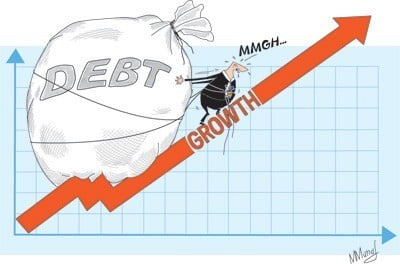
Finally, humanity will face one of its hardest trials: despite the increase in life expectancy around the world, and the advanced therapies or the cure for most prevalent diseases, an unbearable rate of mental illness such as depression, anxiety and suicidal behavior will be the norm in industrialized countries (Han et al. nd). The most prosperous moment in history will show that economic growth and technological advancement without sustainability are not synonymous with well-being.
Governments around the world will continue legislating to protect natural resources and reduce the unethical and anti-ecological behaviors of corporations and citizens, but there may be civil unrest in many countries due to the nature and extent of the ongoing problems.
All the preceding turmoil will create a corporate landscape very different from the one we know today. Only ethical companies, responsible socially and ecologically, will reach the new era of sustainable industrialization. Technological development will adapt from the previously resource-intensive development to a sustainable green technology paradigm where innovation must be subordinated to the control of the ecological footprint it produces.
Jason Hickel, professor of anthropology at the London School of Economics, proposes that the GDP is an irresponsible measure of development because it increases when natural resources are depleted, when forests are decimated, when natural disasters occur or when hospital visits increase. The GDP ignores environmental and social costs.
He proposes a more sensible metric called the "Genuine Progress Indicator" — GPI. It consists of the GDP minus the negative results of growth. An indicator that considers the cost of growth, motivating nations to develop laws, regulations and policies of sustainable growth (Hickel 2017).
A new economy based on sustainability and not on growth will be beneficial not only for all humans on Earth, but also for all companies and industries, because it will eliminate the pressure on the shoulders of CEOs to generate income that grows without limits. In this way, their efforts will be concentrated on innovating, creating more efficient ways to generate value and producing sustainable profits with the smallest possible footprint on the ecosystem (Prádanos 2015).
This vision may sound quixotic to today's capitalists, but the truth is that no company can grow indefinitely (Fisher, Gaur and Kleinberger 2017). Most countries have examples of companies that have prospered for decades generating well-being for their employees and profits for their shareholders, growing organically at the pace of their natural expansion and valued on the basis of their real earnings. Unfortunately, companies like this can't succeed when they face competition that is willing to do whatever it takes to grow beyond their real value and destroy their competitors.
The body of knowledge of this alternative path already exists and is called Ecological Economics. It is maintained by the International Society for Ecological Economics, a nonprofit organization dedicated to advancing the understanding of the relationship between ecological, social and economic systems for the well-being of nature and people (ISEE 2017).
It's only the beginning, but when humanity is ready to leave behind the predatory capitalist economy that is destroying the planet and the mental health of the population, ecological economics, sustainable growth, corporate social responsibility, sustainable impact investing and ethical capitalism will not be just buzzwords, but the foundation of a more just, egalitarian, healthy and prosperous society. Either that or we self-destruct as a civilization.