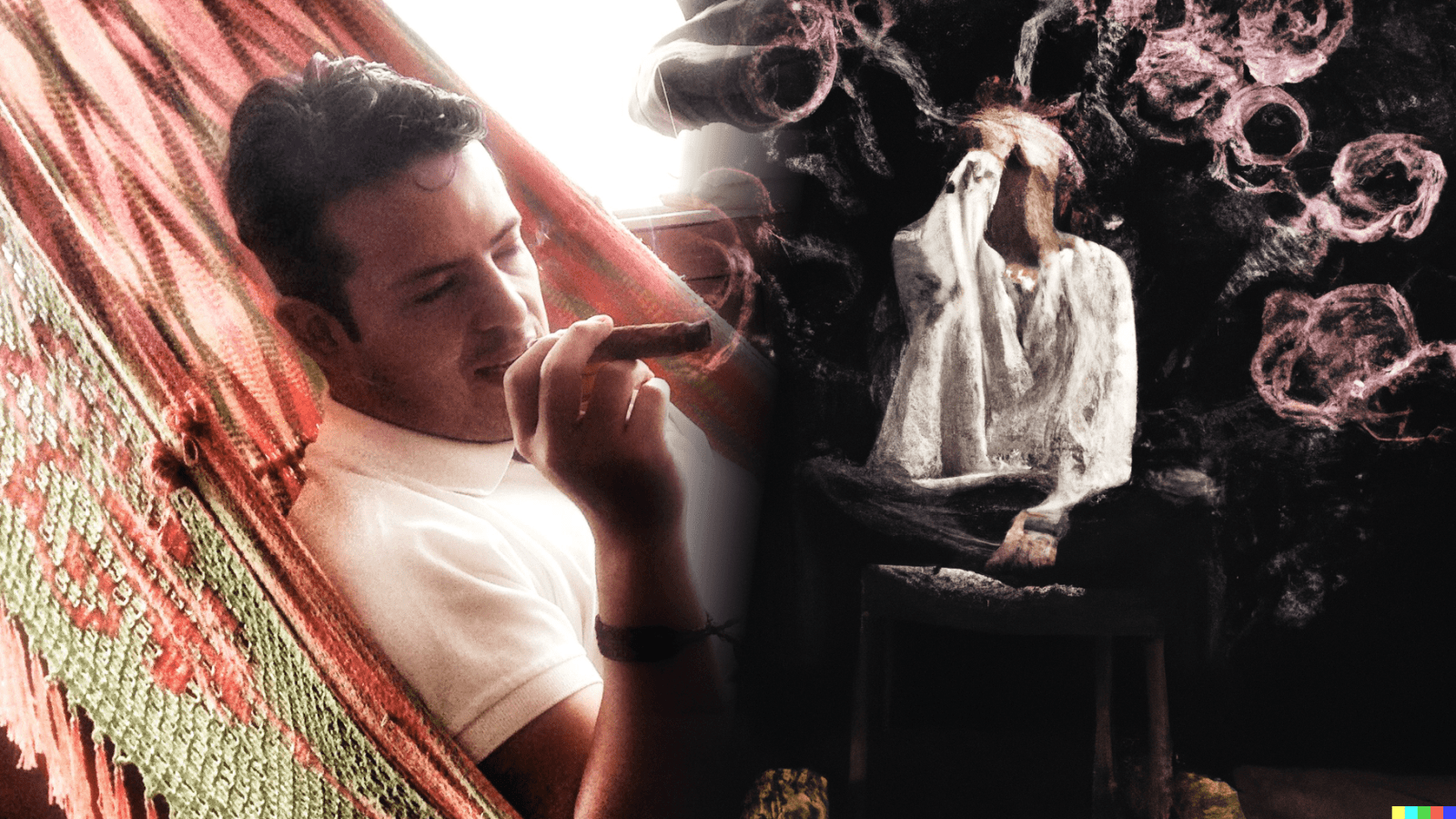
A few days had passed since that yagé ceremony in which my relationship with Diana imploded amid a shameful public display of our impertinence. It was clear there was no going back; that fleeting, intense, and doomed relationship had already become part of the past.
The grief for letting go of that woman whom I'd come to feel in love with was less intense than I had expected. Perhaps the chaos of the triad relationship, with its arguments and sentimental juggling, had exhausted my will toward Diana. Or perhaps deep down I knew our relationship had stretched far beyond her life expectancy. Either way, returning to the peace of my home and realizing how solid my relationship with Paula was more than made up for Diana's absence.
Paula and I had walked the razor's edge and after crossing it, everything suggested we had passed the test. Our love felt strong; trust had not only survived but in some ways had grown stronger: though there were wounds that would take time to heal, we had discovered each other as friends, allies, and confidants—a facet of our relationship we hadn't had the opportunity to explore before.
Suddenly, Paula and I found ourselves in an unfamiliar place: the doors to the United States had closed again and we decided not to try once more. Diana remained a ghost between us, but no longer a dominant presence as she had been during those months. And finally, yagé seemed to have completed its cycle in our lives: Paula had already been feeling for some time that the remedy held no clear purpose for her, and I felt confused and alienated by that last ceremony in which my relationship with Diana collapsed under the weight of our weakness.
It was like turning a page filled with dense, tangled strokes and seeing a blank sheet ready to be filled with a new story. We knew that life from then on would be different, but what we were not conscious of was that, to start a new chapter, we first had to close the previous one. Fate offered us the chance to begin that new life we longed for, but to reach it we would have to free ourselves from our past deeds and face the consequences of our actions. The path would not be easy, but we had already decided we were prepared for our next initiation.
The first decision we had to make was whether to stay in Colombia after three years of trying to move to the United States. Paula was more inclined toward that option, but I, less attached to my roots and disenchanted with Colombia after the peace plebiscite fiasco, felt that my place was no longer in the country where I grew up.
From a practical standpoint, I argued that, without any possibility of moving north, it was only a matter of time before David reminded me that my remote work situation from Colombia had always been a temporary arrangement. Given that possibility, my best option would be to pursue a business master's degree that would position me for a higher-profile role, wherever we settled.
Paula agreed with my logic and also understood that a title at that level would have far more value if obtained abroad and in English. So I set out to research business schools in several countries. Hopefully David would agree to keep me employed at least while I finished my studies. We'd cross that bridge later.
After several months of studying alternatives, preparing for a difficult management skills exam, and going through selection processes at various universities across Europe and Canada, I was admitted to three business schools: one in Paris and two in Canada. Paula was thrilled by the prospect of living in Europe, especially after our wonderful family trip to the old continent the previous year. I, too, felt drawn to Europe, but I had apprehension about having to learn French, a language from which I had only very basic knowledge.
Moreover, the very different time zone from Chicago worried me. I would have to work late into the night to align with the American midwest schedule, in addition to fulfilling my study obligations and fatherhood duties.
But deep down, what drew me most to Canada was that I saw a clear path there to become citizens of that country. Paula considered living in another country would be a temporary situation and that sooner or later we'd return to Colombia to settle down permanently and continue with our lives, but I was increasingly convinced that we were choosing where to build the next part of our story—and perhaps where that playful, cheerful child yagé had shown us would be born: the little angel we thought turned out to be a girl, but whom we still longed to meet and have among us.
After that last yagé ceremony, I had the feeling of not having fully come back from the trance. The impact of my actions and Paula's reaction were undoubtedly reasons why I couldn't return to daily life with the peace and positivism I usually had, even after the hardest and darkest yagé sessions.
But this time was different. A few days after the ceremony, I began sensing nonexistent presences around me. Other times my mind would escape from reality, exploring existential questions or considering unsettling mystical possibilities. Once, while riding my bicycle, a thought hit me like thunder: What if human consciousness is a flaw in creation and no matter how hard we try, death brings an eternity of suffering similar to what I endured during that yagé session where I felt I had embodied evil?
Maybe what I experienced that day was a sample of what all will face when we leave our physical bodies. Suddenly my heart began pounding; I felt my hands starting to sweat and intense cold ran through my body. Never before had I had a panic episode without any understandable trigger.
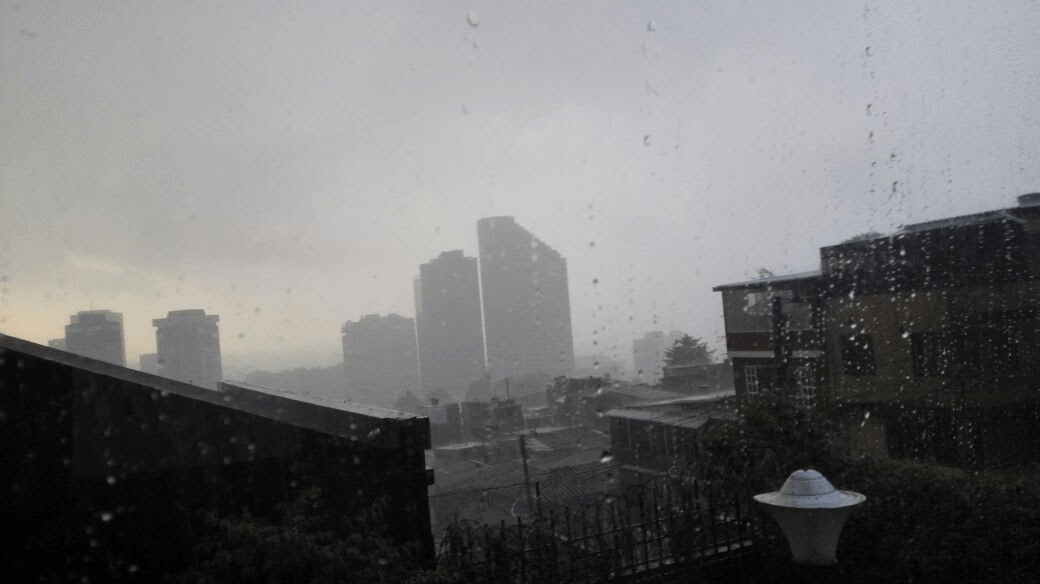
I had to stop my bicycle, breathe deeply, and compose myself before I could continue on my way. My hands were trembling, and the thoughts that had terrified me minutes earlier still circled in my head, even as I tried hard to think of anything else.
As the days went by, I found myself fearing and avoiding my own thoughts. One moment I'd be laughing at some video I found online, and the next I'd be ruminating on the meaning of life, the inevitability of suffering, or the possibility of losing a loved one.
These are questions I had meditated on for a long time, but this time they felt uncomfortably sharp. Whereas before I could easily arrive at positive—or at least reasonable—answers, I found myself always concluding that reality was much darker and more hopeless than I wanted to accept up until then.
At first it was enough for me to focus on the present and my breathing, as I had learned with vipassana meditation, to shake off the overwhelm and function normally. But as days passed, the feeling became more recurrent, more chilling, and harder to ignore.
The worst thing, however, wasn't the lurking sense of fear—I found myself unable to enjoy things that normally brought me satisfaction, like playing with Luciana, watching science videos, or exercising. Sleeping was the only routine I craved each day, because during sleep's unconsciousness my demons faded away.
But in the early hours of the morning, increasingly often, I would wake suddenly before sunrise feeling an awful sense of fear, tremor, and cold sweat. I suffered all this in silence because I hoped that whatever I was experiencing was temporary. I didn't want to worry anyone, but deep down neither did I want to tarnish my supposed image as a cheerful, positive person with everything under control.
What I hadn't counted on was for life to have one more lesson in store before I could turn the page and start a new life in Canada as we were planning.
While battling my demons silently, Paula and I focused on carrying out our plan to move to Canada. In February 2017 I received the exciting news that I had been admitted by two Canadian universities for my business administration master's (MBA). The first—the one that attracted me most—was Victoria University in British Columbia, while the second, though it didn't excite me as much, was Metropolitan University in Toronto. My boss preferred the latter, being just a one-hour flight from Chicago.
We finally decided to go to Toronto, primarily influenced by the possibility of keeping my job with David. I accepted the offer and hurried to complete the necessary paperwork for both the university and the Canadian embassy. The most burdensome part of that process would be obtaining student visa approval, and for that the priority was completing immigration medical exams.
This was a routine checkup including blood tests, X-rays, and a visit to a doctor authorized by Canada's immigration office. We chose Dr. Alberto Kopec based on his reputation online and completed all necessary steps over a couple of days. Then we had to wait several more days for the results so our visa applications could move forward.
But then things took an unexpected turn. One morning, while I was at my office working, I received a call from Paula that left me paralyzed. A few hours earlier she had left home because the lab where we'd done our blood tests informed her that one of the tests needed to be repeated due to a problem with the original sample.
Paula was crying and told me she was heading back home but was very scared because the nurse who gave her the new test results said her ELISA test had come back positive. When I heard this, I felt my heart stop. The ELISA test is the one that detects the human immunodeficiency virus—HIV. On autopilot I told her not to worry, that it wasn't conclusive and we'd talk when she got there.
Then I started trembling and the sensation of panic, with which I was already familiar, invaded me—but this time with very good reason. Like lightning, I began searching online for everything I could find about the test, the virus, AIDS, and the implications of being HIV-positive for a Canadian immigration process. I had just told Paula not to worry, and there I was looking up alternative treatments for AIDS in Cuba.
Searching for medical information online may not be the best idea in general, but in the midst of a panic attack it's truly an error in judgment. I found streams of information, but with my mental state all I could conclude was that the probability Paula had the virus that leads to AIDS was 99.4%.
Suddenly my hands went still and a second wave of panic hit me when I realized the possible consequence of the news Paula had just given me: If she truly had HIV, it was very likely that I had contracted it from Diana and then passed it to her. But how could this be if my own test had come back negative?
Then I changed my Google search criteria to 'can I transmit HIV to my partner without having the disease' and the results left me stunned: The virus can remain alive for several hours outside the body, depending on the medium it's in.
I thought that was what this was about: this was the event I'd been sensing for months, the tragedy I knew awaited me and for which I had been trying to prepare. It was also the punishment I felt I deserved for my infidelity, for my lack of willpower, for having failed the spiritual tests yagé had shown me, and that I hadn't had the fortitude to overcome.
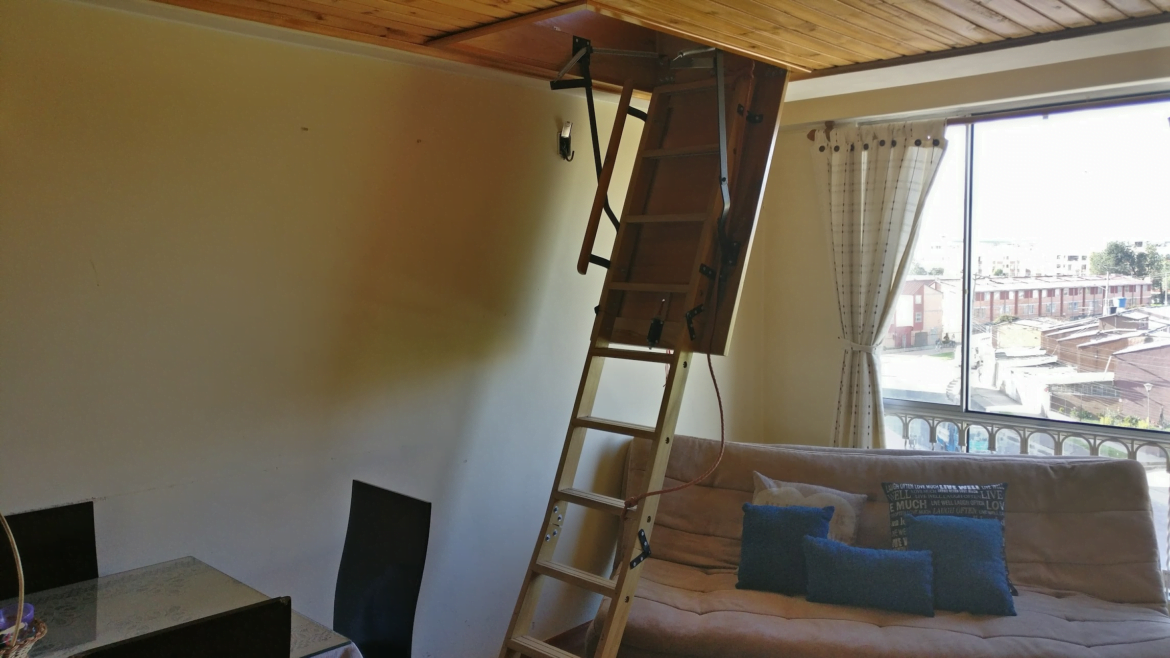
I covered my face with my hands, overwhelmed by shame, and cried like an abandoned child until I heard Paula coming through our apartment door. I wiped away my tears and went downstairs via the ladder from the attic. Paula had also been crying and we hugged for a long time while I promised her everything would be okay, that we'd get through it no matter what. If only I could have believed my own words.
At that moment everything passed to the background: my graduate studies, the trip to Canada, my job. My priority was resolving, as far as possible, the damage I had caused my wife, and I resolved to dedicate my time and effort to it, regardless of the cost. After all, according to my obsessive search results, with modern antiretroviral treatments, seropositive people could have a nearly normal life expectancy.
Except that I was getting ahead of myself. A few hours later we received a call from Dr. Kopec. We sensed more perplexity than concern, and he managed to restore our hope when he explained that the ELISA test alone wasn't conclusive for the presence of the virus and that Paula would need to take a new specific test called Western Blot—which—unlike ELISA—would definitively determine whether she had contracted HIV.
A couple of days later we went to another lab where they drew a couple of vials of blood from Paula, but to our surprise, the results wouldn't be available for between seven and ten days. If my days had already become long and tortuous, those following the Western Blot were unbearably interminable. Moreover, I had to swallow my fears and despair because now I needed to be a worthy support for Paula through that difficult situation.
Paula, as usual, displayed during those days a fortitude that I would not have been able to match even without the shadow pursuing me. She took care of Luciana, Ana María, and our house as always and even laughed during our family gatherings. But I could notice her sadness and worry every time she turned over to sleep after we'd said goodnight. I would try a few words of encouragement, a hug or a kiss to reaffirm my presence beside her, and then I'd turn around to swallow my tears and my guilt until falling asleep so I could cross one more day off the calendar of anguish.
Five or six nights of torment later, while putting Luciana to sleep in her crib, I complained to myself for not being able to extract a shred of joy from watching my baby girl sleep—something that used to fill me with happiness. Suddenly I heard Paula answering a phone call and cheerfully saying:
– "So there's nothing we need to worry about? Everything's fine?"
If I hadn't jumped up and gone out to hug her, it was because just the day before we had taken our pug dog to the vet for a series of tests whose results we were also awaiting. Since we weren't expecting HIV test results for three or four more days, I thought the happy call was to inform us that 'Chimú' didn't have the aggressive parasite the vet suspected.
But when I came out of the room and saw happiness on Paula's face I knew we had woken from a nightmare: Paula's case belonged to that small percentage of false positives for the ELISA test.
The monster turned out to be an illusion, but the lesson for me was clear: the intense suffering I went through those days was largely caused by the guilt I carried over my relationship with Diana. I say the feeling of guilt and not the relationship itself, because clearly, despite all my efforts and mental shortcuts, I could never justify myself or fully convince myself that polyamory was an acceptable path for my life—all the while I kept conscious that sooner or later I'd have to pay for my audacity.
The epidemiologist who issued Paula's health certification explained to us that false positives on ELISA tests are more common than people think and can be caused by other infections such as Lyme disease or other autoimmune conditions. In other words, Paula didn't have HIV—but she might have some illness that in the end could turn out worse than immunodeficiency itself.
We never knew what caused Paula's body to produce the antigen that reacts in the ELISA test. Maybe it was because Paula had gastroenteritis twice right before the immigration exams, but the point is that without my guilt burdening me anymore, I was genuinely optimistic that Paula didn't have anything serious and at least her health wouldn't be a cause for concern.
But even without a real reason for my permanent state of anguish, things in my mind failed to improve. Soon I found myself crying for no reason from one moment to the next and feeling an urgent need to hug Paula, Ana María, my parents, or my sisters. I was using all my weapons: Vipassana meditation in the mornings, frequent use of tobacco hoska during the day, and archangel meditations at night—but nothing fully cured me of the storm raging inside.
The constant sadness and fear were a burden too heavy to accept indefinitely. But there was something more sinister consuming me from within: Perhaps conditioned by those yagé trances in which I felt there was lurking evil within me, I began thinking more and more frequently that perhaps what I was living was precisely that feared transformation into an evil being.
A few months earlier, an aunt told me about a tragedy suffered by the family of a boy who played roller hockey with his children: Out of nowhere, the father murdered the mother and the girl's older sister. According to my aunt, the man had never shown any signs of being a psychopath; on the contrary, he was known for his kindness and devotion to his family.
I also learned about another case in which a flight instructor who lived in Santa Marta with his wife and a three-year-old boy one day stabbed both and then took his own life. And as if that weren't enough, I later saw on the news yet another case where a Colombian living in Spain went to the trouble of piercing his house's gas pipes and sealing any air leaks, so he could poison himself and his family with carbon dioxide at night.
What the hell happens in a man's mind and soul to kill those who are supposedly his most beloved and whom he should protect? Could it be that the devil dwelled in the souls of those poor wretches and in one lapse had snatched control from them to seal some twisted pact with infernal beings with innocent blood?
That possibility took root in my mind and like a sadistic tyrant, it devoted itself to tormenting me every time I found myself in the kitchen with a knife in hand, or holding my little Luciana close to a high-floor window. In my imagination horrific images of death and depravity unfolded, and each time it happened, I felt the same abandonment and desperation I had during those unfortunate bad yagé trips.
My way of dealing with the panic of becoming the worst monster imaginable was to immediately drop the knife, or move as far from the window as possible while hugging my girl tightly, or always yield the steering wheel so I wouldn't be the one driving when my loved ones were in the car.
Life wasn't life anymore. I felt overwhelmed by my own thoughts, tragic premonitions, and constant scanning for dangers around me where the worst potential danger was myself. My meditation routine, powdered tobacco, evasion of dangerous situations, and shamanic spells every fifteen minutes barely kept me functioning, but I knew I wouldn't last long living like that.
My breaking point came one afternoon when Paula invited me to see a movie at the cinema—one I knew I'd enjoy. It was Logan, a somber story of redemption and farewell for one of the most popular superheroes in recent years, which nonetheless focused more on the drama of Logan and his mentor's twilight than on bombastic action scenes.
In one scene, midway through the film, a group of unscrupulous scientists conduct experiments on children to turn them into mutant soldiers. The sequence wasn't particularly graphic or violent, but for my fragile sanity what I was watching felt like an actual subtle message from Hollywood to those who were awake—about what goes on behind the scenes with hundreds of unfortunate children at the hands of corrupt elites ruling from the shadows.
These ideas hadn't occurred to me out of nowhere; I had been accumulating them over years of speculation about the ramifications of the ancestral struggle between good and evil. I myself was part of that battle in my effort to overcome the evil that wanted to take possession of my soul. Moreover, the idea of evil sects torturing children to turn them into weapons, I found in a book called 'The Great Secret' written by the controversial British author David Icke.
When I read that book, about six years earlier, I was at the height of my exploration of spirituality and esotericism. A friend recommended it to me, telling me it was the 'truth' about the world we live in. In it the author recounts how the Illuminati, headed by England's royal family, snatch children from their mothers' arms who will become the world's leaders in the future, and through sexual abuse and torture turn them basically into functional zombies who, like puppets, would carry out without complaint all orders from their reptilian masters.
When I finished Icke's voluminous book, I consider that I believed 50% of his conspiracy theories. Thinking that Queen Elizabeth and her children were actually an ancient extraterrestrial reptile race with the ability to adopt human appearance at will seemed like an exaggeration to me. I found it plausible that the matter of reptilians might be a literary way of referring to their coldness. It seemed reasonable that the conspiracies described in the book were part of why evil and injustice apparently reign in the world.
But that afternoon in the cinema, the image of children subjected to cruel experiments seemed an unquestionable truth. I tried to avoid my sordid thoughts, but it was too late. My hands trembled and cold sweat gathered on my skin as my heartbeats grew ever more intense.
I told Paula I wasn't able to finish watching the movie and asked that we leave. When we went out, I had to find a place to sit and practice my breathing exercises so I could try to compose myself. I think that was the first time Paula said she believed I should seek help—or at least, the first time I considered it seriously. I didn't like the idea of 'surrendering' and feeling that I couldn't find a way out on my own.
Paula suggested we go to a clinic, but if asking for help felt like a defeat to me, turning to conventional medicine instead of spirituality was even worse. I tried thinking of better alternatives, but I was running out of options: yagé had been part of the problem in the first place, my spiritual friends had already shared with me their entire handbook of inner healing, and the spells only brought me a few minutes of tranquility each time—but they were losing effectiveness more and more, and I had to repeat them more frequently.
Then I remembered María Eugenia Calderón's regression therapy, which had helped me years earlier when I first felt distressed at the idea that there was something evil inside me. That time, María Eugenia interpreted my visions during the session and told me that in a past life I had been a kind of black mage who drew power from extracting vital energy from young women. It wasn't a pleasant discovery, but it made me think at least that there was no point in continuing to blame myself for something I hadn't even done in this life—and to somewhat accept having such deep reservations about my own dark side.
Paula thought it was a good idea for me to visit the healer and she got me an appointment with her that same evening. During the consultation, María Eugenia repeated the ceremony I knew from years ago: she asked me to lie down on the table, guided me through a pleasant meditation with her soothing voice, and asked me to narrate whatever came to mind.
I told her I saw myself as a small frightened child, upset. I described feeling anger because my dad had just punished me. This time it wasn't a memory from an alleged past life but one of the clearest memories from my childhood—from once when my father kicked me for having kicked the door of his closet.
I retraced the rage and powerlessness I felt over what I considered an abuse, and above all the hatred that overwhelmed me and made me fantasize about possible violent ways I wanted my father to die. The anger quickly gave way to deep sadness and tears began rolling down my temples.
When I no longer knew what else to say, María Eugenia told me that I was carrying a too-heavy burden and that was what was tormenting me.
"What you saw is an experience you had to live through, but it's part of the past now—you don't have to keep carrying it on your shoulders." She said it gently, then asked:
The question caught me off guard, but even more surprising was my inability to answer immediately. Then I realized something I hadn't considered: I wasn't sure I believed in Him.
I quickly convinced myself of a faith that without realizing it had been eroding silently. If she had asked me about the Virgin Mary—of whom I knew she was a believer judging by the office decor—I could have said no calmly. But I always believed I had a close relationship with the master from Galilee and even thought I'd had several experiences of contact with him over the years.
I answered yes, more out of desire than conviction, and then María Eugenia told me:
"Then hand that burden over to Him. The good Jesus is standing right beside you, holding your hand and wondering why you've drifted so far from Him. Nevertheless, He tells you that He has never left your side and that He's there to lift you up."
The silent weeping through which I was relieving pressure turned in that moment into the inconsolable crying of an abandoned child who had just found his father.
"Do you accept Christ's help and hand over your burden so He can carry it for you?"
I answered affirmatively and let myself be flooded by that delicious balm of absolution. I felt a tremendous weight lift from my back. I cried a few more minutes, then opened my eyes to find the therapist's kind smile welcoming me back onto the path.
I went out to meet Paula eager to tell her how easy it had been to find the cure for my affliction—simply by letting Jesus take back the wheel—but I knew Paula had never managed to believe in that invisible redeemer, despite coming from a very religious family and being married to a fan of the Nazarene.
Anyway, Paula was glad to see me back and sensing renewed hope about the future. With renewed energy I returned to my daily life, convinced that the worst had already passed. And so it did. The truth is I never again felt unexplainable panic like that afternoon at the cinema—but after a few days I realized I still hadn't returned to normal.
For some time, whenever I felt the shadow closing in on me, I remembered the moment of renewal of my faith in María Eugenia's office and repeated the mental ritual of handing my burden over to Jesus Christ to feel better. But as time passed, the effectiveness of that relief also faded, and my doubts returned about faith in a personal savior or the esoteric rituals I continued practicing.
While my crises were no longer so frequent or intense as before the regression, they still fell far from being at an acceptable level, and I discovered that to feel okay for even a moment I had to shut off my logic and entrust myself to the supernatural powers I'd been spending years trying to know and understand.
But despite having tried for so long, I never managed to extinguish the seed of skepticism that the great Carl Sagan planted in me as a child through the Cosmos series, the movie Contact, and the book 'The Demon-Haunted World.'
I understood—at last—that my internal battle was not between good and evil but between faith and skepticism. In my soul coexisted a walker of mysticism and spirituality, and an admirer of the sciences of knowledge. That dichotomy is by no means a personal circumstance but one of the most intriguing characteristics of the human species. It's the origin myth of our civilization, wisely illustrated in Genesis as the antagonism between Yahweh and The Serpent:
According to the biblical text, God offered us the joy of eternal life and the tranquility of paradise—but only in exchange for obeying faithfully and never tasting from the tree of knowledge. On the other hand, the serpent tempted Eve and through her Adam not to accept the divine bribe and instead become gods themselves through the fruit of the forbidden tree.
Adam and Eve chose the latter because... well, because they were human, and in human nature it's impossible to suppress the need to satisfy our curiosity. So it's clear that the serpent had the right idea: as humans we are on the path of becoming gods through knowledge and technology. But Yahweh was also right: the price of betraying God is being cast out from paradise into divine protection and provision.
I was experiencing my own expulsion from paradise. I had lived my whole life with the conviction of being God's chosen, of having His unconditional protection—but at the same time with the suspicion that all of it might merely be a lie we taught ourselves to tell and believe so we wouldn't be obliterated by the anguish of a short, random existence without purpose.
There it was, as I said—the seed of skepticism circling me—but I felt too weak, too vulnerable, to try abandoning the faith that had rescued me from the dark hole I found myself in. However, my faith wasn't strong enough either to ignore the possibility of being wrong about it, and furthermore, the return of moments of fear and anguish brought a new understanding:
If there was no God in heaven listening to my supplications, nor angels ready to come to my aid, then neither would there be a demon lurking to take possession of my consciousness and force me to act against my will. Then everything I had seen and felt during yagé had simply been an illusion produced by the hallucinogenic intoxication. It couldn't be! But perhaps there existed a third possibility: a middle ground between spirituality and skepticism that would allow me to stop fighting with my own mind.
One morning, I was struck by a new panic attack. Then I decided it was time to accept that spirituality had fallen short and—at least for me—the solution might lie in the realm of traditional medical science. I had the precedent of my father's Parkinson's disease, so maybe my problem came from some chemical imbalance in my brain.
Paula took me to the Montserrat psychiatric clinic in northern Bogotá, assisted me through the registration process and accompanied me until a nurse directed me to an office. To my surprise, the health professional asked me to undress and remain in my underwear. Apparently psychiatric patients are always checked for self-harm marks.
Then a young doctor arrived who gave me an extensive questionnaire. The questions included my reasons for being there, family history, and a wide range of issues touching many aspects of my life—my work, personal relationships, daily activities, fears, and concerns.
After finishing the interview, the doctor stood up and indicated I should wait for the chief physician. About half an hour later, the young doctor returned with another doctor—not much older but clearly more experienced and authoritative.
The kind practitioner, who had in her hands the test I had just completed with the other doctor, told me that all my symptoms and the test results pointed to me suffering an anxiety crisis. She explained the nature of the condition and the aspects of my life that likely had the greatest impact on its development.
According to the doctor, years of living with uncertainty about my emigration to the United States, then deciding on a different destination, along with the prospect of a new life project, could have been factors in accumulating the tension that led to the situation I was experiencing.
No less important was having a newborn baby and already entering middle age—a period in which men are particularly prone to anxiety. Apparently it has to do with the transition from youth, which is a period for living exciting experiences and preparing for the future, into adulthood where children and finances take center stage. I was at an inflection point where mental health becomes more precarious.
But the revelation that struck me most that day—and ultimately served me best in understanding my situation—was that the test had yielded another diagnosis: I possessed characteristics of obsessive-compulsive disorder (OCD). According to the doctor, my discipline for recording all expenses, keeping detailed budgets, organizing my office and computer files were indicators, albeit not definitive, of OCD. What seemed to bring me closer to that diagnosis were my compulsions, which the doctor observed—biting my nails and cracking my joints.
The doctor asked me a couple more questions to confirm her diagnosis and prescribed the anxiolytic Alprazolam. She also made a recommendation I hadn't expected:
– "I know that yagé is a very useful medicine for many people and that it can treat certain psychiatric conditions like depression and addictions. But I don't recommend it to people who suffer from anxiety tendencies and especially not with OCD because that sensation of loss of control and uncertainty can be overwhelming and even lead to episodes of psychosis."
I know it may seem strange, but my diagnosis didn't affect me negatively at all—it excited me. It meant there was no demon in my soul nor anything damaged in my mind. I was simply going through a difficulty that millions of people live with daily. It's not something good, but it's much better than believing you're some kind of portal for releasing the world's evil through suffering.
Obsessive-compulsive disorder, on the other hand, had nothing to do with yagé or my recent circumstances. When the doctor explained what it was about, I could understand that it was a trait of my personality that has accompanied me since childhood. That explains my ease for becoming obsessed with specific topics over long periods until exhausting them from sheer tiredness. As a child I read children's books hundreds of times until memorizing them. In my teens I listened exclusively to The Beatles for years, driving my parents to despair; and as an adult I also found myself obsessing over hobbies, projects, and people—which, naturally, I absorbed obsessively until exhaustion.
And my compulsions were also old companions: the habits already mentioned of biting my nails and cracking my knuckles, but many others I've picked up and abandoned throughout my life: licking the lobes of my ears when they get warm, whistling short repetitive notes, grinding teeth even while awake, stroking my lips with my thumbnail, or replying immediately to every email I receive. But there were also mystical compulsions like making the sign of the cross, praying, drawing the tetragrammaton in the air, or repeating protective spells many times a day.
That afternoon at the Montserrat Clinic, many aspects of my life began fitting together like pieces of a puzzle. Until that moment, obsessions and compulsions had been uncomfortable but trivial parts of my personality—but now they took on a new dimension.
Spirituality had entered my life eight years earlier at a time when I found no meaning in my existence, filling me with wisdom, purpose, meaning, and wonderful beings. However, along with spirituality I also filled myself with superstitions and beliefs that without realizing it had been undermining my mental equilibrium like an endless drip of water capable of wearing even the hardest rock.
But that day, after battling against my own mind for several months, it was the science of psychiatry that was reaching out its hand to help me get back afloat. For someone like me for whom the feeling of losing control triggers an anxiety crisis, knowing that I have a relatively common condition—one studied for years with books, therapies, medications, and many other resources—was a breath of fresh air.
When I returned from the clinic I already felt much better. It was as if I had been drowning and had finally found shore. There was still a long way to getting completely out of the water, but at least I had something to hold onto. Panic attacks became much less frequent and intense than before, and macabre thoughts a little less terrifying. Regarding this, the psychiatrist who diagnosed me told me that people who commit atrocious acts like those I described—men killing their families—always have histories of violence, fanaticism, or mental illnesses that disconnect them from reality and from their loved ones.
With this new consciousness I could dedicate myself with renewed vigor to the process of emigrating to Canada while continuing my recovery. I continued meditating and performing some shamanic ceremonies, but I decided to cut back on the spells, amulets, and symbols to which I had attributed so much importance.
I still needed to resolve the matter of my faith: I didn't know if I still believed in an invisible spiritual world surrounding us, in destiny as revealed by yagé, or in the power of mystical symbols—but that was something that at the moment didn't trouble me. It was enough for me to know that at least what was happening to me had nothing to do with evil spirits or ancestral spiritual missions but rather with how my brain works and how I'd been dealing with all the matters going on in my life.
I would have time later to reorganize and clarify my belief system—but for now there was only one more thing I needed to resolve: I didn't want to leave Colombia without having made peace with yagé and without having as my final memory of my spiritual journey with indigenous ancestry that unpleasant yagé session in which my calvary began months ago.
I wanted to say goodbye to yagé at its home: the Amazon rainforest of Putumayo.
2 years ago Very interesting your introspection and experience with yaje.
Comentarios (archivo, solo lectura)
Mostramos 1 comentario guardados de la versión anterior del sitio. Ya no se aceptan nuevos comentarios.
Muy interesante tu introspección y relación con el yaje.