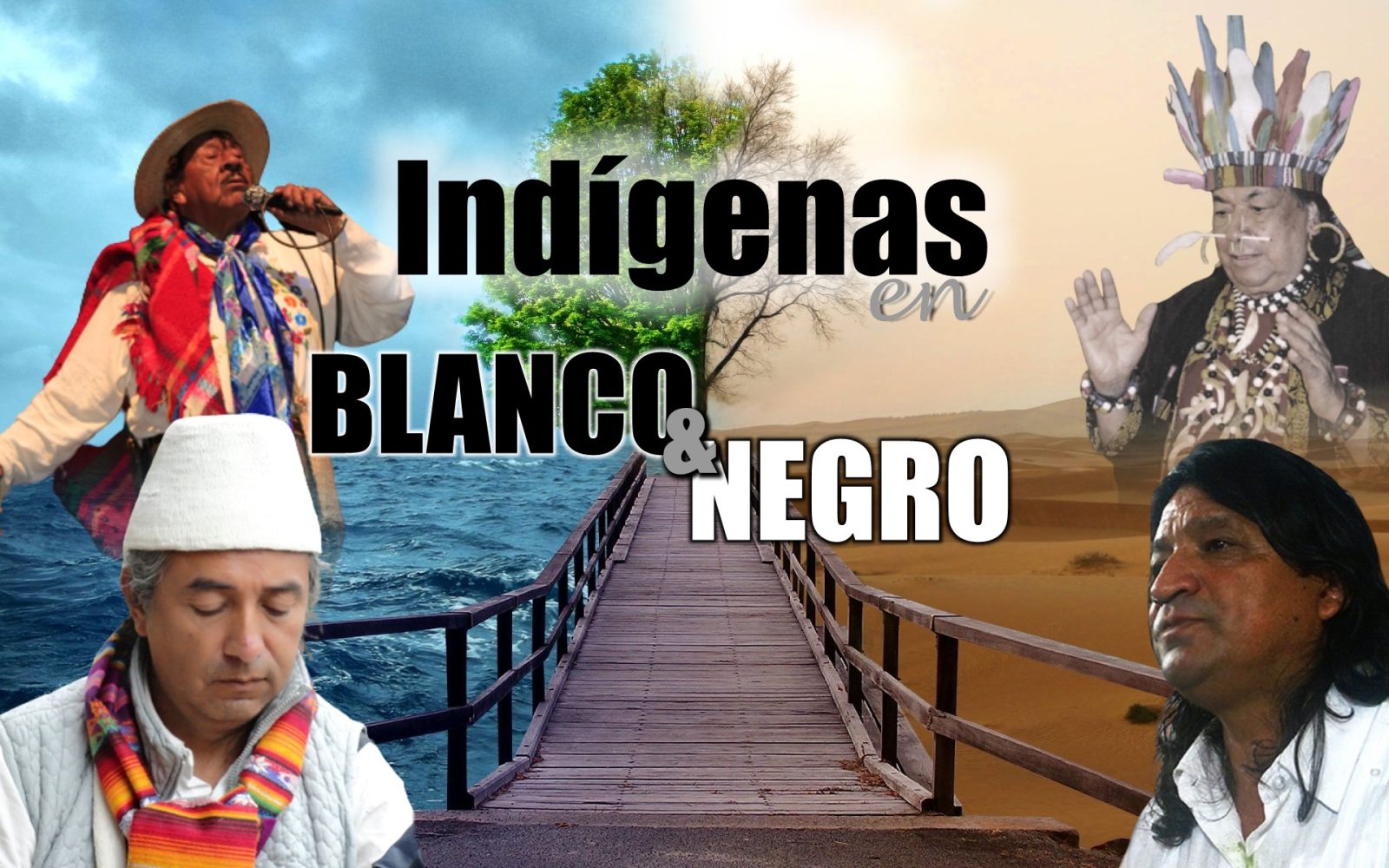
If you have seen the images of my Podcast, you will have already noticed that during a stage of my life I let my hair grow, wore white vestments, necklaces, and other accessories typical of South American indigenous communities. These superficial characteristics reflected something much more important, which was my self-recognition as an indigenous Muisca.
I was born in a clinic located in the northwest of the city of Bogotá, in the locality of Suba, just a few blocks from the place where the company for which I worked from 2006 to 2011 now stands, and where I met my wife Paula. I grew up in a neighborhood in the south of Bogotá, in a family of what is considered the emerging middle class, that is, those who managed to escape the poverty of the countryside, migrated to the city, and were lucky enough to climb the social ladder to be able to afford something more than the strictly necessary, like a roof of their own and a few days of vacation at a spa town.
However, despite having always lived in the big city, part of my family's traditions, uses, and customs reflected the peasant origin of my mom and dad. At home we used natural remedies to face many everyday ailments, my mom cooked almost exclusively perishable foods from the market square, and we had a very strong connection with the territory of origin, particularly with Fómeque, the small town in the east of Cundinamarca where my mother was born.
On the other hand, being part of the first generation that was entertained by canned television, mainly from the United States, I saw myself as more similar to the children of the American series Family Ties or ALF than to the peasant children I knew in the hamlet where my grandparents lived, and I never saw a direct connection between what I understood as peasantry and what my indigenous ancestors once were, who, according to what they taught me at school, were called Muiscas, wore white blankets, planted corn, were goldsmiths, and had disappeared shortly after the arrival of the Spanish conquerors in the early years of the 14th century.
One of the first memories I have about the indigenous communities of Colombia dates back to 1986, when I was in third grade of elementary school as a student of my mom. My parents, who did not have enough money to send me to a private school, distrusted the educational quality of the public schools in the area where we lived. This despite being themselves teachers in those public schools, or rather, because they were, they knew well the poor quality of public education in the neighborhoods of southern Bogotá. Because of this, my sisters and I were students of my parents and of the aunts who worked as teachers in the area, as far as possible.
The thing is that, being in third grade of elementary school, in geography class, the guide text had a section dedicated to the indigenous communities of Colombia in which colorful drawings of children dressed in typical attire told some of the most outstanding characteristics of the most recognized ethnic groups of Colombia. Among them, the ones I manage to clearly remember were those of the Arhuacos of the Sierra Nevada de Santa Marta and the Uitoto of the Amazon, precisely the two ethnic groups with whom I had the most contact during my process with the Muiscas.
After that, while I was in the eleventh grade of high school, I was sent by my School to a national gathering of indigenous communities at a school in the north of Bogotá. The gathering, which rather seemed like a fair in which each indigenous community had a booth, surely intended to serve so that the students of the capital could get to know members of those communities first-hand, but to me it seemed more like a showcase to display the exotic part of our country, even to show us the least fortunate part of Colombian demographics.
The mockery that students made of the most primitive customs of the indigenous people was the order of the day, and I do not remember there being presentations or workshops where indigenous issues were raised beyond the novelty and curiosity that the booths produced. I must admit that even I, who came from a poor school in the south and have no noble lineage in my roots, felt superior and very far from the backward natives.
At that time, the word indio was used derogatorily to refer to an uncultured, ill-mannered, or rude person. In the eighties the phrase “india zarrapastrosa” (scruffy Indian woman) became famous, which the actress Teresa Gutiérrez derisively repeated in her role as a villain, I believe addressing her domestic employee. The other famous popular reference to the indigenous in Colombia is the expression “malicia indígena” (indigenous malice), which, although it is often interpreted as a virtue, in reality is more a declaration of anti-values as a symbol of identity.
The malicia indígena refers to the capacity to use subterfuge or deception to come out ahead of a difficult situation. There are those who defend the expression saying that what it refers to is the ingenuity and creativity that Colombians need to solve our problems, despite the many privations we have, but the truth is that the Royal Academy of the Spanish Language recognizes eight meanings for the word “malicia” and all eight are related to wickedness. The third definition would be the most adequate for the infamous term: “Inclination toward what is bad and contrary to virtue.”
Up to here it is understood that the indigenous is commonly related to backwardness, poverty, and trickery. Another association that is frequently made with the indigenous is witchcraft and other types of dark practices, and this time, part of the responsibility falls on one of the most famous “Indians” in Colombia: The Amazonian Indian (El Indio Amazónico).
Luis Antonio Rueda Hernández, which was his real name, was neither an Indian nor Amazonian. He was born in San Vicente de Chucurí, Santander. He studied until the third grade of elementary school and became a shoemaker in his town. As an adult, Luis Antonio traveled to Bogotá to try his luck, and making use of his malicia indígena, he became an empirical dentist, by dint of paying for private lessons with final-semester dentistry students. Over time they say he came to have 35 dental offices throughout the city.
At the same time as he expanded his dental franchise, he began to travel to Putumayo, where he learned from real indigenous people the secrets of herbalism and indigenous magic. With this knowledge, he began to incorporate “energy and shamanic therapies” into his dental consultations, which, in the credulous and needy lower-class Bogotá society of the 20th century, was more in demand and more profitable than root canals and cleanings.
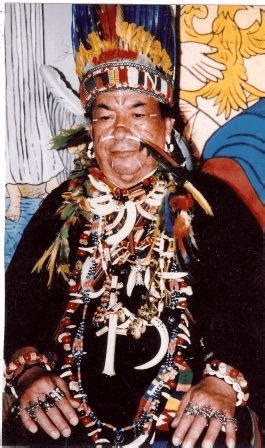
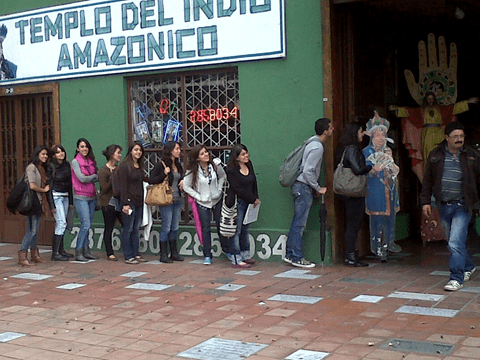
That is how the shoemaker-dentist-herbalist Rueda dressed himself up with necklaces of fangs, a crown of feathers, stuck a feather through his nose, and transformed his dental office on Avenida Caracas with Calle 39 into the Temple of the Amazonian Indian. I remember this place because during my first years of university, every day I passed in front of that establishment, and it was impossible not to get distracted observing the portrait of the “Indian” on the sign of the place, or the life-size Christ with open arms, or the giant golden Buddha that received clients at the entrance.
There, hundreds of people came to buy love spells to bind their loved ones, straighten out unfaithful husbands, remove witchcraft, get rid of the “sal”, which is what bad luck is called in Colombia, and some say also to harm their enemies with the help of black magic. A relative of Luis Antonio declared in an interview that the Amazonian Indian managed to amass a fortune of 500 million dollars, and that in the times of the guerrillas' kidnappings, he had to settle in the United States, where he set up branches of his temple in Los Angeles and New York.
The Amazonian Indian died at 84 years of age in Los Angeles in 2011. According to the article on which I based this story, he died alone, abandoned to his fate, a victim of diabetes and of a painful disease that covered his body with fungi. A fate hard to believe for someone with 500 million dollars in the bank and enough malicia indígena to become a dentist, an Indian, and an Amazonian without being any of the above. A complete display of non-indigenous malice.
The Amazonian Indian was the pioneer of a number of supposed indigenous people with supernatural powers whose only purpose was – and is – to defraud the unwary. Many advertise on poorly printed flyers with spelling errors, and the most successful do so in low-circulation, usually sensationalist newspapers, with titles like “the llanero shaman”, “the witch shaman”, and others.
I have already told in this podcast that even I myself took part in a commercial transaction in the style of the Amazonian Indian, when several members of the Muisca community accompanied grandfather Suagagua to fulfill a contract in which he committed himself to preventing rain during the Nemcatacoa music festival in 2010 (See: T3E1: La Común – Unidad).
In short, indigenous people in Colombia have always been associated with backwardness, poverty, malice, and witchcraft. This is something that did not arise recently or naturally. When reading the chronicles of the Spanish conquest, one finds constant references to supposed libertine, malicious, barbaric, or outright demonic customs on the part of the American Indians.
An example is this fragment from the Memoria sobre las antigüedades Neogranadinas (Memoir on the Neogranadine Antiquities) by Ezequiel Uricoechea:
“For so that what is here may be better understood, I say, that among the other superstitions that the Indians of this New Kingdom had (of which I will speak at great length later) in offering sacrifices to their feigned and false gods, it was not from ignorance, but because the demon, whose were the schemes by which these wretches were governed, had given them to them, so that they would honor him in the waters, wanting with his depraved will to equal God in this, He who is so honored and served in the waters, as He made known in the first steps of the creation of the world, when the spirit of the Lord moved upon the waters”
I know it seems as if the author were drunk, but the writing is confusing because it is written in the Spanish that was spoken in the mid-19th century. The important thing is that the fragment shows the Eurocentric and Catholic biases of the chronicle, despite the fact that the author was a physician graduated from Yale University. The terms Indian, wretch, depraved, and false sound suspiciously similar to the pejorative terms that we have been discussing as having been associated with indigenous people.
Ezequiel Uricoechea was not Spanish; he was born in Santafé de Bogotá, but his contempt for the Muisca culture is evident, biased by the Catholic religiosity of the time, for which everything that did not correspond with the canons of the Vatican was considered demonic and perverted. That is how the indigenous people themselves were indoctrinated to see their ancestral customs as the work of the devil and the origin of all the evils of their lives.
I remember that a few years ago I got to know a small church in the municipality of Corrales in Boyacá, which caught my attention because a large part of the interior decoration consisted of demonic faces, skulls, and other grotesque images, which ended up darkening the already somber image of the bloody and dying Christ.
The town's guides say that the reason that temple had those images was because it was a doctrina chapel, which is where the Indians were forced to attend to receive Catholic doctrine. So they were taught that all those demons were their “depraved” customs, and that only the word of God and that poor battered Christ could save them from the flames of hell that awaited them after their death.
Little by little the Muiscas were losing their gods; their natural sanctuaries such as the hills of the father and of the mother in Bacatá were crowned with respective churches to replace them with the current temples of Monserrate and Guadalupe; their hoska and ambil were confiscated, and in place of their blankets and beautiful necklaces, the colonists dressed them in used clothes and rosaries.
The first generations to receive the catholicizing lobotomy continued honoring their beliefs in secret, but their children, forcibly educated by Catholic priests and nuns, ended up questioning the beliefs of their parents, later discarded them, and with time, the Muiscas themselves, now self-identified as peasants, became relentless judges of the customs of their ancestors and learned to call their own fellow men “wretch”, “backward”, “scruffy Indian”.
The first famous indigenous person I met in my life was “Indio Rómulo”, a folk poet of Boyacá origin who, like the Amazonian Indian, was not an Indian, although he was indeed named Rómulo.
Well, he was not an Indian at the beginning, because like almost all the indoctrinated Muiscas and their descendants, Rómulo saw himself as a peasant, and in fact, the first stage name he adopted was that of “El Campesino Boyacense” (The Peasant from Boyacá), but as we will see later, Rómulo ended up recognizing his ancestral indigenous lineage to become not only the first famous Indian of 20th-century Colombia, but also the first self-recognized indigenous person to become famous.
His thing was poetry, and he professed a contagious love for autochthonous verses, laden with satire and social protest. Similar to the Amazonian Indian, the Peasant from Boyacá left his native Monguí to try his luck in the capital.
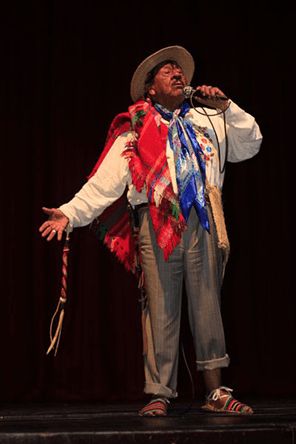
In Bogotá he studied theater while continuing to recite his own and others' poems, and thanks to his talent he was one of the first artists to inaugurate the Televisora Nacional de Colombia during the government of General Gustavo Rojas Pinilla in 1954.
This new showcase turned him into a national figure, especially appreciated by the peasantry, the working class, and lovers of folklore. Beginning in the 60s, Rómulo was already quite a celebrity, and the press began to call him “Indio Rómulo”, surely because of his copper skin and indigenous features. Something that had already been done before with the liberal caudillo Jorge Eliecer Gaitán, whom, for the same reason but probably with a more offensive tone — a clear sign of the veiled Colombian racism — they had also nicknamed “the Indian”. But then the president of the time himself, Alberto Lleras Camargo, challenged Rómulo to accept his ancestry and change his nickname from Peasant from Boyacá to the already popular “Indio Rómulo”. (Source: Indio Rómulo: esta es la historia del inolvidable personaje (elpais.com.co))
And so he did, and for decades, Indio Rómulo carved out a space in the hearts of Colombians, many of whom for the first time found in him a positive reference point for indigenous identity. Those who knew and admired Jorge Eliecer Gaitán had learned to see in his Muisca phenotype a motive for pride, trust, and identity, but the younger ones had that opportunity with Indio Rómulo.
When I was a child, my parents had an LP of Indio Rómulo at home, and although I did not inherit the ability, I did inherit my father's taste for poetry, especially if it was scatological. So I listened many times to one of Indio Rómulo's most famous poems: El Poema al Peo (The Poem to the Fart).
In recent years, already in his old age, Indio Rómulo was fading into oblivion, and the new generations, increasingly less interested in folklore, surely will never have heard of Rómulo. In July 2020, at 89 years of age, Indio Rómulo unfortunately became one of the thousands of fatal victims of the Coronavirus pandemic.
With the fading of Indio Rómulo from the public scene, the popular references of the indigenous disappeared, and the negative image of indigenous people prevailed again. Another peasant from Boyacá who became famous at the end of the 20th century seemed destined to take the place of Indio Rómulo in the popular imaginary of the new Muisca, but Jorge Velosa, one of the great folklorists of Colombia, dedicated his life to exalting the image of the Cundiboyacense peasantry, but never came to self-recognize as indigenous.
Despite this, Maestro Velosa honored his Muisca ancestry. I know this because once he was asked what he thought about the Colombian Academy of Exact Sciences having named two new species of frogs found in the eastern mountain range of Colombia in his honor and in honor of the music he played. The new species were called Eleutherodactylus carranguerorum and Eleutherodactylus jorgevelosai.
“There are apparently strange coincidences. The Muiscas –our ancestors– believed that frogs were the food of Sua, the sun god, and they had a lot of representative weight in their culture; quite a few hieroglyphs bear witness to that. So, by the intricacies of life, I continue to be gladly part of that culture through my carranguero ritual.”
The vindication of the indigenous in 20th-century popular culture was undermined by the negative image that the many “witch Indians”, like the Amazonian Indian, caused with their scams and deceits. Television helped amplify that stereotype with the representation of indigenous people as beggars who frequently practiced witchcraft, but then, at the dawn of the new millennium, with the decline of the influence of the Catholic Church in Colombian society and the proliferation of movements and knowledge known as the New Age, the Indigenous people in Colombia had a “retread” with the new perspective of ancestral spirituality connected with nature.
The yagé ceremonies began to reach the cities hand in hand with the Inga and Cofán indigenous people mainly, and the presence of mamos from the Sierra Nevada de Santa Marta sharing their vision of communion with the Earth and care for the environment became increasingly common, on many occasions even demanding from the national government respect and protection for their sacred territories, particularly affected by the mining exploitation of the companies Anglo American and Glencore in La Guajira.
The U'wa indigenous people of the Serranía del Cocuy and Güicán received the attention of the media when they confronted the multinationals OXY and SHELL, also to protect their sacred territory from the depredation caused by oil exploration. They came to threaten to carry out a collective suicide if their demands were not met, and with that they managed to stop numerous explorations that would have devastated the páramos and water sources.
The Colombian millennials, who also grew up hearing all the pejorative adjectives associated with indigenous people, realized that in the ancestral culture there was a wisdom and a strength that no other segment of society had expressed. For this reason, and despite the almost nonexistent coverage of indigenous issues by the traditional media, young people, especially university students, poured into public squares, gathering places like the maloca of the Bogotá botanical garden, and other venues, to listen to the word of the indigenous people.
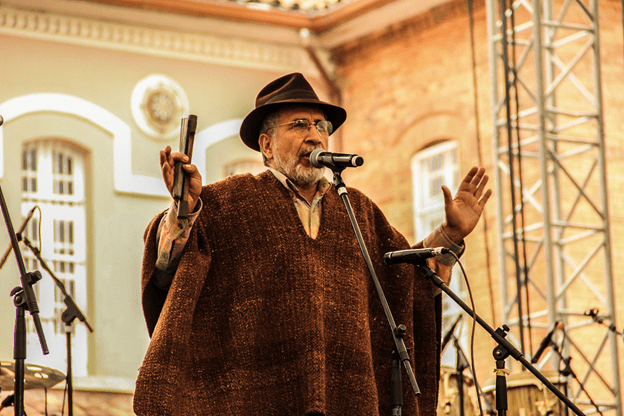
Initially motivated by environmental claims, many young people were captivated by many other aspects of indigenous thought, such as their concept of community, the importance of the elders, the vision of spirituality as a constant experience of daily life that requires a conscious connection with the territory of origin, the territory in which one works, and the internal territory. In short, indigenous thought became a balm for a generation hungry for purpose and identity.
In this new scenario, many mestizos born in the city, or in the countryside but far from the resguardos, who nevertheless felt a strong connection with the indigenous, found the perfect synchronicity to come out into the light, dress in the attires that reflected their identity, and recognize themselves as indigenous. Such was the case of the Muisca elders I have spoken about on several occasions. All of them self-recognized as indigenous, and many joined the indigenous by birth in their demands for the care of the land and the protection of their culture.
In the last 15 years, the image of indigenous people in Colombia has enjoyed a vindication that not even Indio Gaitán or Indio Rómulo had achieved, and thanks to social networks, their causes and their teachings found a new space to exist and flourish. I self-recognized as Muisca with pride, mainly because of the spiritual connection I felt with the teachings of the elders, but with the motivation of making a statement, symbolic and personal, that even though centuries have passed, the doctrineros could not erase indigenous thought from my DNA, and despite the skulls and the grotesque faces, I decide to return to my lagoons and my mountains and leave Christ there on his cross.
Honestly, I thought that my declaration and that of my family were like the songs of a few swallows that do not make a spring, but in 2019, the newspaper of the National University revealed that according to the DANE census, the indigenous population of Colombia between 2005 and 2018 increased by 36%, mainly in areas of influence of traditional cabildos and resguardos, but also significantly in the capital cities, where self-recognition has been the most important form of growth of the indigenous population.
Although the journey I have made would seem to demonstrate that the negative vision of indigenous people was only a perverse construction of Catholicism, and that thanks to the processes of reculturization and self-recognition, justice has now been done and indigenous people have shown themselves to be a fairer, wiser, and more honorable population, unfortunately the reality is more complex and, as always, full of nuances.
In the first place, my experience with the Muisca community, as those who have followed the story of my spiritual path know, had its lights and its shadows. Some elders have exalted the indigenous identity with their work, activism, and teachings, but others have used their fame and influence over people to satisfy their personal greed or to manipulate those who believe in them (See: T3E8: Los Pecados de los Abuelos).
Two close cases can better illustrate this dual reality of self-recognized indigenous people. The first, which I consider positive and praiseworthy, is that of elder Xieguazinsa Ingatyba Neusa, who, as I have shared in other episodes, is the elder whom I consider to possess the greatest baggage of knowledge, both spiritual and political, of the indigenous in general, but of the Muisca in particular.
Xieguazinsa, who distanced himself from elder Suagagua Ingatyba Neusa and from the process of the Muisca community of Bacatá as a result of his dissatisfaction with the mismanagement that his brother had been giving to the community of which I was once part, has been working tirelessly to restore the memory and identity of the Muisca people in the department of Boyacá.
His cause, which has achieved the support of academia, other indigenous communities, and finally of the municipal government, has borne fruits such as the recognition of a Muisca cabildo in the city of Tunja, formed by peasants who self-recognize as indigenous and work together to restore the uses and customs that were snatched from them centuries ago.
Perhaps even more important is that with his word, elder Xieguazinsa has managed to inspire hundreds of people of all ages to feel proud of their ancestral heritage and to learn to combine the cellphone and the laptop with the ruana and the tobacco. Those who want to know the work of elder Xieguazinsa and the admirable work he is doing, I invite you to watch the following video in which he himself describes his struggle and his longings:
The other side of the coin is another mestizo who self-recognized as indigenous and came to have a lot of power and influence, but who could not resist the temptation of the “malicia indígena” and ended up staining the good things he achieved with faults so grave that they earned him a sentence of 19 years in prison.
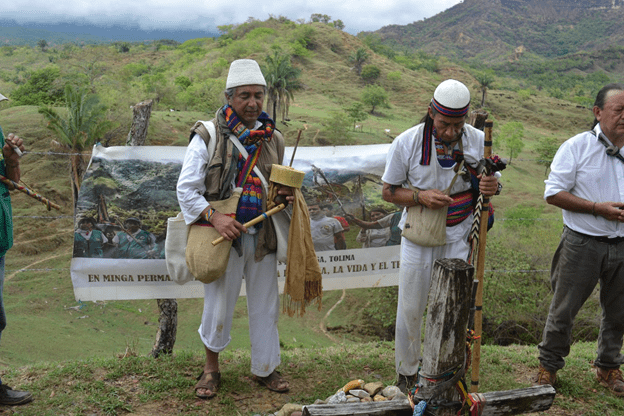
Taita Orlando, as Orlando Gaitán was popularly known, was at one time the most famous yagé taita in Colombia. Hundreds of people went weekly to his farm in the municipality of La Vega, including famous figures and many acquaintances of mine. I never participated in ceremonies with Gaitán, but I did know his farm, because it was there that the ceremony took place in which Paula and I received our aseguranza from the Sierra Nevada (See: T3E3 – La Aseguranza (Part 1)).
On second thought, it is strange that during the 10 years I walked the path of yagé in Colombia, I never had the opportunity to meet taita Orlando, since I met many people who followed him and participated in his ceremonies. Almost all the Muisca elders knew him, and on multiple occasions they took part in joint activities, and even my youngest daughter was received by midwives who belonged to the Carare community, of which Orlando was the top leader.
The thing is that, just like the Amazonian Indian, Indio Rómulo, or Xieguazinsa, Orlando was also not born indigenous, and yet he self-recognized as a member of the extinct Carare ethnic group, which he tried quite successfully to restore thanks to the huge resources he obtained from his ceremonies, but above all from contracts with the state, and even from a health services provider entity that he owned.
Some people who knew him referred to him as if he were a saint, a man with a special power who helped everyone. However, this image collapsed after 2012, when reports by women accusing Orlando of having abused them while under the influence of yagé became public. In total, nine women filed official complaints, and after a process that lasted several years, a court finally declared him guilty of three of the nine accusations (although not necessarily innocent of the remaining six) and sentenced him to 19 years in prison, with the aggravating factor that two of the complainants were minors at the time of the abuses.
Recently I read a book written by one of the women victims of taita Orlando, and it is heartbreaking to hear the level of desperation and loneliness that the women who were abused, not only sexually but also emotionally, lived through, while they were subjected by a man who knew how to use his image of saint and his power over his disciples to satisfy his vanity and fulfill his twisted desires.
I will not go into more details about this case, because I did not know them first-hand, but those who want to know the author's experience, I invite you to read the book “Entre la fraternidad y la violencia. Un caso de neo-chamanismo urbano” by Betty Sánchez Sarmiento. It is truly worth it to learn to recognize the dangers entailed by the neo-shamanic sects that have become fashionable throughout the Americas, and of which I consider the Muisca community of Bacatá to which I belonged to be an example, although not as sordid as taita Orlando's community.
It would be fair to say that in indigenous communities there is primarily good people and some rotten apples, as in the rest of society; however, my experience with both self-recognized and native indigenous people is that the conditions of marginalization, poverty, and lack of opportunities in which most indigenous communities are immersed make them prone to the behaviors and activities characteristic of any other human group in those conditions.
A close friend, who had a relationship with a member of the Wiwa community of the Sierra Nevada de Santa Marta and lived there, told me how alcohol, promiscuity, and machismo are rampant and ended up destroying the possibilities of continuing that relationship. According to what she told me, today's Wiwa youth are more worried about reggaeton parties, getting drunk, and having several women, than about practicing the spirituality of the mamos or helping the community prosper.
However, one must not ignore the effort that some native young people of the Sierra Nevada make to change things and stand out positively. This is the case of the Arhuaco Teyrungūmū Torres Zalabata, who is not only bilingual, but became the first theoretical physicist of his community. On his Twitter, he combines pills of ancestral wisdom with denunciations of public policy and interesting advances in the field of quantum mechanics. All very much in the Espiritualidad y Ciencia style!
And to finish, recently another friend told me that in a yagé ceremony with my dear Taita Gregorio, whom I deeply admire and of whom I spoke in a recent episode, mama Carmenza, the taita's wife, charged her 1,600,000 pesos for a few brews, supposedly to help her remove a spirit she was carrying. My friend, in a state of confusion from the yagé, agreed to the deal, and she tells me that more than the loss of the money, what hurts her is the loss of trust in someone she considered a proper person. I do not know if taita Grego knew about or agreed to such nonsense, but now even I do not know if I can recommend anyone to go to his ceremonies after that.
And the worst part is that it is not the first time I have known of a close case of economic abuse by indigenous people in a yagé ceremony. A couple of years ago my parents were in a yagé ceremony in Putumayo, with a taita recommended by a Kamentsa indigenous woman who has been a friend of our family for several years. After the ceremony, the taita, abusing the knowledge that my dad lives with Parkinson's disease, also ripped a large sum of money out of them to perform a supposed special treatment that would cure him of the ailment. Not only was he not cured of Parkinson's, but my dad also returned from Putumayo with a pneumonia that took almost a year to fully heal.
In conclusion, neither the image of backward, malicious, witch-like Indians nor that of spiritual and kind older brothers is accurate. Nor is there a difference between native and self-recognized indigenous people. Among indigenous communities are some of the wisest and kindest people I have ever met, but also some of the most unscrupulous and incoherent.
Perhaps it is time that, just as we are beginning to do with women, Black people, and the LGTBI+ communities, we stop labeling people by the color of their skin, the place where they are born, their uses, customs, and beliefs. The new times we are living through require, more than ever, that we seek as many perspectives and visions as possible. Both in society and in the workplace and politics, we must see ourselves as equals in our differences, taking off our masks and understanding that in spirituality, as in science, black and white do not exist, except as the combination or absence of an infinite spectrum of colors.

5 years ago INDIGENOUS IN BLACK & WHITE, is an audio that narrates the experiences of Manuel Avila, a young seeker of knowledge on the paths of modern indigenism; who narrates from his point of view the successes, failures, dangers, and potentials explored there, and which we reference as a footnote in a Statement of the MUISCA CHIBCHA BOYACÁ INDIGENOUS COUNCIL CIMCB (COMUN. 52.2809/2021 of April 28, 2021): https://www.facebook.com/photo?fbid=10159274937422390&set=a.10150501170117390
within the framework of the NATIONAL STRIKE, where we clarify the usurpation of ancestral knowledge by sectors of governments, academics, organizations, collectives, tourism companies, NGOs, indigenists; and bamboozlers, etc., since these sociocultural and political phenomena confuse the public and affect in a certain way the AUTONOMY AND FREE DETERMINATION OF NATIVE PEOPLES in their: INTERCULTURAL INDIGENOUS OWN HEALTH SYSTEM SISPI and the INDIGENOUS OWN EDUCATION SYSTEM SIEP Decree Law 1953 of 2014.
STATEMENT OF THE MUISCA CHIBCHA CUNDIBOYACENSE INDIGENOUS COUNCIL CIMCCB BOYACÁ REGION Tunja, April 28, 2021 NATIONAL STRIKE FOR DIGNITY: HUMAN AND OF THE TERRITORIES Sister leaders of the Uwa Nation, Embera Katio and Embera Chamí, other indigenous communities, national, departmental and municipal governments, social, peasant and popular organizations, non-governmental organizations NGOs, the highlands in Boyacá and the Andean highlands and other territories of the country: The Own Authorities of our communities are represented by the MUISCA CHIBCHA CUNDIBOYACENSE INDIGENOUS COUNCIL – CIMCCB (2000-2021), the highest assembly of territorial governance, and likewise the MAYOR MUISCA CHIBCHA BOYACÁ CABILDO (2010) represents departmentally the Indigenous Communities of the Muisca Chibcha Nation People, also represented in the Departmental Committee of Ethnic Groups of Boyacá Decree 0256 of 2017, Government of Boyacá (Advisory body of departmental social policy). Ruling T-792 of 2012 of the Constitutional Court surpasses the discretion of the registration of the Ministry of the Interior for our communities; and we are likewise part of the Coordination of the Union of Indigenous Peoples of Boyacá CUPIB (2010). OBSERVATION: We urge those indigenists of cultural and environmental heritage who repeat “Eurocentric discourses” and “unfinished black histories”, as well as certain indigenous leaders who also turn their backs on our peoples. Politicking indigenists of NGOs and governments who, without respect for the original descendants, handle, misrepresent our cultures, and usurp the rights of our native cultures from ethnic borders, be respected.
https://www.facebook.com/photo?fbid=10159274937422390&set=a.10150501170117390
Comentarios (archivo, solo lectura)
Mostramos 1 comentario guardados de la versión anterior del sitio. Ya no se aceptan nuevos comentarios.
INDIGENAS EN BLANCO & NEGRO, es un audio que narra las experiencias de Manuel Avila un joven buscador de saberes en los caminos del indigenismo moderno; quien narra desde su punto de vista, los aciertos desaciertos, los peligros y potenciales allí explorados y que referenciamos como un pie de página en un Comunicado del CONSEJO INDÍGENA MUISCA CHIBCHA BOYACÁ CIMCB ( COMUN. 52.2809/2021 del 28 abril 2021)
:
https://www.facebook.com/photo?fbid=10159274937422390&set=a.10150501170117390
en el marco del PARO NACIONAL, donde aclaramos la usurpación de los saberes ancestrales por parte de sectores de gobiernos, academias organizaciones, colectivos, empresas turisticas, Ong's, indigenistas; y embabucadores, etc ya que estos fenómenos socioculturales y políticos confunden al publico y fectan de cierta manera la AUTONOMÍA Y LIBRE DETERMINACIÓN DE LOS PUEBLOS NATIVOS en sus: SISTEMA INDIGENA DE SALUD PROPIA INTERCULTURAL SISPI y el SISTEMA INDÍGENA DE EDUCACIÓN PROPIA SIEP Decreto Ley 1953 de 2014.
COMUNICADO CONSEJO INDÍGENA MUISCA CHIBCHA CUNDIBOYACENSE CIMCCB
REGIONAL BOYACÁ
Tunja abril 28 de 2021
PARO NACIONAL POR LA DIGNIDAD:
HUMANA Y DE LOS TERRITORIOS
Compañeras líderes Nación Uwa, Embera Katio y Embera Chamí, demás comunidades indígenas, gobiernos nacional departamentales y municipales, organizaciones sociales, campesinas y populares a Organizaciones no gubernamentales ONG's,ltiplano en Boyacá y altiplano andino y demás territorios del país:
Las Autoridades Propias de nuestras comunidades son representadas por el CONSEJO INDÍGENA MUISCA CHIBCHA CUNDIBOYACENSE - CIMCCB (2000-2021) máxima asamblea de gobernanza territorial, e igualmente el CABILDO MAYOR MUISCA CHIBCHA BOYACÁ (2010) representa departamentalmente las Comunidades Indígenas del Pueblo Nación Muisca Chibcha representadas igualmente en el Comité Departamental de Etnias de Boyacá Decreto 0256 de 2017 Gobernación de Boyacá (Consultivo de política social departamental). La Sentencia T-792 de 2012 Corte Constitucional supera la discrecionalidad del registro del Ministerio del Interior para nuestras comunidades; e igual hacemos parte de la Coordinación de la Unión de los Pueblo Indígenas de Boyacá CUPIB (2010).
OBSERVACIÓN: Instamos a aquellos Indigenistas del patrimonio cultural y ambiental repitiendo con “discursos eurocéntricos” y de “historias negras inconclusas”, al igual que a ciertos líderes indígenas que también le dan la espalda a nuestros pueblos. Indigenistas politiqueros de Ong’s y de gobiernos que sin respeto a los descendientes originarios manosean, tergiversadores de nuestras culturas, usurpan los derechos de nuestras culturas nativas desde fronteras étnicas, sean respetadas.
https://www.facebook.com/photo?fbid=10159274937422390&set=a.10150501170117390