The approval of our visas to live temporarily in Canada arrived while I was battling my anxiety crisis. With this requirement confirmed, I was able to notify Ryerson University in Toronto that I would accept their offer of a spot for the master's in business administration (MBA) with an emphasis on technology and innovation management.
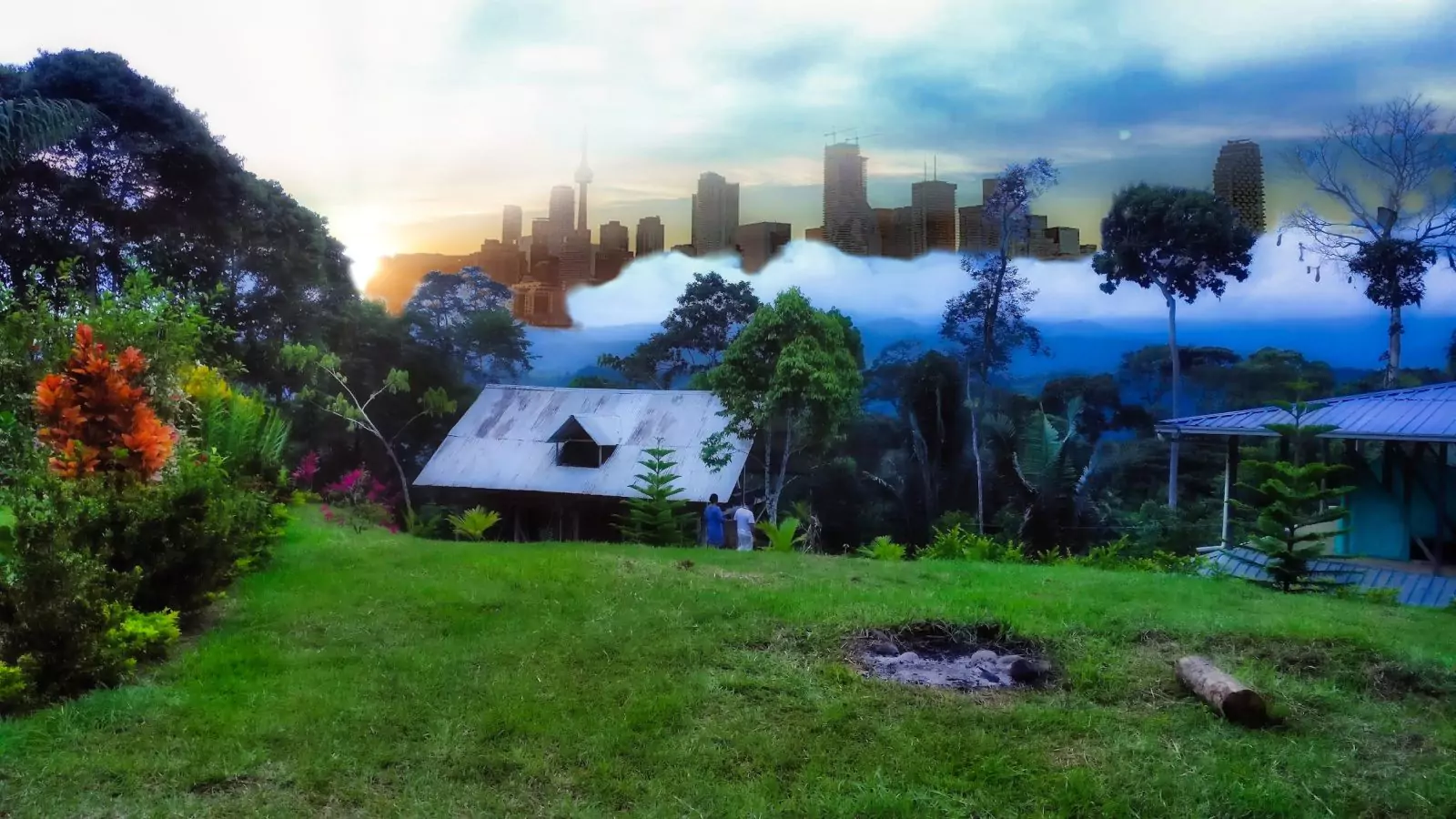
After more than three years of uncertainty about our next place of residence, the dice had been cast. The northern country, known for its hospitality toward immigrants from all over the world, the cordiality of its people, and its endless winters, would be the place where we would establish our home, at least for the next two years.
I remembered the prophetic words I had received thirteen years earlier, while I was desperately trying to keep Angélica, my first wife, by my side. I was sitting in front of the mysterious white-haired, curly-haired old woman, while Angélica, in the room next door, repeated a prayer the seer had taught her. The old woman lowered her voice and told me:
"I see you living in another country; it seems to me that it is Canada. And you are with a pretty girl. But it is not this one, it is another, with two children and in a beautiful house, with a large garden."
A shiver ran through my body. How could it be that this lady had been able to hit the mark so precisely? Well, I still didn't know whether we would have two children, but that was exactly what Paula and I had in our plans. In any case, I set that thought aside because for the moment I didn't want to keep exacerbating my conflict between the magical thinking that so attracted me and my growing skepticism about the supernatural.
The truth was that we were close to leaving our native country for a long time, perhaps forever. There were many matters to settle, both in Colombia and at our destination, and time was pressing. Initially we had planned to travel toward the end of March, so that I could join my cohort in April, but the university's acceptance took longer than expected, so there was no option but to wait until September.
The delay proved providential, because if we had had to travel in the spring, we would not have had enough time to complete certain matters, such as the sale of our apartment, furniture, and valuables, and much less to bid farewell to the country in the way we wanted to do it: by traveling.
We began our farewell tour with a trip through Boyacá, one of the most beautiful departments in Colombia. Along the way we visited several towns, and in each of them we proposed to ourselves to try the typical dishes and desserts that we knew we would miss the most when we lived in Canada.
Back in Bogotá, we decided to go through with a task that did not excite us: selling the most valuable belongings we had, and giving away those that did not merit the effort. Little by little they carried off appliances, furniture, and household items, and with our hearts like a rag, we watched as that little magical place was fading away, whose walls could barely contain all the love we had lived and shared.
"Do you remember when we did that session with Héctor Raúl and Meigy? I was lying there, in my trip, in the middle of the living room while you surrounded me. That was when I heard them telling me that this was our apartment, that it would be the place where we would bring our little Angel."
Paula sighed as we looked at the empty living room, sitting on the floor, holding hands.
Soon we received an offer for the apartment, and again it seemed a product of providence. The interested buyers were a couple, relatives of some friends, who made us feel that the place where Luciana was born and where we lived so many beautiful experiences would be in very good hands.
With the peace of mind of being able to count on enough money to pay for at least the first year of my master's degree and to settle comfortably in Toronto, we focused on the difficult task of finding a place to live at our destination. Soon we understood that trying to remotely find a residence in an unknown country would be a laborious task.
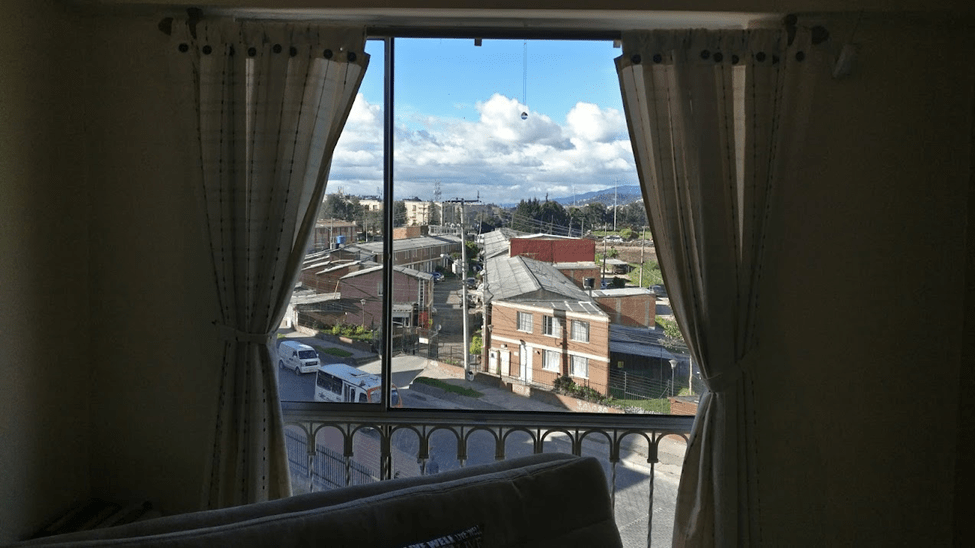
Paula and I visited dozens of online classified ads and even used the services of a real estate agent in Toronto, but after a couple of weeks we concluded that we would probably have to rent a temporary place through AirBnB and continue our search once we arrived in Canada.
The places we liked most had prices beyond our budget, and the ones that were within reach, we knew, would make us miss our apartment in Bogotá more than we wanted to. The only place we found that met all the requirements and whose owner also had no problem with us not having a credit history in Canada was a beautiful apartment located in the center of Toronto, which also turned out to be a scam, one that fortunately we did not fall for. Despite our hurry, we were clear that we would not spend a single dollar before confirming the legitimacy of the landlord by the means we had at our disposal.
We only found one option that passed the due diligence and that, although it did not appeal to Paula too much, did manage to get me excited. It was a small house with a red door, a fireplace, a flourishing front garden, and green lawn, that coincided with the place I imagined as a child, when I fantasized about living in North America. The place also seemed to correspond to the vision of the witch of Santa Marta.
The price was more than fair, and we had already confirmed the legitimacy of the ad through a call we made directly to the real estate agency in Toronto. The only problem was, as always, that we had no credit history or references in Canada; we depended on Laura—that was the owner's name—giving us her vote of confidence without those requirements. We made an effort, sending her evidence of my work with David Collins and the offer from Ryerson University, and even did a video call in which there was very good empathy between Laura and us. Even so, Laura preferred not to take the risk of renting her house to a couple of immigrants with no references, who had not even arrived in the country yet.
With the bitter news that Laura had chosen other tenants over us, we set out on the next stage of our farewell tour of Colombia. For the first time in my life, after more than 8 years of taking yagé frequently, and right after deciding that yagé would no longer be part of my spiritual path, we would make that pilgrimage we had been postponing, to the sanctuary of the sacred plant: the Putumayo jungle.
The idea of making that trip had been circling my mind for a long time. In 2010, shortly after starting my shamanic adventure, we made a trip to the Amazon jungle together with my parents and Ana María. On that occasion, however, we did not go to the department of Putumayo, but to Amazonas, which is more touristy and where we did not know any taita. That was a memorable experience, but I was left with the bitter taste of having had to resort to an unknown chaman to take yagé in the jungle, and not having done it with taita Gregorio, with whom we built strong bonds of affection and trust after more than six years of ceremonies.
I was terrified at the prospect of participating in a new yagé session after the ordeal that occurred at my last experience with the plant, but on the other hand, I did not want to leave Colombia having such a bitter last memory of the yagé. After all, the yagé had been the door of entry to the path in which I found the most valuable things in my life.
I anesthetized my fear by telling myself that the reason for the trip was not necessarily to take yagé, but to visit its territory and to give thanks for everything we had received. If I did not feel safe, I would not force myself to take it.
That is how we set out on our journey to Mocoa, capital of Putumayo, a department that borders the republics of Ecuador and Peru. We traveled by land for 13 hours in a comfortable double-decker bus, and this time we were accompanied by my parents, my sister Laura, her son Santiago, and Lina, a young artist who was just starting her path in shamanism.
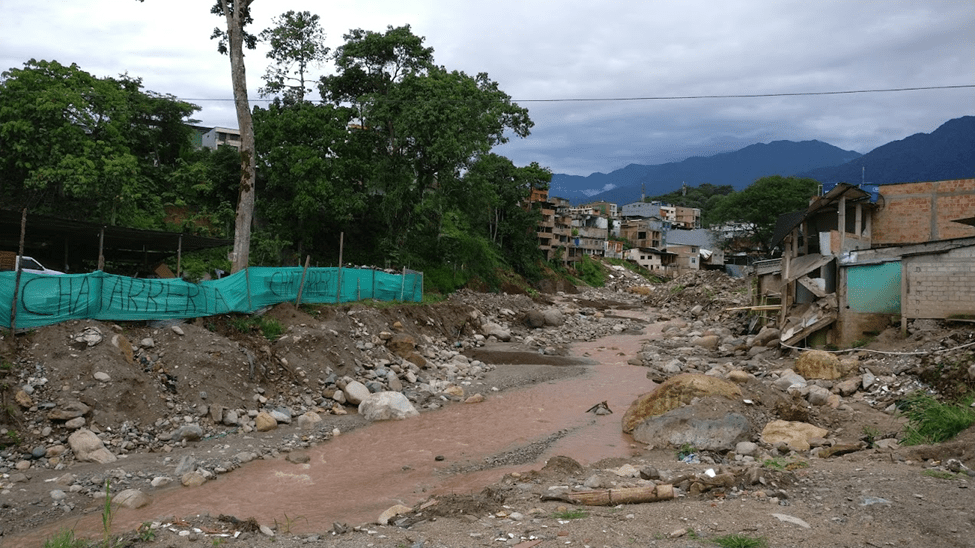
Mocoa is not a city but a town of fewer than 60,000 inhabitants, and on April 1 of that year, after several hours of exceptionally torrential rains, it suffered what was until then the worst natural tragedy in its history.
Three rivers and two streams that run through Mocoa overflowed and caused floods and mudslides that swept away, inundated, and cut off the lives of more than 1,400 men, women, and children. About 200 more could never be found, and more than 15,000 were left as victims. It is said that all the inhabitants of Mocoa lost at least one relative or friend in the tragedy.
We arrived at the town on June 22, less than three months after those events, and just as we had imagined, we found a half-destroyed city. Our bus dropped us off on the bank of the Mocoa river, where we saw devastated houses, smashed household items, and even the victims' clothes. Our first destination was the house of Carmen Jacanamijoy, a friend of my sister Julia and a member of the Kamen-Tsa community, who fortunately was not directly affected by the floods, since her resguardo is located in one of the highest-altitude zones of the town.
Carmen and her family, who kindly offered us their home to stay in during our stay in Mocoa, had escaped the inclemency of the weather, but not the state abandonment nor the social injustice that are rampant in Colombia, especially in the zones farthest from the capital. While we rested from our long journey, Carmen gave us an account of the innumerable misfortunes she had to navigate during her adult life as a woman, mother, and community leader:
Putumayo was one of the departments of Colombia that suffered most from the armed conflict that bled Colombia for decades. The poverty and neglect by the state, habitual since the beginning of the republic, were the breeding ground on which the drug trade, the guerrillas, and more recently the paramilitary groups turned the department into one of the world's largest producers of cocaine base, and a regular headline in the war news.
The drug, which could have at least brought some economic abundance to the inhabitants of the department, only served to enrich the corrupt political elite and the war lords. The good citizens, like Carmen and her family, had to learn to coexist with the war and the "traqueta" culture, or of easy money, while also having to keep dealing with the poverty of always.
In the midst of those circumstances, Carmen knew love, formed a home, and together with her husband they dedicated themselves to working for their family, their community, and their ethnicity. Despite the limitations and risks of being social leaders in the country where those who carry out that work are most assassinated, Carmen and her husband continued with their social work with the same joy and generosity with which she received us in her home.
Unfortunately, a couple of years before our visit, Carmen's husband passed away from a fulminant lung condition. The hard work and the pain forged in Carmen the character that, during the tragedy, served her to become a bulwark for her community.
The night stretched on amid stories of her past and accounts of the night of the floods. Like the one Carmen knew about a woman, whom the rising flood took her little daughter from her arms, and then she saw her son disappear among the waters while trying to rescue his little sister.
Getting close to facts so terrible was undoubtedly overwhelming, but at least it seemed that my anxiety was under control. A couple of months earlier, those same stories would have caused me a panic attack. Even so, I was a few hours from taking yagé again, and just thinking about it made my hands go cold. Already lying on my mattress, I closed my eyes when fatigue overcame me, and I still did not know whether the next day I would be capable of drinking that last sip of the sky, before saying goodbye to my beloved and suffering country.
The path took about two hours. Before starting the stretch we had to do on foot, we stopped at a store and bought the foods that mama Carmen Chindoy, taita Gregorio's wife, had asked us to bring. Despite the fear I still felt, I felt glad to be making that journey I had yearned for for years.
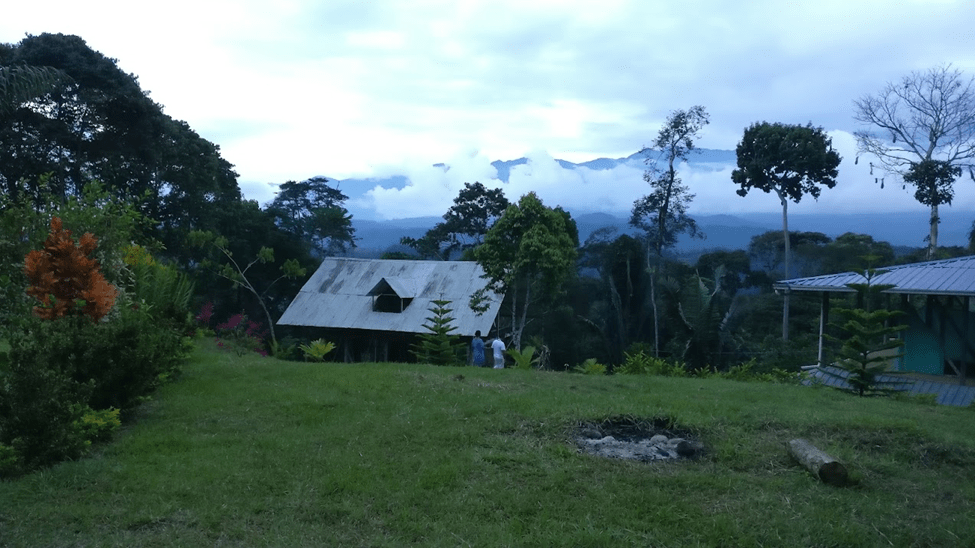
Soon we came upon the giant smile of taita Grego and the majesty of the famous Hornoyaco waterfall that adorned the entrance to his farm. At last I had kept the appointment that Mara used to remind me of from time to time:
"You have to visit the yagé in its home, don't forget it."
It was like a pilgrimage that every yagé user should make at some point in their life, and almost all my shaman friends had already done it. But I had unconsciously postponed the commitment until the last moment. I had wanted to be prepared, to conquer the fear of letting myself go, of facing death, of feeling the darkness. I wanted to be the man of wisdom that taita Mauricio Vicencio had told me I was still far from being.
But there I was, fragile and full of fear. At the lowest point of my spiritual path and without more time to continue my training with the yagé.
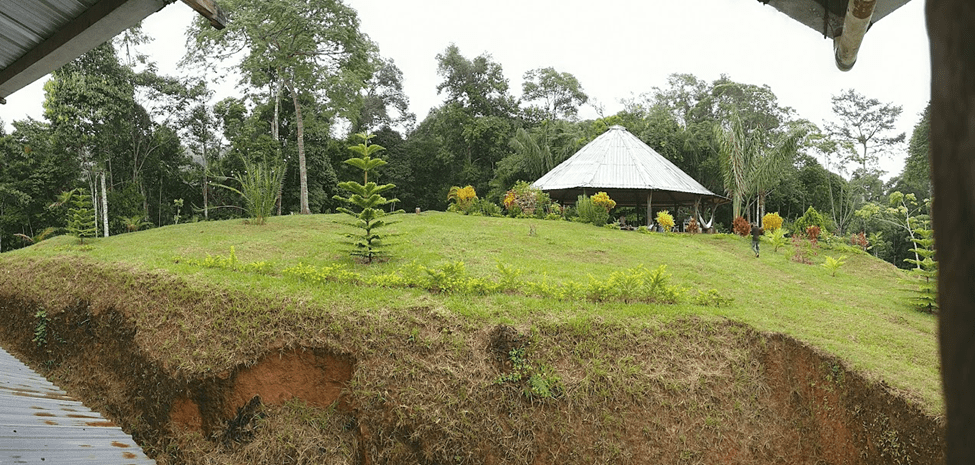
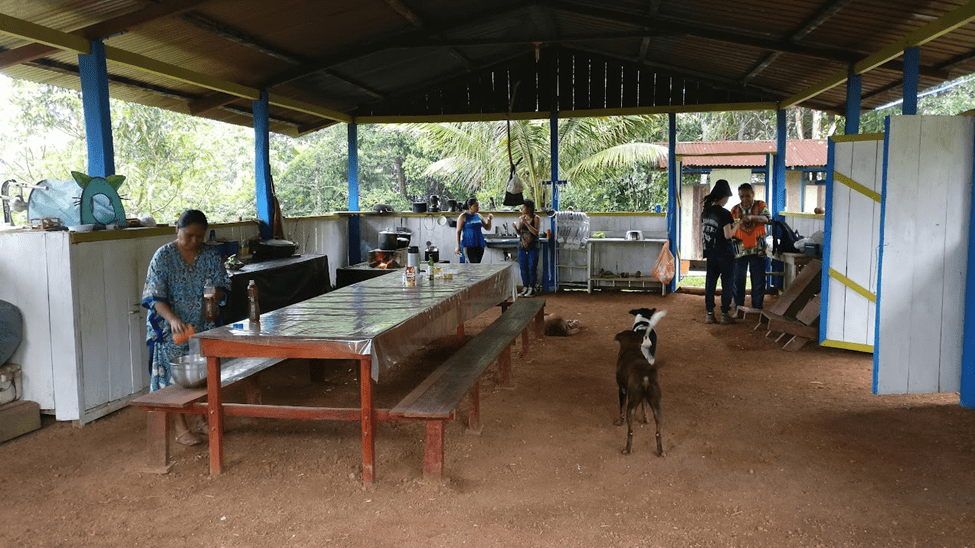
The afternoon dissolved amid Grego's stories and the contemplation of the beauty of the jungle. The person in charge of the kitchen offered us an aguapanela with bread, and soon we were gathered in the maloca that dominates the high part of the farm. We were about 50 or 60 guests, including some foreigners, which was a small group for what was customary with taita Gregorio.
I don't remember having been as afraid to take yagé as I was that night, but I was not willing to go to Canada with the memory of not having been able to take the sacred plant, being in the heart of the jungle. I think Grego gave me a slightly smaller dose and I drank it as fast as I could. Then I went back to my mat and lay down to wait. Let whatever had to happen happen.
The fear gave way to introspection, and it seems humility was achieving what stubbornness never reached. It was true that taita Gregorio's yagé had always been softer than the one that started my torment, but that night it was being even nobler than all the previous times.
Something also happened to me that I had not experienced in a long time: the enteogenic paint was interspersed with long stretches of deep sleep and strange sensations in a half-awake state. It was a long, strange, and mystical night, but also one of deep calm. The spirit of the yagé seemed to hear my plea of mercy and gave me a wonderful experience.
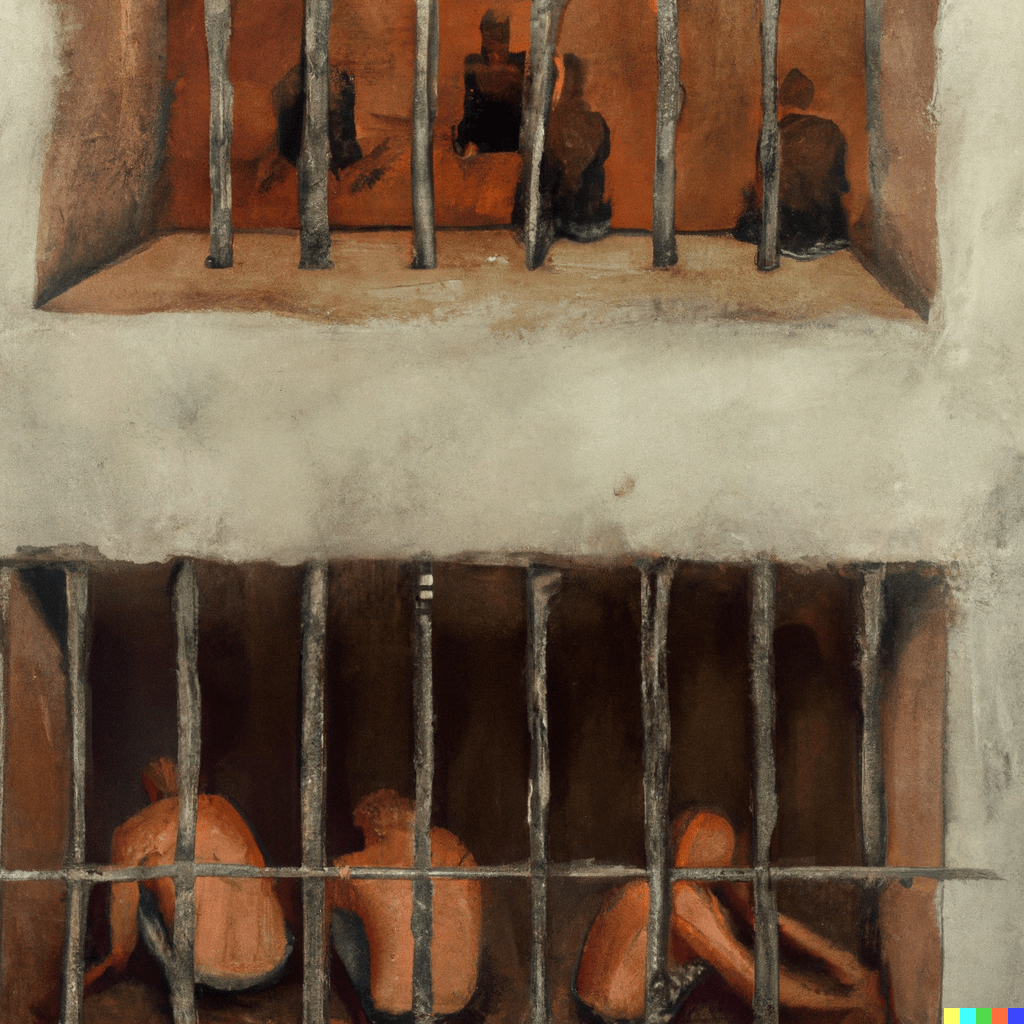
In the midst of my dreams and visions during that session there was a particularly unsettling one: I found myself naked, locked in a horrible cell along with another 20 or 30 men, also naked, who were crying and asking for help. At the base of the four walls of the dark room there was a trench where everyone deposited their excretions, and in the upper part, small barred windows through which one could barely manage to see out.
While I was in that place, I began to feel the familiar despair that preceded the most somber episodes of my yagé trips. Then I breathed deeply, relaxed my body, and I realized that that repugnant cell was the anxiety I was trying to escape. It was the same sensation I had 15 years earlier when marijuana made me see the sadness I felt about the separation from my first wife, as if it were a cage in which I found myself trapped.
With that understanding I felt myself rising, I passed through the bars of my cell and I soared over the green meadow that shined on the other side of the wall. After floating a while, I found a group of people gathering in front of a stage, of the kind that are set up in the central squares of towns during their fairs.
I headed toward the stage, and whom I found there if not Samael Aun Weor himself and his wife Litelantes, dressed in their colorful ceremonial attire and unsettling headdresses. Samael carried in his fist the grotesque sword with which I remembered having seen him in some photograph. Their faces showed the bewilderment of seeing me there floating and not screaming in my confinement.
I knew that they had placed me in that place, but I still felt affection for those two beings whom I felt close to, despite never having known them, except through the books and lectures of the dark gnostic guru. I gave them one last look, said goodbye to them, and I moved away from that place feeling sorry for the poor unconscious ones who remained dominated by their spell.
In the morning, after a good country breakfast, I looked for taita Gregorio to thank him for the ceremony and tell him my dream. I realized that I had never talked to him about the Gnosis, perhaps assuming that, like most of the shamans I had met, he too was a secret follower of Samael's teachings.
I could not have been more wrong. Gregorio told me about his vision on Samaelian gnosiology, and how he had seen dozens of people whose lives had gone to ruin because of the sect. However, making use of his wisdom, the taita advised me to be thankful for what I had learned during the years that I believed in those teachings, and suggested to me that perhaps later I could return to that prison and help others to get out of the confinement.
That morning I was so excited to have again had a harmonious, revealing yagé ceremony with paint and no drama, that I agreed to receive an infusion of chichaja, another sacred plant, which the indigenous of the Inga and Cofán ethnicities consider the wife of the yagé.
According to the accounts of friends who had tried it, especially of grandfather Luis, the experience with the chichaja was less intense in the mind, but much more demanding for the body. The plant's most common effect was a complete paralysis, which sometimes came on suddenly while the person was standing. For that reason, mama Carmen told me that I should lie down immediately after receiving the dose and stay there until its effect passed, which, moreover, usually lasted longer than the effect of the yagé.
So I did as soon as I finished drinking the half-liter infusion that was required to do the cleansing. Restless but excited, I waited for the sensations of chills, trembling, and weight in the chest that I had heard so much about, and I was intrigued by the possibility of not being able to move my body while conscious. But none of that happened. Instead, I felt a slight dizziness that lasted a little more than an hour, a pleasant sensation of rest and tingling, and only a little vomiting at the end of the second hour.
After that, the unusual sensations died down and a ravenous appetite came over me. Then I got up and headed toward the kitchen to look for food. There I ran into Paula and mama Carmen, who, surprised, asked me how I had managed to get all the way there without help. I told her I already felt normal, at which she reacted with an expression that made me understand that the chichaja had been exceptionally kind to me.
Motivated by my good luck with the sacred plants during those two days, I agreed to take yagé again at night, before returning the next day to Mocoa. Just like the previous night, my experience was calm and pleasant, but I had no visions or dreams. Instead, I found myself in a deep state of conscious introspection in which I reviewed the events of the last months and ruminated on what awaited us when we arrived in an unknown country where we didn't even have a place to live.
I also had an unsettling revelation: I saw myself as an infinite spirit that could not stop feeling uncomfortable inside a human body. I speculated that said restlessness was the root cause of my obsessive-compulsive disorder. I felt that my soul had not finished being born on Earth, because it still clung to its prenatal incorporeal existence, leaving me in a limbo that I did not finish crossing.
I also realized that my fear of being born hid behind my fear of death, and that that was why it was so hard for me to let myself go with the yagé, let go of the past, and face the uncertainty. What I was truly afraid of was being born, because that also meant dying to my previous existence.
I thought about Diana and lamented that things had ended the way they did, but I was grateful that in the end I could turn the page with nothing more than lamenting some tears, the pain I caused Paula, and my mental health still needing to finish healing. In my heart I thanked Diana for being a teacher in the shadow, just as Samael had been in his time.
Before the night ended, the universe gave us a beautiful sky full of stars, and by the warmth of the fire I enjoyed the sweet notes of taita Gregorio's guitar, with the conviction that everything would turn out well for us. I did not think that some magical power would protect us, or that we were predestined for absolute happiness, but for the first time I felt that I believed with certainty in those words I received during my ceremony in the Juan Curí ravine two years earlier:
"No matter what happens, I will always find a way to be happy again."
The sun peeked out above the treetops and found me full of gratitude for a magical night and a complete reconciliation with the yagé. But if the night had been bountiful in spiritual gifts, the morning that was beginning would bring with it an event that put my nascent skepticism to the test and made me think that only maybe miracles do exist.
A little after taking breakfast, while I was packing our things for the return trip, I felt the vibration of my phone in my pocket. That surprised me because in most of the farm, my cell network signal was very weak, and also because the calling number appeared as "Private."
I answered the call, and on the other end I heard a man's voice that spoke to me in English:
"Is this Manuel? I am Ray Cochrane, Laura Li's realtor, and we want to know if you are still interested in the house at 1 Kalmar."
"Is this Manuel? I am Ray Cochrane, Laura Li's realtor, and we want to know if you are still interested in the house at 1 Kalmar."
It took me a moment to understand what I was hearing, not because I didn't understand the accent, but because I couldn't believe that it was possible. The agent told me that the tenant Laura had initially chosen had withdrawn their offer, and that Laura and her family were just hours away from boarding a plane to relocate again to China. They still had another couple of applicants, but it seemed Laura wanted us to be the ones to take the house where she, her husband, and her daughter had lived up to that point.
I confirmed to him that we still wanted the house, and Ray told me he would send me the contract right away. I went looking for Paula, still confused by the news, and told her:
"Honey: remember last night when I told you that the yagé had shown me that everything would be okay? Laura's agent just called me and told me that the beautiful house we liked would be for us."
We hugged and stood looking out toward the jungle with gratitude. We didn't know how, but it couldn't be a coincidence. Once again the yagé was leading us by the hand to our destination.
We returned to Bogotá after a couple of days of touring Mocoa together with Carmen and her family, and encountering a town full of kind, joyful, and optimistic people. If it hadn't been for the evidence of the flooding on the riverbank and the dozens of posters on the posts and walls looking for missing persons, we would never have guessed that the worst tragedy in its history had just hung over that beautiful town a few weeks earlier.
It is apparently the virtue of those who have descended into hell many times: to be able to rise above calamity, transmute pain into action, and find the strength to smile again. It was the people of Mocoa, the home of the yagé, who showed me that no matter what happens, one can always be happy again.
Our last days in Colombia were spent in the places we love most, beside the people we love. We visited my grandparents' house, where many of my best childhood memories and some of the people I most admire are found. Then we shared time at my parents' house in Villeta, with my dear cousin Tania and her family, and then we spent a week in Medellín saying goodbye to Paula's family and their friends. Among those goodbyes, the hardest one was that of don Ricardo, Paula's maternal grandfather.
He had just turned 92, and his health had deteriorated rapidly in the last months. When we arrived at his house in Medellín, we realized that we would not see him again. His labored breathing spoke of the precariousness of his heart, and his dissociated, taciturn demeanor revealed the irreversibility of his state.
The last time we saw him was in the palliative care unit of a hospital in the center of Medellín, where he had to be transferred a few days after our arrival. That day, despite the fact that his moments of lucidity were already scarce, I realized that don Ricardo was present and attentive in the moment of the farewell.
After Paula quickly said goodbye to him to avoid him seeing her crying, I stayed alone with the old man for a moment and took his hand. I told him that he could go in peace, that I would take care of his granddaughter and his great-granddaughter for my whole life, and that I would also keep an eye on his wife and his daughter to make sure that nothing would be lacking for them in his absence. Don Ricardo nodded with his head and with his right hand patted mine. I understood the gesture as a sign of his approval, and I left him with gratitude and sadness.
Back in Bogotá again, we attended Luciana's last day of school, where she participated in a typical dance for which the children of the kindergarten she attended had been rehearsing for the last months. Then we made a short visit to my sister Julia at her apartment in Chía, and on July 20, 2017, the day on which the independence of Colombia is celebrated, we gathered for an emotional farewell lunch with almost all our family and friends who lived in Bogotá, plus my family from Manizales, including Tania and her family, who lived in the Netherlands.
Two days later, Bogotá became a small maquette nestled in the mountains of the Andes cordillera, and it faded among the clouds and the tears of my eyes. I looked at Paula, who on the other hand had not tried to hide her sadness. I took her hand and promised her that everything would be okay.
I closed my eyes and I realized that I was still under the star-filled sky, beside the fire, listening to taita Grego's songs. Every time I felt doubts again, like in that moment, I would close my eyes and return to the place where I understood that I had to leave behind the fear of being born.