
When I began writing my story in 2019, I thought I was doing so because I had reached the end of my spiritual odyssey. I believed that my version of shamanism held that point of balance between reason and mysticism I had sought for so long, so I decided it was time to take stock and set down in writing the testimony of my odyssey from materialism to spirituality.
Back then, already settled in Canada and awaiting the birth of my son Benjamin, I kept officiating shamanic ceremonies whenever the opportunity arose. I led a couple of talking circles with relatives and some friends who were interested in learning about this kind of ceremony, and on two occasions I performed tobacco cleansings for two people who sought my help with conflicts in their relationships.
I revered every chance to wear my vestments and necklaces, play the pincuyo or the harmonica, and flow into the performance of the officiating shaman. Unlike in Colombia, where it was hard to avoid neglecting other matters because of attending spiritual gatherings, in Canada such events were unusual. That is why I occasionally attended the talking circles that grandfather Luis organized by videoconference and coordinated some virtual mambias with friends in Colombia to ease my healer's nostalgia.
I also kept for some time folk customs left over from my Muisca past, such as bathing with blue laundry soap of the “Rey” brand, snuffing tobacco powder every now and then, and uttering prayers and incantations in moments of difficulty or uncertainty. Nevertheless, gradually and without realizing it, I was heading irremediably toward radical skepticism.
The catalyst for that transformation was a modest mobile app I installed on my phone that year. It was Libby, the official app of the Toronto city library system, which I discovered thanks to a coworker's recommendation. This simple app was a doorway to the world of knowledge: not only could I reserve any digital book in the library network, but I also gained access to thousands of audiobooks, both fiction and nonfiction. This was perfect for me, since I was never fond of reading on paper; I often found myself dozing off after just a few pages, unless it was a page-turner like some of Dan Brown's books, or the unforgettable “Brandenburg” by Glenn Meade and “The Truth Machine” by James Halperin.
Because of this, I read few books when I lived in Colombia, and even fewer related to science, skepticism, or nonfiction. But that changed when I could access a practically unlimited collection of books in the palm of my hand. The first audiobook I listened to with the app was “A New Earth” by the Canadian Eckhart Tolle, author of “The Power of Now” – a book I still consider a must-have in any spiritual traveler's library.
However, ‘A New Earth’ did not impact me the way Tolle's first book had; instead, I found it repetitive and pretentious, as if the author were plagiarizing himself, trying to replicate the emotions his bestseller had evoked. And it was not that the book was bad, but that I was no longer that aspiring initiate discovering a new world. Everything I found in the spirituality books seemed like repetition to me, whether from Mara's words, the lines of Osho or Kalil Gibran, the Hindu Vedas, or the Buddhist dhamma.
But shortly after, I would experience that feeling of intellectual thrill and awe again – no longer from discovering the ancestral wisdom of spirituality, which I still treasure in my life, but from the incredible story of the human race and the understanding of many of our current tribulations in the light of anthropology and ethnography.
The book that transformed my way of seeing the world and renewed my enthusiasm for scientific knowledge was “Sapiens” by the Israeli author Yuval Noah Harari. I also devoured its sequels: “Homo Deus” and “21 Lessons for the 21st Century”, in which he explores the present and possible futures of humanity. As it happens, in the last part of Homo Deus, Harari tells of having found the inspiration to write ‘Sapiens’ during a Vipassana meditation retreat he did a few years earlier.
And I could no longer stop: I went on with Michio Kaku's futurist books, the astrophysical explorations of Brian Greene and Neil Degrasse Tyson, Malcolm Gladwell's revealing studies of the human mind, Nassim Nicholas Taleb's treatises on chance, until I reached the profound studies of evolutionary biology by Richard Dawkins, who is also a renowned atheist and harsh critic of religions and of magical and superstitious thinking.
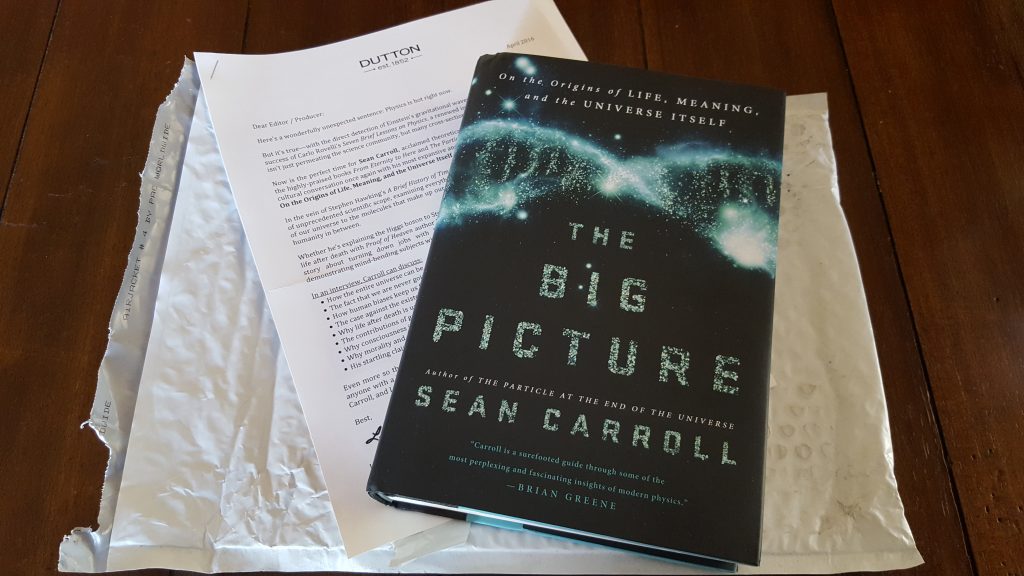
But it was the book by the American astrophysicist Sean Carroll, “The Big Picture”, that showed me the way out I had been looking for, allowing me to harmonize the whole body of factual knowledge – cold and wonderful – that I was acquiring, with the spiritual wisdom that was still alive in my life, and that I had even vindicated upon realizing that most of those ancestral teachings contradicted none of the scientific concepts I was studying.
In “The Big Picture”, Sean Carroll fuses a scientific and natural view of the world with a poetic, and even mystical, appreciation of reality. He calls this way of understanding the world “poetic naturalism”, and when I heard it, I understood that it was exactly what I had been looking for.
The core of poetic naturalism lies in the idea that there is no division between matter and spirit; rather, there is a single world: the natural world. This world follows patterns determined by the laws of nature, and we can learn about it through observation and empirical experimentation.
However, the ‘poetic’ aspect of poetic naturalism resides in the fact that there are multiple ways of describing and speaking about that world. These approaches are grounded in narratives and interpretations that depend on the level of reality being observed and the perspective adopted to describe it. Thus, different contexts or perspectives may require different forms of language for their description, including poetic or even mystical terms.
The only rule is that all those ways of speaking about the world must be consistent with one another, and also with the observations of reality.
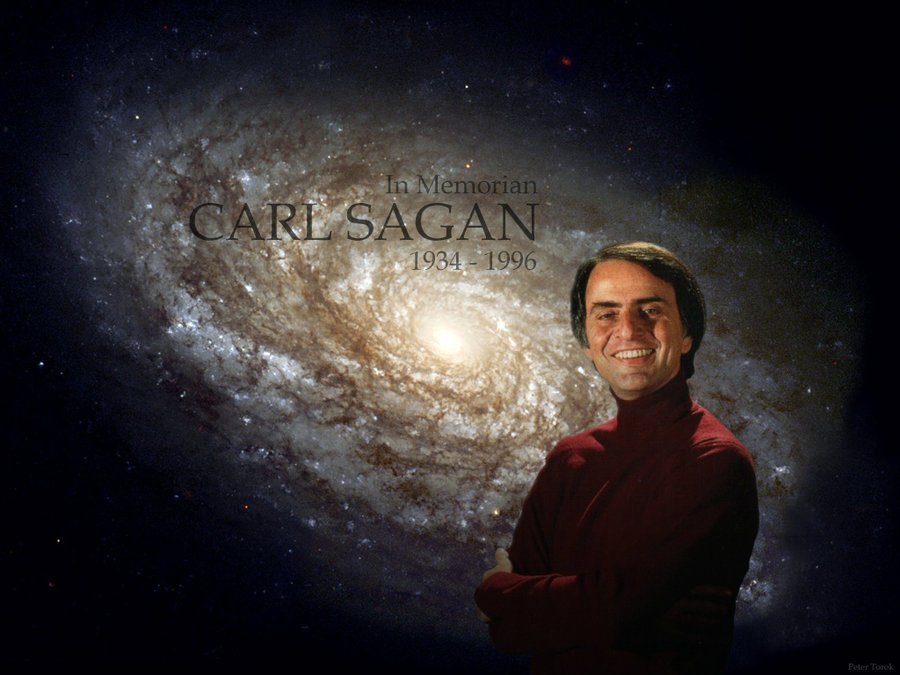
I do not remember whether Sean Carroll made any reference to Carl Sagan in “The Big Picture”, but as soon as I understood poetic naturalism, I recalled my favorite lines from the late science communicator in his wonderful 1980 series “Cosmos”. I was transported to my home in the “Gustavo Restrepo” neighborhood in southern Bogotá, back in 1988, jumping onto the heavy beige fabric sofa with red lines in front of the television, listening to the first notes of “Entends-tu Les Chiens Aboyer”, the Vangelis melody with which a new episode of Cosmos began.
One of the reasons Carl Sagan became such an influential figure for millions of people around the world was precisely his use of a poetic, I would almost say spiritual, language to speak of nature and the universe. Some examples that took root in my mind more than three decades ago were:
Now I believe that my spiritual quest, from the very beginning, was an attempt to understand those phrases that sounded so magical and evocative to an 8-year-old boy, but that required many hours of reading and study to be understood in all their magnitude.
This is probably the reason I felt I was facing a deep truth when the Muisca elders told me that our origin was not the Earth, but that we came from the stars, perhaps from Alcyone or the Pleiades. I let myself be carried away by the fantasies of interstellar travel of Sixto Paz Welch, the implausible sacred geometry of Drunvalo Melchizedek, and the outlandish pseudoscientific theories of magnetized water of grandfather Juver.
However, these mystical and romantic beliefs, which seemed harmless, revealed their most dangerous side during the Covid-19 pandemic between 2020 and 2021. Perhaps fear and the eagerness to understand such an unusual situation led millions of people to give credit to and spread conspiracy theories about the origin of the disease and its effects, but more insidiously, about the supposed ineffectiveness or even danger of vaccination, or even of an innocent cloth face mask.
Then came the most twisted and consequential falsehoods related to the alleged usurpation of Donald Trump's presidency that caused the riots at the American Capitol in January 2021, which included the vision of Trump as a champion of justice and good fighting against a twisted cabal of pedophiles and Satanists embedded at the center of power in Washington.
Since I first heard those theories, it seemed incredible to me that anyone with a modicum of common sense could give credit to such nonsense. In almost all those viral fictions, the ignorance about the biology of the virus, about how vaccines work, ignorance about the body's defense mechanisms, or how medical science and the pharmaceutical industry work, was plain to see. Not to mention an endless array of contradictions and logical fallacies.
I must admit that I judged lightly my friends and acquaintances who shared all those hoaxes and misinformation on their social networks, and I asked myself how it was possible that people whom I mostly considered intelligent and even wise could believe in so much foolishness.
But what should really have surprised me was that I had remained on the side of official information and that coming from renowned institutions, without considering almost any of those alternative theories plausible. After all, not long before, I too had harbored beliefs that were not far removed from the crazy theories about the virus created in a laboratory as a chemical weapon, or the miraculous properties of laundry bleach.
Looking back over my path through religion, esotericism, and shamanism, I found many of those beliefs, similar to the ones I now viewed with disapproval in my former traveling companions. To begin with, the obsession with semen retention so present in many variants of esotericism and spirituality. For years I believed that not ejaculating granted me some healing energy and, above all, a power that could be exchanged for health, prosperity, and peace of mind.
Mystics of many cultures have adopted some form of sexual asceticism as a vehicle for attaining enlightenment, although at the same time, almost all of them proclaim sexual magic as the most elevated mechanism of transmutation and connection with the divine. Of course, without ejaculating!
I also accepted and promoted, without a drop of skepticism, the unrestricted consumption of power plants, especially tobacco. For years I offered tobacco in ceremonies, mambias, and informal gatherings, often in the presence of children under ten years old. I allowed my daughter Ana María to use multiple forms of tobacco at that age, accepting the Muisca doctrine that it posed no health danger, since it was not cigarettes with tar and other chemical additives, but a sacred plant, and that its supposed carcinogenic effects were nothing more than a conspiracy of the dark powers of the world to distance humanity from this source of power and divine connection.
In fact, for a long time I repeated that using powdered tobacco nasally, in the ancestral manner of the Muiscas, was not only safe, but was a good way to prevent the flu and other respiratory diseases.
And so, I felt I had the authority and knowledge sufficient to lead tobacco ceremonies in which I induced states between mild and intermediate intoxication in the participants, as part of the ritual exercise of the tobacco cleansing.
All of that seemed healthy and legitimate at the time. The Muisca elders, heirs of the millenary tradition of the indigenous communities of central Colombia, had given me the initiation in tobacco and, therefore, I could trust that the elemental spirit of tobacco guided me and placed in my mind the information necessary to make use of that power that had been granted to me.
Even during the time of the pandemic I performed a few tobacco ceremonies, although it is true that I moderated their use and no longer did it in the presence of children. Even though I was not entirely clear in my mind whether I still believed so fervently in all of that.
But I was no longer the same. Those years of educating myself about the sciences, reading some of the most legitimate minds in astrophysics, biology, neuroscience, and psychology, were gradually eroding the weak and artificial mental scaffolding that held up my beliefs. In this process, understanding the way the human brain works was especially instrumental, with its multiple layers, cortical columns that model reality, and protection systems that carry as unwanted effects the numerous mental biases and conceptual mirages we contend with.
So, despite the nostalgia that remembering those happy and magical times of my shamanic path produced in me, I felt that the circumstances of the world at that moment demanded a firm position with regard to lies, manipulation, and misinformation. Of course, not because I played any important role in the events that were unfolding, but because of my role as guide and custodian of my family, and also because I knew that I exercised – and exercise – some influence over many relatives and friends who seek my advice and trust my judgment.
The pandemic revealed the hidden face, or perhaps the true face, of the magical thinking I had practiced for years. Faced with the dilemma between cold, evidence-based knowledge on the one hand, and on the other, beliefs based on faith that sometimes bring peace to the soul, but sometimes cause death, I clearly sided with the path of skepticism.
However, I still struggled to fully accept the idea that there was no way to escape the tyranny of chance. It caused me anxiety to think that my loved ones and I were as vulnerable to calamity as any ordinary person, regardless of our spiritual merits or the promises of protection of yagé or the Holy Spirit.
But any hint of doubt about that vanished when I witnessed the sad and painful ordeal of my uncle Álvaro in the final stage of his fight against cancer. If there was anyone who did not deserve such a punishment, it was precisely my uncle; a man devoted to his family and his farm, untouched by addictions, enmities, or gossip.
The superstitious might argue that the reason my uncle ended his days in such a cruel way was precisely his lack of faith in the protection of a supreme being. I am not sure my uncle did not believe in God, but even if he did, it is unlikely he would have believed that attending Sunday mass or going on a pilgrimage to a Catholic shrine would have made any difference in his situation.
What he did make very clear was his rejection of the simplistic theory that the origin of his illness had anything to do with a supposed inability to communicate his emotions or feelings; and that is what he demanded of doctor Eusebia when she wanted to resort to pseudoscience to find the root of his ailment.
That anecdote reminded me of a book I had read a couple of years earlier called «Everything Happens for a Reason: And Other Lies I've Loved». In it, the Canadian author Kate Bowler recounts the experiences she lived through after being diagnosed with stage IV colon cancer. Having grown up as a member of the Mennonite church, a practitioner of the so-called “prosperity gospel”, Kate had to face – in addition to the disease – the frequent judgment of other members of her community, for whom the tragedy she was living through could have no other cause than the failure to fulfill her obligations toward God.
I myself heard similar claims from elders and wise men of the Muisca community, referring to the illnesses, separations, and even the deaths of other members of the community. It was common for them to refer to those situations as evidence of the unfortunate person's lack of “spiritual work”, or even that their misfortune was the consequence of having distanced themselves from the community or of having disobeyed the elders.
It always seemed to me that there was a veiled threat in those assertions: if you distance yourselves from the community or disobey us, you may have to suffer a similar punishment. Later I learned that this is precisely one of the tactics that the leaders of most cults employ to ensure the unconditional loyalty of their members.
I also recognized in Kate Bowler's book another sectarian tactic, more subtle but equally insidious: Your fellow believers will tell you that they pray for you and your family, and that the “blessings” you enjoy are partly the result of the prayers of the other church members, but above all of the pastors or leaders.
During my spiritual search I came across several versions of that belief, from the idea that as long as I took yagé, my family and I would be protected from all evil, to the doctrine of the “seguranzas” (spiritual insurances), through which, by means of a mamo or shamanic priest, one acquired an exclusive spiritual protection that likewise guaranteed my safety and prosperity.
An example of that disguised blackmail was when I told grandfather Suaga Gua that David Collins had offered me a job at his company in the United States. His response was:
– “Yes, the elders have been working from the spirit so that this would happen”
The clear implication was that, had I not counted on the intercession of the community's leaders, I would not have been able to achieve that goal. What the grandfather did not know was that I had spent five years cultivating my friendship with David and demonstrating my knowledge and skills, with my sights set on one day working with his company.
But my uncle Álvaro did not accept the crude blackmail of mystical superstition, not even with death breathing down his neck. Nor did he agree to take refuge in the miraculous promises of faith or in the illusory comfort of a full life in the afterlife. While holding his hand during one of the visits I made to him in 2022, I searched my mind for the words to tell him about yagé and suggest that he receive it as a tool that would allow him to find a purpose for his suffering and perhaps a preparation for his encounter with death. But I could not do it. That wise old man had much more to teach me about life than I thought I knew about death. I kept silent and withdrew, feeling that he was helping me more than I had hoped to help him.
The last time I saw him he smiled at me and we talked about music and the countryside, just as we had done more than 30 years earlier when he taught me to play chess.
The cells of the body do not understand religions or mystical initiations. They cannot be blackmailed or persuaded to act differently from what the spirals of DNA in their nucleus instruct them. Each cell fulfills the purpose for which it evolved, transforming glucose into energy, contributing to the formation of the tissue to which it belongs, and reproducing itself in a controlled manner.
But there is an additional mission that cells must fulfill: in due time, every cell in our body is programmed to self-destruct. The scientific name of this process is “apoptosis”, and it is what could be called the “programmed death” of cells. It is a very important process, since it decreases the probability of harmful genetic mutations and ensures a regular supply of young and vigorous cells that sustain that wonderful process we call life.
On some occasions, however, small alterations occur in the genetic code of the cell, which can be caused by some carcinogenic substance or even by something as improbable as a concentration of cosmic rays striking directly on the cell nucleus. Those mutations can alter the last two cellular processes mentioned above: reproduction and cell death.
When that happens, the cell can reproduce uncontrollably and/or “forget” its obligation to self-destruct in due time, creating an avalanche of mutant cells that emulate this behavior. This is what is known as cancer. In my uncle's case, that process began at the base of his tongue, probably a couple of years before the uncontrolled proliferation of cancerous cells became a perceptible tumor.
It was not his beliefs or the absence of them, nor his words or his silences, that triggered the cruel punishment that swallowed the tongue and part of the throat of a good man, taking him to the grave. It was relentless chance that, with its cosmic dice, sentenced my uncle's fate. Under normal conditions, the immune system is in charge of destroying the mutant cells that “rebel” against their instructions, but my uncle was already an old man, and his immune system was much more prone to failing in its mission of controlling the incipient cancerous cells. He also lived in an era with very little information and protection against carcinogenic agents, in particular the toxic components present in insecticides, fungicides, and herbicides, with which a farmer like my uncle had frequent contact for many years.
To these predispositions were added, without a doubt, the precariousness of the preventive medical system in the Colombian countryside, and the especially adverse circumstances for a timely diagnosis, such as those existing during a world pandemic – an event that on average happens every 100 years. In my mother's folk words: “his time had come”.
Despite how painful the situation was, seeing my uncle smile and crack jokes when we said goodbye before my return trip comforted me enormously. Not because I believed his suffering had been given a reprieve or because I was not aware that this was the last time I would see him alive, but because it reminded me of that epiphany I had under the waters of the Juan Curí waterfall in December 2015: “no matter how desperate the situation or how painful the road, there will always be a new dawn, and there will always be a way to be happy again.”
The hardest part of leaving is leaving behind those you love, and leaving behind a belief system is a way of departing. At least when you travel, you always have the possibility of returning, even if only for a visit, but when you abandon something as ethereal, and yet so real and profound, as your way of seeing and understanding reality, there is no turning back.
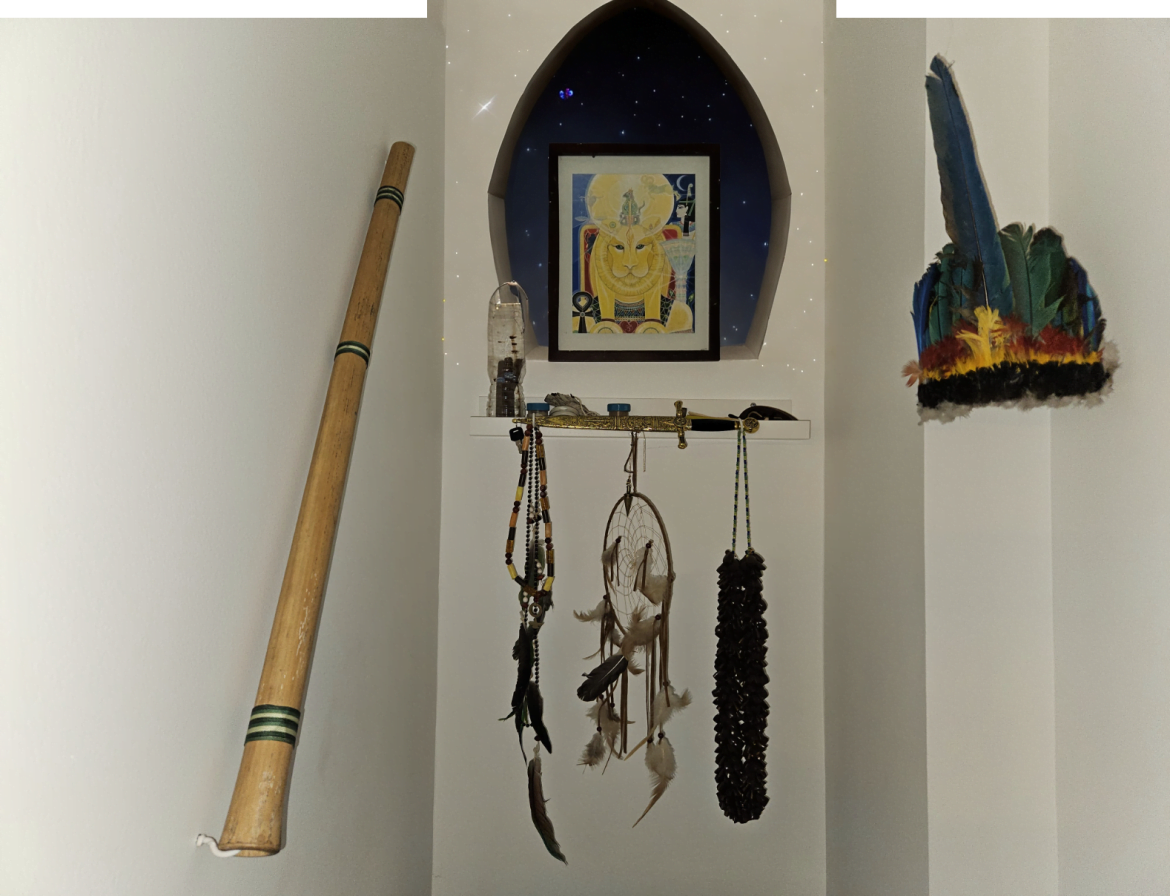
Upon finishing writing the memoirs of my spiritual journey, I still keep some of the practices I frequented for almost fifteen years: I have a small shamanic altar in a corner of my house in Toronto, with a couple of little bottles of powdered tobacco, a few Cuban cigars, a bunch of white sage, my necklaces, and some esoteric symbols.
But more than a place of prayer or meditation, my altar is now a window to a past that I treasure with gratitude and nostalgia. When I stand before the altar, I can no longer feel the reverence and excitement I felt many times when I believed that the sacred plants and meditation would lead me to explore other worlds, reveal the mysteries of the universe, or attract good fortune. But I can indeed recognize in myself the same thrill for exploring the universe and for trying to find the truth about the world that surrounds us.
I do not regret having invested so much time and energy in my spiritual quest, for the same reason that a scientist cannot regret having formulated hypotheses and carried out experiments that turned out not to be right. Proving that one is not right is not an error but, on the contrary, it is being one step closer to the truth.
And that was my intention from the beginning. When I lived the most spectacular, traumatic, and wonderful experience of my life during my first yagé ceremony in La Mesa, I committed myself to scrutinizing that magical and mystical world until I could verify for myself how real everything I saw and felt that October morning of 2009 was.
And I set out to do it not as a mere curiosity, but as my absolute priority. I reasoned that, if we truly were immortal beings, traveling through the universe back to our origin at the center of everything, then what could be more important than finding the path that would allow me to make that journey correctly and be able to guide my loved ones through it?
Of course, not everything I found during the journey was a deception. Thanks to spirituality, I found masters and teachings full of wisdom that I am sure I would not have known otherwise. I discovered the healing power of the talking circle, the transforming magic of attentive observation with mindful observation, and several other strategies for controlling the most harmful impulses of the human mind.
I also met wonderful people whom today I call my spiritual family. All of them, unlike me, remain faithful to their mystical beliefs, but despite our differences, they continue to profess their affection and trust in me, just as before my “conversion”.
This is partly thanks to my discovery of “poetic naturalism”, which I have applied in recent years in my podcast “Espiritualidad y Ciencia”. In that space, in which over a span of four years I shared the story of my spiritual path, I did not try – despite my new skepticism – to undertake a crusade against religion or esotericism, but rather to find a meeting point between respect for the truth and the magical way of seeing the world that we Latin Americans love, especially those of us with an inclination toward the occult.
In this new stage of my spiritual path I have not only found forms of spirituality in science, but also manifestations of religion in skepticism. An example of this inverse connection between spirituality and science I found in another podcast: “The Skeptics' Guide to the Universe”.
In 2022, my reading journey through science took me to the first book published by Steven Novella, a self-proclaimed nerd and co-founder of the New England Skeptical Society. In the book, Dr. Novella, who is also a neurosurgeon, presents a didactic explanation of the biases or systemic failures that affect the perception of reality in the human mind. He also explains the most common logical fallacies we resort to when we try to defend an idea without having the evidence or consistent logical arguments to back it up.
The book led me to the podcast that Dr. Novella and his brothers Bob and Jay have been publishing weekly since 2005. Motivated by the idea of learning more about skepticism, I started listening to the podcast episodes in order from its very first broadcast, and at the time of writing these lines I was only at the first episode of September 2009.
The exercise, besides being intellectually enriching and good company during my bicycle rides and before sleeping, showed me that manifestation of religion in skepticism that I mentioned before: The format of the podcast closely resembles the structure of a Catholic mass or an esoteric ceremony. Each episode begins with a fragment of the musical theme “Theorem” by the San Francisco band “Kineto”, then Steven Novella, the officiant of the ceremony, greets the audience and the panel, to whom he gives the floor so they can do the same.
Then, Steven presents the science news of the week, with the sporadic participation of the other panelists, similar to the readings and psalms that precede the reading of the gospel. The central part of each episode is usually devoted to an interview with a celebrity or expert on some topic related to skepticism and science, after which the team expresses their opinions, not very differently from the Sunday sermon.
At the end, the group of skeptics takes part in somewhat more relaxed and didactic activities such as the segments “Science or Fiction” or “Who's That Noisy”, with which they seek to make the audience relax while learning about science or history. In the world of religion, one could compare it to the segments of religious music, communion, or the Catholics' sign of peace. In Muisca ceremonies, it would also be equivalent to the interlude of conscious music, the sharing of fruits and food, and the farewell hugs.
At the end, and in the same way that I have done in my own podcast, the skeptics' episode always closes with the same phrase and a short musical cue. Something like the blessing at the end of mass or the greeting to the four winds with which we Muiscas concluded the talking circles.
There is no escape: ceremony is inherent to the human being, and gathering around an idea to establish and strengthen bonds of cooperation that go beyond family or neighborhood ties is a human need. Whether it is a Masonic ceremony, a religious service, a political rally, or a soccer match, our brain structure, the result of billions of years of evolution, forces us to believe in something greater than ourselves.
And not only to believe in it, but to create it: a podcast, a political party, a cult, or a nation. With our will and creativity – or creative power – we are capable of creating and modifying reality. Even realities opposed and hostile to the vital natural reality of our environment. We are free to believe and create whatever we wish, even if doing so destroys ourselves.
I am a spiritual skeptic because it is the way I can touch the sky and infinity, while keeping my feet firmly on the ground.
When I wrote the first chapter of my story, I believed I had clear the name my book would carry. I christened it “Caminos de barro y flores” (Paths of Mud and Flowers), characterizing my spiritual quest not as a single road, but as a succession of many paths. Recognizing that a large part of that journey had been difficult, confusing, and painful, but also that amid the mud of the road I found beautiful and priceless flowers that I would not have found on more forgiving ground.
The title never fully satisfied me because I felt it had too negative a connotation, and I believe that is because I started writing shortly after overcoming my anxiety crisis, which was one of the darkest episodes of my life. I decided then to wait until I completed the last chapter to reconsider the name of my book in the light of a more complete and balanced review of the whole journey.
When I finished writing “Regreso a Casa” (Coming Home), I understood that my path was never from religion and esotericism toward skepticism. Instead, my starting point was the curiosity and fascination for nature and the universe, and my goal was to discover the truth behind the great mysteries of life. That quest took shape thanks to the encouragement and resources that my parents put at my disposal to formulate questions, imagine hypotheses, and strive to find my own answers.
Religion, esotericism, and spirituality were the tools I tried in order to find those answers. But in the end, I found my home in the scientific method and the academic knowledge built by humanity over centuries, at least to answer any doubt about the material world. For matters of the heart, on how to live a life in love and harmony, and to learn to accept the inevitability of death and chance, I will continue to trust in the wisdom of Buddhism, the advice of my elders, and the path of meditation.
My journey began at the center of the Cosmos, at the beginning of time, when a mysterious singularity materialized the hydrogen and helium that form the greater part of my body. Then it was enriched during the death of some ancient and distant star, which in its last exhalation of life fused its essence and created the atoms of carbon, calcium, iron, and the others that would complete my corporeal vehicle. I became life in the boiling ocean 3.5 billion years ago, or perhaps in the nucleus of a comet coming from deep space.
I took my first steps on the African savanna much later, and in the body of a woman from the east of the continent I completed most of the genetic information with which Creation wrote the symphony of my existence. I am my grandparents and my parents living one more experience and contributing to the Cosmos knowing itself through my search for the truth. I will live in the carbon bodies of my children and their descendants, as well as in the silicon bodies of the artificial intelligence that I am feeding with my thoughts and my soul.
Until the path takes me once again to the ocean to which one day I will return.
Good path and good breeze.
2 years ago Dense, extensive but very interesting analysis of this life of yours and of the future, not only yours but of all humanity. How much knowledge is in that crazy little head of yours!
0 Reply cristian Ciro 2 years ago Hello Manuel, thank you very much for telling such an enriching experience. I tried to always be attentive to your posts, since between each reading or podcast I got very hooked, because I feel a similarity between your story and mine. I feel that you helped me understand several matters and make a more comfortable path for myself without the need to enter a kind of spiritual repression. Thank you very much again
0 Reply manuelr Author Reply to cristian Ciro 2 years ago Thank you for listening to me and thank you for your words, Cristian. The elders used to say that strength lies in accompanying, and in this space that is one of the objectives. A hug and much light for your path!
Comentarios (archivo, solo lectura)
Mostramos 3 comentarios guardados de la versión anterior del sitio. Ya no se aceptan nuevos comentarios.
Denso, extenso pero muy interesante análisis de esta vida tuya y del futuro lo solo tuyo sino de toda la humanidad. Cuánto conocimiento hay tu cabecita loca!
Hola Manuel
Muchas gracias por contar tan enriquecedora experiencia.
trataba de estar siempre atento a tus publicaciones, pues entre cada lectura o podcast me enganche mucho ya que siento una similitud de tu historia en la mia. siento que me ayudaste a entender varios asuntos y hacerme un camino mas a gusto sin la necesidad de entrar a una especie de represion espiritual.
Muchas gracias nuevamente
Gracias por escucharme y gracias por tus palabras, Cristian. Los abuelos decían que en acompañar está la fuerza y en este espacio ese es uno de los objetivos. Un abrazo y mucha lu para tu camino!