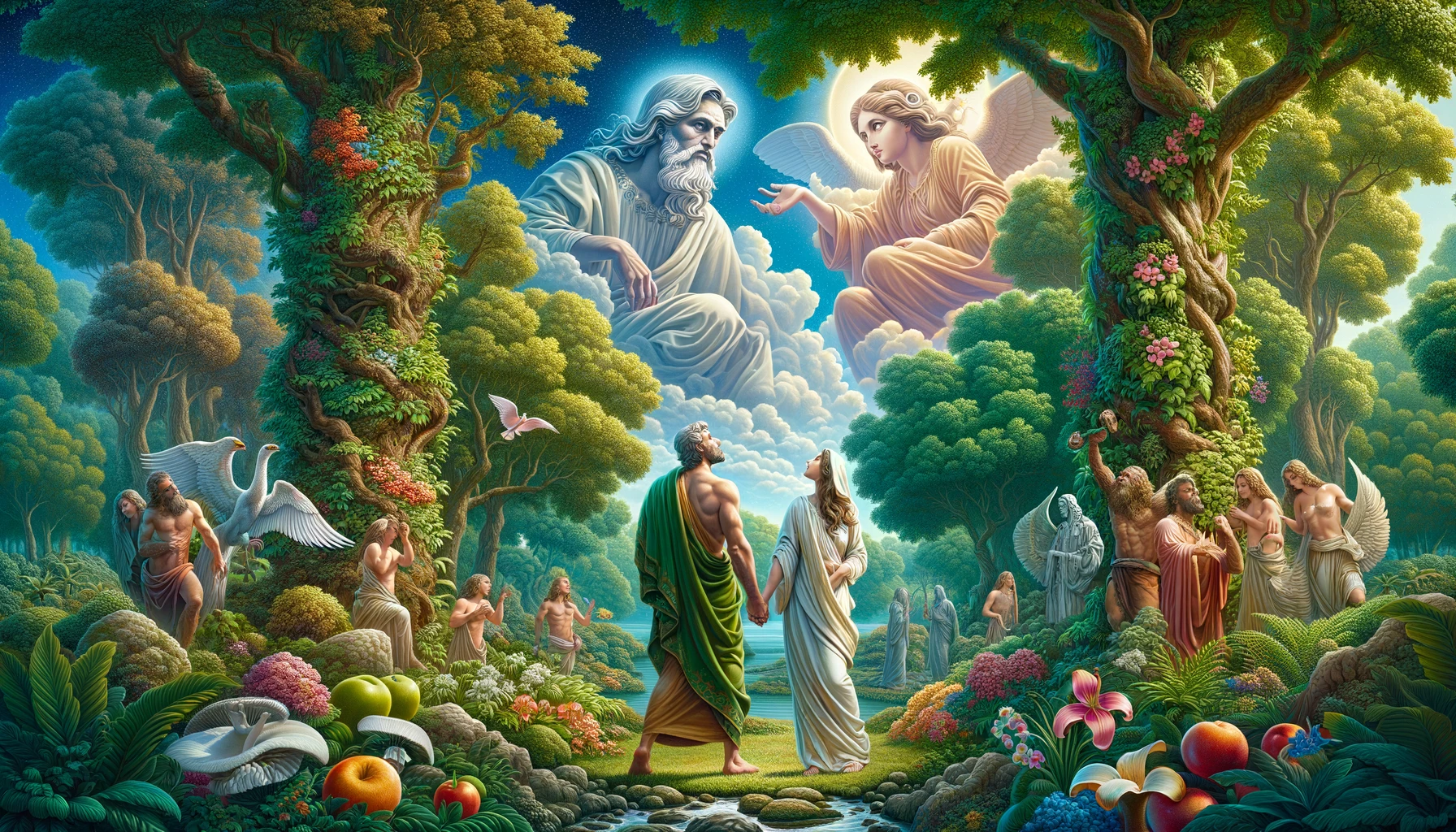
Today I want to address a topic that I have not dealt with in this podcast until now, given its complexity from a spiritual perspective: the concept of God. This topic has been tangential in several episodes, but I have never faced it directly. The motivation to talk about this arose today after finding on the internet a couple of situations that caught my attention.
One particular news story impacted me: it concerns a famous American YouTuber, known within the influencer niche dedicated to education and parenting topics. This woman, of about 40 years, was recently sentenced to 30 years in prison for child abuse and mistreatment. Delving into her story, which I was unaware of until then, I discovered that she had clear psychiatric problems and traits of psychopathy. Her family philosophy seemed to be based on the adage that 'the beatings sink in', employing methods that, while not violent in the most evident sense, ended up being recognized as emotional and physical abuse. This mistreatment did not necessarily consist of beatings, but included actions such as tying up her children, depriving them of food, and other severe punishments. She had six children, and her YouTube channel, '8 Passengers', included her partner and her children, whose ages ranged between 6 and 16.
The case came to light when one of the children, a 12-year-old, sought help showing visible signs of mistreatment, including marks from having been tied up with adhesive tape. As a result of this, videos of this woman's parenting advice came to light, generating dismay at seeing how someone could contemplate punishments as severe as taking away their food or making them sleep on the floor as a form of discipline, supposedly with the objective of teaching them lessons.
However, the most shocking was a video where the children seem to accept and justify these punishments, interpreting such acts of violence as demonstrations of love. Observing their expressions, one does not perceive hatred or fear toward their mother, but rather sadness and frustration, mainly with themselves, for having disappointed her, without showing aversion toward her. This situation led me to reflect deeply on the topic of God and spiritual values in opposition to these actions.
Reflecting on one of the first lessons I learned when venturing into the path of shamanism with the Muisca, I was reminded that healing the relationship with our parents is an essential task for any spiritual being. This teaching has been reaffirmed in conferences and books that highlight the fundamental importance of the relationship with our parents in our human experience, as well as in the origin of most of our emotional wounds.
It is evident that, in extreme cases of mistreatment like that of the mother YouTuber mentioned, the victims can take years, or even an entire life, to heal. But even in my case, coming from a loving and conscious family, I recognize having lived episodes that have deeply marked me. Now, as a father, I understand the transcendence of this relationship in a child's life, something we often forget. Many painful experiences are stored in the subconscious, eclipsed by happier memories, but the way we perceive our parents during our childhood has a lasting impact.
From the moment we are born, our universe centers on our mothers and, shortly after, on our paternal figures or whoever fulfills that role, forming the base of our human experience. These people are everything to us, and it is difficult to imagine the perspective of a baby, for whom their entire world is reduced to one or two people. As we grow and begin to explore the world, the influence of our parents continues to be fundamental, defining who we are and what we can come to be. This reflection underscores the importance of understanding and healing our parental relationships as the cornerstone of our spiritual and emotional development.
The importance and impact of our parental figures during childhood are immeasurable, configuring to a large extent our future trajectory. This reflection led me to deeply appreciate the work of Osho, especially his book on humanity, where he establishes a fascinating parallelism between the first years of our existence and the biblical accounts of Genesis. According to Osho, the biblical narrative of a state of innocence, perfection, and absolute peace in communion with the Creator in Paradise is, in reality, a mirror of our childhood. In that childhood 'garden', everything is provided for us by our parents, who moreover exercise an authority over us.
This stage of innocence, similar to that of Adam and Eve, who were not conscious of their nakedness nor saw in it a reason for shame, reflects the attitude of a child who does not feel modesty while naked, free of the malice that characterizes adults. The Bible suggests this change with the appearance of the serpent, who invites Eve to eat from the tree of the knowledge of good and evil, an act that leads them to recognize their nakedness and, symbolically, their sexuality and vulnerability.
The 'apple' of the tree of good and evil, often associated with sex by its red color and the consequent awareness of nakedness, marks the end of innocence and the beginning of the need to work and provide for oneself. This moment represents the transition from total dependence to an existence where we are conscious of our mortality, weaknesses, and needs, including reproduction.
This interpretation invites us to reflect on the idea that we should aspire to maintain or recover that state of childhood innocence, a notion that, although attractive, is contrary to the biblical teaching that there is no return once the knowledge of good and evil is acquired. The narrative suggests that, by becoming aware of our human condition and its limitations, we face the reality that we must navigate life with this new understanding, with no possibility of returning to the pure innocence of childhood.
This process of taking on awareness, similar to the modesty about being naked that children experience, signals an inflection point in human development, marking the beginning of the recognition of social norms and the perception of oneself in relation to the environment. I lived this transition with my oldest daughter and currently observe it in my younger daughter, who is approaching pre-adolescence and beginning to understand concepts like wickedness and death, aspects unknown to humans before being expelled from paradise, according to the biblical narrative.
The interpretation of the Bible, not as a historical record or mystic teachings, but as allegories that reflect an ancestral and timeless wisdom, resonates with this stage of discovery. These narratives, inspired by even older writings, such as the Sumerian ones, suggest that the biblical teachings connect with the human experience through cultures and epochs. This universal echo is observed in how the teachings of the Bible, just as the Quran for Muslims or the Vedas for Hindus, continue to influence millions of people today.
The resonance of these teachings suggests that they hold truths experienced by many, although the idea of a childhood 'paradise' varies enormously between individuals and contexts. Even in difficult environments, a child can feel whole and safe within the limitations of their surroundings, as long as their parents provide them with a space of safety. This concept extends even to situations of mistreatment, where children, just as Adam and Eve with Yahvé, can perceive the actions of their parents as just, internalizing the guilt as their own.
The discussion of alternative interpretations of the Bible, such as those offered by modern Satanism, which sees Satan as a symbol of humanism and defense of human autonomy, introduces an additional complexity to the understanding of these texts. Although these views can generate discomfort, especially for those who, like me, grew up in a Christian environment, they offer an opportunity to reflect on the diversity of interpretations and the meaning of freedom and morality in the human context. However, my focus remains on exploring how these ancestral and universal narratives reflect the depths of our collective and personal experience.
The Epic of Gilgamesh and the Sumerian stories of Enlil and Enki offer fascinating parallels with the biblical accounts, especially in regard to episodes such as the universal flood. These narratives, considerably older than the biblical texts, not only influenced the writing of the Bible but also contribute a rich dimension to our understanding of ancient beliefs and their transcendence through time.
According to the Sumerian tablets, a group of deities from a planet called Nibiru, described as a gigantic spaceship that visits Earth approximately every 36,000 years, played a crucial role in the early development of humanity. Although the existence of Nibiru lacks scientific evidence, these mythological narratives are rich in symbolism and meaning.
Enlil, assigned with the supervision of the northern hemisphere, and other beings of extraordinarily long life, are described as the creators of an enslaved race, identified with the reptiles or reptilians, destined to extract resources such as gold from the Earth. In the face of the rebellion of these enslaved beings, who demanded freedom upon recognizing their own consciousness, the gods decide to create a new species to replace them in the extraction labor.
The solution proposed by this divine council was the genetic modification of terrestrial primates, into whom they infused their 'divine seed' or essence, giving rise to the human being. These new beings, designed initially as slave workers, begin to reproduce, with the reptilians acting as supervisors of their labor.
Enki, one of these divine beings, eventually develops empathy for humanity, recognizing the injustice of their enslavement upon seeing in them the presence of the divinity. This change of perspective in Enki reflects a recurring theme in many mythological and religious traditions: the recognition of the inherent dignity and divinity within each human being.
Enki appears as a figure that approaches humanity, proclaiming the possibility of freedom and sharing the divine essence, similar to the serpent in the biblical narratives. In the Sumerian context, Enki stands out as a defender of the human being against the oppression of Enlil and other gods, promoting human liberation toward the realization of their divine potential. This account introduces the idea of a universal flood, instigated by Enlil (assimilated to Yahvé), with the objective of exterminating humanity, perceived as a failed creation due to its rebellion, an echo of previous disobediences.
The Sumerian narrative intertwines with the analogy of adolescence, where youthful rebellion is compared to the struggle of humanity against divine authoritative figures. This comparison underscores the adolescent's dilemma of opposing parental authority, not for the provision of basic needs, but as an act of rejection toward what they perceive as oppression. This conflict is deepened by the inevitable internalization of parental aspects in the young, generating rejection and the search for a proper identity, marked by differentiation from the parents.
This pattern of behavior not only reflects a family dynamic, but is also suggested as an essential evolutionary mechanism for emancipation and the formation of new family units, favoring genetic and cultural diversity. The need for discord between generations promotes separation and exploration, a phenomenon reflected both in biology and in culture, underscoring the norms, dramas, and universal experiences of humanity. This process of separation and subsequent reconciliation with one's family origins, viewed from a distance, contributes to a deeper understanding and appreciation of the roots and parental teachings.
These narratives articulate through myths and legends present both in Indoamerican cosmogonies and in other traditions, reflecting stories that, although unique in their details, share a common thematic structure. Central to these stories is the dichotomy between figures of authority, frequently masculine, symbolized by the father, and figures of nourishment and care, usually feminine, represented by the mother. This duality is also explored in the esoteric realm, where the masculine and the feminine are seen as complementary forces that nourish and at the same time limit.
The conceptualization of God as a distant and mysterious entity is contrasted with the personal and immediate experience of the divine, which is internal and emotional, and is deeply rooted in family dynamics. The physical absence of a paternal figure does not eliminate its psychological and spiritual influence, as the personal account illustrates, about the relationship with an absent but omnipresent father in the life and development of an individual.
The spiritual search is presented as a means to approach this divine figure, motivated by a desire for a deeper connection not only with the spiritual but also with the terrestrial parental figures. The exploration of spirituality, including mystic experiences and the use of sacred plants like yagé, reveals itself as a path toward the understanding and experience of the divine, describing intense and transforming encounters with a being perceived as omnipotent and omnipresent. These experiences underscore the interconnection between the search for identity, the relationship with the parents, and the comprehension of the divine, offering a unique perspective on how family dynamics influence the perception of and the relationship with the spiritual.
The experience with yagé reveals a fascinating duality: on one hand, one finds a divine and benevolent presence, and on the other, an equally powerful but malign presence. This duality reflects the complexity of mystic experiences, where contact with the divine often entails encounters with darker and denser aspects of existence, interpreted as manifestations of evil or loneliness. In such moments, the sensation of being a divine incarnation on Earth is presented, an experience that challenges understanding and humility, leading to careful introspection and a search for meaning.
This revelation coincides with a period of personal transformation, marked by the preparation to take on a more active and conscious role as father and family leader. The experience is best understood in the context of the transition toward fatherhood, reflecting an evolution of personal identity toward the assumption of greater responsibilities. Fatherhood is presented not only as an act of creation and guidance, but as a manifestation of the divine, where the father or mother become figures of supreme authority and sources of wisdom and unconditional love for their children.
This perspective highlights the archetypic role of the parents as representatives of the divine in the life of a child, offering a deep interpretation of the parental relationship. Through the eyes of a child, the father becomes a direct connection with the divine, underscoring the importance of parental presence and guidance in the child's development and well-being. The experience of mistreatment, seen from this lens, is understood as a profound betrayal of this sacred bond, illustrating the devastating impact of abuse on the child's perception of authority and love. This account not only explores the complexity of mystic and spiritual experiences, but also delves into the meaning and the responsibilities of fatherhood, highlighting the profound influence of the parents in the formation of the worldview and values of their children.
I reflected on the idea that accepting to be considered a god is not about vanity, but rather about assuming a profound responsibility. This acceptance raises the essential question: what kind of god can I be at this moment? Just as through the innocent gaze of a child we can be seen as a source of light, that same gaze can reflect the fear of a dark and fearsome god. This duality I have observed personally, especially in the figure of my father, who at times seemed to embody evil.
This experience is not limited to childhood or adolescence; it is a continuous process of formation. By accepting myself as a god, I recognize that I am molding the perception of divinity in the mind and soul of the children I am raising. I understand this task as my greatest responsibility, beyond any personal or professional achievement, whether it be becoming president or inventing something that alleviates world hunger. My role as a father becomes the most significant, extending its effects beyond my biological children, also influencing those I teach or advise.
This act of giving without expecting anything in return, and other virtues associated with the divinity, are considered gifts of the Holy Spirit in several religions. It is crucial, then, not to fear accepting the responsibility of incarnating a god. Linking this idea with the discussion on humanity and artificial intelligence, and referring to what was proposed by Yuval Noah Harari in 'Homo Deus', we face the creation of a new concept of divinity. In a context where Nietzsche's idea of the death of God resonates, we are in a process of recognizing that man has created god.
For those whose spirituality still centers on a personal god, this vision may present challenges. However, I suggest we focus on the inner divinity and on how each one incarnates that notion of divinity, independently of how or where it is conceived.
Jordan Peterson offers a perspective in which God represents the supreme ideal to which one can aspire. He illustrates this idea with the story of Pinocchio, a wooden boy who yearns to transform into a human being. By fervently desiring before the brightest star, Pinocchio symbolizes the effort to reach the highest, the supreme. This analogy suggests that, regardless of the name given to the divinity (Father, Mother, God, Yahweh, Allah, or the universe), the essential is to aspire to the virtues and values attributed to a perfect being.
The invitation is to position oneself, symbolically, at the window, look upward and express the desire to pass from being a wooden figure to an authentic being, reflecting the divine qualities one admires. This process involves a deep and personal commitment to the values considered most elevated. However, Peterson warns about the risk of idolizing false gods, such as a soccer team, a flag, a national anthem, or even material or ephemeral aspirations, since that too will determine what we become.
The reflection concludes with a call to direct our aspirations toward the noblest and most magnanimous thing that our mind and heart can conceive, whether in relation to our children, be these human, animals, or projects we consider our 'spiritual children'. The central message is to pursue that supreme ideal, that 'brightest star', and to strive to incarnate the divine qualities we value, in any aspect of our life.