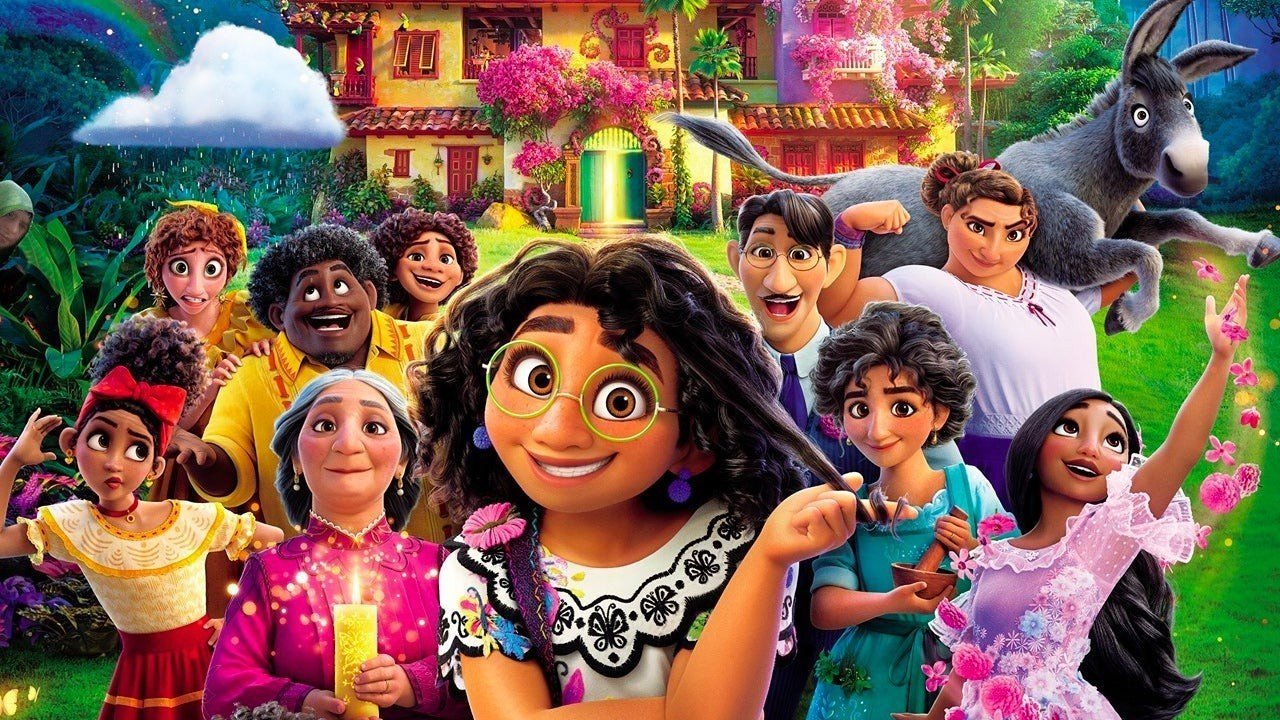
In previous episodes I have referred to films that touch on themes related to spirituality, or that can be used as an analogy to concepts or phenomena that I talk about in this podcast. However, until now I have not dedicated an entire episode to the analysis of a film, and the truth is that there is a lot to be learned when one observes with attention the content of some films that have been created around themes like feelings, emotions, or human relationships.
For this episode it occurred to me to do exactly that with one of the films that has impacted me most in recent years, and that many would dismiss as just another children's movie. I am talking about Encanto, Disney's sixtieth studio film, and which was inspired for the first time in the culture and music of Colombia.
It is no longer a surprise that a children's movie inspires more psychological or spiritual analysis than most movies for adults. For years we have seen that children's filmmakers use the medium to treat themes that the studios do not dare to touch in productions for other audiences.
Perhaps the colorful and fun characters are a good way to sweeten and make more digestible themes that otherwise could turn out very dense, but in any case, in my opinion, it was Pixar, and in particular the director John Lasseter, who proved that children's cinema does not have to be unidimensional, but can have layers of meaning that allow it to be appreciated by a more sophisticated audience.
I also believe they realized that parents appreciate having content dedicated to our children that has a positive message or a lesson that goes beyond simple entertainment. This is something other media have adopted, and fortunately now we have books, songs, and television series that teach how to manage emotions or how to accept oneself as one is.
Pixar is still the leader and, in my opinion, the studio most on point in its handling of these themes, especially with Inside Out, which I talked about in a previous episode and which gives a very good description of the way emotions work in the brain, Soul, which ventures into one of the most difficult themes, which is death and the importance of enjoying here and now, or more recently with Luca, which focuses on the value of recognizing oneself as one is, even making a clear wink at the discovery of a diverse sexual identity.
However, recently Disney, which, despite being the owner of Pixar, still keeps the productions of the two studios separate, has also embraced this trend, although until now it had done so in a more subtle way. Perhaps later I will do some analysis on the way Frozen treats depression, but this time around, we are going to focus on Encanto.
From this point on I must issue a warning to whoever has not yet seen the film, because I will be entering spoiler territory, and the truth is it is worth discovering the things I am going to talk about on your own.
There are several perspectives we can analyze about this film, and although I would very much like to talk about the beautiful way the culture of my country is shown in its music, food, and traditions, I am going to refer to the themes that for me are the most important in the plot, and they are generational trauma and family roles.
In the story of the Madrigal family, everything begins rosy and, at first glance, it is a loving and joyful family that, besides having a marvelous house, is blessed with magical powers, with which its members keep everything in order in the 'Casita' and help the rest of the inhabitants of 'Encanto', a town
But as the movie progresses we come to realize that something is definitely wrong with the Madrigals. After Mirabel introduces all the members of her family and tells us how wonderful and unique they are, 'fantastic and magical' — more exactly — we see that she does not get along at all with her sister Isabela, that her grandmother seems to prefer all her other grandchildren except her, and that there is someone in her family that no one talks about.
Then comes the scene of the ceremony in which little Antonio will receive his gift. There the enmity between Mirabel and her sister becomes more evident, her pain at not being fully accepted and not fitting in like the others, and the harshness with which the Abuela handles all the strings of the family, leaving them very little room to make mistakes or to do what they really want.
From there begins Mirabel's adventure, after having a vision in which her house was starting to crack. It is also the moment when Maribel realizes how much her grandmother underestimates her, and that if she wants to discover what is threatening the stability of the Casita, she is going to have to do it on her own and at the risk of ending up isolated by her grandmother, as she did years before with her uncle Bruno.
In that journey Mirabel tries to reconstruct the puzzle of the cracks in the house and realizes that the fissures in the Casita are actually fissures in her family. The perfection the family appears to have is actually a façade behind which hides a series of toxic relationships, behind which, in almost all cases, is the matriarch of the family, the abuela Alma.
There is something very beautiful that differentiates Encanto from almost all the other Disney films, and it is that for the first time there is no villain as such, despite the fact that at the beginning it is hinted that Bruno is one. Even abuela Alma, who is revealed as the cause of the family's problems, can be understood as yet another victim of the true evil of the Madrigals: the generational trauma of the armed conflict in Colombia.
This is what surprised me most about the film; that they risked touching in a children's film on something as delicate and traumatic as the massacres and forced displacement in Colombia. It must be said that the filmmakers did an excellent job softening those scenes to make them digestible for a family audience, but even so it is totally clear that the reason abuelo Pedro disappeared was because he was assassinated by a band of bandits during what appears to be a displacement of farmers during the partisan violence of the mid-twentieth century.
Being in the cinema theater I could not avoid, no longer tears but outright weeping, at seeing these scenes harmonized by the notes of the beautiful song 'Dos Oruguitas' by Lin Manuel Miranda. The impact of the drama on the screen affected me in particular because the way my paternal grandfather Rafael Jiménez died, apparently shot to death because of his political affiliation while crossing a river, was very similar to the way Mirabel's grandfather was assassinated in a river, also during the times of the violencia in the Colombian countryside.
Upon hearing the Abuela Alma's narration of those sad events, Mirabel understood that the harshness of her grandmother, her excessive control over the family, and her little tolerance of any carelessness that might threaten the stability of her home, were merely the result of the tremendous trauma that it meant for her to lose all her belongings and have to abandon her land, only to then lose the love of her life and have to head out with her three small children toward the unknown.
This is a discovery that I also made in recent years when I had to reconcile the idea of having grown up in an exemplary home full of love, with the reality of recognizing intra-family conflicts and unhealed wounds, in particular with my father. The best way I had to carry out this process was the review of my dad's history, which I shared in one of the first episodes of this podcast, in the context of the violence between liberals and conservatives in his town, which culminated in his displacement along with my abuela Dolores into the rigors of poverty in Bogotá, the capital of the country.

Knowing that my father grew up in the midst of this violence, with the constant fear of losing everything, of finding death at any moment, and under the rigorous upbringing of my abuela Dolores, made me understand, just as Mirabel did, that my dad always gave me with love the most he could, and that his harshness on many occasions was the reflection of his fear of losing, through some carelessness or omission, the fragile tranquility he had achieved with so much effort to provide us.
This is, in essence, the reason why the Madrigal miracle was on the verge of disappearing. The abuela Alma controlled her children and grandchildren so closely and with such a firm hand, that the foundations of her family trembled and the house crumbled under its own weight.
I think what I liked most about the narrative resources of Encanto was the use of the Casita as a visual representation of the Madrigal family itself. The Casita is one more character in the story that represents the family as a whole, and that is why in it each character is represented as a room. Well, almost all, because notably there are two characters who do not have a special room: Mirabel and the Abuela Alma herself, precisely the two who have no gifts or magical powers.

The magical rooms of the Casita are a reflection of their gifts, indicating that the gift of each family member is what sustains the magic of the house. I find this reflects how in a family, each member of it adopts a role, which comes to be what each one contributes to the harmony of the family.
This is interesting because the gifts the filmmakers bestowed on each of the members of the Madrigal family seem to me a magical version of the gifts that we frequently adopt when we participate in a social context. There are infinite possible roles depending on the context, including the role of father, of child, of mentor, of apprentice, of friend or partner, but also more specific roles, like trainer-father, confidante-mother, problem-solver friend, or possessive partner.
In my opinion, the writers of Encanto did a good job reflecting typical family roles in our Latin American families, and with each character, the film shows both the magical or positive side of the role, as well as the negative or toxic side that is frequently found in those who adopt those roles.
First, let us analyze the abuela: her name is alma, with which we can intuit that she is the soul or the spirit of the family. She is one of the two members of the family who has no powers, except that she is the guardian of the miracle, which means she is the guardian of the family magic, a role that is very common to find in the older women of the family, who take care of the household economy, keep an eye on the personal and emotional affairs of everyone in the family, and who usually have the strength to keep the family united despite the problems that arise or the winds blowing against them.
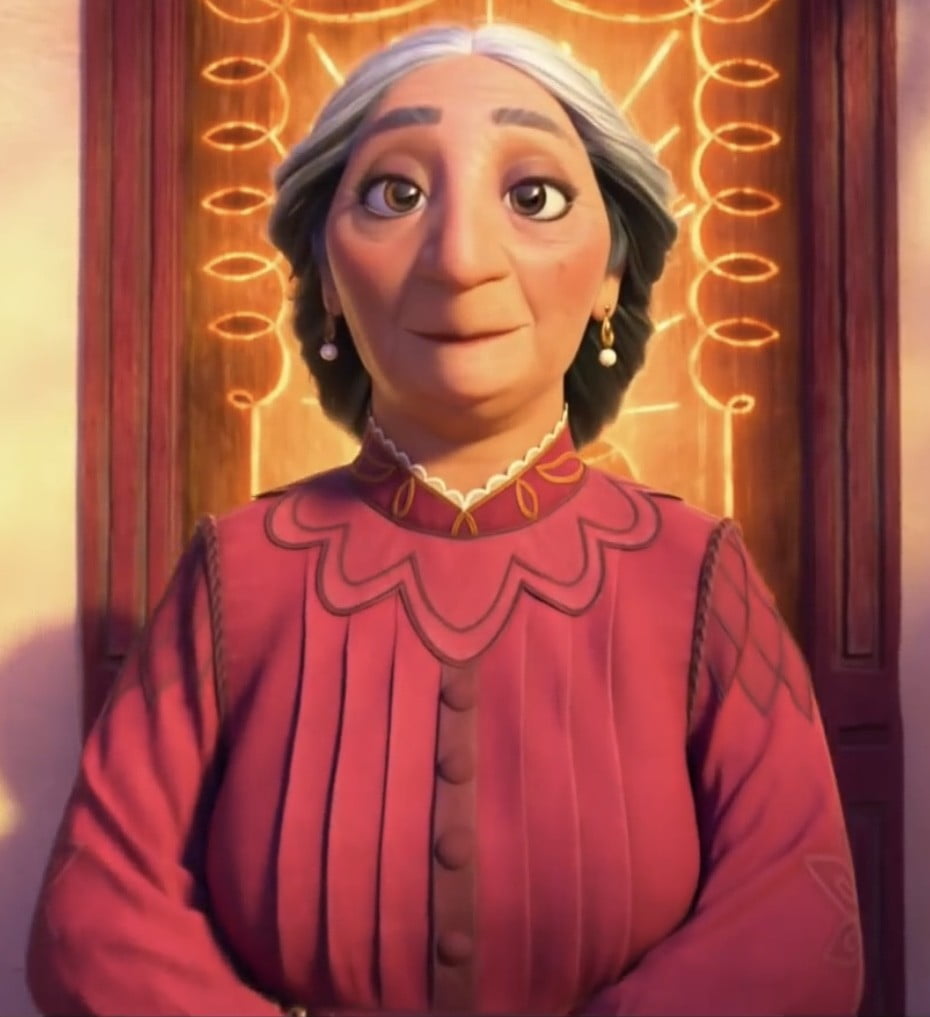
As is discovered toward the end of the film, abuela Alma, due to her fear that something unexpected would destroy her family, as happened years before, became an inflexible controller of the lives of her children and grandchildren, neglecting the most important thing, which was ensuring that they were happy. Her redemption came when she remembered that the reason for being of her miracle was to make her own happy, not to manipulate them to guard the miracle at the expense of their mental health.
Mirabel's mother is a sweet lady who reminds us of many mamás whose priority is to heal their own, even going so far as to overlook their own needs. In Encanto, Julieta heals physical illnesses with food, but we all know that Latin American mamás heal the soul with food.
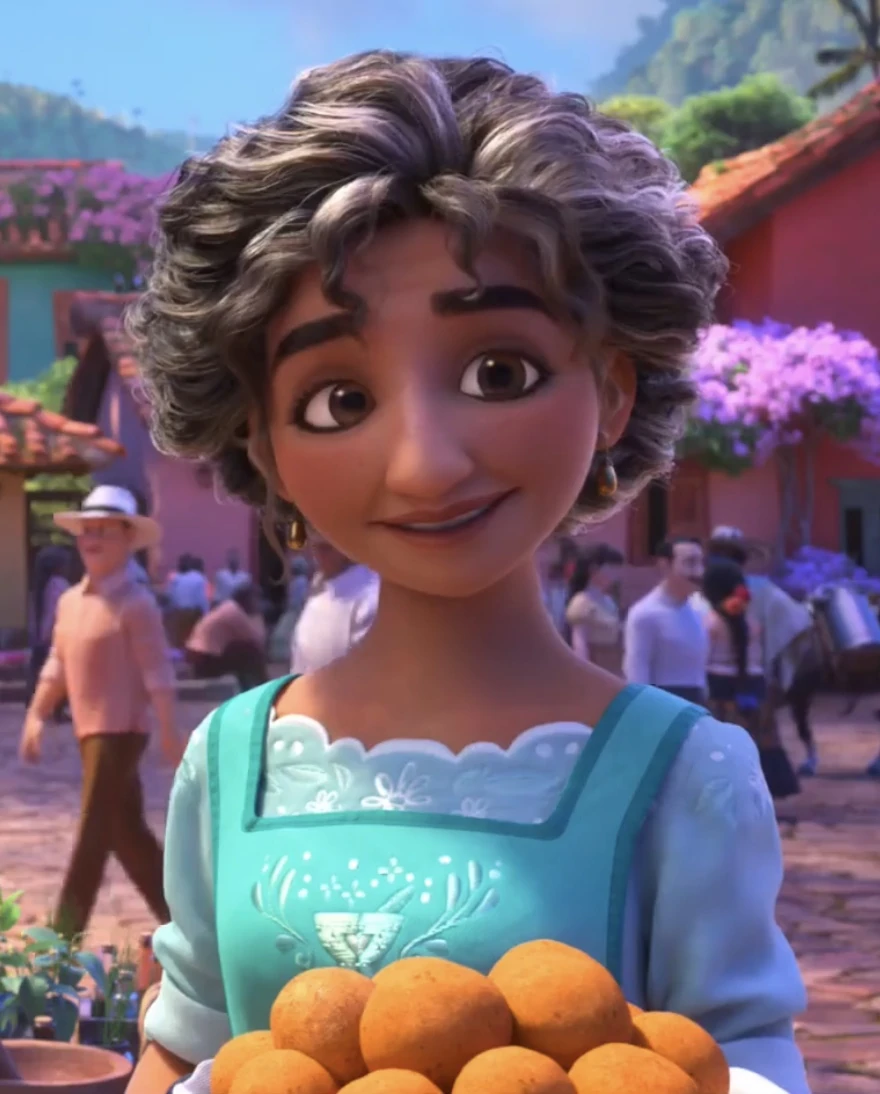
In the case of Mirabel's mother, the negative side that I could identify was the fact that, despite being aware of the injustice of the way abuela Alma treats her daughter Mirabel, she was not willing to intervene in favor of her daughter. Something with which we too can identify, those of us who have older adults in our family with very rigid personalities, who create around them an authoritarian environment in which criticism and dissent are not accepted.
This character is very interesting because she has a power that is not easy to interpret as a traditional role. Pepa, or Josefa as I imagine her name is, has the power to manipulate the climate, with the disadvantage that she has to try constantly to control an extreme microclimate that pursues her according to her mood.
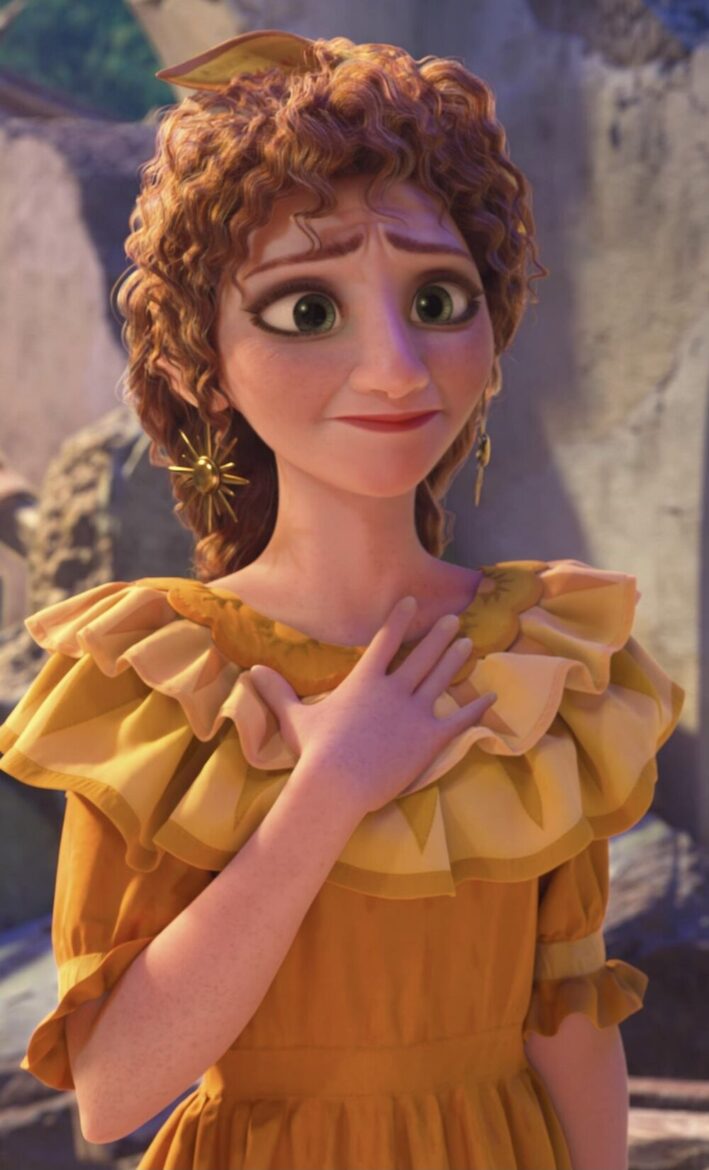
That last point is what gave me the key to understanding what Pepa represents: if the climate that pursues her represents her own emotional state, then it means that the power she has is the power to manipulate the emotional state of other people. This is something we do not see directly in the film, because what Pepa does is stop the rain or produce rainbows, but we can assimilate Pepa to someone who has the faculty to influence other people to reduce their emotional storms, alleviate their rains of tears, and produce in them rainbows of peace and tranquility.
The cost of that power, however, is having to deal with what to me seems a delicate mental stability, if not a mental illness, probably anxiety. There is a particular scene in which everything is getting out of control and Pepa starts to hyperventilate, a gray cloud begins to form over her, and the abuela orders her something like: 'Pepa, stop that rain!' Pepa raises her voice at her and says: 'Oh, come on! I'd rather you be grateful it's not a hurricane!'
Many people have the capacity to influence the emotions of others and use this capacity to help them improve their lives, but it is not uncommon for those people to have difficulty managing their own emotions. In some cases, the capacity to empathize with others entails an elevated sensitivity to pain that can translate into a tendency toward depression or anxiety, which are mental conditions that those of us who have experienced them know can be perceived as authentic emotional storms.
Luisa's power, the eldest of Mirabel's sisters, is super-strength, which during the song 'Bajo la Superficie' is revealed as the capacity to carry the problems of others, frequently, as in Luisa's case, those of the most vulnerable members of the family. This is the first magical gift clearly shown as a gift with a negative side: Luisa has a constant fear of not being good enough, that there be some problem she cannot solve.

According to what I have read on Twitter and YouTube comments, many older sisters and brothers identify totally with this feeling of the need to be strong for their siblings and the fear of not being good enough. I did not have that experience with my sisters, but I did live it fully for several years with my parents, wife, children, and friends. Being strong is a very praiseworthy virtue, but when it is not accompanied by a good dose of self-care and responsibility with one's own mental health, it too often leads to problems like anxiety and depression, something we see happening to poor Luisa as the cracks in the foundations of the Madrigal family begin to be noticed.
The roles of Isabela and Camilo seemed to me similar and complementary. Isabela is the perfect granddaughter and daughter, at least in the eyes of her parents and abuela: she does not cause problems, does what she is told, and strives to make everyone feel content with her. Her power is to make flowers bloom everywhere. Flowers that are frequently her abuela's favorites, the Jacaranda.


Camilo's power bears a lot of resemblance to Isabela's, because he also uses his power to please others: he transforms into each person he greets, because we all like to see our reflection in others — at least the reflection of our best face. He also turns into the people his grandmother asks him to when she needs help for the family, and on occasions he does it to entertain those around him.
Surely you know people who, like Isabela, have always followed the steps their parents designed for them, striving not to disappoint, to make proud, and to receive approval. You must also know someone who, like Camilo, seems to have no personality of their own, but instead molds themselves to the personality of whoever is in front of them, and who perhaps hides their sadnesses and frustrations through humor. A case that comes to my mind is the sad story of the actor Robin Williams, who fought all his life against the ghost of depression while making others laugh.
In the film we don't see the negative side of this conformity for Camilo, but Isabela, after her argument with Mirabel, ends up accepting that she was about to explode from her effort to seem "perfect," to please the grandmother, and to devote herself to creating only flowers of cheerful colors. Everything starts to fall into place for the family when Isa begins to create plants with thorns, carnivorous plants, and other exotic plants, which seem to represent chaotic, imperfect, and authentic personality traits that Isabela had been hiding for a long time.
I'll mention Dolores only in passing, because it seems to me she was a character used above all as comic relief and to move the plot along when there was no other way to do it. However, her role has to do with communication, common in people who know how to listen to others and who therefore frequently become confidants. As we see with Dolores, treasuring so much information usually comes with the temptation to breach confidentiality and reveal secrets and gossip, whether for a good cause or for pure fun.
But without a doubt the most important characters in the healing of the Madrigals' cracks were Mirabel and Bruno, the two "different" members of the family. Bruno, like his sisters and nephews, has a power that the film makes evident actually symbolizes a quite human virtue. While in the magical realism of Encanto Bruno has the ability to see the future, we quickly realize that his "visions" are nothing impressive: noticing that a local woman's fish was about to die, that another neighbor was going to gain weight, or that the town priest was going to go bald.
It's evident that Bruno is in reality a keen observer, someone with the ability to analyze the situations around him and make educated predictions about what might happen as a consequence. In the film, Bruno realized that the grandmother's attitude toward Mirabel when she didn't receive a gift reflected a toxic attitude that could crack the unity of the family.
Threading a bit thinner, I could say that Bruno was the only one who dared to question the excessive control of grandmother Alma, who even seemed capable of going so far as to reject a little girl simply for not showing willingness or talent to meet her expectations.
The most illustrative case of this toxicity is the rejection that, even today, is experienced when, whether for cultural or economic reasons, the family expects a boy and instead a girl is born. This was common when a man was synonymous with an extra pair of hands to till the land and generate income, while a girl was seen as a burden to be supported until she could be married off to a good husband.
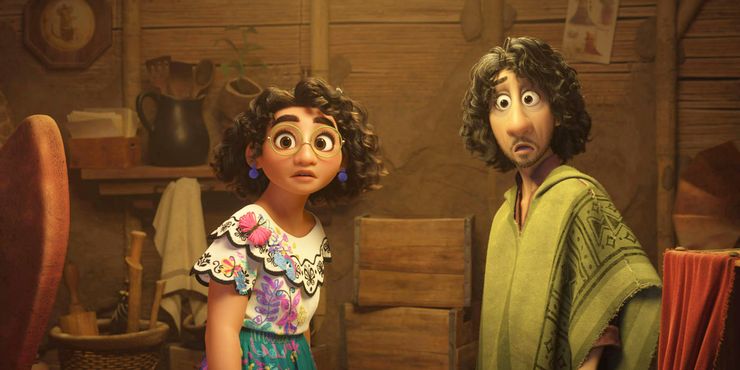
Well, Mirabel, in the eyes of the grandmother, didn't receive any gift and therefore wasn't as useful as the others in her purpose of keeping the family's miracle alive. Something similar to those parents who reject their children when they decide not to follow in their footsteps and threaten the family legacy, especially when there's a family business or properties that the child was expected to keep taking care of when the parents grow old.
Bruno then did what many decide to do with their families: keep loving them and try to support them from a distance, but stop participating in the corrosive dynamic that can breed bigger problems later on. It's not common for someone to keep living between the walls of the family house, but this can also be seen as a metaphor for the cases in which the presence of a relative who left in disagreement with their own is still felt in the family, despite the effort made by those who stay behind to "not speak their name."
At the end of this relatively short film, Mirabel completes her heroine's arc when she stops feeling like a victim of her grandmother and inferior to her sisters and cousins, and realizes that her worth isn't in having some particular gift but in the courage to see the cracks in her family and the will to do something about them.
Mirabel isn't as strong as her sister Luisa, but she teaches her that there's strength in recognizing one's weakness and asking others for help. She isn't as "perfect" as Isabela, but she teaches her that in her imperfections and in the capacity to accept and even enjoy them, there's more beauty than in perfection. The fact that she doesn't receive any gift after saving the miracle highlights the lesson that will and work tend to reap more fruits than innate talent.
For me, the last lesson that Mirabel and Bruno give us is that being uncomfortable can be a great gift. Bruno was rejected for warning about the negative consequences of the actions or omissions he observed, and Mirabel had to confront her grandmother for disobeying her orders and, eventually, also for telling her what she thought she was doing wrong.
It's sad that many times even the most loving families crack and fall apart for the sake of an illusory miracle, the utopia of the perfect family in which problems are swept under the rug and ignored, trusting that affection is enough to keep the family united. Family roles of father, daughter, brother, or cousin are often placed above the reality of simply being distinct, diverse human beings who, by the chance of destiny, have been assigned to walk through this life experience together.
What each one contributes to the family — money, work, effort, gifts, or time — is also often imposed over what each one is for the others, and if someone doesn't contribute something useful or proportional to what they receive, they can be relegated, as happened to poor Mirabel, who, already an adolescent, still had to keep sleeping in the children's room.
In short, there is much to reflect on and discuss after watching the first Disney film inspired by Colombia. I believe the Colombian family is very well represented in the film, but according to the comments I've read on social media, thousands of people from very different cultures identify with the Madrigals, and it's a very good excuse for us to review our family relationships, the roles we play in our family, and perhaps, to follow Mirabel's example and heal those broken relationships we surely have lying around, understanding who each one is in our environment without the mask of their role as husband, grandmother, son, or sister, and seeing ourselves as spiritual Beings, who have come together to share, experience, and learn.