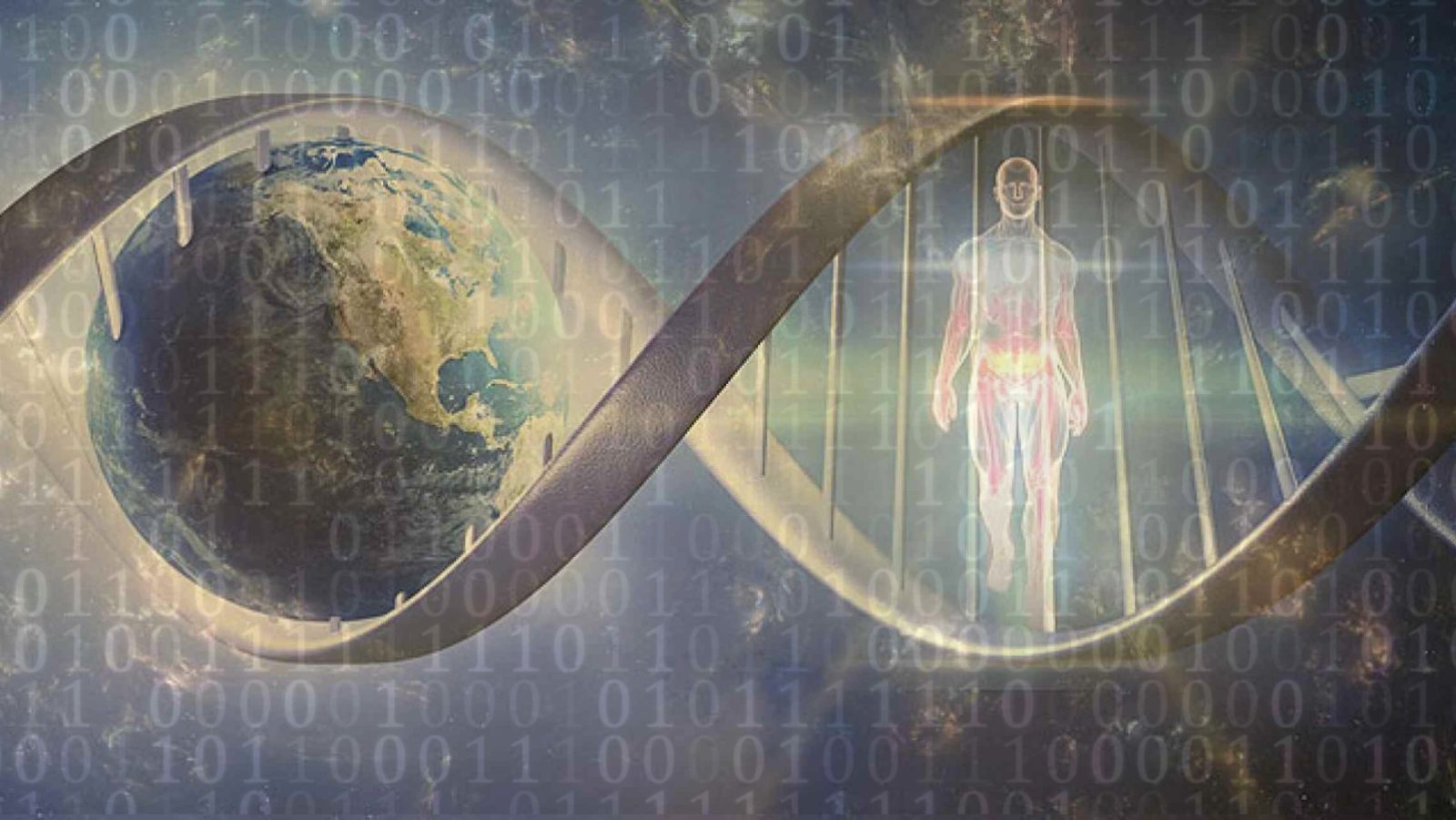
For me, the hardest part of my ayahuasca trances was always the experience of death. It's an experience shared by many yagenautas and users of other entheogens like mushrooms or LSD. In what some describe as a "bad trip," you feel that you're about to die; but it's not a thought or even a fear, it's a certainty: you're dying, and it doesn't matter that you know you're under the effects of a psychoactive — you're living your last minutes.
During those moments, say the taitas, the walker of the Spirit stands at the threshold of one of the most important trials on the way to becoming a shaman. Omar Barreto used to say that the true shaman has to look death in the face and travel with it through the inner worlds, let himself be carried away to learn the mysteries of the great sages.
But I could never let myself be carried away. It didn't matter that I was aware I was in the middle of a ceremony, where death wouldn't be real and final but mental and momentary. The conviction that I was about to lose my life was so visceral and compelling that every time I felt it, I fought with all my strength to stay alive, lucid, and present.
It's possible that my fear of death cut my shamanic path short and kept me from unveiling more secrets of the ancestral way. But that experience — not being able to let myself die "for pretend," even in exchange for the answers and experiences I longed for so much — left me restless, and since then I've meditated on that irrational fear of death, which not only blocked my shamanic path but eventually led me to experience a serious episode of anxiety.
It's likely that you too have experienced, or at least contemplated, the fear of death. It's a common experience in almost all human beings and probably in other species too, if they're also capable of abstracting the concept of the end of their own existence.
Some authors consider that humanity's curse — ever since natural selection, or the gods, chose for us the path of intellect and knowledge — is the certainty of our own mortality. Death is a concept inseparable from the awareness of life, because neither can be understood without the other; so once we become conscious of our own existence, we head inextricably toward the desolate place of contemplating the inevitability of death — not only our own, but worse still, that of the ones we love.
Not long ago, my daughter Luciana started asking me about death for the first time, and all of a sudden she confronted me with my deepest existential uncertainties. What is my position on death, after all these years of carrying such a difficult relationship with the one the Muiscas taught me to see as the third mother, after the mother of flesh and blood and Mother Earth?
Luciana's questions also reminded me that a large part of my conflicts with death stem from the education — or absence of it — on that subject during my childhood; the influence of religion and, in general, the almost universal rejection of death in our society. I'll get to that later, but let's go back to the previous point.
At my daughter's age, around seven years old, humans begin to question our reality, to ask ourselves what it means to be alive and, eventually, what it means to die. At that point children are like a blank canvas on the subject; what we adults tell them about death will become the starting point for developing their relationship with that concept.
Having been born into a Catholic home, the vision of death my parents instilled in me was the one the Holy Church dictates: upon dying, divine justice decides, based on the merits of your existence, whether you go to heaven to enjoy the eternal presence of God, or to purgatory to pass the subjects you failed, or to burn in the fires of hell if you were a hardened sinner.
Almost all children who receive this doctrine, or any other escape fiction, like reincarnation or turning into an angel or teleporting to another planet, understand just one thing: upon dying, things will no longer be as they are now, and you'll be in a very distant place. And so almost all children resist the swap and decide they want nothing of the sort, neither for themselves nor for their mommies and daddies.
My answer to Luciana then, as it could not be otherwise, steered away from those mystical illusions and instead described my current vision of death, which I'll share toward the final part of this episode. Did I manage to give her an answer that chased the fear from her innocent mind? Absolutely not — there was a hint of tears and rejection of my poetic description of death, but I think I planted the seed so that her understanding of death can advance along a less rocky path than the one I had to stumble through to reach my current understanding.
Death's great virtue — and at the same time its problem — is that, as I said before, we know it's inevitable because we're conscious of our own existence, and as such we carry it all the time like a sword of Damocles, reminding us that at the end of the road, death waits to erase in one stroke everything we are and everything we can be.
I say it's a virtue and a problem, because depending on how we choose to see it, the awareness of our mortality can serve us as motivation to live intensely, to choose love over fear and build a legacy, or else to decide that life makes no sense if in the end everything finishes in the darkness of non-existence.
Faced with the second option, the most common alternative seems to be the adoption of some religious faith that lets us bear existential anguish with the balm of an uncertain prolongation of our consciousness in a different package, as Hinduism and other reincarnationist creeds promise, or in an astral or alternate body in a different planet, dimension, universe, or reality; call it heaven, purgatory, nirvana, Kolob, or Valhala.
The "afterlives" offered to us, in their wide variety of climates, comforts, and entertainments, have one thing in common: they assure us of an everlasting retreading or recycling of our individual, personal consciousness.
In this sense, the idea of eternal life in the afterlife seems to me more effective and attractive than its reincarnationist counterpart for two reasons: reincarnation presents itself as a punishment in itself — a prolonged cycle of death and rebirth in which each iteration resets our memory and condemns us to repeat errors and attachments, until, in one of so many lives, we somehow manage to become enlightened, thus escaping the infamous wheel of Samsara.
And so, whether through enlightenment or with an automatic pass after death, our hope of giving meaning to the struggles and tribulations of human existence rests on the possibility of finding ourselves at some point in the presence, or in the exercise, of divine presence forever and ever. In that state — or place — human aspirations and desires for material pleasure, power, knowledge, development, socialization, and so on would cease.
This promise of an eternity of mystical rapture has proven to be an effective balm for warding off, or at least keeping at bay, the dread of disappearing completely; of entering a state of non-existence — something we can't even imagine — despite being the state in which we found ourselves before we were conceived.
When I began to think about these questions, I tried to abstract these concepts about eternal life and found, as has probably happened to you too, many holes in their logic. Some problems are technical, like the question of understanding something that has a beginning but no end; that is, the eternity of something that didn't exist before being born but will exist forever after dying. But other doubts are more philosophical: if I will no longer desire what I desire now, nor have the flaws I have nor the drives that motivate me, will I still be me?
These, of course, are not novel questions, but ones that philosophers and thinkers of all times have posed in many ways. One of them, Plutarch, referred to the problem through what is known as the Ship of Theseus paradox. It goes like this:
The ship on which Theseus and the young men of Athens returned from Crete had thirty oars, and the Athenians preserved it until the time of Demetrius of Phalerum, since they removed the damaged planks and replaced them with new, sturdier ones, so much so that this ship had become an example among philosophers about the identity of things that grow and change; one group defended that the ship remained the same, while the other asserted that it was not.
This can be translated into the following question: would we be in the presence of the same ship if each one of its parts had been replaced one by one?
There is also an additional question: if the replaced parts were stored away, and then used to rebuild the ship, which of the two, if either, would be Theseus's original ship?[1]
The analogy is very fitting, because according to science, almost all the cells that make up the human body renew themselves constantly, some every few days and others every few years. Furthermore, throughout our lives we change our ideas, beliefs, habits, and behaviors. So, in a very literal way, we are not the same as we were 10, 20, or 30 years ago. Ships and humans, however, have one important difference: memories.
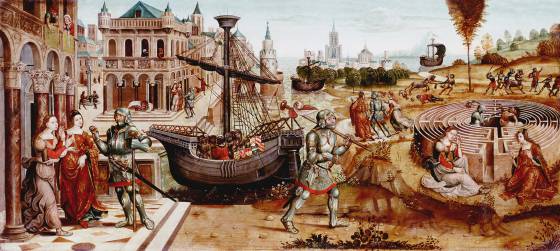
I know that "I am" because I remember that "I was." I remember being a child and being able to ride on my father's feet, believing in ghosts and reacting with grief if my favorite toy was taken away from me. I know it was me because I remember those scenes in the first person, even though I no longer resemble that curious child much, either physically or intellectually.
Some believe there's an "essence" that appears in the first years of life and never changes, that it's what we really are — something like a glimpse of the soul — but the fact is that beyond philosophical discussions and biological details, what terrifies us is the prospect that a moment will come when the light goes out forever and there will be no new flash of consciousness, no sensation, no memory.
Our mind isn't even capable of grasping the idea of non-existence, and that's why it creates associations with concepts we can abstract: darkness, silence, stillness, cold. We're terrified of thinking about being reduced to that state of immobility in shadows where we won't be able to satisfy our desires to know, to experience, to love.
This primary fear of death, some say, is the force hiding behind all other fears. If death didn't exist, it wouldn't matter to lose a job or be abandoned by someone, or to let an opportunity pass. After all, in an infinite amount of time, there will always be another chance to find a better job, or to recover lost love, or literally to do and have anything you can imagine.
This situation was intelligently explored by Jorge Luis Borges in his beautiful story "The Immortal." In it, he narrates the story of a man from ancient Greece who set out on the search for the fountain of eternal youth in the city of the immortals. The adventurer imagined that the immortals would be like gods — wise, kind, and perfect — but instead he found troglodytes devoid of all humanity, silent, indifferent, and self-absorbed.
The immortals lack purpose because they've already undertaken everything, curiosity because they've already learned everything, mercy because no death is possible in that city, and emotion because there's nothing left that sparks their interest. With an eternity at hand, there's enough time to descend into madness, depravities, and complacency and then ascend to perfection — not once, not many times, but an infinite number of times.
Borges's conclusion, then, is that immortality is not a prize but a sentence. Death gives meaning to every act of our lives before the possibility that it might be the last. As the famous musician Ray Charles said: "Live every day as if it were your last, because one day you'll be right." Death is not only necessary at the biological level so that natural selection can work its magic and ensure that living beings adapt to their environment, but it is also necessary to shape the purposes and meanings of human existence.
However, human beings have declared war on death: we bend nature to drive predators and any threat to our survival away from our proximity. We developed technology to destroy our invisible enemies, the germs, and now we toy with the genetic code to defeat cancer, reverse aging, and why not, one day banish death from our lives.
And it's not that I think it's wrong for us to strive to reduce suffering and get the most out of our lives, but it seems that Western society unanimously decided that death is a flaw to be corrected, a cause of suffering to aspire to exterminate.
I believe that at the center of this mindset lies the excessive individualism that reigns in our most important social systems. Humanism, which since the fifteenth century has been spreading and imposing itself around the world, focuses on affirming the dignity and value of the human, but not so much of humanity as of the individual.
Societies in which common welfare is privileged over the individual are considered backward today, if not malevolent. According to Yuval Noah Harari, the most widespread religion today is precisely humanism. Humanism tells you that the most important thing in society is your quality as an individual, deserving of certain rights and privileges by birth, among which are that of seeking your happiness and fighting to achieve your goals.
Society's well-being is in the background and, in any case, is subordinated to the voluntary contribution you wish to make to it, except taxes, which are indeed obligatory. The individual's life is above the survival of their community, and that is proven by our inability to take radical action to avoid the catastrophe that could come from the climate change we are causing, precisely to maintain our comfort and peace of mind.
With a worldview centered on our individual experience, it's logical that one's own death is increasingly seen as an aberration, an inconceivable tragedy that we do well to fear or ignore. I'm not saying that valuing life and putting it at the center and forefront of our values is bad — quite the contrary, I believe it's what has allowed us to live in the era of the fewest wars, diseases, and suffering that our species has ever experienced.
But unfortunately, the price has been that, ironically, the more life expectancy, the fewer diseases and less violence, the more we live with anxiety, depression, and fear than ever before. It's ironic, but it's possible that our ancestors, who had to live with double-digit infant mortality, almost constant wars, and violence everywhere, seemed to enjoy the small pleasures of life more intensely.
Perhaps the ubiquitous presence of death stripped it of some of its halo of mystery and served our ancestors as a constant reminder of the need to enjoy life while possible. Nowadays death no longer happens around us but hidden away in nursing homes, hospitals, and under forensic sheets. Yet we hear about death every day on television and social media, turning it into a sort of invisible monster that lurks everywhere, but nowhere at the same time. Hence the immense anxiety it arouses.
Of course, I'm not suggesting that we should desire death, nor trivialize it. I also believe it's fine that we strive, as a species and individually, to prolong our existence. However, I believe what should motivate us is the love of life and not the fear of death.
I know this seems like an oxymoron, but I believe we can achieve both things: value and wish to extend our life and, at the same time, value, understand, and accept death. Moreover, I believe we can accept and value it without needing to resort to the promises of eternal life that religions offer us, but rather by clinging to the reality and meanings that science gives us.
During the mental health crisis I went through shortly before moving with my family to Canada — which I'll describe soon in detail — the fear of death was the torture that came over me every time I had an anxiety episode; and my internal conflict with religious dogmas kept me from enjoying the balm of trust in the afterlife.
In other words, I was crashing against the difficult wall that many have to climb before abandoning religious creeds and taking the step toward agnosticism. In that inner struggle, I tried to make use of my old shamanic resources, to negotiate with my skepticism by looking for logical legs for some of the theories about life after death, or simply trying to avoid thinking about it, as if looking the other way could make me ignore the deepest anguish and the most primary fear of the human being.
That process didn't take days or weeks but months, and I'd even say that to this day I keep refining my vision and adjusting my concepts, as I navigate through the years, the experiences, and the scientific knowledge I've been integrating into my life. But I can share with you the main keys of what I now consider my deeply spiritual, pragmatic, and naturalistic vision of what death and the true afterlife mean:
In this podcast I've shared before some "supernatural" experiences I had throughout my life. Most were of a mystical nature, like intuitions, premonitions, or the feeling of being in the presence of God, especially during ayahuasca trances. But I also had a couple of events in which I felt the presence of a loved one who had already passed away.
The first involved my godfather Diego García, when weeks after his death I received a cassette with his songs and his messages, which I felt as a farewell from beyond the grave. Years later, during a yagé ceremony I had the certainty of being before the spirit of my friend Jassir, asking me to help him leave this plane of existence so he could fly freely over the jungle.
Those experiences, which are frequently had by those who have lost a loved one, in which the spirit of the deceased pays a visit to say goodbye and usually to ask the bereaved to be at peace, are usually explained as an effort of the mind to ease the acceptance of the new absence, as a necessary part of the grieving process. You get up with a bit more serenity after having had that posthumous farewell and you carry on with your life.
Some believe these experiences are real and that they truly had a visit from the spirit of their loved one and feel great relief, but an agnostic, knowing it's a creation of their mind, can dismiss the experience as a fantasy and be left without the benefit of the peace of mind that the encounter would have provided.
What I want to propose today is that the encounter is real, or at least, we can see it that way, even under the light of the scientific knowledge we have. The first time I thought such a mental juggling act was possible happened during the yagé session I had in 2012 with Maestro Mauricio Vicencio. It was a metaphysical experience, but curiously, not with a dead person but with a friend who was alive and kicking.
As I narrated in that episode, during the most difficult phase of the ceremony, my friend Héctor Raúl González approached me from behind, put his hand on my shoulder, and said to me, more or less in these words:
"Easy there, little brother, breathe, everything is fine, you're working it out really nicely."
Then he asked me if I felt okay. I nodded and then thanked him. The episode had nothing metaphysical about it for me at that moment, but that changed the next day. While I was enjoying the sunrise over the mountain of La Mesa where I was staying, I got up to look for Héctor Raúl and thank him for his company the night before. Then I remembered that Héctor Raúl never went to that ceremony. Instead, he was doing his own thing in Bucaramanga, unaware of my interaction with his spirit, 100 km away.
Héctor Raúl only found out about the anecdote when I told him months later, but I'm sure that what I heard would have been his words and his attitude had he been physically there that night in La Mesa. By then, I had been to so many ceremonies with him that I had memorized the tone of his voice, the words he often said, and his style of calming the yagenautas tangled up in their visions.
So, was my encounter with Héctor Raúl real? No, speaking in materialist terms. But I carried within me the relevant information about Héctor Raúl at that moment, and if there is an essence or a soul in sentient beings, what can its nature be if not information?
Let's go back to the Ship of Theseus paradox, in which we keep changing the ship plank by plank and bolt by bolt until, years later, not a single part of the original ship remains. Is it still the same ship or a different one? The answer is that it is the same ship AND a different one. We cannot deny the irrefutable fact that all the original physical matter of the ship is scattered in landfills, the bottom of the sea, or chairs and tables that some cabinetmaker built from the recycled parts of Theseus's ship.
But neither can we deny the fact that there's a continuity between the original ship and the current ship, a process through which, step by step, we accepted each small replacement part as part of the original and decided that the replaced piece no longer was. It's no less true that throughout our lives we keep accepting every small change in the people we know as a new part of their being. Other parts left behind — physical, mental, and emotional — remain in memory as something that is no longer part of that person.
So the question is: after so many changes, are you still you? Just as with the ship in question, the answer is yes and no. That's the thing about paradoxes: they're made to confuse because they trap us in a false dilemma — A or B — when almost everything in nature is a shade of A, B, and C. Osho said that he was not a person but a process, and that he didn't "exist" but rather "happened," in the same way that a river is never the same one you saw before because its water is new at every instant.
So if we are a process that constantly changes, then our essence is neither the matter we're built from, nor the image we project at any given moment. Our essence is the information of which we are a construct. The study of genetics sheds light on this: our genes are enormous stores of information in which, through ordered chains of proteins, our cells are told what to do and stop doing so that, all together, they perform the marvelous symphony of life.
On top of this biological machine, thanks to the mysteries of our brain and neuronal system, the scaffolding is built upon which consciousness emerges, in a similar way to how the billions of transistors of a computer are arranged to give rise to the existence of operating systems, applications, games, and databases.
I've made this analogy before, but it's useful to remember it because, just as computers and computer networks are nothing more than the platform upon which the phenomenon of the Internet occurs, and within it the phenomenon of cyberspace and now the metaverse, our biological machine is the platform upon which the phenomenon of consciousness happens.
So our existence, despite appearances, doesn't happen in the physical world but in the mental world. We are information and we inhabit a constant flow of information: that which we receive through the senses and that which we process internally, but always at a level of meta-existence that is above physical reality. In fact, even physical reality is only a three-dimensional manifestation of a deeper quantum reality where, as far as we know, the most basic level of information resides, and it may have many more dimensions.
Since we inhabit a level of existence above physical reality, our system needs to acquire and process information from the physical world through the senses of our body. These senses capture light, sound, vibrations, and other stimuli and carry them to our mind, where they enter the mental world, the subtle reality we inhabit.
Everything you see, every sound you hear, including my voice right now, is no longer part of the physical world but information inside your head. As you listen to me, new neural connections are created and different regions of your brain are activated, depending on whether you feel curiosity, emotion, anxiety, nostalgia, or pleasure.
From a neuronal point of view, there's no major difference between hearing someone speak into your ear and imagining those same words. For my brain, that night of yagé in 2012, there was no difference between imagining Héctor Raúl putting his hand on my shoulder and speaking words of comfort to me, and the real situation of having had that same experience in the physical world.
To tell the truth, there's only one substantial difference between one phenomenon and the other: when your physical senses tell you that your loved one is in front of you and speaking to you, you have much more confidence in the truth of the phenomenon than if your eyes are closed and you know that person is no longer there. People who can't make this differentiation are diagnosed with schizophrenia, but there's the possibility of exercising that capacity to dream while keeping your feet firmly planted in reality. This is my vision of what a shaman is in the twenty-first century.
Let's do an exercise right now: close your eyes (unless you're driving, of course) and visualize your room. Imagine walking in through the door, you see your bed, your pillows, the headboard, maybe a painting on the wall, some photographs... The nightstands with the things you keep there, you look up and see the lamp on the ceiling, and so on.
I bet this exercise was very easy for you to do, because your bedroom is a place you see every day, you tidy it in the morning and clean it on the weekend. So you have a lot of information about that place, and you can reconstruct it just by wishing it. When you make that journey, are you really traveling to your room? It doesn't matter! There's no difference for your brain. Of course the details are clearer and more abundant if you truly stand in front of your bed, but if you practice active visualization, you can get very close to the same level of realism.
And what does all this have to do with death? Well, just as the more information you have about a place, the more easily you can visualize it in your mind, likewise the more information you have about a person, the more capacity you have to "feel" their presence, to know what they would think, what they would say, what they would do in a given circumstance.
All this is possible because, as the most recent neuroscience research has shown, our brain builds complex models or neuronal representations of the outside world, as if they were scale models made of neurons. This includes objects, people, and also abstract ideas like values, economics, or aesthetics. In other words, inside your mind dwell small models of the physical world, of your house, of your room, and also of the people you love. As it is outside, so it is within.
Understanding the essence of life as information can substantially change our vision of death. We are very identified with the physical part of our human existence, but as technology increasingly takes over our daily experiences, the line between the physical-material and the mental-computational becomes ever more subtle.
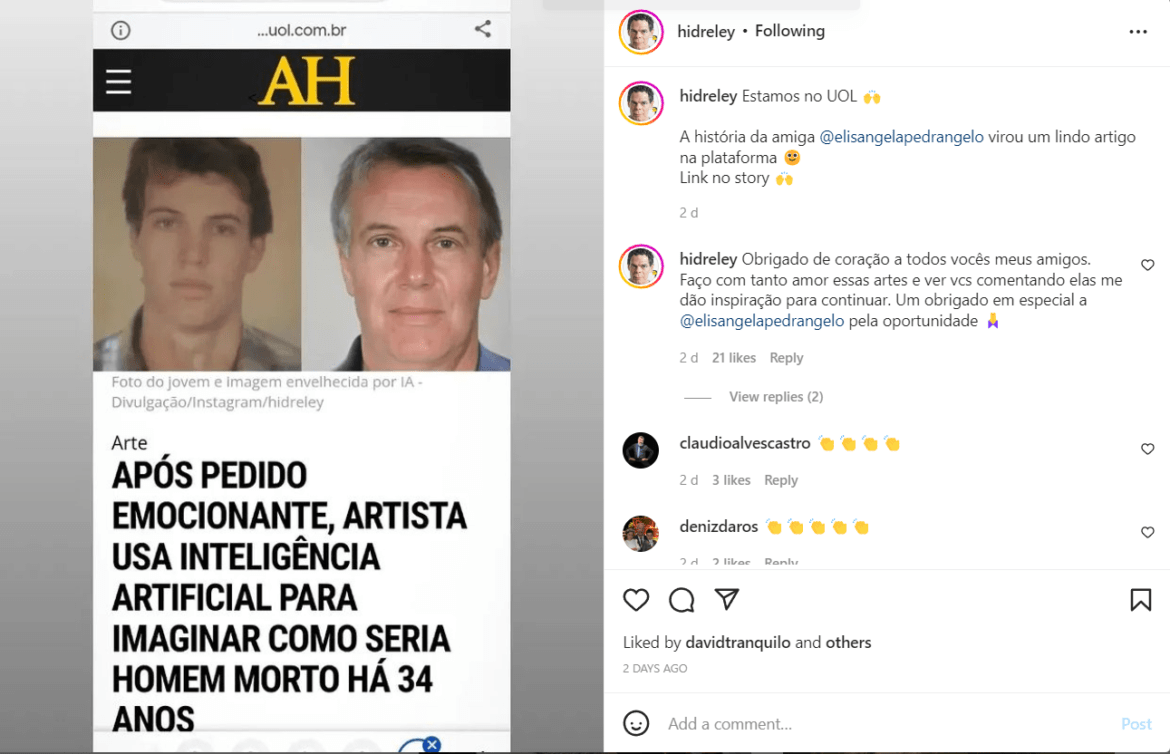
New developments in Artificial Intelligence, skillfully foreshadowed by the television series "Black Mirror," already make it possible to "simulate" the personality of someone deceased, based on their chat conversations, emails, posts, and other writings. Other AI applications, which film studios are already using, make it possible to recreate the voice of the deceased and their facial expressions.
With all this technology, it's technically possible to have a video call with a deceased relative, talk with that person for a while, and hear them say things they never said during their life but that would correspond completely with their way of thinking, their values, customs, style of humor, and even memories.
It's unsettling to think that even if that loved one hasn't died, but instead suffers from Alzheimer's or some other cognitive disorder, it could be argued that their artificial intelligence version would be more like the loved one when they were in full possession of their faculties than the real person with their current limitations.
This is just a point to consider and debate, but the point I want to get to is that our fear of death can be divided into two sub-fears: the fear of disappearing, of not existing, of being in an uncertain place we call "death," and, on the other hand, the fear of not being there for the people we love, of no longer sharing pleasant moments with them and slowly descending into oblivion.
As for disappearing, the truth is that you and death will never be together in the same place. They say death comes to us all, but that's not true. When death arrives, there's no longer a person for it to come to. I understood this recently, when for the first time I was under the effect of general anesthesia, while they removed my gallbladder. The last words I heard were those of the anesthesiologist saying, "you're going to feel strange for a moment."
A few seconds later my vision became diffuse, as if the ceiling of the operating room began to distort and blur. Immediately after, I opened my eyes and I was already in the room they had assigned me. There were no dreams, nor any notion of time during the surgery. My body and my brain slept, but I was not there.
It doesn't matter if some electroencephalogram had determined that I had brain activity. From my subjective perspective, there was no experience of consciousness. Well, I believe that's what death is like: the light goes out and there's no more individual consciousness. It won't be the first time! We all come from the same state: before being conceived, we didn't have an individual consciousness either; yet few people feel anxiety about that state of prenatal non-existence.
I really enjoy watching old videos of Bogotá, my hometown, filmed before I was conceived. I observe the architecture, the technology of the era, the way passersby dressed, and I recognize the things that were still there during my childhood. While I enjoy that time travel, I always reflect on the fact that I didn't exist anywhere in this universe while those scenes were being filmed.
Or that's what I used to think... Because thinking about it carefully, all the atoms that form each one of the cells of my body, every drop of water, every gram of iron, calcium, carbon, or magnesium already existed and were somewhere in this world: perhaps among the clouds, in the fertile soil of the Bogotá savanna, or in the bowels of some mountain.
But as I said before, what I am is much more than matter: it's information. All the genetic information that describes each cell of my body, the structure of my brain, my primary impulses, and my brain chemistry already existed too: in the nucleus of my father's and my mother's cells. 23 chromosomes inside each of his cells and 23 more inside each of hers.
But I'm much more than a body and chemical processes; I have a soul made up of ideas, principles, behaviors, beliefs, longings, and my own style. All of that existed too, in the personality of my parents, of my grandparents, of the cousins born before me, in the minds and books of the authors who have shaped my soul, in the experience of the teachers and mentors who educated me, and in the social, economic, and cultural conditions that existed in my country during the first years of my existence.
I am the unique, unrepeatable result of the mixture of all those torrents of information, shaped by the chance of the circumstances of my life up to this moment. Part of me existed long before my parents decided to come together to continue the age-old symphony of life; and part of me will keep existing long after the traces of my footsteps have been erased.
Some of what I am will keep existing in the souls of my descendants, in the souls of the friends I have influenced, and in the souls of their descendants. Perhaps these words will outlive me for many years and come to life in the life of someone who reads me once I'm gone, and the consequences of my acts, however small and inconsequential they may seem, will echo through time, touching the lives of many people and reverberating in thousands of small eddies in the lives of beings who won't even know of my existence.
And there's nothing special about me; the echoes of your life will also be heard long after you're gone. Of course, not all of us will be remembered and celebrated like Cleopatra, Hypatia, Winston Churchill, or Elvis Presley, but that's irrelevant; most of the people who have caused the most important changes in history are anonymous: the African woman who knew how to protect herself from the barbarians and give birth to a progeny that would become the entire human race, the loquacious servant who gave Gutenberg the motivation to create the printing press, the mothers of the Enlightenment philosophers who shaped them with the ideas and curiosity that would blossom years later, revolutionizing art, letters, and politics in Europe.
Because of all the above, I believe that the anxiety produced by death is totally related to the illusion of individuality that we have accepted in our society. We have forgotten that we are part of a tribe, of a species, and of a living planet. Inside our body, millions of cells die every day so that our body can live. Likewise, millions of humans die every day so that our species can survive, and the evolution of life condemns thousands of species to disappear so that others can adapt to a world that changes and never stops.
In an earlier episode I told the story of the murder of Jaime Garzón, one of the most beloved figures in Colombia during the 1990s. In an old television interview, Jaime said:
"I would like not to die, not to die in history."
It was around the same time that Jaime was carrying out humanitarian efforts to free kidnapping victims and visiting young university students to tell them that if they didn't take responsibility for saving their country, no one would do it for them.
In Colombia, 23 years after he was cowardly murdered, Jaime Garzón is as alive as ever: in books, songs, documentaries, and hours of humorous sketches that survive on YouTube, but above all in the souls of millions of young Colombians who, on June 19, 2022, elected for the first time as president of their country a candidate who carries many of the ideals and principles for which Jaime fought and gave his life.
For here, I believe, lies the secret: only those who lock themselves within themselves die — those who do not love intensely, those who forget that giving to others, giving oneself to others selflessly, is the only way to inscribe oneself in immortality.
[1] Ship of Theseus paradox – Wikipedia, the free encyclopedia