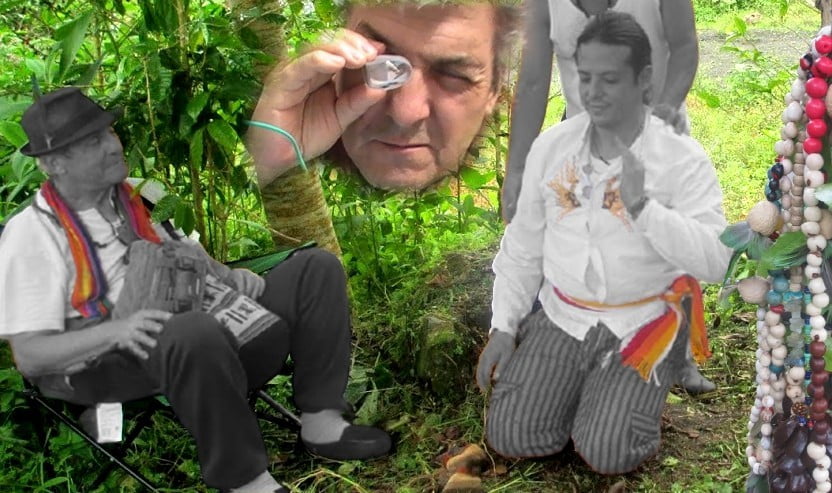
Juver Osorio is one of the most fascinating characters I came across during my spiritual path in Colombia. A follower of the Gnostic teachings of Samael Aun Weor since the seventies, a homeopath, a secret sorcerer, an alchemist, a yagé man and a master of marijuana, a follower of the teachings of Carlos Castañeda, a Yanacona grandfather adopted by the Muisca-Chibcha Nation People, only to later become one of their fiercest detractors.
I never knew much about grandfather Juver's personal life, except that he was born in the department of Valle del Cauca, that he had a brother living in the United States, and that he had a harmonious relationship with his wife Myriam. In retrospect, I realize that I never got around to talking with Juver about his personal life, because there was always some magical or mystical topic filling the agenda during the long hours we shared at his house or at the Quantum Shasta temple.
From the moment I met him in person on December 21, 2012, I realized that Juver Osorio was one of those people who shine effortlessly and end up making everyone revolve around them. I never met any other grandfather or wise man who even came close to the sheer vastness of knowledge that Juver possessed, who had his ability to produce hundreds of pages of text on a multitude of esoteric subjects, and who was so diligent in trying to give empirical — one could almost say quasi-scientific — support to his mystical theories.
I said I met Juver on December 21, 2012, but that was not the first time I heard of him. That happened a couple of years earlier, when I was sorting and organizing the enormous digital photo archive of the Muisca Chibcha Nation People together with grandfather Suagagua. As I moved the disorderly photographs into new folders according to their capture date, I noticed some photos that gave me a start.
In the photos there was a mature man sitting on a plastic chair without a shirt, and on his back you could see a huge open sore, as if a piece of skin had been ripped off. I asked grandfather Suagagua who the poor wretch was and what had happened to him, and he answered that it was a grandfather who had once belonged to the community but was now a detractor. His name was Juver, and according to Suagagua the sore on his back had been caused by a work of sorcery of which Juver had been the victim and which, he said, he had not known how to counteract effectively, as would have been expected of a competent ancestral wise man.
I only made the connection between grandfather Juver and those photos years later, while conversing with Juver himself at his house, when he briefly mentioned an infection he had had on his back a few years earlier, a product of the diabetes he had been suffering from since shortly before. When I told him I had seen the photos and that grandfather Suagagua had told me it had been a work of sorcery, Juver made a grimace of displeasure and said:
– “If he said that, it's because he knew what he had done…”
Going back to 2012, that morning after the yagé ceremony that Juver led to receive the “energy” of the end of the Mayan calendar, I was dazzled by the grace and pedagogy with which Juver shared a string of esoteric tips:
– “Remember that you always give with the left hand and receive with the right. If I hand you a bill and you take it with your left hand, you receive the paper but not the energy of the money I'm giving you, and that is where abundance starts to disappear…”
– “Listen here, young lady, do you even know what that cross hanging on your chest means? You'd better make sure it's properly set, because that is the Ankh cross, and that is the key of life, and it is used to summon fertility” – He said, and then let out a condescending little laugh.
My family and I had to make our way back home, so I could not stay to hear more from that delightful wise man, but I promised myself I would visit him as soon as I could, and so I did. Within a couple of weeks I showed up for the first time at his house in the La Serena neighborhood, in the northwest of Bogotá. The place was conveniently close to my home, so I soon became a frequent visitor and eventually an apprentice, but above all a friend of good Juver.
I don't know whether Juver ever completed any level of university studies, but what I quickly learned is that years earlier he had been certified as a homeopath by the Homeopathic Medical Association of Colombia. As it happens, grandfather Juver began his practice as a homeopath alongside doctor Raúl Castaño, another homeopathic physician who, since the 80s, had attended to almost my entire maternal family in his practice, including my grandparents, parents, sisters and, until a few years ago, Paula and my daughter Ana María.
Since childhood I got used to visiting doctor Raúl from time to time, having the iris of my eyes examined and quickly being prescribed six or seven little dropper bottles with green caps, filled with a liquid with a strong smell of alcohol. My mother, above all, always had great faith in doctor Raúl's homeopathic remedies, and I must admit that on at least one occasion I noticed a marked improvement in a chronic allergy I had been enduring for years, after diligently completing the treatment recommended by doctor Raúl.
There was something, however, that had always sparked my curiosity during my visits to doctor Raúl: the presence of mysterious objects with a sacred air in his office. Among them was a painting with apocalyptic imagery and an enormous five-pointed star in the center; a figure that also appeared in other places in the office and on an enormous ring on the homeopath's left hand.
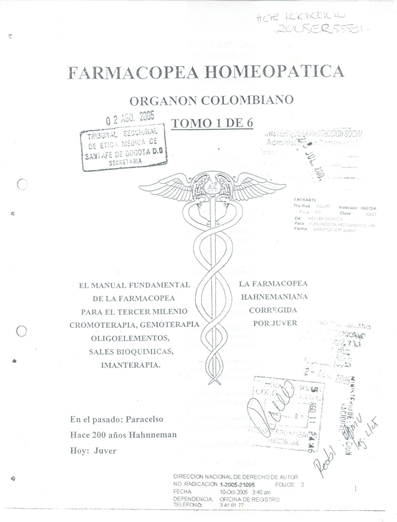
The mystery was solved when grandfather Juver told me that many years earlier he had worked alongside doctor Castaño Escamilla on the design of a new homeopathic pharmacopoeia, one that would include the spiritual and magical perspective which, according to him, had been established as a requirement for a true homeopathic medicine by the famous Swiss alchemist Paracelsus, and cryptically ratified by Samuel Hahnemann, creator of the homeopathic Organon at the beginning of the 19th century.
Raúl, however, would not have had the courage to distance himself from the homeopathic canon adopted by the guild in Colombia and, according to Juver, had fallen behind in homeopathy's advance toward a true, demonstrable, empirical science. That last bit — referring to a discipline widely known as a pseudoscience — caught my attention greatly, and later on I had the opportunity to see up close this approach Juver was attempting between esotericism and the scientific method.
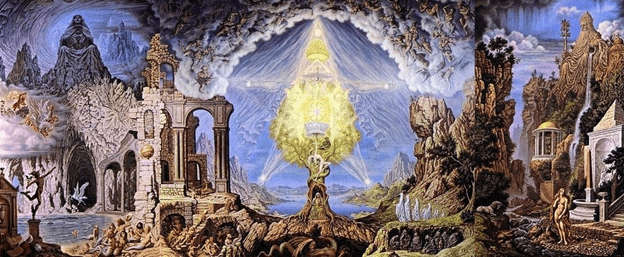
The other thing Juver and Raúl had walked together through for many years was the practice of the gnosis of Samael Aun Weor. Grandfather Juver is the only one of the ancestralist grandfathers I met in Colombia who not only never hid his Gnostic past but was proud of having been a member and leader of the Gnostic Church. He frequently published letters addressed to Gnostics all over the world and claimed to be the bearer of the true tradition and the legitimate knowledge delivered by Samael.
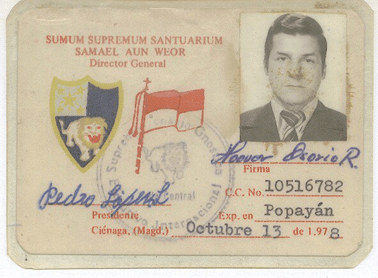
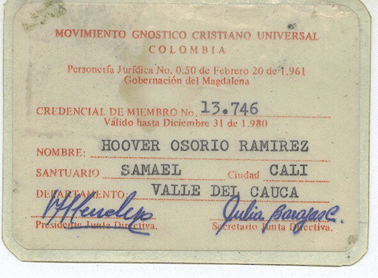
Doctor Raúl, for his part, perhaps out of respect for his patients' religious beliefs, never revealed his status as a Gnostic nor the extent to which those beliefs influenced his homeopathic practice, if they did at all. Even so, the last time I visited doctor Raúl, I dared to bring up Juver and ask him about gnosis. When he spoke of gnosis his face lit up, and with pride he pulled a couple of Samael Aun Weor's books from his desk, pointed out his talismans to me, and spoke of his loyalty to the teachings of the Great Avatar of Aquarius. As for Juver, he simply smiled and said:
– “That Juver came out with a few crazes and forgot about Hahnemannian homeopathy”
As a homeopath, Juver was a revolutionary. His main endeavor was to recover Hahnemann's postulates on the use of magnetism in the preparation of the homeopathic remedy, and to add his own dose of mysticism to his processes of preparing, sublimating, and administering the remedy. Additionally, he fervently believed that the homeopath should not only be an expert technician in the potentiating dilution of the medicine, but also a conscious, disciplined, and wise being, capable of performing the psychic practices common in gnosis, such as leaving the body in the astral to study medicine in the invisible temples of the Akash.
Due to his conviction that there is no physician without magic, Juver coined the term “Homeopathic Curandero”, since to complement traditional homeopathy, his vision was that one had to rescue the traditional wisdom of indigenous communities and the mestizo healers or “teguas”, so common in the towns of Colombia and of which Juver felt himself a part.
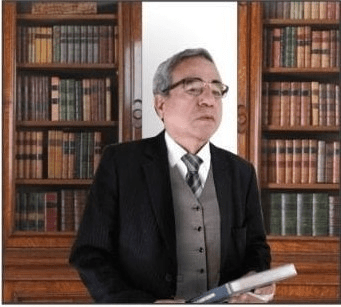
But Juver's reformist vision did not end with the publication online of an enormous number of articles on the subject; the grandfather's dream was to train dozens or even hundreds of homeopathic curanderos and elementotherapists — a term that referred to the Gnostic practice of “mastering” the four elements: water, air, earth, and fire, through initiatory trials in the subtle or inner worlds.
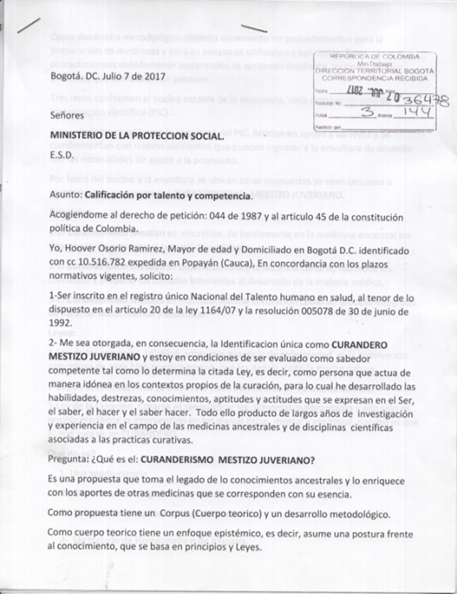
To achieve this end, grandfather Juver created the Juverian School for Curanderos, making use of the rooftop laboratory on the fourth floor of his house and the power of social media. But in addition to teaching all of the school's lessons, carrying out all the experiments he considered necessary to prove his theories, and writing up all the results of his research and academic articles, Juver took upon his shoulders the management before the ministry of health to get curanderismo recognized as a traditional medical practice with a status comparable to the one homeopathy had achieved after many legal battles and lobbying in congress.
His legal battle horse for achieving that goal was article 20 of Law 1164 of 2007, which regulated articles 7 and 8 of the Political Constitution of Colombia, guaranteeing the country's ethnic groups the right to practice the traditional medical practices of their own culture. According to Juver, that law opened the door for Colombia's mestizo communities — something like 86% of the country's population — to demand the provision of services covered by the Mandatory Health Plan through traditional curanderos like him and the graduates of his school, instead of, or in addition to, physicians with university degrees.
Grandfather Juver's legal battle had the merit of seeking not to replace traditional allopathic medical practice, but to complement the ailing Colombian health system with an army of Juverian curanderos with fees much lower than those of certified physicians, and with prescriptions whose production cost would be between nothing and whatever a few magnets, boiled water, and a few drops of plant extracts cost, for hundreds of thousands of units of homeopathic remedy.
This approach, despite Juver's methodical and disciplined effort, would be destined for failure — not because science is an immovable guideline for politicians in Colombia, but because such a change in public health policy would have required much more than well-intentioned letters; probably hundreds if not thousands of millions of pesos to lobby, fund political campaigns, finance feasibility studies, and, of course, properly oil the machinery of governmental corruption. A change of that nature was barely possible in Evo Morales's Bolivia, and to a certain extent in Canada, where a good number of employee health insurance plans include the provision of homeopathy, naturopathy, and other practices considered pseudoscientific, or acupuncture and midwifery, which are instead recognized as traditional medicine.
Despite the headwind, Juver devoted a great deal of effort to consolidating his School for Curanderos. I took part in several sessions on diamond water potentization, magnetic pharmacopoeia, radiesthesia, use of the pendulum to measure the potency level of the homeopathic remedy, Hahnemannian chromatization, and even tarot.
However, I must say that I found it impossible to consolidate or even abstract the torrent of concepts, theories, and procedures that Juver dispatched in the two hours of class. I tried taking notes during the first two classes, but I soon realized that this was a futile practice, since I surely was not going to understand the tangle I managed to capture in my notes; and in any case, I did not see myself preparing homeopathic remedies in the near future, so my notebook did not come back with me to the meetings.
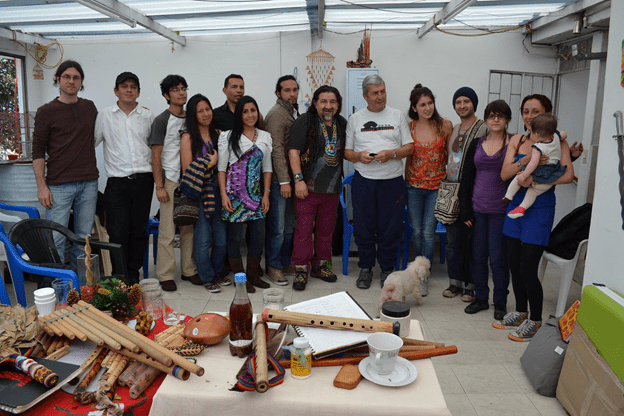
What I actually liked about going to the Juverian School classes was the encounter with the grandfather and the friends who also attended, but above all, listening to Juver. Usually smiling and with a pleasant tone of voice, it seemed to me that everything he said was an ordered chaos. The ideas seemed threaded together with logic and methodical certainty, but I believe they were only the reflection of the fascinating mind of an intelligent, disciplined, and disorderly man who had built in his brain a sophisticated, reasonably coherent intellectual structure to accommodate esoteric, ancestral, pseudoscientific, superstitious, and magical knowledge.
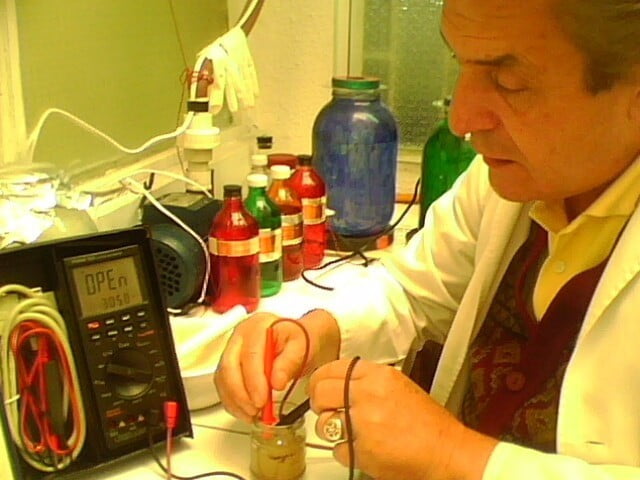
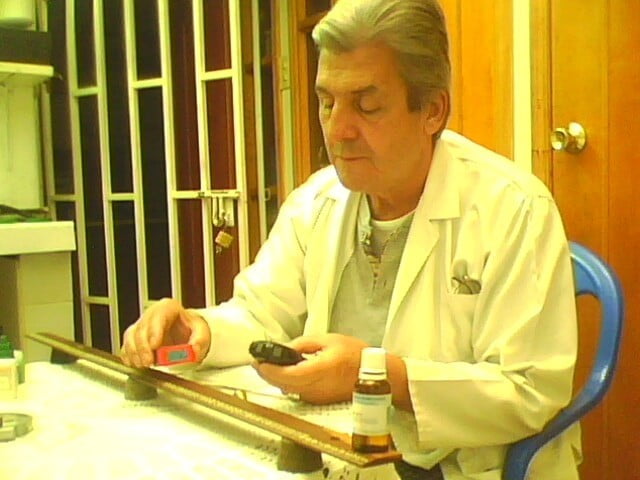
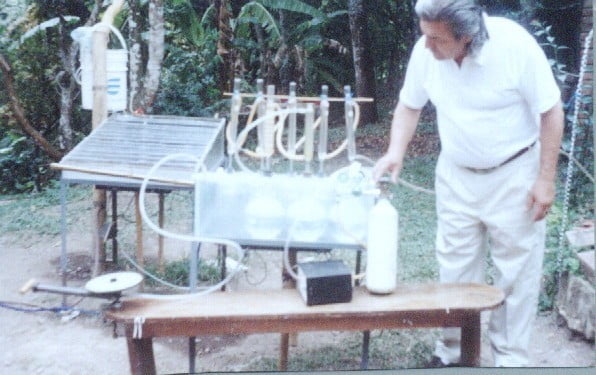
What I admired most about Juver Osorio's work was his very serious attempt to implement the scientific method in the midst of that tangled conceptual structure. I never met any other esotericist who invested the time, effort, and money necessary to put his theories to the test through practical experiments with clear scientific pretensions.
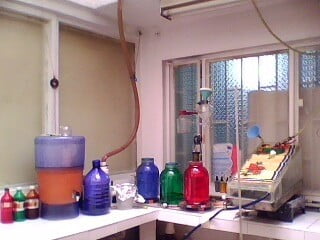
The rooftop of his house was a true museum of esoteric experimentation, with crystals, transparent tanks, test tubes, magnets of all sizes, condenser tubes, glass flasks, copper spirals, and beakers. It was more common to find Juver in a white lab coat than with jungle necklaces and his colorful Jaibaná staff.
The problem is that all those experiments only served two functions: satisfying the grandfather's experimental restlessness and arranging themselves to deliver the results Juver needed to confirm his theories. Somehow, every experiment he performed was successful, and all of them confirmed beyond any doubt the postulates that had given rise to them.
Even though at the time I was completely devoted to my spiritual search and gave credence even to the most improbable theories about the nature of reality, it was evident to me that some of the evidence Juver displayed made no sense at all or defied basic concepts of physics or chemistry.
Some of the people who took part in the Juverian workshops seemed dazzled and convinced by Juver's theories in light of the results of the experiments he showed us, but on me they had the opposite effect: although I wholeheartedly wished to believe in all of it, and there was an instinct in me — in addition to my experience with yagé — telling me that the esoteric was real, seeing experiments rigged to produce predefined conclusions struck me rather as proof that there was no way to bring into the physical world evidence of the phenomena I considered very real in the psychic field.
Despite that disappointment, I did not stop admiring Juver for his effort, and instead I saw myself reflected in him. I too wanted to experiment with everything I had learned so far and try to find a connection between science and spirituality, but I was convinced I would not do it by deceiving myself and ignoring real science.
In the end, I stopped attending the classes of the curanderos school and instead began visiting grandfather Juver alone, trying to draw out of him the topics that interested me most, which were those having to do with practical magic and sacred plants. Within the ordered chaos that existed in Juver's mind, the superstitions that Colombians have learned for generations had a logical and methodical structure.
The example I told of giving with the left hand and receiving with the right fell into this category. I also learned to keep a folded dollar bill in my wallet, to always carry with me a Saint Benedict cross and the Caravaca cross, to always spit out the tobacco-laced saliva when performing cleansings on other people, to detect the truth when someone's tobacco ash fell while speaking, to wear a hat to protect myself from sorcery attacks while using tobacco, and even to cross religious processions on Good Friday to ask for abundance.
That was the kind of thing that did stick with me when I chatted with Juver, because they were nourishment for my ritualistic instinct and my magical thinking. I have always found great tranquility in performing repetitive acts like mantras and prayers, and I was drawn to complexity, so Juver's superstitious recipes fit very well with the way my brainstem operates.
If fifty percent of my conversations with Juver during those months were about magical rituals, the other half were diatribes against grandfather Suagagua and the Muisca-Chibcha Nation People movement. It was evident that Juver had come to love — and I would say admire — Suagagua, only to later feel deceived, perhaps betrayed.
I never learned the details of the relationship between the two of them, but Juver liked me to tell him the things I had seen in grandfather Suagagua's behavior that made me distance myself from the community. It seemed to reaffirm his own objections and in some way vindicate his past. I did not much like talking about that subject, but I saw it as a kind of barter between word-spinners: Juver taught me practical magic, and I talked to him about Suagagua and let him vent with me.
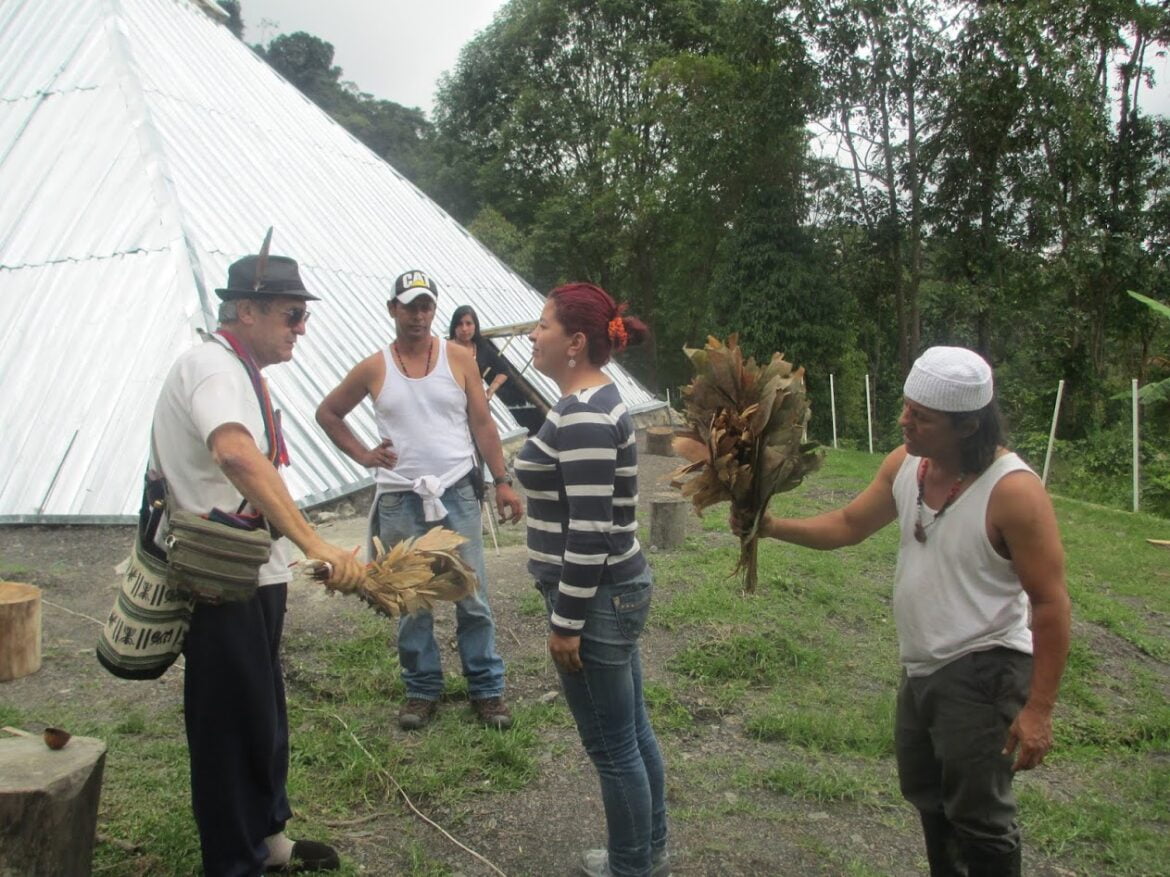
One of the moments with Juver that I remember with the most nostalgia was when Paula and I took part in a workshop led by him at the Quantum Shasta pyramid temple in May 2013. Grandfather Juver displayed his particular and vast knowledge of sacred plants. In a single afternoon together with its night we received word about toé (borrachero), Indian hemp (marijuana), and yagé espíritu, a preparation invented by Juver, in which the yagé is not reduced through direct cooking as the indigenous people of the Amazon do, but rather distilled in darkness.
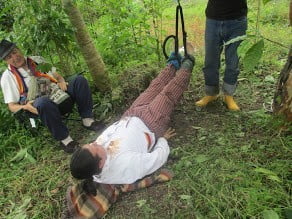
In the afternoon we did a borrachero ceremony in which we smeared the plant on our backs. At dusk we smoked marijuana while receiving the grandfather's word about this beautiful plant, and later we performed the long-awaited taking of yagé espíritu. At that moment I imagined that grandfather Juver's preparation would be as harmless as the one on December 21, 2012, but I was wrong. That cup of transparent, almost flavorless yagé, contrary to what I expected, actually gave me an entheogenic experience that was not only vivid but incredibly calm and controlled. There was no violent vomiting, no episodes of fear, no feeling that evil possessed me. It was all introspection, relaxation, and divine visions that existed only while I kept my eyes closed, but that prudently withdrew when I opened them. For the first time I could afford the luxury of stepping out of the “trip”, going to chat with the grandfather or a friend, and then lying back down to keep enjoying the visions.
– “You see, yagé is not meant for rolling around and ending up a wreck. That is not the order of things, but that's how they taught it to us, as punishment. Yagé espíritu, on the other hand, goes straight to the Being, without passing through the ego.”
With those words, Juver showed me that at least one of his experiments had indeed hit the nail on the head.
Juver earned the admiration, affection, and respect of hundreds of spiritual seekers, but in a way he also embodies the tragedy of the lack of opportunities and, above all, of the precariousness of science in Latin America. I am sure that had he been born in a developed country, with his mental brilliance, love of research, curiosity, and discipline, Juver would have become a renowned pharmacist, chemist, or physicist.
Perhaps he would be collaborating on some research to solve the problem of climate change, prepare humanity for the next pandemic, or develop the new generation of gene therapy to cure cancer, Alzheimer's, or Parkinson's. Juver dreamed that from his humble terrace in western Bogotá, with no more resources than what his patients' occasional consultations and the voluntary contributions of attendees at his talks allowed him, he could find the medicine of the future, cure all those diseases, and forge a better world.
But despite the success of his yagé espíritu as a spiritual therapy, his tegua magnetic homeopathic medicine — element-therapeutic, telluric, and chromatic — never ceased to be more than a placebo with which he was able to help some people with mild ailments, but nothing more. This pessimistic conclusion is not based on attachment to the academic consensus regarding the aforementioned “alternative” therapies, but rather on the rawness of the facts I was able to witness.
The first evidence I had of the ineffectiveness of grandfather Juver's medicines, beyond the disqualification issued by his former colleague, the homeopath Raúl Castaño Escamilla, was the fact that my mom, along with my dad, went to grandfather Juver's consultation and took his remedies with the same faith and discipline with which she consumes doctor Castaño's. Not even faith was enough for her to take advantage of the placebo effect that such remedies usually provide. There was no improvement for her, and much less for my dad.
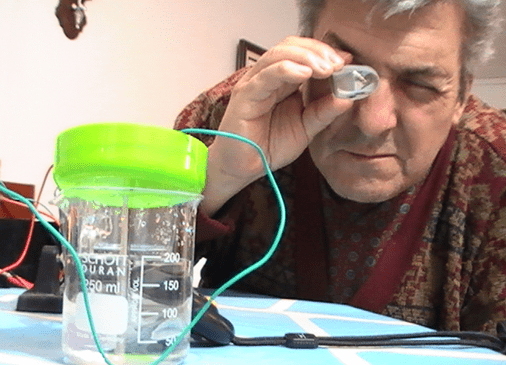
The second piece of evidence was much more tragic and costly for grandfather Juver himself. As I mentioned before when I recounted the anecdote of the photos of the open sore on the grandfather's back, Juver suffered from diabetes and believed that the medicine he was creating would be the definitive cure for his ailment, and would also allow him to demonstrate that allopathic medicine, with its insulin injections, was nothing more than a lukewarm cloth and not a true remedy.
The result of his experiment on his own skin was that the grandfather lost a foot and almost all of his eyesight. The last time I heard of him, he barely spoke and, of course, no longer wrote. The last post on his Facebook profile was in July 2017, and the last entry on his website in October of the same year. It is the twilight of a brilliant mind that, had it been given the opportunity, would have contributed a great deal to all of humanity. Even so, he is a great soul who inspired many to live a practical, experimental spirituality, to share knowledge, and to question traditional structures of thought.
I know he is an inspiration to me, and that I will do whatever is within my reach to advance his dream of bringing spirituality closer to science.
4 years ago Very interesting story. I have learned a lot reading here. It is interesting because although you have an interest in the spiritual, you have not abandoned reason. I have always thought that the two things should go hand in hand.
0 Reply Julian Centella 11 months ago Do you have the address, or do you remember where his house was? Or another way to contact him? I lost touch with him several years ago, but I want to reach out and give my condolences to Mrs. Myriam. I would be very grateful.
0 Reply manuelr Author Reply to Julian Centella 11 months ago Hello Julián. It has been many years since I last went. I remember it was in the Los Cerezos neighborhood, but not the exact address. Maybe you'll find some information here: https://escuelajuverianaparacuranderos.wordpress.com/2017/10/19/
Comentarios (archivo, solo lectura)
Mostramos 3 comentarios guardados de la versión anterior del sitio. Ya no se aceptan nuevos comentarios.
Muy interesante historia. He aprendido mucho leyendo aquí. Es interesante porque aunque tienes interés por lo espiritual no has abandonado la razón. Siempre he pensado que las dos cosas deben ir de la mano.
¿Tienes la dirección o recuerdas donde quedaba la casa de él? U otra forma de contacto, perdí hace ya varios años el contexto con el pero quiero acercarme a darle el pésame a la señora Myriam.
Te lo agradecería mucho
Hola Julián. Ya hace muchos años que fui por última vez. Recuerdo que era en el barrio los Cerezos, pero no la dirección exacta. De pronto encuentres alguna información aquí: https://escuelajuverianaparacuranderos.wordpress.com/2017/10/19/