Luciana came to illuminate the life of everyone around her. From her first smile, the little angel filled our house and our hearts with happiness. The birth had been a mystical experience for Paula and for me, but the birth ritual did not end with the cutting of the umbilical cord with the chusque blade.
We had considered the possibility of having a “loto” birth, which is the name of the traditional type of birth in which the placenta is extracted and kept attached to the baby until it separates naturally. However, this process can last from 3 to 10 days, so, for various reasons, the most likely thing was that we opted to cut the umbilical cord, but we wanted Luciana to remain attached to her placenta for at least a couple of hours.
Things were not to turn out that way, however, because the umbilical cord that joined the baby to the placenta turned out to be shorter than usual. So short, in fact, that we could not even manage for Paula to breastfeed the baby without cutting the cord, so I had no choice but to make the separation immediately, in the way that Alexandra had indicated to me.
Once the baby was in Paula's arms, while Alejandra and Alexandra cleaned the blood from Luciana's small body and helped the new mom Paula to recompose herself, Andrea carefully performed the second part of the birth, which, according to the midwifery tradition, is almost as important as the first one: gently removing the placenta and making sure that no piece of it was left inside the mother.
The midwives called the placenta “grandmother” and they told us of the importance of making a good extraction, preservation and disposal of this organ. The placenta, which during nine months had contained, sustained, protected and nourished Luciana, was, spiritually, the girl's connection with her mother and with her grandmother. A piece of information I learned during the preparation for the birth that surprised me a lot, is that women at birth already have in their belly all the eggs of which they will have throughout their lives; with which, a part of Luciana was one day in the belly of her grandmother Betty, Paula's mother, and a part of Luciana's children, if she decides to have them, were for nine months inside Paula's belly.
The midwives do not throw a placenta in the trash, nor burn it or ingest it, as some traditions advise, but rather they prepare it to be buried in the earth, in a ceremony that celebrates life, but also honors death. The birth ritual does not end when the baby detaches from the physical connection with its mother, but when, through the placenta, a new spiritual connection is created between the new life that is born and the second placenta that will contain, sustain, protect and nourish it: the Earth.
I first recognized the importance of the placenta for indigenous communities when we participated in the ceremony of raising our aseguranza with the mamos of the Sierra Nevada, at the finca del Sol Naciente. Inside the small white wool backpack that I had to weave against the clock, in one of the mini-backpacks it contained, there was a wisp of cotton wrapping a small female sea shell.
During the first night of ceremony, mamo Ramón told us that we would work with that little backpack before any other, because it represented our placenta, and as he knew that in the western world, the great majority of placentas are simply thrown in the trash or incinerated — or converted into face cream, according to some urban legend — we would have to do the work of recomposing that placenta and planting it in some place of power… in a spiritual way, of course, that is to say, with the creative imagination.
At the mamo's instance, I closed my eyes and while holding the shell and the cotton inside the mini-backpack, I imagined myself flying all the way to the hospital in the northwest of Bogotá in which I was born, taking in my hands the placenta that once wrapped me and carrying it in a swift flight to my grandparents' farm, there, where I lived many of the most memorable moments of my childhood, and where one day — I thought then — I would also plant the placenta of our little Angel.
To exactly that place, but no longer in the spiritual world of the imagination, but walking, I arrived five years later, hand in hand with Paula, who carried our baby against her chest with a sky-blue carrier. With us were our midwives Alejandra, Alexandra and Andrea, and a brother of my mom, who was the owner and guardian of the farm.
We prepared for that important moment by stocking up on tobaccos, coca leaves, quartz crystals, and most importantly, Luciana's placenta, which had been covered in sea salt for 50 days, resting inside the clay pot that Paula and my sisters had decorated with white, pink and red paintings.
I also brought, as it could not be otherwise, a dose of yagé, which taita Fernando Lezama had given me expressly for Luciana's birth. I did not yet know how I would use it, but it occurred to me that before the most important moment of the ceremony, I could take a sip, and in that way, ask the yagé for protection and guidance for my little daughter throughout her whole life.
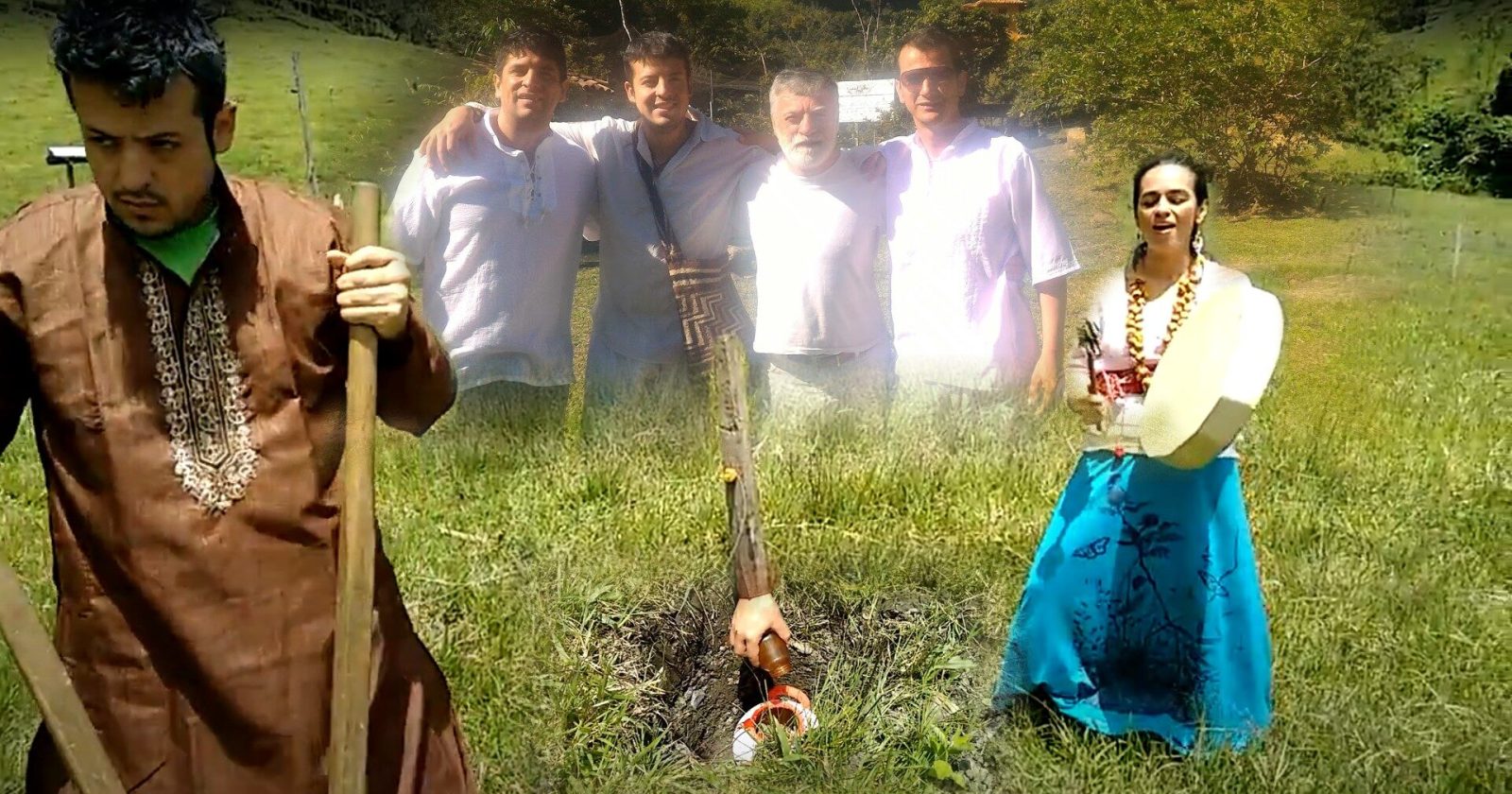
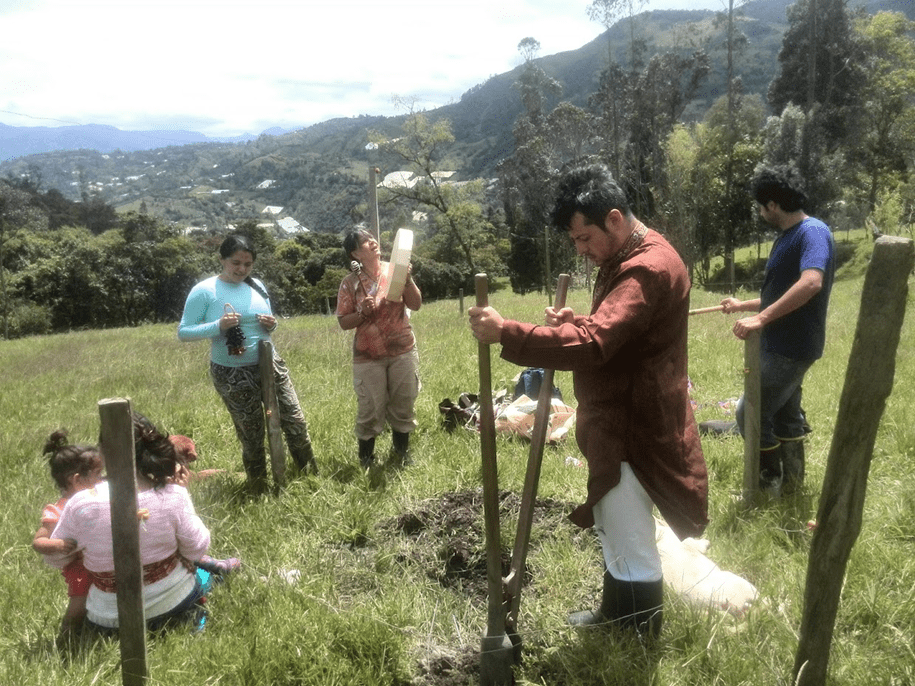
The ceremony began with the beating of drums and incenses, and soon I had to assume the father's principal responsibility during the ritual: to dig the hole, about 60 centimeters wide by a meter deep, in which the clay pot with the placenta in it, would receive the rays of the sun for the last time.
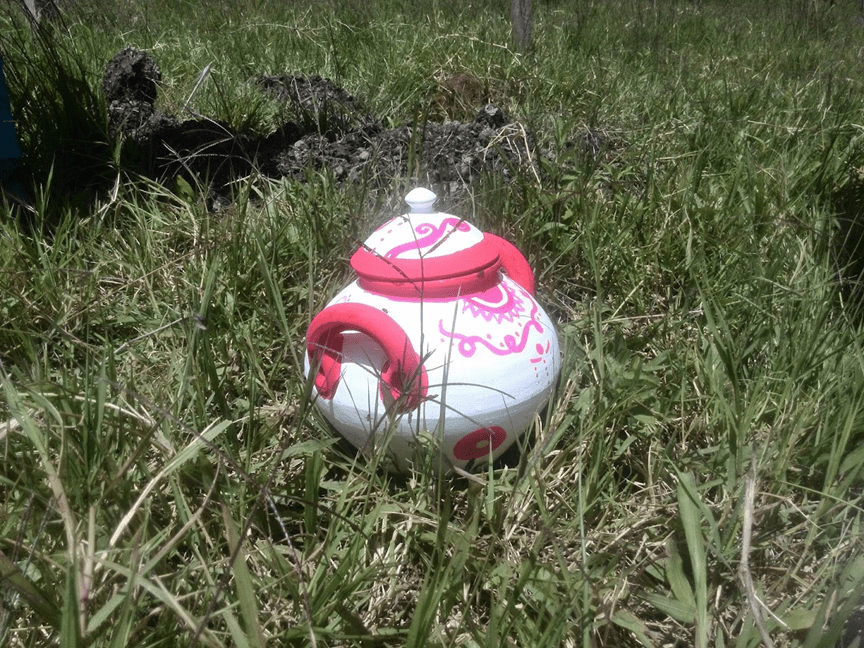
Pedrito, a good shaman friend who had done a couple of placenta plantings before us, had told me that digging the hole had been a very difficult task for him, and not because it was physically demanding, but because while he was digging, he began to feel unwell and emotionally upset. He told me that before finishing the work he had had to throw up while crying bitterly.
His words were repeating in my head while I stirred the earth with a manual excavator. However, I felt fine and I was able to finish the task without discomfort or tears, but there, with fatigue and sweating.
But when I looked to the side and saw the urn with the placenta and at my feet a hole in the earth, I immediately recognized the allegory to a burial. I was about to bury the grandmother to make way for the girl's life.
When Alejandra gave me the signal, I took the clay pot with the placenta and put it at the bottom of the hole. Then she leaned over the container, removed its lid, and over the placenta she moved a cup of incenses while she made invocations of gratitude and blessing. Then she asked us to place the tobacco, the coca leaves and the medicines we had brought on top of the placenta, and so we did.
I hesitated for a moment, but heeding my intuition, I then proceeded to pour a shot of yagé over the placenta and to drink the rest in a sip. When I did, I immediately realized that the way in which I executed the last two actions had been hasty and that I had not consulted with anyone else. Alexandra even asked me what that was, and when I answered her that it was yagé, she limited herself to emitting a nasal exhalation that I understood as a gesture of disapproval.
At that moment I felt a bit uncomfortable, but I consoled myself in the fact that, just as I had done when I administered yagé in the middle of New York, this time too I had acted following my inner wisdom and good intention.
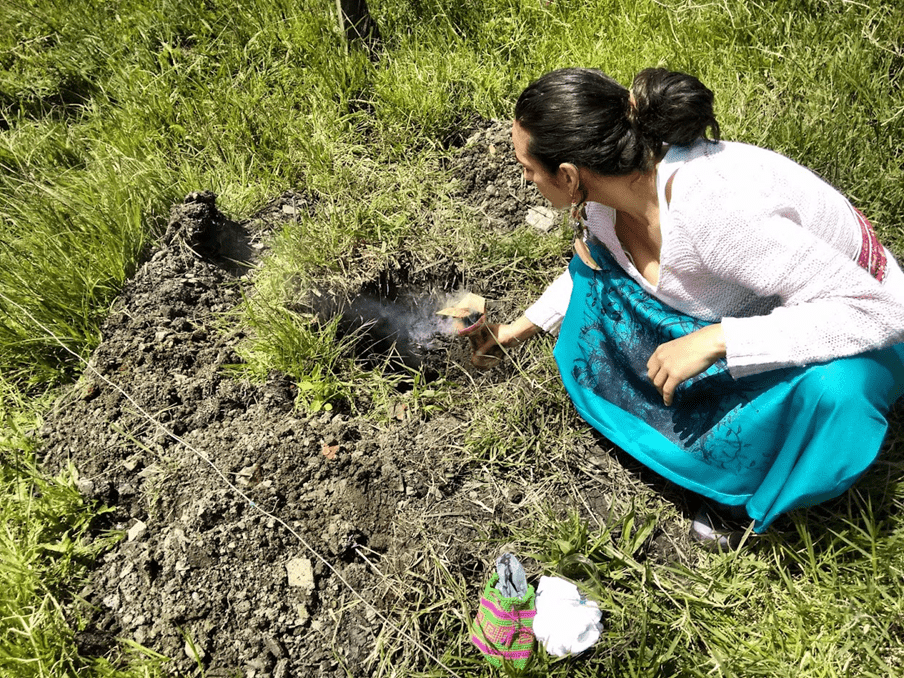
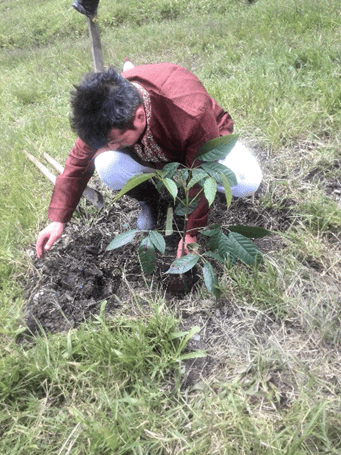
After pouring the medicines and the payment objects into the clay pot, we put the lid back on and I proceeded to bury the vessel with the placenta. Before filling the hole completely, we planted a small umbrella tree that we had bought in the town of Choachí, when we were on our way to the farm in Fómeque.
We did some closing songs of the ceremony, and with the sun setting over the mountains, we bid farewell to the place where Luciana's placenta, from that moment on, would remain consecrated to the Mother Earth. As we descended toward the lower part of the farm, where the house is, I began to feel the effect of the yagé in my brain. It was a soft sensation of tingling in the body, accompanied by an increase in my heart rate.
Upon arriving at the house, I took advantage of the fact that the midwives, Paula and my relatives were talking animatedly, and I reclined in an armchair that was in the front hall. The effect of the ayahuasca and the chacruna began to intensify, but the sensation was very pleasant. I began to see subtle colored geometric figures and to feel an enormous love for that place. I felt that the spirits of the territory had received the placenta and our offerings positively, and that our consecration for the protection of my Lucy was complete.
I could not enjoy the placid state for long, because it was already time to start our three-kilometer walk, to the place where the veredal express service would pick us up a little later. Without wanting to draw attention to my — perhaps untimely — entheogenic trance, I stepped off trying to seem normal and I went to Paula's side, carrying the child.
Just as I had feared, as we got closer to the pickup point, my trance was becoming stronger, but fortunately it was still manageable. I kept it that way until we got into the back of the old, narrow Nissan pickup. The road that connects Guane, the vereda where we were, and its municipal seat Fómeque, is completely unpaved, and although it had not rained in that season, the road was irregular and winding. Not exactly comfortable for tourism, much less so for someone with a potent psychoactive in their system.
Making use of the breathing techniques I knew, I did everything possible to stay in control, but as we got closer to the town, it became harder for me. Half an hour into the trip, I began to feel hints of my greatest fear during yagé takes: the creeping sensation of panic that came accompanied by dark images and twisted thoughts. I looked into the eyes of Alexandra, who was in the front seat, and I told her:
— “Alexa, I am feeling very dizzy, the little yagé is hitting hard”
The midwife looked at me with a stern expression, and in a low voice told me that what I had done with the yagé had not been good. Then she thought about it a bit and changed her tone, she took my hand and affectionately told me to stay calm, to keep breathing deeply, and not to worry.
Her words kept repeating in my head as if they were the inexhaustible echo of a mantra, until a few minutes later, the white and brick houses of the municipal seat appeared. We were finally in Fómeque, but I was still trying to avoid falling into panic and, above all, worrying Paula or the midwives.
It has always intrigued me that almost all the people I knew in the shamanic circle managed, after a certain number of ceremonies, to “pilot” the yagé, as they said. I often saw people as affected as I, living episodes of panic and total loss of control, but invariably they were novices in the medicine, or yage-nautas who were not so assiduous in practice. But I, by that time, would have taken yagé at least 40 times or more, and even so, I felt like the most inexperienced. Sometimes I felt that I had control, that I could manage my journey, but every four or five takes, there was one in which I ended up becoming the main show of the ceremony and taking up a good part of the taita's time and his assistants'.
I remembered the words of taita Mauricio Vicencio when I was lying at his feet, rolling around in one of my proverbial yagé bad trips:
— “The medicine is a serious matter, you don't play with it, and you can't go around playing at being a shaman; a real shaman is firm, standing well, not rolling around like you are…”
And yet, three years later, there I was, once again trembling with fear, trying to keep control like someone trying to shelter from the rain with their hands. I felt like crying, screaming, and asking for help. The mere act of trying to seem normal was a torture, and to top off the miseries, everything around me was turning gloomy, diabolical.
Fómeque is a town in which, for some reason — generational endogamy, I would venture to conjecture — a large number of people with mental illnesses or disabilities can be seen. In that state, they, the crazy ones, as the people called them, seemed to be the ones noticing my altered state of consciousness. With total certainty, I would look like one of them, moving my hands strangely and rapidly rocking my right leg. But I saw them as if they were demons, beings of the underworld, wandering the Earth as part of a long cosmic penance.
That was something the elders had taught me: people with mental disabilities were in reality low-vibration souls, generally possessed by opportunistic spirits or demons. Nothing new in shamanism, which had inherited those pseudoscientific and discriminatory beliefs about a vulnerable population, of people often more kind and affectionate than the “normals”.
The point is that I could not bear that psychological torture any longer, and I let myself free to do what I always did in those trances, only that this time in the middle of the street and in broad daylight: walk from one side to another, ask for help from those I considered had enough power to give it, and ask over and over “do you see me okay? am I okay?”
Paula was rightfully upset, because not only would she not be able to drive to go back to Bogotá, but also now she would have to take care of a two-month-old baby and an 87 kg adult who behaved like a child. I got into the pickup truck that my parents had lent us for the occasion, and I lay down in a fetal position in the back seat, while I shook with the tremors and spasms the yagé produced in me.
I could hear the conversation of Paula with the midwives, trying to decide what to do in that inconvenient situation, and agreeing with them that it had been an act of irresponsibility on my part to start taking yagé under such unpropitious conditions. Alexandra, who had held back until that moment, approached the pickup's window and told me:
— “You really screwed it up, Manuel; how could you think of pouring yagé on the placenta? Don't you see that that is blood, yagé and blood can never be mixed! And on top of that, pouring dirt on top of it! You got yourself into something big.”
To a great extent, I deserved the scolding, but, on the other hand, with thoughts of death and diabolical sensations already in my head, Alexandra's words became a multiplier of the nightmare. Now I was convinced that I had made some kind of dark pact with the yagé, that I had invoked spirits of death by burying a shot of the brew.
Little by little, the yagé kept taking over my conscious mind, and the initial terror gave way to the phase of senseless madness. I began to repeat biblical passages and Catholic prayers in no order and probably incomplete, but in my madness, I was mending what I had damaged, through invocations and mystical spells hidden in the religious texts.
When I was beginning to feel a bit better, an irrational panic struck me over having perhaps put my little baby in spiritual danger. While I waged my battle in my mind, Paula drove to the town's only hotel, to see if we could spend the night there. But that was not possible, there were no rooms available, and since the midwives refused to leave her alone without finding a solution, Paula decided to set out on the journey back to our home in Bogotá.
The trip seemed to the three of us as long as it could be. I was convinced that, at any curve in the road, we were going to roll over, since I presaged that that day we would surely die. Luciana, who probably perceived the charged atmosphere in the car, did nothing but cry for a good part of the way, and Paula had to try to keep calm while the baby screamed and I was saying incoherent things.
That night, we got home in the evening and went to bed in silence. I was already in a phase of the yagé in which the effects were much milder, but the fear of some lurking danger still remained there. Many times, when I had those dark journeys on yagé, the last part of the trance was a kind of emotional rebound; I would receive positive sensations and feel that the dark part of the journey had had a purpose, that it had let out something that was hurting me.
But this time it was different; that positive part never arrived. The effect of the yagé faded, but I was left with a void in my chest, a sensation of loss, of abnormality. I felt guilty and ashamed for my irresponsibility and all the discomforts I had caused to Paula, to Luciana and to our midwife friends, on a day that was supposed to be of joy and celebration. Curiously, it is not uncommon for placenta deliveries to have episodes with a heavy emotional load, but in our case, I felt that it did not have to be so, that I had sought out my own harm.
I had had many dark and hard yagé takes, but I always returned to daily life with more joy, enthusiasm and optimism than before. This time, it was not so. The days following the ceremony of placenta delivery were normal, but without the usual injection of energy. Alexandra's words about my irresponsibility with the yagé joined the memory of taita Vicencio's words and the doubts I had about the yagé trances in which I felt like an evil, dark being.
— “Could there be an evil being inside me, someone who sooner or later will bring misfortune to those around me? Could my destiny be to cause pain?”
Tears would accumulate in my eyes every time I thought things like that, but I quickly chased them away with positive affirmations
— “I am what I decide to be, I am a being of Light, of Love and of Wisdom, and I will always fight for the good, for justice… Even at the cost of my life”
And then the tears would peek out again.
The rest of the year 2015 was a mixture of beautiful moments enjoying my new family, and sporadic episodes of unexplainable anguish. When I talked about the topic with Paula, I told her that I felt as if that yagé take in Guane had not fully ended. Sometimes I would be walking down the street, or riding my bike, and suddenly I would feel a dark presence near me, my heart would race, and I would begin to feel fear without an evident reason.
My mind, accustomed to finding an explanation for everything, would begin to conjecture about the origin of that fear, and then hundreds of fatalistic or ominous thoughts would come, which did nothing but increase my anguish even more. The idea that for some reason resonated most in my head was that I was perhaps presensing some kind of tragedy for me or for someone in my family.
I kept these stormy ideas to myself and tried to keep my life going its normal course, but I was becoming more fearful and cautious, even trying to avoid some trips or even leaving the house unnecessarily. But there were two symptoms that troubled me enormously: When I carried Luciana in my arms and passed near an open window or a balcony, I felt that perhaps something inside me wanted to throw the baby from that height, and compulsively I had to move away from there as quickly as possible. Something similar happened to me when I held a kitchen knife in my hands and Paula, Ana or the baby were near me. I felt that I might try to hurt them, so I would immediately put the knife in a drawer or in the dishwasher.
With those actions I weathered the momentary anguish, but invariably I was left with a growing worry about what might have been happening that was altering my mind in that way. I decided that what was happening to me was too shameful to tell anyone, and I did not want my family to think that I was losing my mind and perhaps becoming someone dangerous to them.
My strategy then consisted in not giving my mind time to work out my fears. I redoubled my efforts in work projects, the digitalization of the El Mundo de los Niños Encyclopedia, which I had undertaken as a personal goal, and writing two books about technology that I did by commission of the Universidad Manuela Beltrán.
The little free time I had left I devoted to family and to spirituality, participating in ceremonies and word circles in which I intended to help other people, but where I silently implored for a healing for my mind, burdened by formless, originless fears, that led to an almost constant anguish that something bad would happen to my little Lucy, or to Annie, or to Paula, or that perhaps I was living my last days.
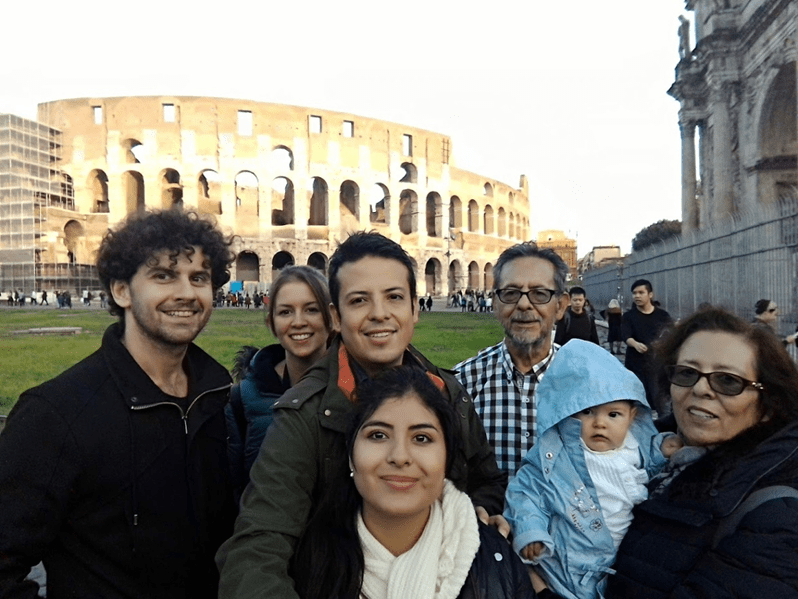
In November of 2015, my family and my parents took a two-week trip to Europe. We wanted to know the old continent for the first time, and I was secretly looking to face my fears and clear my mind after several months of emotional instability. The trip turned out to be a wonderful experience, and sharing with my parents in places that when I was a child seemed unattainable, was a great joy.
However, my goal of keeping the tragic thoughts at bay had not worked out as I expected. The night we arrived in Barcelona, our first destination, we were met with the news that, in Paris, the city we would go to a couple of days later, one of the worst terrorist attacks in its history had just occurred, when three ISIS cells killed 130 people and seriously injured 416 others, with simultaneous attacks on a stadium, café-restaurants, and the Bataclán theater, in which 1,500 young people were attending a concert.
Europe was on red alert for Islamic terrorism, and we were touring the area! Fortunately we returned to Colombia without any incident, but being in the middle of the generalized panic caused by the attacks, military presence everywhere, and news of possible attacks on our destinations, did not help at all to reduce the fears that tormented me.
Shortly after returning from Europe, my shaman friend Nelson Dorado invited me to a kind of spiritual retreat that he was going to do together with Maiker, another shaman, whom I also met in the yagé takes of Taita Gregorio. I suggested that we also invite abuelo Luis Sánchez, and both were delighted to agree.
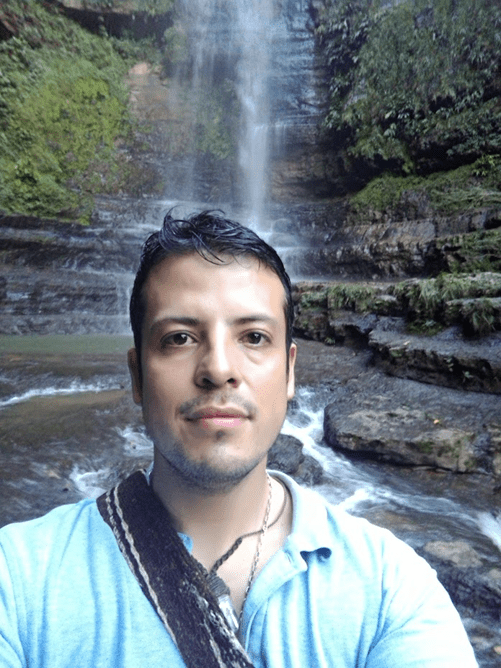
Maiker picked us up on the morning of December 19, and we set off toward our destination, which Nelson described as a natural energetic portal. It was the Juan Curí waterfall, located near the municipality of San Gil, in the department of Santander. Along the way we shared anecdotes, stories, and lessons from our spiritual paths, and as we enjoyed the spectacular landscapes, I realized that this was the first time I was taking a trip with friends that was not about taking yagé. Wow! I guess I missed out on living some things during my adolescence.
The moment we arrived at the farm where the waterfall is, we started our ascent on foot to the famous natural attraction. The waterfall, about 250 meters high, falls in a staircase shape onto a huge rock where tourists usually take their photos. We arrived at around 5:30 in the afternoon, and there were still a few people visiting the place, so we decided to wait until they left to do our ritual.
In fact, none of us had prepared any particular logistics for the ceremony, so we improvised it together. Abuelo Luis and I, as always, made an offering of tobacco and coca leaves to the waters. Maiker carried a couple of bars of Rey soap, a traditional laundry soap, that is very much used by indigenous peoples, esotericists, and shamans in Colombia, since it is supposedly good for doing an energetic cleaning.
He shared the bars among the four of us, and with them we bathed in the cold waters of the stream, asking that the guardian spirit of the place take away the physical and spiritual impurities we might have. Then each one had to go underneath the waterfall, receiving for a minute the beating of the water directly on head, shoulders, and back. When the minute was up, each one was to come out and let out a full-lung shout, as if declaring themselves reborn from among the waters.
While I endured the icy beating of the waterfall over me, I asked with a lot of faith that those thoughts of death that had been accompanying me would go, that they would stop tormenting me. Then, as if someone were whispering into my ear, I received a message that would become a healing mantra from then on:
— “No matter what happens. Whatever it is. Always. Always, I can be happy again”
Many of the esoteric and shamanic teachings I received during those years sounded very good and made me feel good when I repeated them, but when I thought about them deeply, I realized they had no logical support, or were contradictory, and they lost their effect. But this one was different. It was simple but effective and, above all, true: Whatever life may have in store for me, if I set my mind to it and fight for it, I can be happy again.
The phrase was an antidote to the unhappiness that we sow every time we say “If this or that happens, I wouldn’t get through it, I wouldn’t want to keep living.” No, whatever happens, I count on myself to do whatever I have to do to be happy again. It was a commitment that gave me peace of mind.
The next day we got up early, full of energy. We were renewed and radiant. In fact, in a photo we took before we set out on the road back to Bogotá, we looked like we had a kind of halo of light around us. I felt that I had found what I had gone looking for, and I hoped that this would be the beginning of the end of my internal storm.
Besides, Nelson, Maiker, abuelo, and I had strengthened our bonds of friendship, the ones that would lead us to live other valuable experiences in the sharing of the spiritual learning. On the way back, I watched out the window and saw everything with more optimism. I presaged that things would start going well again after that rebirth, and that I would finally be able to leave behind the gloomy chapter that began with my yagé take during the delivery of Luciana’s placenta.
But unfortunately, my path along the trail of the darkness of the soul had barely begun. More than two years of hard trials and moments of despair were still to come, before closing that chapter and being able to start the new life that I had been coming to search for, ever since yagé showed me a vision of my future in that first ceremony at la Mesa, 6 years earlier. My cell phone buzzed, I took it out of my pocket and opened the text message, read it, and smiled — there was the person for whom I would risk everything I had built until then, and who would accompany me along unknown and dangerous paths.