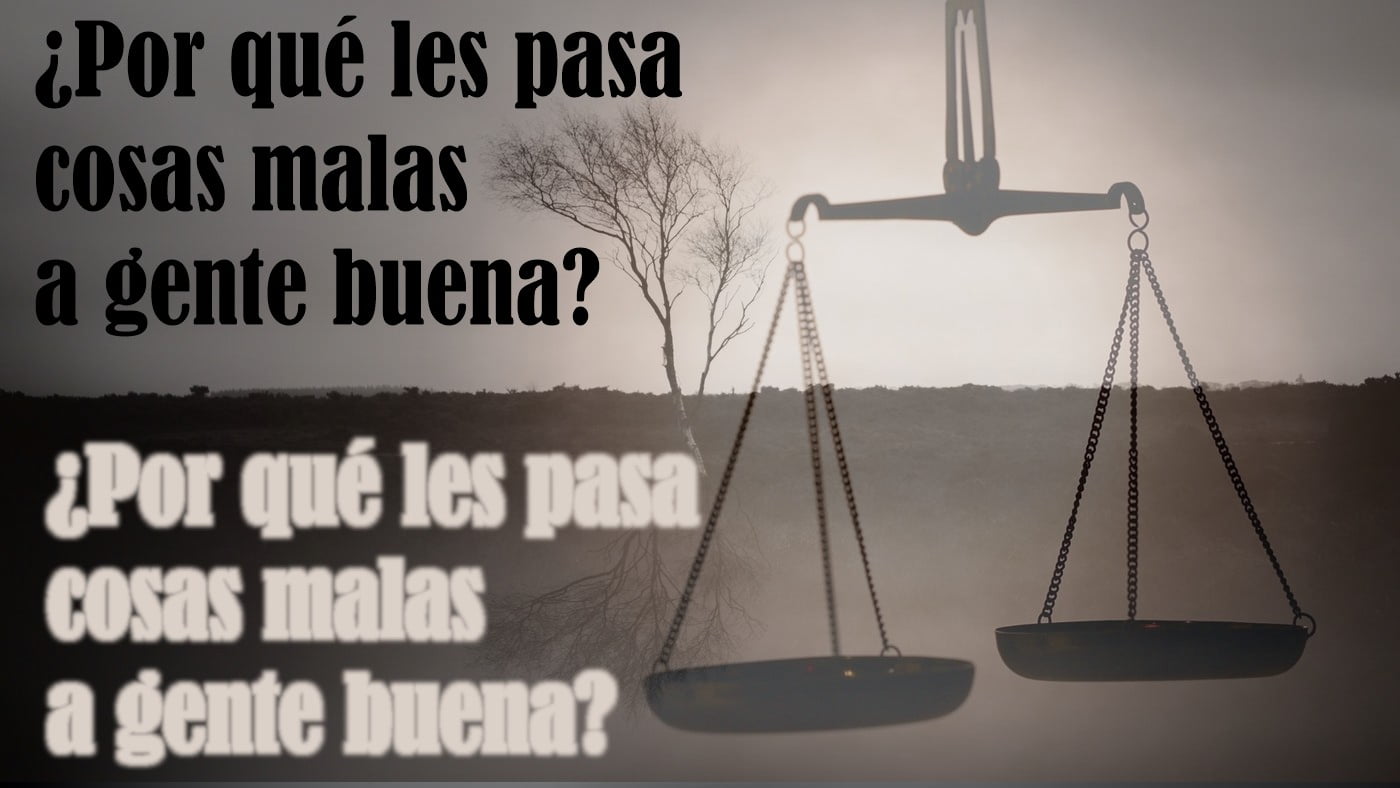
I believe that one of the most difficult topics to address in spirituality is that of justice at every level: social, political, spiritual and even ecological. It is difficult because defining justice is in itself already very complicated, but also because it questions us on two aspects very sensitive to our human experience: on the one hand the concept we have of ourselves — “I am a just person” — and on the other hand our expectation of what we deserve from others, from the government, from God or from nature: “if I am just, I deserve justice.”
Since we are small, especially those of us who grew up in religious families, we receive a doctrine about justice that goes more or less like this: “There is someone or something that is watching you all the time and it notices whether you behave well or badly. If you are good, you will receive good things from life, but if you are bad, then that higher being will punish you.” We are also taught that we can negotiate with that higher being and ask for its mercy, so that despite our faults, it protects us from evil.
I remember that when I was a child, as I narrated in Episode 18: Waking to Life, I came to have a very vivid experience of that divine protection. I actually felt that there were invisible beings taking care of me and keeping the dangers away from my path. I prayed frequently in my mind, feeling that I was in dialogue with God and that he was answering me by placing the answers I asked for, which emerged like a kind of intuition that blossomed in my mind.
I also prayed a lot, and every time I did so, I felt that I was covering myself with an invisible mantle of protection that lasted a while, until I felt unprotected again for whatever reason, and then I renewed my invisible cloak with another prayer. The one I liked best for this purpose was the prayer to the archangel Saint Michael:
“…Defiéndenos en la pelea, sé nuestro amparo contra la maldad y las asechanzas del demonio…” — “…Defend us in the fight, be our protection against the wickedness and the snares of the demon…”
But when I reached thirteen years of age, things changed. The first thing that happened was that my maternal grandmother, Ana María Rosa, had to be hospitalized because she suffered a cerebral hemorrhage from which she did not manage to recover. The stroke left her paralyzed, and she remained completely dependent on outside help for everything: to eat, to move, to take care of her physiological needs, and so on. Besides that, she was no longer able to speak, but I know that her mind remained intact until they began to keep her sedated all the time.
I know she was aware of everything by her gaze, and because she reacted with sounds and small movements to the questions we asked her or to the things we told her. Which means that she had to suffer the agony of feeling a prisoner in her own body, unable to express her thoughts or her needs, and without the possibility of returning to her beloved house in the countryside to say goodbye to her marigolds, and what I know hurt her most, without being able to see Arnulfo and Deiber again, her two little grandchildren with whom she lived in my beloved vereda of Guane in Fómeque, Cundinamarca.
If there was a good, pious and just person, that was my grandmother Ana María Rosa, in honor of whom I baptized Ana María, my eldest daughter. I believe that even when she suffered her thrombosis, my grandmother prayed the Holy Rosary every night, and fulfilled the task of taking care of her husband, her grandchildren, her house and her flowers. Surely she must have had some occasional episode of unjustified anger, or she must have told some little lie to get out of an occasional tedious commitment, but I am sure that she never in her life did harm to anyone, and on the contrary, she did as much as she could to help and serve her family, her neighbors and even the soldiers and guerrillas who passed through her farm, when the vereda became the stage of a war that she did not understand, but for which once I saw her with tears in her eyes.
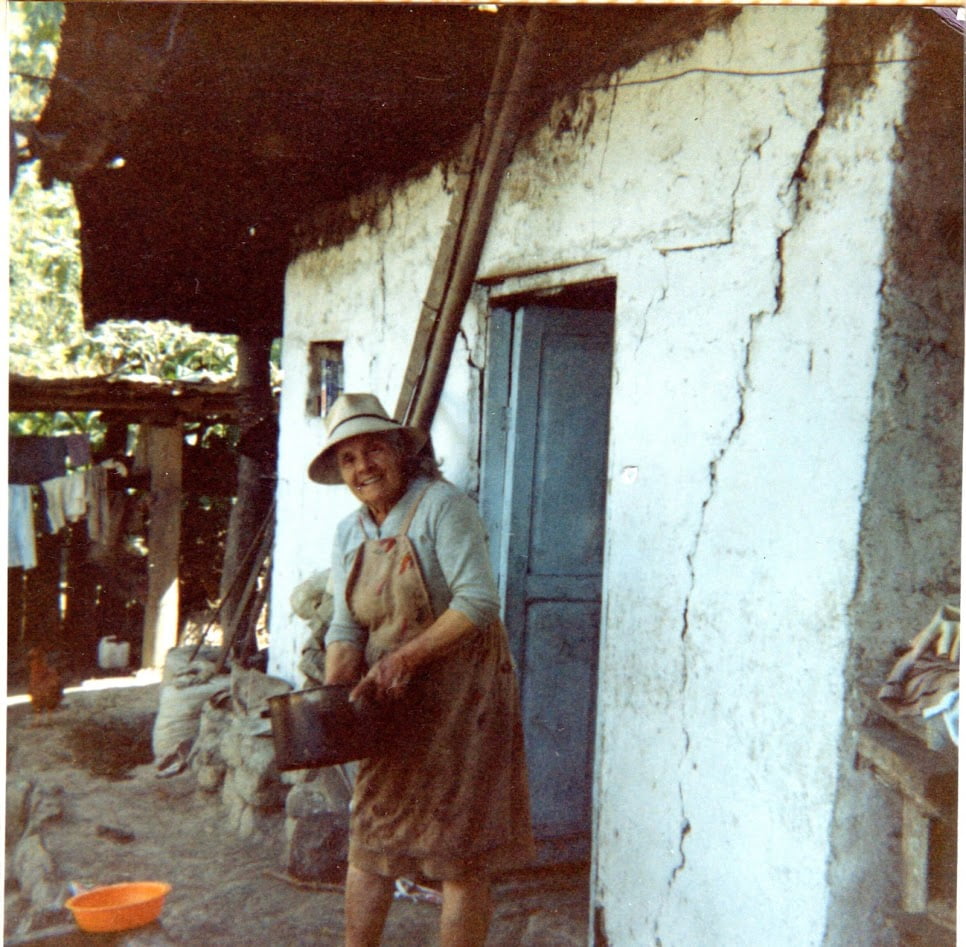
“Pobres muchachos” — “Poor boys”, she would say, while she listened to the rattle of the machine guns and the explosions of the grenades in the mountain.
So then, why did my grandmother have to go through such a stormy calvary in the final days of her life? Did she not deserve to have lived a longer life and to die peacefully in her bed surrounded by her loved ones, as in fact my grandfather died thirteen years later? And where did that leave me, who at my young age already had the certainty of not coming close even to the degree of goodness of my grandmother?
The illness and death of my maternal grandmother was like a waking to reality. Suddenly I found myself in a world in which bad things can happen to good people. Of that there was no doubt. To cap it all, that same year, while walking through my neighborhood in the south of Bogotá, I was a victim for the first time of an armed robbery. A young man barely older than me put a huge knife to my chest and asked me to take off the baseball cap I was wearing, which my father had given me as a birthday present.
With that new awareness I began to pay more attention to the news, in which more and more was said about the atrocities that drug traffickers and guerrillas committed against the civilian population. How was I going to deal with the new reality in which there were no magic prayers or codes of conduct that could save us from misfortune? Well, I was not going to: I simply refused to believe that it was possible for life to punish good people and leave the unjust unpunished.
I believe that is what most religious people do: faith is believing without seeing, and having confidence that God is good, that he can do all things, and that nothing happens without his consent. The logical conclusion, therefore, is that either the person who suffers a calamity was not good, or that what happened to them is not, after all, a calamity. It makes no difference whether it is cancer, an accident, losing one’s job or suffering a deception in love: whatever it is, it is for the best.
You are probably thinking that now I am going to say that this is not what science has discovered, or that true spirituality should not be based on self-deception, but that is not so, well, at least it is not entirely so. I believe that suffering can be for the good, but today I want to share with you the path I traveled trying to understand the meaning of suffering and its relationship with justice on the spiritual path.
I have told in other episodes of my personal history that since I was small many fears have accompanied me, and in a very intense way, so one of the things that most attracted me to esotericism and the occult was precisely that of the magic protections. Besides that, esotericism offers an alternative, though in the end very similar, vision to the one religion gives us with respect to justice.
You have probably heard about the laws of karma, the power of the scales, the akashic records, the cosmic agreements, the law of attraction, the law of correspondence, or the assuranzas, like the one I explained in episode T3E3 – The Asseguranza. All of these are concepts that revolve around cosmic justice, or the vision that there is some kind of universal law that judges human beings according to their actions or omissions, something very similar to the concept of the judge God that almost all religions observe, except that esotericism strips them of the participation of a person-God.
So then, what would be the vision of Spirituality and Science on the meaning of suffering and justice in life? I want to arrive at that answer, but first I am going to tell you what the problem is that I see with the esoteric theories:
Let us remember that the word esoterism comes from Greek and means “study of the interior”[1]. That means that any belief system that grants greater importance to internal causes can be considered an esoteric creed. From this point of view, Buddhism, and to a lesser extent Hinduism, can be considered esoteric because they grant great power to the individual over their own spiritual realization. In contrast, religion tends to give more importance to exterior behaviors, like participating in cults, doing certain works for others, or seeking salvation in an external higher being.
Well then, let us begin with the concept of Karma[2], which literally translates as “deed”. It is the base of the Hindu cosmogony, which is based on the concept of cause and effect. Both Hinduism and Buddhism consider that the actions we perform, including deeds, words and thoughts, have a consequence that depends on the quality of the action, that is, whether it was a good or a bad deed, and that it can manifest during the current life or in a future existence through some form of suffering, which can be an illness, pain, or premature death.
Therefore, the faults we may have committed in a previous life could have repercussions during our current existence, if it is that we did not manage to atone for those faults during the existence in which we committed them. The problem that arises then is that by losing the memory of our previous existences, we would have no way of knowing those harmful actions we did in those lives, and therefore of avoiding the suffering that awaits us as a consequence.
Buddhism offers the alternative of achieving enlightenment in order to escape altogether from the wheel of samsara, or the cycle of deaths and rebirths, but considering how difficult it has proved to be to reach the state of the Buddha, other theories have emerged that seek to compensate for that difficulty of the law of Karma. That is where another popular esoteric belief appears: that of the akashic records. This belief, which comes from theosophy, which is an esoteric doctrine founded by Helena Petrona Blavatsky[3] and adopted by different gnostic cults, explains in broad strokes that there is a record or a book in which absolutely all the experiences that our soul has experienced and will experience during its cycle of human reincarnations are written down.
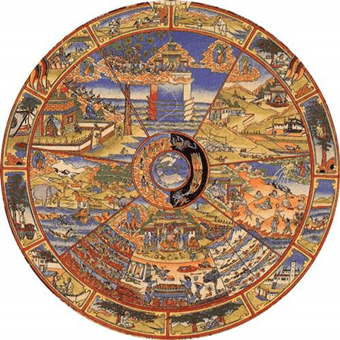
The theory indicates that with the information of the akashic records, we could know what faults we must atone for during our life in order to avoid the punishment of suffering.
When I became involved with the indigenous communities in Colombia, I realized that the ancestralist spirituality or Latin American neo-shamanism adopted to a great extent the concept of karma and the akashic records, although calling them by different names and linking the work of unveiling those stories of past lives with the use of sacred plants like yagé or tobacco. However, there is a part that does come from the indigenous traditions, and that in fact is the reason it is known as “Ancestralidad” (Ancestrality): our life experience depends to a great extent on the hits and misses of our ancestors, particularly mom and dad, but also our grandparents, great-grandparents, and so on.
At bottom, all of these beliefs, including the idea of original sin that the Bible narrates to us, revolve around the need to establish prenatal guilt, that is, the evil or corruption that we inherit, whether from Adam and Eve, from our previous lives, or from our ancestors, in order to justify retrospectively the misfortunes that we have to experience during our existence, whether in the form of divine judgment, the law of the scales, or the law of cause and effect.
But why do we need, in the first place, causes prior to our birth in order to understand the calamity in life? Because otherwise we could not accept the injustice of an agonizing illness in an innocent child who is just beginning to live, or that good and just people have to live their whole lives in poverty and marginalization. The theory is that “that soul must have done something in a previous incarnation, and is now paying with pain in this life.”
A frequent variation of this idea is that the innocent is paying with their suffering for the faults of their ancestors, their relatives, or even of all of humanity; an idea reinforced by the drama of Christ dying on the cross for the forgiveness of the sins of all of humanity. The central point is that suffering must have a purpose, and what has been most generally accepted is that said purpose is forgiveness. It is what we could call the theology of suffering: we admire Christ nailed to his cross because we trust that his suffering was enough to spare us from the punishment that we would surely deserve were it not for the sacrifice of the Messiah.
There are books and complete studies on this topic that seek to find a logical and satisfying answer to the question of why God allows suffering in the world, and specifically why he allows the misfortunes that, not infrequently, fall upon the innocent. Whether punishment, atonement, lesson or trial, the Bible is full of stories that confirm our interest, since thousands of years ago, in understanding the why of injustice.
The truth is that no matter what beliefs you have, your concept of justice or your idea of why bad things happen to good people, you have surely known more than one person who has had to endure immense pain without having done anything to bring it upon themselves. The problem that I saw during my years of ancestrality and esotericism is that very frequently I heard that those were examples of people who in previous lives had been unjust or even wicked, and who were now paying that fault. Is it of any use to the person who is going through a tragedy to think that they are paying for something they supposedly did before being born? I believe not. But it is useful to others, to sustain the idea of the existence of divine justice.
So then the question would be whether divine justice exists. My personal answer is that it does exist, but it does not work the way most people believe or would like: as human justice — but perfect — in which an infinitely just being gives each one what they deserve based on their past actions. This divine justice, which is the one on which the theories of karma or ancestral burdens are based, is the one that Kate Bowler rejects in her best seller “No todo pasa por una razón” (Not Everything Happens for a Reason), a book that I referred to in the episode on The Dark Side of Spirituality.
In the book, the author tells how, when she was diagnosed with colon cancer, some well-intentioned people suggested to her that she was surely paying for some past fault, other people told her that her illness could have its origin in repressed emotions that she had not known how to channel; in short, they were telling her in a way that her illness was her own fault. This is to some extent what happens when the news carries stories of minors being murdered, or massacres in zones of extreme poverty. I have seen that many people immediately comment “they must have done something to deserve that killing,” even if it is merely “getting involved with the wrong people” or “exposing oneself unnecessarily in the wrong place at the wrong time.”
It is always the fault of the victim, whether because of their errors in a past life, for not managing their emotions in the correct way, because they needed to learn a lesson, or for committing some imprudence. We cannot bear the idea that misfortune can happen without any motive, because it terrifies us that the implication is that even though we are good, responsible, kind and just, still, misfortune could visit us too.
It is possible that you are thinking that you do not agree with me, that divine justice does exist and that each one, sooner or later, receives what they deserve. I ask you to stay with me, because later I am going to share with you a vision of divine justice that does not have to be retrospective or based on guilt.
The other thing that I found on my path with ancestrality and esotericism is the quantity of spiritual protections, from physical elements such as necklaces, medallions, talismans, esoteric symbols, bracelets, up to spells, mantras and other verbalizations that have as their objective obtaining some kind of immunity against physical or spiritual dangers.
During my years in the shamanism with the Muisca, I learned, for example, that if I closed my right fist, trapping the thumb under the other fingers, I could make myself invisible to enemies and threats. I got used to “tracing circles of fire” around myself to protect myself and my family, and I memorized a spell to draw the pentagram, which according to Samael Aun Weor, provides protection against energetic attacks, witchcraft and demons: “Klīḿ Kṛṣṇāya Govindāya Gopījana Vallabhāya Svāhā”. In retrospect, it can be concluded that these invocations were nothing more than other kinds of prayers and recitations similar to the ones I used in my stage of Catholicism.
But do prayers, spells and recitations work? The answer that I have found from spirituality and science would be: It depends. It depends on the expectations we have. If the expectation is that the prayer gives us security and allows us to feel protected, trusting, and able to advance through life with fewer fears, then undeniably, yes, it works. If the expectation is that the prayer effectively protects us and allows us to continue with our life without the possibility of having to go through suffering or calamity, then, unfortunately, no, it does not work.
As for the first scenario, the best analogy about the power of prayer and spells I found again in a movie. In this case, the excellent Bollywood comedy from 2009 “3 Idiots”. In it, the protagonist “Rancho” tells his friends that once there was a village in which its inhabitants, to protect themselves from the raiders who frequently looted entire towns, installed in the main square a tower with a lookout post at the top. From there, a watchman stayed up all night and would shout every so often “¡Todo está bien!” — “All is well!”, “¡Todo está bien!”, so that the inhabitants could sleep peacefully knowing that there was no danger lurking.
It happened that one fine day, the village was raided just a few minutes after the customary “All is well!”. The next day, the villagers, stripped of their valuable possessions, went to complain to the watchman — and they discovered that this man was blind! Confused by the discovery, they set out to get to the bottom of the matter and to punish whoever had placed the poor wretch in the post.
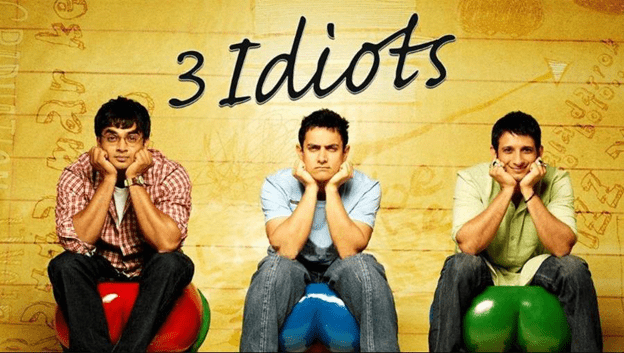
Then someone from among the locals said:
“¿Qué diferencia habría hecho? No tenemos armas ni guerreros. Todo lo que necesitábamos era alguien que nos dijera de vez en cuando que todo estaba bien.” — “What difference would it have made? We have no weapons nor warriors. All we needed was someone to tell us every so often that all was well.”
Well, that is the power of prayer, whatever your creed and your customs may be: it will always be useful to cling to something that gives us enough peace of mind to move forward, and not remain paralyzed by fear. Soccer players have lucky socks, soldiers and killers alike use religious images of protection, and many national hymns mention God somewhere. Does science tell us that we must stop believing in prayers because they really do not protect from any danger? No, on the contrary: it recognizes the power that prayer has to change our mental state, to reduce stress, anxiety, even pain, and to allow us to function in the midst of the dangers that, by pure chance, may end up crossing our path.
In all my years of the path with indigenous people, shamans, esoterists and witches, I never met anyone who had not gone through one tribulation or another: an illness, the loss of some relative, economic difficulties, robberies, breakups in love, and all the rest that also happens to religious people and atheists. Of course, I could say that thanks to the spells, invocations and ceremonies that I performed during those years, I did not have to suffer any calamity, but then I would also have to say that in the last 4 years, in which the number of ceremonies I have performed has been substantially fewer — fortunately I have also not had to go through any misfortune — so I believe that anecdotal experience, exactly as science establishes, should not be used to determine cause and effect.
What I do dare to conjecture is that believing too much in supernatural powers as a guarantee of well-being can be very counterproductive. During the pandemic of Covid-19, we saw how in all countries groups of fervent believers were among the most affected by the pandemic, and among those who propagated the coronavirus to the most people, potentially causing many of the subsequent deaths. One of the famous cases was that of a South Korean woman, 61 years old, who, even knowing that she was a carrier of Covid-19, traveled all over the country participating in religious services, with whom, according to the viral tracing, she was in contact with more than 1,100 people. It is not known exactly how many people she infected, but the truth is that after the travels of the lady, the count of sick people went up from less than 50 to more than 2,000[4].
Another example that I read recently in the New York Times is that of the ultra-Orthodox Jewish communities of Israel, which, by their culture and attachment to the Talmud, have not heeded the measures of social distancing and the use of face masks, and for that reason they have had the highest mortality index among all the other social groups in their country.
I also came to know up close the case of a Muisca elder, a friend and teacher of mine, who was convinced of having found the perfect medicine, based on homeopathy but adding magnetism and spells. The elder, whom I will speak about in more detail in a coming episode, believed that he could cure himself of his diabetes this way, and not only did he not manage it, but he lost a foot and remained practically blind, not using the indicated treatment for the control of his glucose.
So now, yes, we arrive at the heart of the matter: can one speak of divine justice if one chooses a spirituality based on science? I believe yes, but as I said before, not a retrospective divine justice in which a higher being judges our past and gives us what we deserve, but a divine justice toward the future, in which the inner divinity of each one of us as spiritual individuals, and even collectively as humanity, decides the destiny of our life based on the merits of our heart in the present.
The reality is that our universe is based on physical laws in which chance plays an important role, and it is enough to be at the wrong moment and the wrong place to be a victim of misfortune. Each step we take every day, each decision we make, each mouthful of food we swallow is an act of faith that we have enough information and care for that step, that decision, or that mouthful to be of profit and not to cause us any harm, neither now nor in the future.
Every time we turn our back to a stranger on public transport, we trust that he is not going to take advantage of our defenselessness to attack us. But the truth is that in a world of more than 7,500 million people, somewhere, at some moment, someone is going to be attacked by a stranger without any provocation, someone is going to die of a severe allergic reaction to an unknown food, or someone is going to fall and fatally strike their head by taking a wrong step. In the same way that someone is going to find a valuable jewel among the grass of their garden, or many are going to win the lottery after having bought a ticket for the first time in their lives.
It is inevitable: chance is both our ally and our enemy, and no matter how many spiritual protections we carry or precautions we take, there will always be the possibility of having to go through a painful experience. What spirituality tells us is that, in the first place, we have to tell ourselves every so often that all is well. Yes, there are many risks everywhere and all the time, but it makes no sense to be paralyzed by them. To live is to take risks from the very first moment: the fetus does not know what is beyond the placenta that nourished it during its short life, and yet it fights to be born. It feels that it is drowning as it passes through the vaginal canal, and yet it makes the journey until it sees the light.
Childhood is a constant exploration of risks, rewards and punishments. We learn to recognize our limitations by falling, crashing, making mistakes, and sometimes getting sick. But if you have seen a child cry from a fall, you will have noticed that their crying only lasts a few minutes, and soon they go back to trying what they were doing, this time with more care.
Then come the years of adolescence, in which many of us seemed to believe that we were invincible and eternal. Not even the stories of tragedies that other young people went through by mixing liquor and imprudence stopped us from doing things that now cause us between laughter and pride, but that we would not be able to attempt already being grown up.
So then, spirituality is knowing that we can only do our part, and the rest is up to the universe. Consciousness, the moment-by-moment observation, and prudence help us avoid unnecessary risks and considerably decrease the probability of having to face misfortune. Knowing how to recognize the truth spares us from deceiving ourselves by believing that we are immune to pain, and then humility arises to recognize our limitations and weaknesses, and to try to find strategies to overcome them responsibly.
You can use prayers, spells, or power phrases that reaffirm you in your capacity to choose your path and to recognize the dangers in a timely way, and you can perform ceremonies to strengthen your spirit and to empower yourself when you are about to take an important decision. In a coming episode I am going to teach you how to perform a ritual, and why it works.
But if, despite all of this, fate arrives, then it is when the divine justice of poetic naturalism operates, or we can then call it natural justice: if adversity arrives as a consequence of our own actions, then we have to do the mourning of our own guilt, forgive ourselves with love, and take on the responsibility of building a better future in which we will have the wisdom that that unpleasant experience grants us.
The justice of consciousness is a theme that Fyodor Dostoyevsky explores in great detail in his work “Crime and Punishment”, in which the protagonist, who is not a bad person in general, is harassed by his own conscience for a crime he committed, and it is shown how, beyond the fact that human justice apparently had no way of proving his crime, the suffering that it caused him to have made a bad decision and with it to cause the misfortune of innocent people, was enough for him himself to decide to turn himself in to the authorities, and to end up paying a sentence to atone for his fault.
Those of us who have had at some point in our lives the misfortune of upholding a lie, and having to calculate our words every moment, to cover our tracks and hide the truth, know the calvary and the loneliness that life becomes. Something similar happens to the corrupt and to the violent. Many times they have to fill their life with luxuries and material pleasures, in order to try to compensate for the emptiness they feel in their lives.
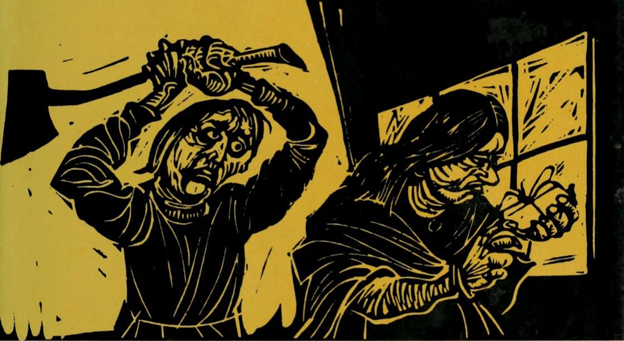
However, this, despite being very common, is in no way a law. Surely there have been many unjust people, even criminals and corrupt ones, who died old without ever seeing a punishment for their actions; on the contrary, many are remembered as heroes or saints, and surely they ended their lives believing that they did the right thing, even that everything they did was for a greater good. A typical case in this category could be that of soldiers who served in genocidal or oppressive armies, and who were received afterwards as heroes, after having tortured, killed and raped. Many of them never came to feel a shred of remorse, because they learned to see their victims as animals or as beings of no value whatsoever.
But this kind of thing should not have to rattle a spiritual person, because we know that unconsciousness exists, and that for each person at that level of wickedness there are many more who try to be good and not do harm to anyone. We also know that our task is not to judge others, but to work on ourselves, becoming more and more conscious, responsible and loving.
And finally, so what happens to the misfortune that comes purely by bad luck? When suffering arrives without having been caused by our own unconsciousness, but simply by being at the wrong moment in the wrong place? Then there are three things that we can do. The first is to accept that misfortune is part of life, and that, just like fortune, it is simply an experience that sooner or later will pass. Anicca, says Buddhism: everything is impermanent, everything passes.
The second thing we can do is to turn that misfortune into an opportunity to take the reins of our destiny. No matter how difficult a situation is, even if it ends up leading us to death, it can be an opportunity to achieve something beautiful, something memorable. Many patients who have gone through cancer, like Kate Bowler, the author of “Not Everything Happens for a Reason”, have found in their illness a transformative experience that has served them not only to achieve a fuller and more fruitful life, but to help others discover that one has to live intensely, love more and share more, despite the difficulties.
In the case of my grandmother Ana María Rosa, perhaps she did not have the opportunity to transform her suffering into something positive, but the rest of the family did. From her death on, and for a long time, the family began to gather every year in her honor, and managed to turn her passing into an opportunity to unite more around her memory and her teachings.
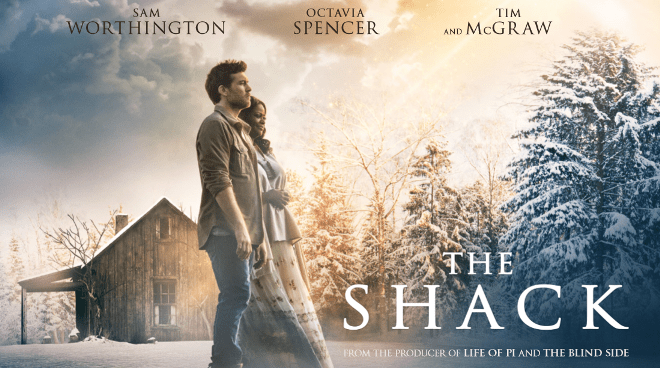
If you want to see a heartbreaking but beautiful movie that, despite being totally religious, I believe explains very well the process of mourning, acceptance, transformation and blossoming of someone who is going through a misfortune, I recommend “The Shack” from 2017, with Octavia Spencer and Sam Worthington.
The third thing that poetic naturalism could say about suffering is something that served me to overcome an existential crisis that I went through shortly after my daughter Luciana was born. Having more and more reasons to be happy filled me with fear. At that moment, the mere idea that something could happen to one of my daughters or to my wife filled me with anxiety. It was at that moment that I became totally aware of what I said before about chance: at any moment life can take from us what makes us happy. This was something very difficult to accept, especially when one understands that there is no magic protection that can guarantee us that it will not happen.
So then, after going over the problem many times, I understood that the only thing that could return me my peace of mind was not deceiving myself by thinking that nothing bad would happen to me, but having the certainty that no matter how hard what life puts before us may be, we have the power to be happy again. Let me repeat this to you: No matter how difficult what you have to live may be, because surely you are going to have to live difficult things, but no matter how hard it is, the sun is always going to rise again, and you are going to be able to smile again.
This lesson I was taught by a person displaced by violence, whom I met in the peace camp in 2016. The paramilitaries entered his farm one afternoon and, for not having agreed to sell his land for the pittance that some landowner had offered him, they shot and killed his children and his wife in front of him. I cannot imagine a deeper suffering, and yet, there was that man with a white flag and a smile, demanding the signature of the peace agreement between the FARC guerrilla and the government, so that no one else would have to live what he had suffered. I will never forget his beautiful energy and his commitment to peace.
This is not an esoteric or religious belief. It is something that no one can deny, and that on the contrary can be verified beyond the margin of error: in your mind and your heart you have the capacity to rebuild your life, to leave the past behind and to build a future of happiness. To that power is what I call your inner divinity, and that capacity to achieve what you deserve by your own merits and because you decide it, is what I call divine justice.
[1] Esoterismo – Wikipedia, la enciclopedia libre (free encyclopedia)
[2] Karma – Wikipedia, la enciclopedia libre (free encyclopedia)
[3] Teosofía – Wikipedia, la enciclopedia libre (free encyclopedia)
[4] South Korea’s Patient 31, Punjab Priest, Bhilwara Doc, Tablighi Jamaat: Infamous Covid-19 Super-Spreaders (msn.com)
4 years ago. Very interesting, thanks for sharing.
Comentarios (archivo, solo lectura)
Mostramos 1 comentario guardados de la versión anterior del sitio. Ya no se aceptan nuevos comentarios.
Muy interesante, gracias x compartir.