On the journey toward the construction of my own belief system, I walked through the Catholic religion, esotericism and shamanism before arriving at skepticism-based spirituality. That journey had as its starting point the worldview my parents bequeathed me based on what they received from their parents, but the paths I chose from then on were those that best answered my personal search.
I always believed that search originated in the longing to obtain a deep knowledge of the reality of the spirit and a personal experience with the divinity, but there was always something more. In the bottom, more than a search, my spiritual journey was a personal crusade against my deepest fears: To die, to be forgotten and to not have control over my life.
It is possible that you identify with some of my fears; that would be no surprise because we are not talking about fears particularly difficult to find. We are genetically programmed to strive for our survival, establish complex relationships with other people and transform our surroundings. For that reason, death, oblivion and not having control are at the “top” of the most popular fears for human beings.
What we sometimes do not notice is to what extent our fears condition not only what we do and what we leave undone, but above all what we believe. We have the natural tendency to gravitate toward beliefs that take away power from those fears and to reject the beliefs that amplify them. For example, those who fear the loss of economic liberties more than the loss of civil liberties can be more akin to a more conservative and right-wing thought. Those who prefer the restriction of economic rights to the restriction of civil rights could in turn tend to be more liberal and left-wing.
In my case, the very idea of being vulnerable to misfortune and having to go through the loss of a loved one, a grave illness, an accident or any other calamity terrified me. My spiritual search was clandestinely motivated by the need to feel safe in a world in which it did not take much looking to find apparently fortuitous calamities everywhere.
From very young I learned to pray to the “Guardian Angel” so that it would not forsake me neither night nor day, adding at the end that I only had to fulfill my guard until I was at peace and joy with all the saints, Jesus and Mary. A bit older I learned that that moment of peace and joy would be when I died, so basically I was asking the busy angel to discharge me.
Okay, I know that was not the idea. The curious conclusion of the popular prayer may have arisen from the effort to form a four-line stanza of twelve-syllable verses with assonant rhyme, but perhaps, the famous childlike prayer is not the only instance of curious contradictions where the certainty of divine protection wrestles with the inevitability of death and suffering.
For example, the Catholic church says it centers its message on the salvation of Christ and yet its principal symbol is the image of a dying Jesus nailed to the cross. Faith is preached as the formula of protection against misfortune, but also sacrifice as the best vehicle for salvation.
That and other contradictions led me to question the coherence of the religion, besides arousing my curiosity about the metaphysical and hidden knowledge.
As I have recounted earlier in this podcast, there came then my encounter with the spiritual world through the entheogenic trance in yagé, and my life changed completely. I obtained the certainty that not only is there a beyond, but that we can communicate with beings that inhabit it: speak to them and hear them directly, without the need of intermediaries or of having a blind faith.
So, with my new direct line to the divinity, I changed the nightly prayers to the guardian angel and the invocations to Saint Michael the archangel when I felt in danger, for the use of amulets, spells and prayers of protection. In other words, I changed cosmogony, but not worldview. I changed the angels for guardian spirits and my conviction of the need to pray and go to mass to be protected, for the idea that by taking yagé every two or three months and participating in word circles, I would obtain that longed-for protection from all evil, without which my life would be a torment.
However, inside me there was also a force that attracted me toward a scientific vision of the world, without supernatural phenomena nor magical thinking. But accepting that vision of reality meant that I could no longer be a “Mary's darling” as my godfather Diego once classified me, or someone under the protection of the Holy Spirit as the seeress I consulted in Santa Marta had pronounced years before.
And how accept a reality so indifferent to my spiritual merits, when I had seen the protection and fortune that undoubtedly have been present throughout my life? How not to believe in the guardians that God placed in my path to protect me in the moments of danger? How to justify the tragic situations that passed through me grazing without causing me any harm? Where would the theophanies that guided me through my spiritual journey then come from, granting me joys beyond my greatest expectations?
My personal experience, biased by that good fortune I feel has accompanied me, indicated to me that I had taken the correct steps to achieve the favor of providence and that it was precisely when I strayed from its path that I had to go through difficult situations; as happened when my first marriage ended due to my infidelity.
At least, that is the reality I lived for many years and the mentality I put at the center of my spiritual work: strive to be an exemplary human being, fulfill the will of God to obtain in exchange the protection from evil and good fortune I longed for for myself and my loved ones.
That was, in the end, the same cosmic business I had tried with the religion years before: fulfill the commandments, go to mass and practice works of mercy in exchange for divine protection and other material gifts.
The problem was that I had not clear what I was supposed to do, and what was not permitted to me, in the middle of the potpourri of beliefs I stirred up during those years. Some things were evident, like not causing suffering, respecting life, being honest and keeping one's word; but there were more controversial matters in which the 'incorrect' was not so evident.
Among those dilemmas were whether God required to be adored or not, the gnostic matter of whether ejaculating was licit or not, and also whether impure thoughts constituted spiritual crimes. Besides, what should be considered impure? These topics dominated a good part of the hundreds of hours I spent in word circles and conversations with grandfathers. The answers were almost always moralistic and Christian, and consequently chauvinist and conservative.
With that context, I tried to carry out my own spiritual consultation on the divine law through the sacred plants and although some times the entheogenic experience revealed to me surprisingly libertarian and countercurrent truths, other times the revelations were totally contradictory and in the end, I always returned to the conservative moralism that was inculcated in me in my Christian upbringing.
A conservatism in which I always saved a small zone of relaxation for my primary instincts, since if I resigned myself to the rigorous asceticism the grandfathers preached - though they never practiced - I would not have had with which to save myself from the fury of the divine. My escape from the mental tangle was the observation that if life was smiling at me it was because in the midst of everything, my small indecorous licenses did not displease the eternal judge so much.
Sometimes, however, I feared that those lapses may have been padding out a cosmic ledger of faults and that at some point I would have to pay in pain and suffering for my licentiousness and lack of willpower.
That psychological yo-yo was my reality during the first years of my spiritual journey, in which at the same time I enjoyed the satisfaction of my growth as a person and the frustration of my incapacity to overcome the temptations of the flesh. It is possible that that conflict was one of the origins of my bipolar psychedelic odyssey between heaven and hell in the yagé.
One of the laws that the yagé had shown me that Paula and I should observe to ensure its protection was that we could not involve ourselves emotionally with other people. In my imagination, if either of us failed that promise, we would lose everything we had built.
Then the unthinkable happened and it was that Paula - and not I, as could be expected - had to face the trial by fire of feeling love for another person. That event gave rise to the first and only separation between the two of us and served me as an excuse to give free rein to my own repressions. I rushed toward the forbidden like a lamb to the slaughter, emboldened by my arrogance, with destination to all that supposedly was forbidden to me, under pain of banishment from divine grace.
But despite the cosmic warnings, apart from the natural couple crisis, nothing negative happened. After a short separation, Paula and I found each other again more in love than ever, more decided to move forward with our home and with more confidence to share a space of complicity that we had reserved for ourselves before. That 'sin' united us and allowed us to know each other in ways we did not even know we needed to find.
Despite the unexpected but welcome ending of that lapse, I kept not discarding the logic of the cosmic business and, therefore, I kept trying unsuccessfully to become a chaste man of wisdom and bouncing between heaven and hell in my yagé takes. And so it was until I met Diana in 2016 and there I threw overboard my attempts at spiritual correctness, chastity, decency and even common sense.
I have already recounted in this podcast the paradise and purgatory that relationship meant for Paula and for me, but besides the logical consequences we had to face as a couple, the fact is that there was also no divine punishment, nor bad luck, nor ruin nor illness. Not even an occasional case of dandruff or a scrape on the knee. Only something happened that I believed was the deserved divine punishment, but turned out to be merely a medical misunderstanding. Not only that, but just like after the previous experience, our relationship became even stronger, we learned many things and moved on to keep fulfilling our goals and dreams.
It was no longer worth the trouble of continuing to deny reality: either the divine punishment does not exist or God is much more permissive than believed. Well, the possibility still existed that for some reason God would decide to wait to discipline me at another moment, perhaps when I least expected it. But I will refer to that possibility a little further on.
Understanding that the divine punishment does not exist did not turn me into a brazen libertine nor did it cure me of my human weaknesses. I kept being the same, with my virtues and my defects, but without that constant source of anxiety I carried for years while I believed God would punish me as soon as I crossed the line.
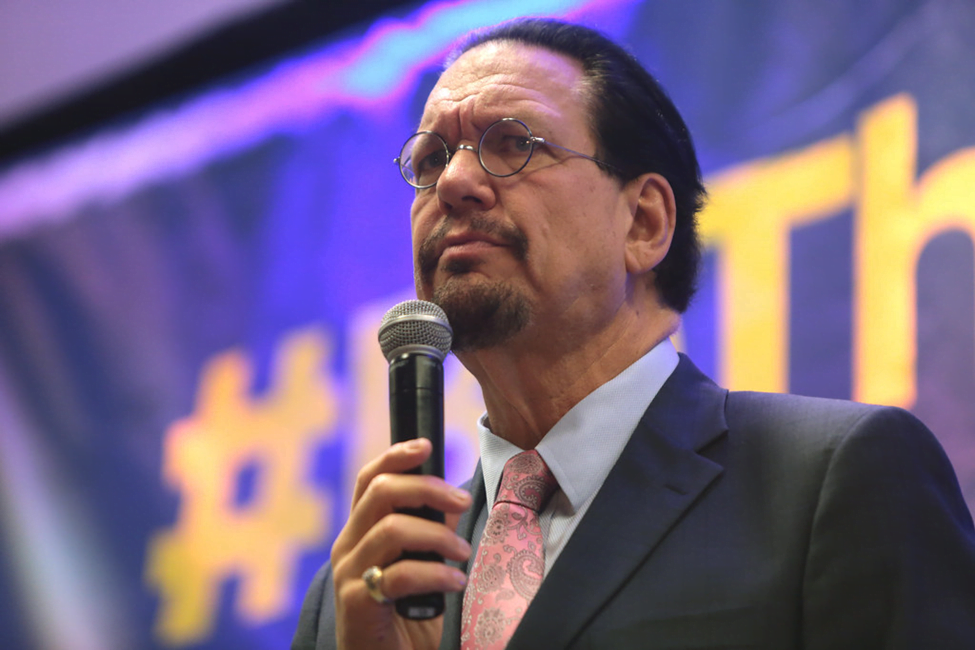
Let us say I proved for myself that lesson of the renowned illusionist and known atheist Penn Jillette, when during one of his conferences, a Christian stood up and asked him the following question:
– “If God did not exist, what would stop everyone from going around killing or raping whoever they felt like?”
And Penn's response was:
– “Oh, but I do kill and rape all that I have wanted to kill and rape in my life. Do you know how many people I have wanted to kill and rape? EXACTLY ZERO! Disgusting psycho!”
And it is true, there may be some psychopaths who need the fear of the divine punishment to abstain from executing their perversions, but for the majority of documented criminals that does not work. Instead, it is known that many serial killers and rapists justify their crimes with supposed noble or even sacred motivations. After all, the worst aberrations of history have been carried out in the name of religion, the homeland, honor and other chronic imbecilities. (See the story of the Cárdenas and Valdeblanques families).
The reality is that the great majority of human beings do not kill or rape, not because we fear the divine punishment, but because we do not have the genetic predisposition to that level of violence, because we do not have personal motivations to act that way, because we do not live in socioeconomic conditions that push us to it, because we did not grow up seeing evil up close, because we were formed with noble values, or as in my case, for all those factors at the same time.
Returning to my personal search, I at last resolved one of the great questions I had before starting my spiritual journey. There is no immediate divine punishment proportional to the sin involved. Any nefastous consequence for the perpetrator can be explained by the effects of human vengeance or justice, or in many cases by the feeling of guilt. But it is enough to see the news to find hundreds of examples of criminals, cruel and corrupt people who not only do not receive a punishment for their acts, but enjoy wealth or admiration to the point of being decorated for their actions.
The only refuge of the believer in divine justice is the faith in the deferred punishment. That deserved cosmic reckoning that would be reserved for old age or better yet, for the hour of death. That is the basis of the Hindu doctrine of karma or its Christian alternative: hell and purgatory. These theories seem to represent the solution to the problem of cosmic justice. However, here we have already entered the terrain of supernatural speculation and until now no objective way to test those hypotheses is known. At not being part of the domain of physical reality attainable by science, it is impossible to refute or confirm scientifically which of the two options: reincarnation or hell, reflects the reality we live, if it were any of the two.
Knowing this, I resorted again to entheogenic exploration with the yagé, but unfortunately, after years of ceremonies I did not find an answer. I saw supposed past lives, but I also explored heaven and hell and even witnessed future lives on other planets, despite those concepts being exclusive of each other. My conclusions on what awaits us after our last exhalation may be of your interest, but I do not want to stray further from today's topic, so, if you allow me, I will speak of it in a future episode.
For now, returning to the point of punishment for sin, the idea that it always arrives, even if years or even decades pass for it to be consummated, is a feeble argument that nullifies itself. I am about to explain why: If the consequence is not proportional, nor immediate, nor explicitly tied to its cause, then it will always be possible to argue that any adversity that happens is the punishment for a fault. It would be like throwing an arrow at a wall, then going and painting a target around it and saying it has hit the bullseye.
The problem is that in the reality we inhabit, all human beings have to experience some level of adversity: accidents, illnesses, material losses or at least the ailments of advanced old age and the inevitable death. Experiences totally independent of our moral quality or balance of infractions committed.
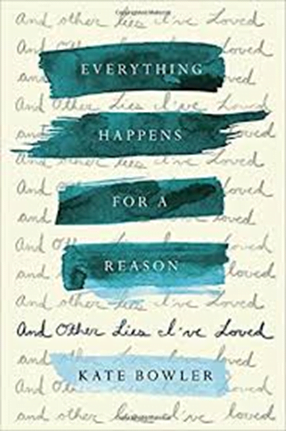
Even so, many believe - and I believed so for a long time - that those of us who try to adjust ourselves to the norms of a Christian, spiritual and kind life, would be exempted from such material punishments. A doctrine that if you think about it is insidious and totally unfair with those who face misfortune. This is the important lesson of the book “Everything Happens for a Reason and Other Lies I Loved to Believe” by the Canadian writer Kate Bowler.
In that book, the author, who was a practitioner of the “Prosperity Gospel” of the Mennonite church, discovered how ruthless this belief of “God does not punish neither with a stick nor with a switch” can be. Despite her religiosity, kindness and compassion with others, Kate had to go through for years not only a strange variant of cancer but other serious problems in her health. To the bewilderment that the failure of that promise of a life without greater difficulties in exchange for her permanence in the faith caused her, was added the hard blow of being excluded and pointed to by her own community. After all, if she was going through such a tragedy, it had to be because God was punishing her for her sins.
There also exists the doctrine of “There is no bad that does not come for good”, beautifully illustrated in the 2017 film “The Shack”. In the film, the protagonist learns that the murder of his small daughter, which left a hole of resentment and pain in his soul, was something he 'had' to live to grow spiritually and plant the seed of a new life.

This concept, very common in the knowledges of the new age, is problematic because again it adds to the tragedy the burden of having to find the “what for”. It can also create the erroneous idea that the crime is justified because in the end it will always turn out in something good, or that the perpetrator is not to blame at all because before that they are helping the victim learn something valuable for their life. The rescuable idea of this type of thinking is that when misfortune strikes us we always have the alternative of taking advantage of the experience to dedicate more time, get closer to our loved ones and grow around the pain. That is called the process of mourning and it has nothing to do with predestination nor divine justice but with the human capacity to overcome pain and be strengthened in the face of adversity, it is the topic I referred to in the episode “Antifragile” the previous season.
The last corner in which that elusive proof of divine justice could hide is in the space of the human mind itself, where some believe that every infractor receives the just punishment for their faults. It is the center of the famous novel by Dostoievski, who, through the protagonist of the story, Rodion Raskolnikov, pretends to demonstrate that in our innermost being it is not possible to justify immoral acts and that all of us, independently of status or beliefs, are subject to the same moral laws and must face the consequences of our actions.
This theory, considered frequently as the manifestation of divine justice through one's own conscience is in principle, more plausible than the previous ones. In my family I heard it alluded to in the saying that “no one can hide from their own conscience” and that those who act badly cannot live in peace. But, unfortunately and with Dostoievski's permission, the justice of conscience also does not hold up under the weight of the evidence.

Average people, unless they have been diagnosed with psychopathy or other mental dysfunctions that affect the capacity to feel empathy, usually suffer some level of remorse and self-flagellation after committing an action we know is incorrect. But, when we speak of criminals, repeat offenders, corrupt politicians, dictators and genocidaires, that is not the most common case.
Human beings are excellent narrators of stories and we have the custom of creating narratives to justify our acts, no matter how wrong or insidious they are. Some of us have self-justified by eating fruit in the supermarket without paying for it, by committing fraud on some exam, downloading pirated movies or being occasionally unfaithful. Well, in the same way there are those who find satisfactory justifications to exploit their workers, deal in drugs, beat their children and partners or murder hundreds of people in the name of freedom, morality or God.
We would like to believe that the generals who direct the invasion of a neighboring country or the autocrats who have ordered the execution of hundreds of innocents cannot sleep peacefully, that they cry in secret for their faults and that they fear death because they know the flames of hell await them. But that is almost never so. Unless human justice overtakes them, judges and punishes them, the most common thing is that those characters do not lose a second of sleep thinking of their victims and, on the contrary, enjoy remembering their exploits while their lackeys acclaim them and impel them.
A recommended reading to understand this phenomenon is the interesting “The Angels We Carry Within” by Steven Pinker. In this voluminous book, Pinker makes a journey through different epochs of human history from the point of view of violence between nations and between individuals, as well as of men toward women, children and animals.

In that book it struck me a lot that things we today consider abominable like throwing babies in the trash, beating children until they are unconscious or setting dogs and cats on fire for fun, were considered socially acceptable and sometimes even desirable behaviors in the middle ages. Without going so far, when I was a child during the 80s and 90s, bullfights, rooster fights, homophobia and racism were totally tolerated and considered part of Colombian 'culture' and 'morality'.
At my 43 years, I can see clearly decisions and actions I took when I was in my 'twenties', that today cause me repentance and shame, but that at that time not only did not take away my sleep, but made me feel proud. In conclusion, conscience is as relative as morality and is totally conditioned by the sociocultural, religious, political and circumstantial context of the moment.
It is clear that I dedicated a considerable amount of time to arrive at my conclusion that there is no universal justice that punishes evil on earth. There still remains to be discussed the possibility of a punishment in the beyond, but at least, my fear of the divine punishment on earth no longer had a foundation. And it was not something that worried me because I had the intention of committing some crime, but because on my spiritual journey I found so many rules, prohibitions and ambiguities, that I did not even have clear what I had to do or avoid to elude misfortune.
Matters like abandoning the religion, not believing in Yahveh, polyamory, masturbation, ejaculation, gossiping, criticizing sacred books, making jokes about Jesus, denouncing chauvinism and homophobia in the shamanism. I already felt free to act according to my principles and my agreements without the yoke of the fear of celestial vengeance.
But there was a part I still had left to resolve: If I had already proven that the sins are not punished on Earth, how is it that - in contrast - the beneficial and pious actions I carried out were indeed rewarded to me with abundant blessings? Because I would have to be blind not to see the many times I have been rewarded by providence, particularly during the years following my spiritual conversion with the yagé.
Until then I had had to go through some difficult moments, a couple of them clearly associated to bad decisions I made, but the serendipities in my life were and have been much more abundant than the difficulties. Why? What merits do I have over millions of human beings who will arrive at the end of their days without enjoying the tranquility and comforts that destiny has gifted me?
I am conscious that I was born with some advantages over many others: educated, affectionate, responsible parents with economic stability, if well with the common narrownesses of the working class of Colombia of the early 80s. I received a good nourishment during my gestation and childhood, I had the luck of a genetics that predisposed me to intellectual curiosity and a stimulating family environment in which I received the foundations of a future with good tools and no greater burdens.
In other words, a great part of the blessings I 'received' could not have been a reward because the merits were not mine. In some way, my life is the reward or rather the consequence of the efforts of my parents, my grandparents and all who preceded them. Having received a starting point with advantages none of them had is the result of all my ancestors, no matter their circumstances, being capable of having at least one descendant who lived long enough to reproduce as well. But more than that, the result of my most recent ancestors, especially my parents, being able to overcome their own vicissitudes and traumas to ensure me a better life than the one they had.
I know that my parents thank God for the positive things they received and they taught me to do the same, but my new perspective obliges me to direct my gratitude and admiration toward them first and then to our ancestors for their effort and bravery.
Having started my life at such a favorable starting point was undoubtedly the factor that had the most weight among the causes of the greatest successes of my life: my family, my spirituality, my career and my hobbies. Even so, I cannot disclaim the fortuitous events that were needed to be able to reach many of those achievements: meeting Jensy, with whom I shared my hobby for the Beatles and the computers, which led me to learn English and programming at an early age. Meeting Martín, who led me to Mara and then to the yagé. Paula having been destined to work right a few meters from my desk or meeting in the midst of a work assignment Andronicos, the friend who connected me with David Collins, thanks to whom I could study and live in Canada, among many other providential events.
And likewise I recognize the events in which if I had not counted on some supernatural protection, I would not have been able to reach where I am: That taxi that ran me over on my bicycle when I was 15 years old but that only caused me a few bruises, that mugger who threw a stab at me that I managed to dodge when I did military service in the Police, that time I fell from a liana vine in the Tayrona park of some 4 meters in height and ended up with contusions in both feet but without fractures, or that beautiful night in which a paramilitary confessed to me that he had offered to kill me for having made a dear friend of his suffer.
The list is longer but I do not want to be sensationalist. The point is that it seems unquestionable that someone or something has been protecting me from my own stupidity during all these years. Does it ring a bell? If so, it is because we are arriving at the heart of the faith in God: We know that it exists for what it has done in our lives, the graces it has granted us and the calamities from which it has saved or freed us. If not it, who?
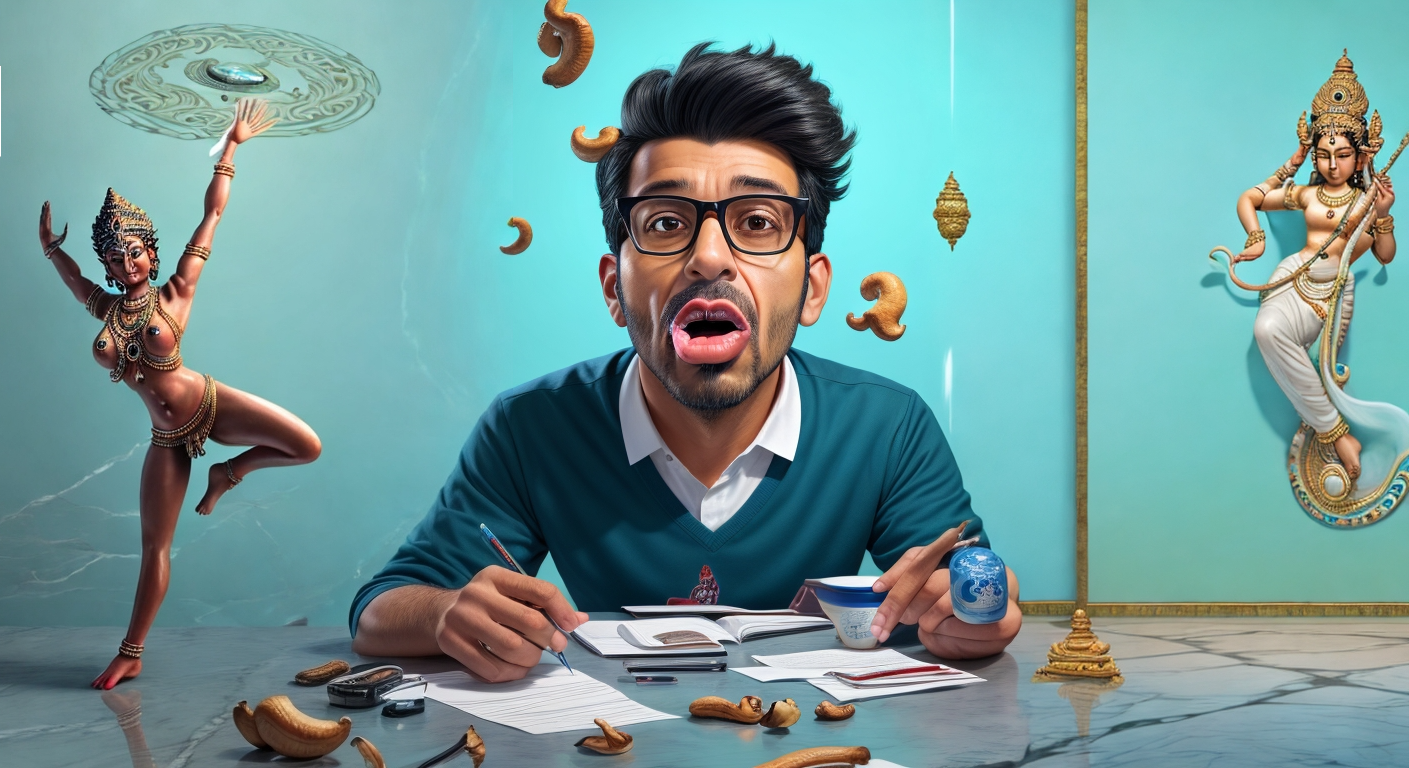
An alternative response occurred to me a couple of years ago while I was working from home during the pandemic. I was eating toasted pecans with honey from a cup at my desk, while I was concentrated on my tasks. After a while of extending my hand repeatedly and taking out one or two of the delicious nuts, I realized that only one little pecan remained at the bottom of the cup.

I was about to devour it on the spot, but then an odd thought occurred to me. If that small pecan had consciousness, it would surely have been able to feel itself unique and special. When it was with its other 40 or 50 little companions it would have noticed how a mysterious giant claw pounced on them and was extracting them one by one.
It is possible that a couple of times it had had just that pecan between my fingers for a second, before slipping out without meaning to. Then, when there were already only four or five of them, the lucky pecan would have realized that my hand was heading directly toward the others, always avoiding touching it until, at last, its turn came.
Then, Pecanuel - let us say that is its name - trapped between the fingers of the glass-eyed giant, would have realized that the almighty eater of pecans had spared its life one more time. Instead of throwing it into its maw like the others, it kept looking at it attentively like a lunatic.
“I am the chosen by the divinity, clearly I am protected from the fatality that punished my little brothers. Perhaps it is my reward for being the best of among them, or perhaps for having been the most sincere in my prayers not to be eaten. Maybe the others deserved their destiny, they must have done something wrong.”
This could have been the reasoning of the caramelized fruit while I saw it defenseless between my fingers.
That, right before throwing it in the air and catching it in my mouth with a snap, to then go to the kitchen to serve myself another cup of the addictive snack.
I meditated for several days on that idea and I did not find flaws in the pecan's logic except for one important one: I was the god who administered the sentences in that porcelain cup and not for a moment did it occur to me to select the pecans I was eating by any criterion other than grabbing the one closest to the random place where my fingers landed.
What if God does the same with us? Throws his hand and goes grabbing little humans, to some of whom he gifts talents, others he takes to the mouth to chew on for a while and others he swallows all at once. Well, God is not needed to do something the laws of physics can do without any problem, although we can always call that cosmic phenomenon God that makes some things happen and others not. Or better yet goddess, as I will explain in a moment.
During the following years, I devoted myself to exploring books on astrophysics and quantum mechanics to try to understand that cruel but just God who dispenses gifts and hardships without distinguishing creeds, merits or faults: Chance.
That exploration led me through the second law of thermodynamics, chaos theory with its butterfly effect and fractal mathematics. They are very interesting topics that explain the science behind what we call chance and provide tools to model it mathematically, but I will not delve into those concepts in this episode because they stray a little from the point I want to reach. What I want to share is that there are two theoretical universes that can exist: one in which goodness is rewarded and evil punished, where everything that happens obeys a detailed plan and where it is possible to avoid the consequences, and another universe that is so complex, rich and immense, that the combination of all the factors that intervene gives rise to some predictable phenomena, but many more that cannot be anticipated much less controlled.
Science is conclusive, the universe we inhabit is the second: one dominated by chance, which however has an order thanks to being governed by some inflexible physical laws.
I was born thanks to the chance of my parents meeting at a gathering of young revolutionaries and I was endowed with good health, intellectual capacity and ease with languages by the genetic chance inherited from two healthy parents and particularly talented for communication. I entered a university where I started a successful career in technology thanks to the chance of meeting my friend Jensy. I knew the spirituality thanks to the chance of finding my friend Martín and I live in Canada thanks to the chance of meeting my friend David Collins.
I am also alive and intact thanks to the chance of not having been in the wrong place at the wrong time and perhaps again thanks to the genetic chance of having relatively strong bones.
But chance also granted me a brain overloaded with certain neurotransmitters that make me prone to anxiety, to obsessions and to compulsions, a fascination for the female sex that has gotten me into trouble more than once - although it has also given me many satisfactions - and the genetic tendency to suffer from hypertension and perhaps baldness within some years.
But none of what I just said means that I have no merit at all, nor that the divinity does not exist. Confused? Allow me to explain it:
Having met the god Chance has obliged me to be more humble, because I cannot allow myself the arrogance of considering that so many blessings are due solely to my personal merits. I know I have been fortunate and I am very grateful for that. To whom? To Chance, of course. I do not feel guilty either for the lame part of the deal. I have my loads, but I know that to a great extent they are not my fault, much less my parents'. It is merely the dark side of Chance.
I also know that Chance has not gifted me everything I have and everything I have achieved. It has provided me opportunities, it has created possibilities for me, but I am the one who has taken advantage of them. I have known how to cultivate and take care of the good friends who have arrived in my life and I have earned the trust of those who have offered me their help. I have managed to overcome my destructive impulses and convince the woman I love that it is worth staying by my side despite my weaknesses. In the same way, I have had to fight to overcome the difficult cards of the deck with which I have had to play and although I cannot sing victory, until the moment I have not done it so badly.
But chance is as I said before, relentless. I have no way of negotiating with it, nor can I deceive it. It is a god that does not seek praises nor prayers and does not punish either, it only creates opportunities of creation and of destruction. The mystic representation that comes closest to this archetype would be the god Shiva with its feminine counterpart Shakti. Shakti is destroyer and transformer, the constant and final change of the cosmic cycles. It is closely related to the concept of lila, the divine and capricious game with which the world is created and destroyed. Lila reflects the unpredictable nature of chance.
As goddess of the dance, Shakti can change the course of destiny in an instant with a random movement of her body

Before that power, the personal talent one may have seems laughable, but it is not so. Knowing chance confers a very important power: Knowing the rules of the game allows us to play in the best way possible with the cards we receive on behalf of destiny.
Instinctively, we all try to adjust to the circumstances chance bequeaths us, but we do not always do it in the best way, precisely because we do not know the rules of the game: If your focus is fulfilling a series of religious norms or divine commandments with the hope of receiving better cards, or if your strategy is to pray to your God so that magically he makes the three of clubs stronger than the ace of spades, then you are wasting the opportunity of doing the best you can with what you have.
My understanding of the rules of the game cleared up a lot when two books by the brilliant writer and former stockbroker Nassim Nicholas Taleb reached my hands, the same author of Antifragile: They are “Fooled by Randomness” and “The Black Swan”. All three are magnificent books that I recommend you read. What Nassim teaches us is that we must make ourselves conscious that we inhabit a world dominated by chance, which, by force of science and technological development we have turned into one that generates the illusion of being predictable and just.
Our ancestors were more conscious of the harshness of Chance because they did not have concrete, vaccines, firemen, police, constitutions, laws and a long etcetera. Misfortune and death could peek at any corner and in fact it did so with frequency. For that reason, families had many children, after all, almost certainly one or two would die during infancy.
But in the modern world, in which we consider human rights as something natural, including the right to the pursuit of happiness, we forget that we continue to live in a Universe dominated by Shakti. Then from time to time the goddess dances and manifests as a black swan: everyone thinks that swans are always white until suddenly one black one appears out of nowhere.
Nicholas Taleb uses the figure of the black swan to refer to unexpected events, both positive and negative, that can change the course of events, determine a different future course and in general transform reality. Black swans can appear at the personal level, the family, in a community, nation or even at the planetary level.
But the most important characteristic of the black swan is that it cannot be predicted. Therefore, global warming, the coronavirus pandemic or the invasion of Russia in Ukraine are not black swans. All these events were foreseeable and in fact many voices announced them with sufficient anticipation. Some examples of black swans that have presented themselves in my life could be having taken yagé, the anxiety crisis I had in 2016 or meeting the people who have opened to me the doors of great opportunities or of difficult lessons of life.
What Nassim proposes is that, since we cannot predict them, the only thing we can do facing the black swans is prepare ourselves to face them or take advantage of them: We can train ourselves to be antifragile and reduce the risk of a negative black swan destroying us and we can create opportunities for positive black swans to present themselves.
The first part I explained in more detail in the episode on Antifragility, but the general concept is that we can cultivate the mental capacity to not only resist in the face of unexpected misfortune, not only to be resilient to bounce back when life knocks us down, but that we can even go further: every time life faces us with a tragic event, we can use that experience as a training field to strengthen ourselves, learn something new, acquire wisdom to help others and plant our own future happiness.
Part of that training consists of being conscious of the existence of negative black swans. Facing that reality without the false hope of being exempt because it is you. Antifragility means having the certainty that no matter how difficult the situation we face is, the night will always give way to the day and we will be able to get up again and smile. Finally, it invites us to form a positive attitude facing discomfort, boredom, pain and above all facing failure.
If you run from the small tests life puts in front of you, you will not have the necessary strength to face the great ones. Sometimes it is worth even facing our fears voluntarily and anticipating the unpleasant tasks we know we will have to do to increase our self-confidence and feel that we are making ourselves a little stronger, wiser, more antifragile every time.
The second part: exposing ourselves to positive black swans, consists of fostering activities and situations in which fortuitous beneficial opportunities may present themselves. For example, if you work in an isolated cubicle, without communication with people who allow you to grow and you only go out to go from home to work and from work to home, then the probability that an opportunity for a promotion, or to do an exceptional business arises, is almost nil.
What you can do then is force yourself to meet people from other fields frequently, participate in social events, enroll in professional associations, take a theater course, enroll in cooking lessons or anything that exposes you to meeting new people, learning new skills or thinking differently. All those are pretexts for a positive black swan to arise.
Nicholas Taleb says that is for that reason that cities are much more prosperous than the countryside: a high population density increases the possibility that two people who can complement and support each other meet and generate opportunities that did not exist before.
Of course, knowing what to do, how to do it, when to do it, where to do it and above all what NOT to do, how NOT to do it, when NOT to do it and where NOT to do it is where the magic lies. Having good genes, good friends and good values is a good start, but it is not enough. There is something inside you that little by little is finding the way to guide you to sidestep chance, take advantage of the opportunities and come out strengthened when adversity presents itself.
That something inside me is the light that has illuminated my path, it is the wisdom that has been growing as I have become more conscious of reality. That something inside me is the God I always wanted to know, the God I once believed inhabited the skies or a different dimension. The God I believed I had to praise and fear. It is the God that has always been with me, that has rescued me from the deep abysses and has guided me again toward the light, that God is my own conscience.
If we wanted to put a name on that God, we could turn to the Hindu figure of Saraswati, the goddess of wisdom, music, pure intelligence and mental clarity. She is associated with Vak or the sacred word, the capacity to express the truth and the knowledges that illuminate us.
Saraswati is the consort of Brahma the creator, so she participates in the knowledge of the fundamental cosmic truths.
The Vedic texts describe Saraswati as the guide to acquire knowledge and discernment, but also its practical application to make well-founded decisions. This applied wisdom is based on equanimity, clear vision and understanding of the universal laws. A definition surprisingly close to the concept of science, which did not yet exist in the time of the vedas.
When I entered the path of the yagé, one of my strongest motivations was that of knowing the mysteries of God and one of the most beautiful experiences I had during those years was when I had the vision of a Hindu goddess over a garden full of white and yellow flowers. The black swans of my anxiety crisis and my move to Canada took me off the shamanic path and put me on a route of learning through science.
Making use of poetic naturalism I could also say that the goddess Shakti guided me from the yagé to follow the path of Saraswati through science. And Saraswati was always here, watching me with patience from the throne of my own mind while I searched for her outside... fooled by Chance.
This episode is dedicated to my mother, Julia Elena, on her 70th birthday. I love you, mami!